


Luxury consumers are 54% more willing to pay a premium simply because a product makes them feel exclusive. This statistic reveals a fundamental truth: in luxury sales, emotional connections matter more than product specifications. Understanding and leveraging emotional triggers transforms how your brand engages high-end customers, directly impacting purchase decisions and customer lifetime value. This guide unpacks the psychology behind emotional triggers and provides actionable strategies to apply them effectively in your luxury marketing campaigns.
Table of Contents
- Understanding Emotional Triggers In Luxury Sales
- Key Emotional Triggers In Luxury Sales
- Common Misconceptions About Emotional Triggers In Luxury Marketing
- Framework And Comparison Of Emotional Triggers
- How Emotional Triggers Influence Consumer Behavior In Luxury Markets
- Practical Strategies To Implement Emotional Triggers In Luxury Marketing And Sales
- Measuring And Validating The Impact Of Emotional Marketing In Luxury Sales
- Summary And Future Directions For Emotional Triggers In Luxury Sales
- Enhance Your Luxury Brand With Expert Emotional Marketing Solutions
Key Takeaways
| Point | Details |
|---|---|
| Emotional connections drive luxury purchases | 70% of luxury buyers cite emotional reasons as crucial in their decisions. |
| Four core trigger categories exist | Exclusivity, identity reinforcement, sensory engagement, and aspiration shape buyer behavior. |
| Segmentation multiplies effectiveness | Tailoring emotional appeals to specific segments increases campaign performance by 25% or more. |
| Authenticity sustains engagement | Genuine emotional messaging builds trust while insincerity damages brand equity permanently. |
| Measurement enables optimization | Tracking sales uplift and engagement feedback reveals what resonates with your audience. |
Understanding Emotional Triggers in Luxury Sales
Emotional triggers are psychological stimuli that prompt purchasing decisions beyond rational product evaluation. In luxury markets, these triggers override traditional decision-making factors like price or functionality. While a mid-market consumer might compare specifications, luxury buyers prioritize how a product makes them feel.
The emotional branding strategies used by successful luxury houses tap into deep psychological needs. Research shows 70% of luxury buyers cite emotional reasons as crucial in their purchase decisions. This data contradicts the assumption that wealthy consumers make purely logical choices.
Typical emotional drivers in luxury sales include:
- Aspiration toward an idealized self-image or lifestyle
- Nostalgia connecting products to cherished memories
- Identity reinforcement through brand alignment with personal values
- Exclusivity signaling unique status or belonging to an elite group
These triggers work because luxury purchases serve psychological functions beyond utility. A handbag isn’t just for carrying items; it’s a statement of identity, a marker of achievement, or a bridge to aspirational social circles.
Pro tip: Assess your brand’s emotional resonance by surveying customers about the feelings your products evoke. If responses focus only on quality or craftsmanship, you’re missing emotional engagement opportunities.
Key Emotional Triggers in Luxury Sales
Four primary emotional trigger categories drive luxury purchasing behavior. Understanding each helps you craft targeted campaigns that resonate with specific customer motivations.
Social triggers center on exclusivity and status elevation. Exclusivity and social status are core emotional triggers in luxury marketing. Limited editions, invitation-only events, and members-only access all activate these triggers. Customers pay premiums for products that signal their membership in exclusive circles.
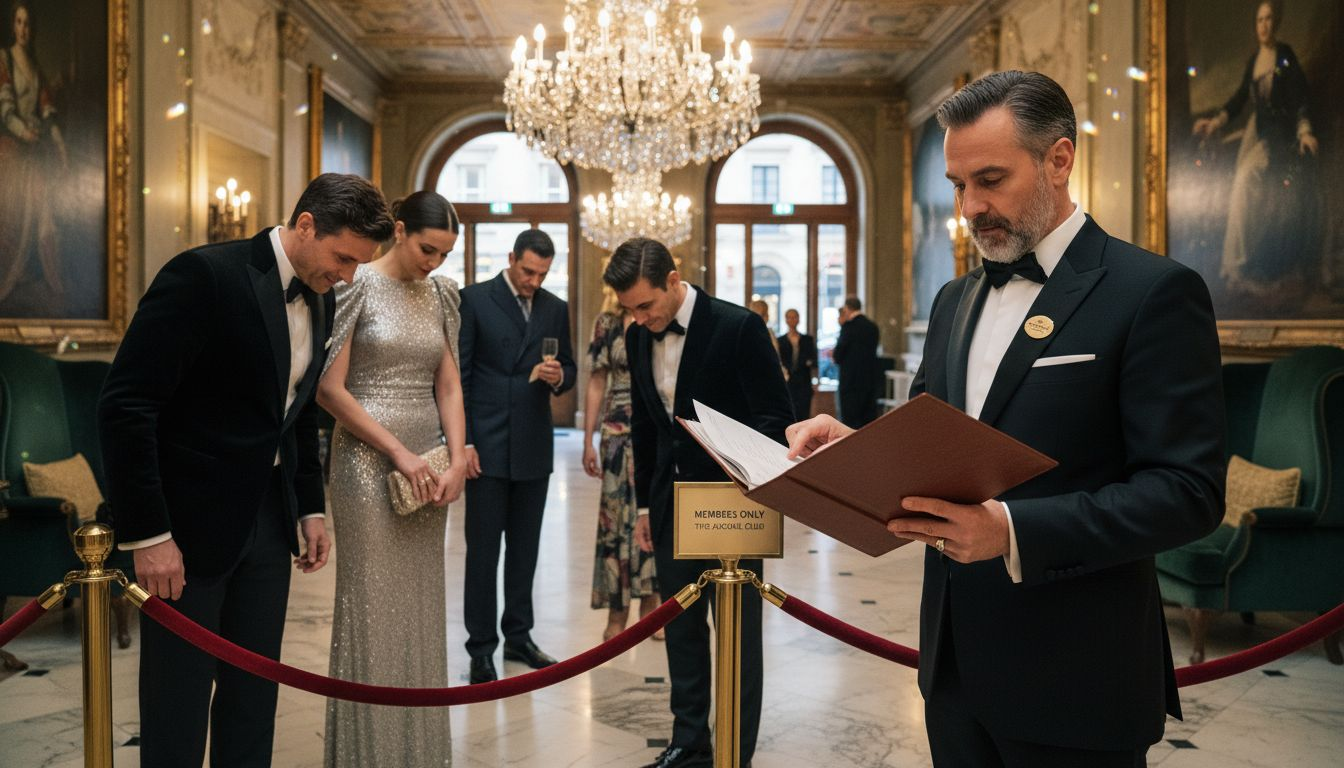
Identity triggers reinforce self-concept and personal narrative. Luxury brands that align with customer values, heritage, or aspirations create powerful emotional bonds. A watch brand emphasizing legacy appeals to buyers who see themselves as custodians of tradition. Nostalgia-driven campaigns connect products to formative life moments, creating emotional anchors.
Sensory triggers engage through touch, sight, sound, and scent. The weight of premium materials, the ambiance of flagship stores, and the signature fragrance of packaging all create memorable experiences. These sensory elements transform transactions into immersive brand encounters that customers remember and seek to repeat.
Aspirational triggers focus on achievement and future self-image. Luxury products represent milestones or stepping stones toward desired identities. Marketing that positions products as rewards for success or catalysts for transformation taps into powerful motivational psychology.
Different demographics respond distinctly to these triggers. Younger luxury consumers often prioritize identity alignment and aspiration, while established buyers may value exclusivity and heritage more strongly. Successful emotion-driven campaigns tailor trigger combinations to target segment characteristics.
Common Misconceptions About Emotional Triggers in Luxury Marketing
Several myths about emotional triggers lead marketers astray, undermining campaign effectiveness and brand equity.
-
Luxury buyers only act rationally based on quality. This misconception ignores evidence that emotions like nostalgia and aspiration heavily influence decisions. While quality is necessary, it’s insufficient to drive premium pricing without emotional connection.
-
Emotional triggers apply universally across all customers. Generic emotional appeals fail because different segments respond to different triggers. Segment-specific emotional messaging increases effectiveness by 25% or more compared to one-size-fits-all approaches.
-
Discounts are effective emotional levers in luxury. Discounting actually damages exclusivity and perceived value. It triggers scarcity anxiety rather than positive emotional connection, training customers to wait for sales rather than engage with brand values.
-
Brand prestige alone creates emotional connection. Prestige provides recognition but doesn’t guarantee authentic engagement. Emotional authenticity is required to maintain trust and loyalty in luxury markets. Customers quickly detect superficial emotional messaging.
Pro tip: Resist the temptation to discount luxury products during slow periods. Instead, create exclusive experiences or limited offerings that reinforce scarcity and value. Authentic psychology-driven sales tips preserve brand equity while driving revenue.
Framework and Comparison of Emotional Triggers
A structured framework helps marketers prioritize and deploy emotional triggers strategically. Four categories organize triggers by their psychological mechanism and application context.
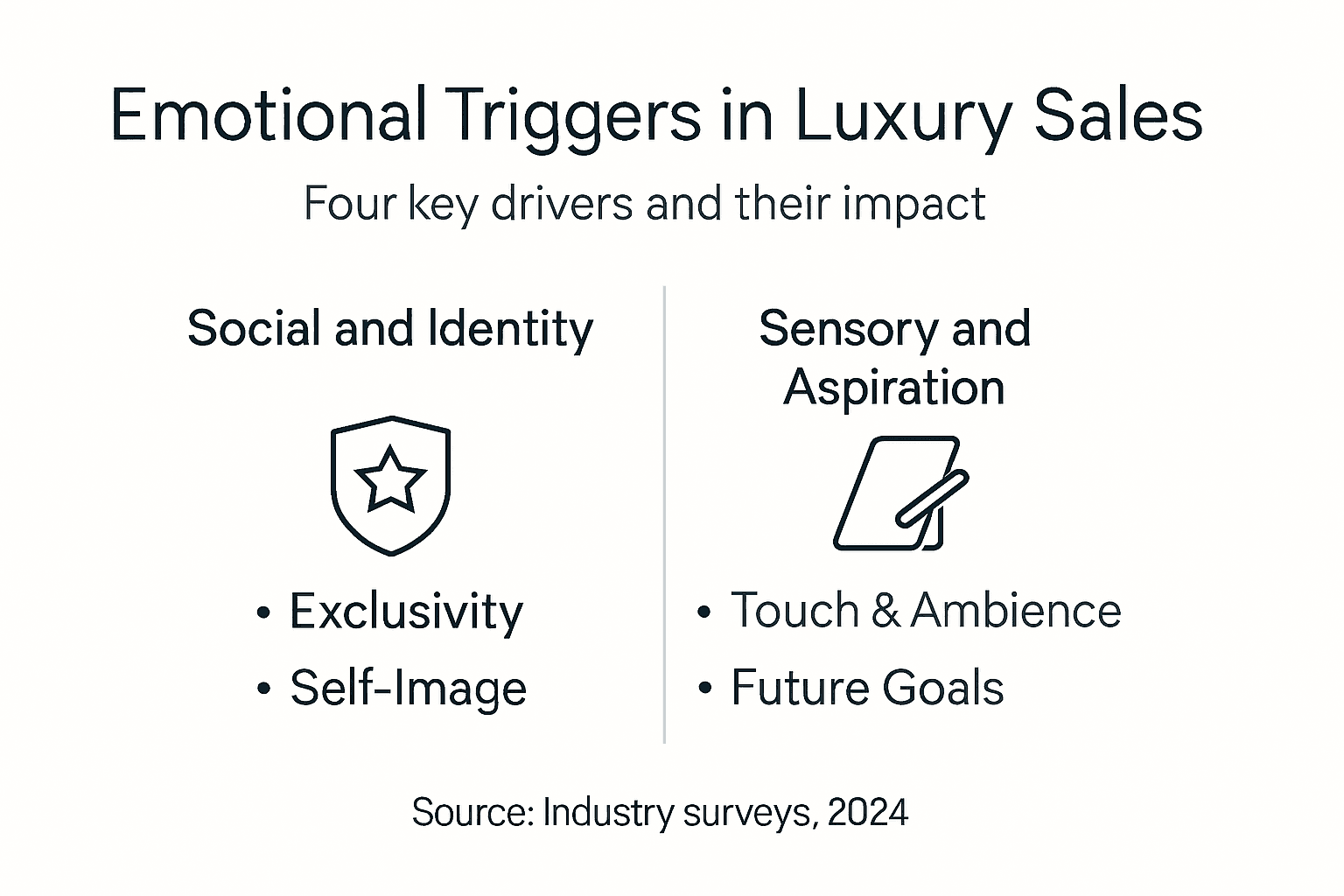
Social triggers leverage group dynamics and status signaling. Sensory triggers create memorable physical and aesthetic experiences. Identity triggers align brands with customer self-concept and values. Aspirational triggers connect products to goals and desired future states.
Segmenting emotional triggers by category helps prioritize marketing strategies and improves engagement. This table compares trigger characteristics:
| Trigger Type | Primary Benefit | Best Target Segment | Implementation Complexity |
|---|---|---|---|
| Social/Exclusivity | Status elevation, belonging | Established affluent, social influencers | Medium – requires access control |
| Identity/Values | Deep loyalty, advocacy | Value-aligned, heritage seekers | High – demands authentic alignment |
| Sensory/Experience | Memorable encounters, differentiation | Experience seekers, aesthetic enthusiasts | Medium – needs consistent execution |
| Aspirational/Achievement | Motivation, milestone purchases | Emerging affluent, achievement-oriented | Low – readily communicated in messaging |
To integrate this framework into marketing planning:
- Analyze your target segments’ dominant psychological needs and preferences
- Map product attributes and brand values to relevant trigger categories
- Design campaigns that activate multiple complementary triggers simultaneously
- Test trigger combinations and measure performance by segment
- Refine your approach based on conversion data and customer feedback
This systematic approach prevents scattershot emotional messaging and ensures resources focus on triggers that resonate most powerfully with your specific audience.
How Emotional Triggers Influence Consumer Behavior in Luxury Markets
Understanding the mechanisms by which emotional triggers shape behavior helps marketers predict and guide customer actions. Authenticity and trust form the foundation. When customers perceive genuine emotional connection, they lower psychological defenses and become receptive to brand messaging.
Emotional connection drives 64% of brand loyalty in luxury markets. This loyalty translates into increased purchase frequency and higher average transaction values. Emotionally engaged customers also become brand advocates, generating valuable word-of-mouth referrals within their social circles.
Emotional trigger effectiveness varies across demographics. Younger luxury consumers respond strongly to identity and aspiration triggers, seeking brands that reflect their values and ambitions. Established buyers often prioritize exclusivity and heritage, valuing tradition and social signaling. Cultural background also influences trigger sensitivity, with some cultures emphasizing collective identity while others prioritize individual achievement.
Observable emotional behaviors in luxury consumers include:
- Increased time spent engaging with brand content and experiences
- Willingness to pay premium prices without negotiation
- Repeat purchases and consistent brand preference over alternatives
- Active participation in brand communities and events
- Emotional attachment expressed through collection building or display
Recognizing these behaviors helps marketers identify successful emotional engagement. Luxury buyer behavior analysis reveals patterns that inform loyalty program design, personalization strategies, and campaign optimization. Brands that systematically study emotional responses gain competitive advantages through deeper customer understanding.
Practical Strategies to Implement Emotional Triggers in Luxury Marketing and Sales
Translating emotional trigger theory into practice requires specific tactical approaches tailored to luxury market dynamics.
Create exclusive experiences that make customers feel special. Private shopping appointments, invitation-only previews, and personalized consultations activate exclusivity triggers. These experiences should feel genuinely rare, not manufactured scarcity. Document and share selective glimpses of exclusivity through social channels to amplify desire among aspirational customers.
Enhance sensory marketing in physical retail environments:
- Use signature scents that customers associate with your brand
- Ensure materials and finishes create distinctive tactile experiences
- Design lighting and acoustics that evoke desired emotional states
- Train staff to recognize and respond to customer emotional cues
Leverage digital technologies for immersive emotional engagement. Digital innovation such as AR enhances emotional engagement, boosting sales in luxury retail. Virtual try-on experiences, 3D product exploration, and digital storytelling create emotional connections before physical interaction. These tools work particularly well for reaching younger luxury consumers who expect seamless digital experiences.
Maintain authenticity across all touchpoints. Every customer interaction should reinforce your brand’s core emotional promise. Inconsistency between messaging and experience destroys trust rapidly. Train all customer-facing staff to embody brand values and understand the emotional triggers your strategy targets.
Pro tip: Integrate emotional triggers consistently between online and offline channels. Customers should experience the same emotional resonance whether browsing your website, visiting a flagship store, or receiving a product delivery. This consistency amplifies trigger effectiveness and builds stronger brand memory.
Explore luxury brand growth tactics that systematically apply emotional trigger insights to expansion strategies.
Measuring and Validating the Impact of Emotional Marketing in Luxury Sales
Validating emotional marketing effectiveness requires both quantitative metrics and qualitative feedback. Without measurement, you cannot optimize trigger deployment or justify investment in emotional strategies.
Key quantitative indicators include:
- Conversion rate increases following emotional campaigns
- Average transaction value uplift when emotional triggers are activated
- Repeat purchase frequency among emotionally engaged customers
- Customer acquisition cost reductions from improved targeting
Qualitative feedback tools provide deeper insight. Emotional engagement surveys ask customers to describe feelings associated with your brand. Digital sentiment analysis tracks emotional language in reviews, social media mentions, and customer service interactions. These qualitative measures reveal which specific triggers resonate most powerfully.
| Metric | Benchmark Range | Measurement Method | Optimization Signal |
|---|---|---|---|
| Conversion Rate Uplift | 15-30% improvement | A/B test emotional vs. rational messaging | Below 15% suggests misaligned triggers |
| Average Transaction Value | 20-40% increase | Compare emotionally engaged vs. standard customers | Plateau indicates need for new triggers |
| Emotional Engagement Score | 7.5+ out of 10 | Post-purchase surveys on emotional satisfaction | Below 7 requires authenticity audit |
| Brand Advocacy Rate | 25-35% of customers | Track referrals and social sharing | Low rates suggest weak emotional bonds |
Best practices for ongoing measurement include:
- Establish baseline metrics before implementing new emotional strategies
- Test individual triggers in isolation to understand their specific impact
- Segment analysis by customer demographics and psychographics
- Conduct quarterly reviews of emotional engagement metrics
- Iterate rapidly based on data, adjusting trigger combinations and messaging
Quantitative metrics and customer feedback enable continuous improvement of emotional trigger strategies in luxury sales. Data-driven refinement maximizes return on marketing investment and prevents resource waste on ineffective approaches.
Summary and Future Directions for Emotional Triggers in Luxury Sales
Emotional triggers—exclusivity, identity reinforcement, sensory engagement, and aspiration—fundamentally shape luxury purchasing behavior. These psychological mechanisms drive the premium willingness to pay that defines luxury markets. Successful implementation requires authentic messaging, careful segmentation, and consistent execution across touchpoints.
Customer segmentation amplifies emotional trigger effectiveness by ensuring messages align with specific audience motivations. Authenticity remains non-negotiable; sophisticated luxury consumers detect and reject superficial emotional manipulation.
Emerging trends shaping the future of emotional luxury marketing include:
- AI-driven personalization that tailors emotional appeals to individual customer psychology in real time
- Immersive technologies like virtual reality creating deeper sensory and experiential engagement
- Sustainability and social responsibility becoming powerful identity and values-based triggers
- Hybrid digital-physical experiences that combine convenience with emotional richness
- Neuromarketing insights revealing unconscious emotional responses to refine trigger deployment
Maintaining competitive advantage requires continuous innovation in emotional engagement approaches. The luxury brands that win will be those that deeply understand customer psychology and create authentic emotional connections that transcend transactional relationships.
Enhance Your Luxury Brand with Expert Emotional Marketing Solutions
Ready to transform insight into action? Implementing emotional trigger strategies requires deep expertise in luxury consumer psychology and proven tactical frameworks. Specialized support accelerates your results and prevents costly missteps.
Explore luxury market growth tactics designed specifically for fashion and lifestyle brands seeking sustainable competitive advantages. Discover how to analyze luxury buyer behavior systematically to uncover emotional trigger opportunities unique to your customer base. Leverage digital innovation in luxury to create immersive emotional experiences that drive engagement and sales.
Professional guidance grounded in psychology and proven in high-end markets helps you implement emotional strategies confidently and measure their impact accurately.
FAQ
What are the most effective emotional triggers in luxury sales?
The four core emotional triggers—exclusivity, identity reinforcement, sensory engagement, and aspiration—each serve distinct psychological functions. Exclusivity and status work best for established affluent customers, while aspiration resonates with emerging luxury buyers. Identity triggers create the deepest loyalty when authentically aligned with customer values.
How can luxury brands measure the success of emotional marketing campaigns?
Measure success through conversion rate improvements, average transaction value increases, and repeat purchase frequency among emotionally engaged customers. Complement quantitative metrics with qualitative feedback from emotional engagement surveys and sentiment analysis. Continuous data analysis enables refinement of trigger combinations and messaging for optimal performance.
Why is authenticity crucial in emotional luxury marketing?
Authenticity sustains consumer trust and prevents the brand damage caused by perceived manipulation. Luxury customers possess sophisticated detection abilities for insincere messaging due to their purchasing experience. Genuine emotional connections create lasting loyalty, while inauthentic attempts trigger skepticism and brand abandonment.
Can emotional triggers be universally applied across all luxury customer segments?
Emotional triggers require segmentation for maximum effectiveness because different demographics and psychographics respond to different psychological mechanisms. Tailoring emotional appeals to specific audience characteristics increases campaign performance by 25% or more compared to generic approaches. Age, cultural background, and purchase motivation all influence which triggers resonate most powerfully.