

TL;DR:
- Brand image in luxury forms the psychological foundation that influences consumer willingness to pay and loyalty. It is shaped by perceptions across functional, emotional, and symbolic layers, which are driven by consumer interactions rather than brand messaging. Maintaining consistency across distribution channels and storytelling is essential for long-term prestige and market strength.
Brand image in luxury is not a style exercise. It is the psychological infrastructure your entire market position rests on, shaping what consumers are willing to pay, who they tell, and how long they stay loyal. Most marketing teams in the luxury space still treat image as a visual discipline, something managed by the creative director and measured in aesthetic consistency. That framing is both incomplete and costly. Brand image and customer perception research confirms that brand image is the full set of consumer perceptions and associations that guide judgments, emotions, and downstream behaviors. This guide gives you the frameworks and research to act on that reality.
Table of Contents
- What is brand image and why does it matter?
- The psychology behind luxury brand image
- Brand image in action: Context, retail channel, and pitfalls
- Measuring and managing brand image in the digital age
- Rethinking brand image: Why consistency and meaning win over just being ‘loud’
- Advance your brand image strategy with expert guidance
- Frequently asked questions
Key Takeaways
| Point | Details |
|---|---|
| Brand image shapes value | A strong brand image drives willingness to pay, loyalty, and advocacy by anchoring prestige and trust. |
| Psychology drives luxury | Luxury brand image succeeds when it taps into aspiration, identity, and emotional desire—not just product features. |
| Context changes perception | Where and how a brand is sold can elevate or erode its image, especially for second-hand luxury. |
| Modern metrics matter | Best-in-class luxury brands measure share of search, sentiment, and meaning, not just social engagement. |
What is brand image and why does it matter?
After outlining the stakes for luxury brands, let’s break down what brand image truly is and why it’s mission-critical for your marketing strategy.
Brand image is not what your brand says about itself. It is what lives in the consumer’s mind after every interaction, every touchpoint, and every story your brand tells or fails to tell. The distinction matters enormously because you cannot directly control the image, only the inputs that shape it.
Think of brand image as a three-layer construct. The first layer is rational and functional: perceived quality, craftsmanship, price-to-value ratio, material excellence. The second layer is emotional: aspirational pull, the sense of trust, the feeling of reward attached to ownership. The third and most powerful layer in luxury is symbolic: status, group belonging, and identity projection. For a consumer buying a Hermès scarf or a Bottega Veneta jacket, the symbolic layer almost always outweighs the functional one.
Brand image is more than logo or look. It is the meaning customers attach to your brand after every interaction, conscious and unconscious.
Why does this matter commercially? Because brand image in strategy translates directly into brand equity by strengthening brand associations and perceived quality, which are the exact forces that drive choice in markets where rational evaluation is difficult. Luxury is precisely that kind of market.
Key business outcomes of a strong luxury brand image:
- Higher willingness to pay, often with no ceiling in ultra-luxury segments
- Repeat purchase behavior driven by identity reinforcement rather than utility
- Unprompted word-of-mouth advocacy from customers who see the brand as part of their identity
- Reduced sensitivity to competitive pricing pressure
- Stronger position during brand crises or product missteps
The luxury brand storytelling guide on this site goes deeper into how narrative construction feeds directly into these image dimensions. The point here is that each dimension is not a soft marketing aspiration but a measurable commercial lever.
| Brand image dimension | Business impact |
|---|---|
| Perceived quality (functional) | Justifies premium pricing, reduces churn |
| Aspiration and trust (emotional) | Drives repeat purchase and brand loyalty |
| Status and identity (symbolic) | Amplifies word-of-mouth, reduces price sensitivity |
| Aesthetic and visual coherence | Builds recognition across channels and contexts |
The psychology behind luxury brand image
Now that you know the what and why, let’s explore the underlying consumer psychology that makes image your most powerful growth lever in luxury.
Luxury consumers do not buy products. They buy proximity to an identity they desire or want to reinforce. This is not a metaphor. It is how the purchasing decision actually processes in the brain. When someone considers a luxury purchase, the evaluation rarely starts with “does this product do what I need?” It starts with “does this brand represent who I am or who I want to become?”
Luxury brand marketing research confirms that brand image in fashion and lifestyle is tightly linked to aspiration, identity signaling, and perceived prestige. The product is almost secondary. It becomes the physical token of an identity transaction.
Three psychological triggers sit at the core of luxury brand desire:
- Aspiration: The brand image signals a lifestyle, a social tier, or a personal quality the consumer wants to attain or confirm. This is the most powerful long-range trigger.
- Achievement: Purchasing the brand is a reward signal. It says “I have arrived” or “I earned this.” Many luxury buyers describe purchases in language that mirrors achievement psychology.
- Group belonging: The brand functions as membership. Owning it places you in a community of people who share taste, values, or social status.
The four-step path from image to willingness to pay:
- Aspiration: The brand’s image represents something the consumer wants to embody or be associated with
- Justification: Symbolic and quality associations give the consumer rational cover for an emotional decision
- Pride: The act of ownership delivers identity satisfaction, reinforcing the emotional investment
- Advocacy: The consumer shares the brand because it reflects well on their own identity, driving organic growth
Understanding storytelling’s role in luxury marketing matters here because story is the primary mechanism through which you deliver aspiration, not advertising copy. And brand storytelling effectiveness research shows that narrative-based brand communication creates far more durable memory encoding than product-feature-focused messaging.
Pro Tip: Map every consumer touchpoint, from packaging to post-purchase email, against the three psychological triggers above. If a touchpoint does not reinforce aspiration, achievement, or belonging, it is at best neutral and at worst diluting your image.
Brand image in action: Context, retail channel, and pitfalls
Understanding psychology is only the start. You must also account for how sales channels, environments, and context actively shape image outcomes and risks.
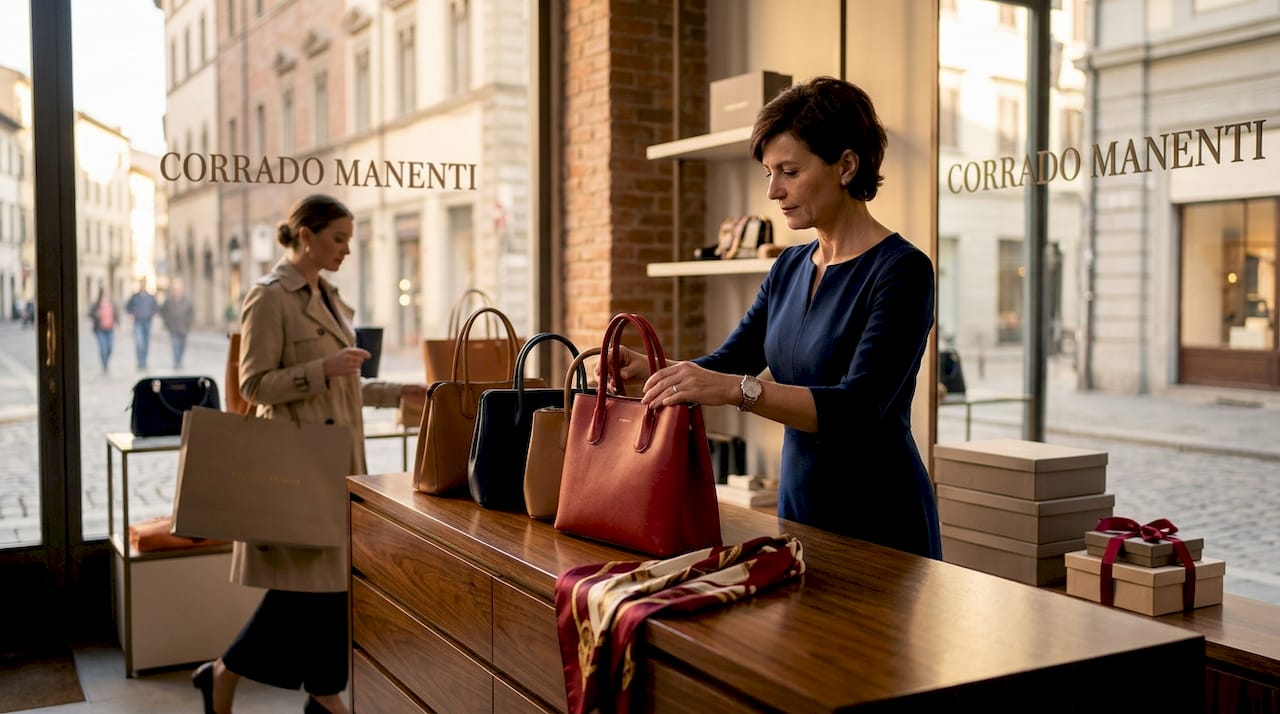
One of the most underappreciated findings in luxury brand research is that image is not a fixed asset. It shifts based on context. The same product can carry completely different meanings depending on where and how it was acquired. This is not a consumer behavior quirk to work around; it is a structural feature of how image functions.
Official vs. unofficial channel research provides direct empirical evidence: luxury brand image can shift based on purchase context and psychological construal. Specifically, second-hand luxury goods purchased through unofficial retailers can meaningfully lower brand image perception, whereas the same goods acquired through official or brand-authorized channels can maintain it. The product is identical. The image impact is entirely different.
This has serious strategic implications for how you manage distribution, resale programs, and partnership decisions. Brands like Rolex and Patek Philippe have been methodical about controlling authorized dealers for exactly this reason.
Comparison: Official vs. unofficial retail channels and brand image outcomes
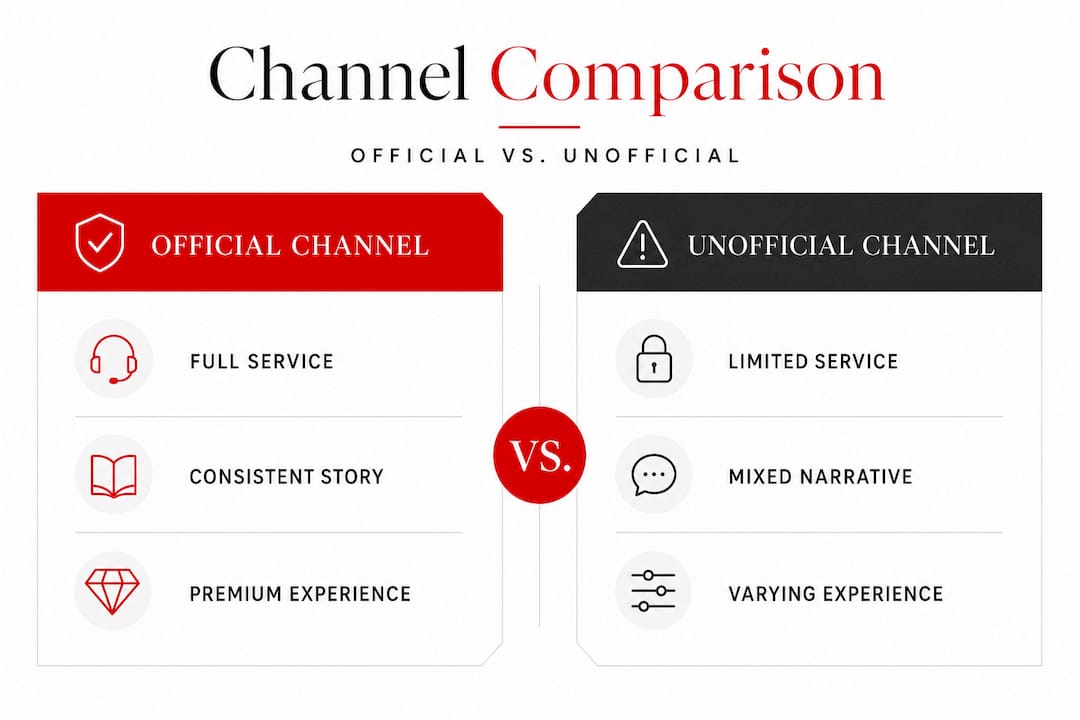
| Factor | Official channel | Unofficial channel |
|---|---|---|
| Perceived prestige | Maintained or elevated | Frequently diminished |
| Authenticity signal | Strong, built into transaction | Weak, relies on consumer trust |
| Brand story continuity | Consistent with brand image | Fragmented or absent |
| Post-purchase advocacy | High, consumer associates with brand | Lower, consumer associates with deal |
| Long-term loyalty | Reinforced | Disrupted |
Common channel strategy pitfalls and how to avoid them:
- Over-distributing through non-curated stockists: Every unauthorized point of sale is a context you do not control. Audit your distribution footprint annually against your image positioning.
- Ignoring the resale market: The secondary market for your products is now a brand image channel. Brands like Chanel and Burberry have developed official resale programs specifically to retain image control.
- Inconsistent in-store experience quality: Flagship-level experience in some locations and generic retail in others creates cognitive dissonance for multichannel luxury buyers.
- Digital context mismatches: Running performance ads on channels that attract a mass-market audience can signal that your brand is accessible in ways that contradict the image you build everywhere else.
Study brand stories from luxury fashion icons for real examples of how the most enduring brands have protected image by treating every distribution context as a brand statement, not a sales opportunity.
Measuring and managing brand image in the digital age
As market dynamics accelerate, measuring and tuning your brand image is more than analytics. It’s about capturing and deepening consumer meaning in a digital-first world.
Most luxury marketing teams are still measuring brand health with metrics designed for direct-response marketing. Follower counts, engagement rates, and click-through rates tell you about content performance, not brand image health. Worse, optimizing for those metrics can actively harm your image by pushing you toward content that performs well algorithmically but positions you as loud and accessible rather than quietly aspirational.
Digital brand equity measurement research confirms that existing digital tools can be inadequate for capturing brand image. Brand associations now need to be measured with a human dimension and with digital constructs that go beyond social-only signals.
Modern metrics that actually reflect luxury brand image strength:
- Share of search: The percentage of branded searches within your category. Growth here signals that you are winning the aspiration race against competitors without naming them.
- Branded query volume trends: Rising search for your brand name, heritage, and story-related terms shows that consumers are actively seeking meaning, not just products.
- Brand sentiment depth analysis: Not just positive or negative but what words, contexts, and associations surround your brand in organic conversation.
- Digital brand meaning mapping: Qualitative research into what unique concepts your brand owns in the consumer mind, tracked periodically to measure drift or strengthening.
- Review language quality analysis: The sophistication and emotional language in organic reviews tells you whether buyers are engaging with your image or simply evaluating the product.
A practical framework for using these metrics:
- Identify the core associations you want to own in the consumer mind, grounded in your brand’s real heritage and positioning
- Measure your current share of those associations using sentiment tools, search data, and qualitative panels
- Act by aligning content, channel, and experiential strategy to strengthen the gaps
- Refine quarterly, treating brand image as a living asset that needs active management, not periodic campaigns
The effective storytelling framework connects these measurement imperatives directly to narrative strategy, showing how the stories you tell become the associations you own.
Pro Tip: Combine quantitative metrics with at least one qualitative research touchpoint per year, whether that’s consumer interviews, focus groups, or ethnographic observation at retail. Numbers tell you what is shifting. Qualitative tells you why and what it feels like. For luxury, the feeling is the data.
Rethinking brand image: Why consistency and meaning win over just being ‘loud’
Here is the perspective that most luxury brand conversations avoid: the brands with the most enduring market power are rarely the loudest ones. They are the most consistent ones.
Every few years, a trend cycle pressures luxury brands to refresh aggressively, to chase cultural moments, and to flood channels with content that proves relevance. Some respond. And almost without exception, the brands that break most dramatically from their core image associations in the name of relevance experience a lag in brand equity that takes years to recover. Givenchy’s repeated creative director cycles in the 2010s and 2020s illustrate this clearly. Contrast that with Hermès, which has remained almost stubbornly consistent in its image cues for decades and now commands arguably the strongest brand image in global luxury.
The research backs this up. Purchase context research shows that brand image functions as a shortcut for quality, trust, and prestige and as an identity and aspiration signal. That shortcut only functions when the associations are dense and consistent. Every time you break from your established image cues, you force consumers to re-evaluate. And in luxury, re-evaluation creates doubt, which erodes the prestige premium.
The real advantage of treating brand image as a long-term meaning asset rather than a short-term awareness tool is compound returns. Consistent associations build what I’d call brand gravity: the ability to attract consumers, talent, retail partners, and media attention with less and less effort because the meaning is already embedded in culture. Building this requires patience and the willingness to say no to trend-driven opportunities that would dilute the image even when they would generate short-term engagement.
The application is practical. Every campaign brief, partnership consideration, and channel decision should be evaluated first against a single question: does this deepen the associations we already own, or does it create noise that dilutes them? That filter, applied consistently, is the core discipline of brand storytelling principles in luxury.
Advance your brand image strategy with expert guidance
Brand image is too important and too dynamic to manage with frameworks alone. The brands that build lasting prestige combine rigorous strategic thinking with deep consumer psychology expertise and relentless execution discipline.
If you’re ready to move beyond surface-level branding and build an image strategy grounded in consumer psychology and channel control, the resources here are designed for exactly that. Explore luxury brand growth tactics built specifically for fashion and lifestyle brands operating at the premium end. If you’re managing a repositioning or refresh, the strategic rebranding guide gives you a structured approach that protects image equity throughout the process. For psychology-first brand building, psychology-driven brand engagement translates consumer behavior science into actionable strategy.
Frequently asked questions
How does brand image affect consumer pricing decisions in luxury?
Brand image increases willingness to pay by associating the brand with prestige, exclusivity, and emotional value. Brand equity components like perceived quality and brand associations are the direct mechanisms that influence choice and price acceptance in luxury markets.
Why is official retail channel so important for protecting luxury brand image?
Official retailers carry the brand’s full image system, including environment, service, and narrative context, while unofficial channels strip those cues away. Research on purchase context confirms that second-hand luxury from unofficial retailers can lower perceived brand image compared to authorized sources.
Are social media followers and engagement enough to measure luxury brand image?
No. Engagement metrics measure content performance, not brand meaning. Digital brand equity research shows that existing measurement tools can be inadequate and that brand associations require a human-side measurement approach beyond social signals alone.
What’s the biggest risk to luxury brand image today?
Inconsistency across channels and retail contexts is the most immediate risk. Context-dependent image research shows that brand image can shift based on purchase context and psychological construal, meaning a single off-brand environment can undermine years of carefully built prestige positioning.