


Luxury brands don’t sell handbags, watches, or shoes. They sell a version of you that you haven’t become yet. That gap between who you are and who you want to be is where the most powerful branding in the world lives. According to Forbes, luxury branding sells the customer’s “better self,” not just products. For luxury brand managers and marketing executives, understanding this distinction isn’t optional. It’s the foundation of every pricing decision, campaign, and customer experience you design. This article covers what aspirational branding really means, how the best houses engineer it, where it’s evolving, and what you can do to build it with precision.
Table of Contents
- Defining aspirational branding in the luxury sector
- Core mechanics: How aspirational brands create value and loyalty
- Nuances and new dynamics: From perfect aspiration to authentic connection
- Best practices: Building aspirational branding for modern luxury
- A fresh lens: Why narrative coherence is the next luxury battleground
- Take your luxury brand’s aspiration further
- Frequently asked questions
Key Takeaways
| Point | Details |
|---|---|
| Aspirational branding defined | It’s a strategy that sells a vision of the customer’s elevated self, not just the product. |
| Mechanics drive value | Tactics like scarcity and rich storytelling create loyalty and justify luxury pricing. |
| Authenticity matters now | Blending aspiration with authenticity attracts modern consumers, especially Gen Z. |
| Narrative coherence is critical | Consistent storytelling protects brand identity and value in a noisy market. |
| Practical strategies work | Tiered access, experiential touchpoints, and personalization drive aspirational success. |
Defining aspirational branding in the luxury sector
With the stage set, let’s zero in on what truly defines aspirational branding and why it’s the secret weapon in luxury.
Aspirational branding is not about showing customers a beautiful product. It’s about showing them a beautiful life they could live, and positioning your brand as the bridge to get there. The mechanics are psychological before they are commercial. You’re working with desire, identity, and what psychologists call the “aspiration gap,” which is the emotional distance between a person’s current self and their ideal self.
This is fundamentally different from inspirational branding, which motivates action, or functional branding, which communicates utility. Aspirational branding does something more specific: it creates emotional connections in luxury branding that feel personal, almost intimate, as if the brand truly understands who the customer is trying to become.
“Aspirational branding sells a vision of the customer’s better self.” This is the core truth that separates luxury positioning from every other category.
Three psychological triggers power this engine:
- Desire: The brand creates a magnetic pull toward an elevated lifestyle or identity.
- Belonging: Owning the product signals membership in an exclusive, admired group.
- Aspiration gap: The brand keeps the ideal just close enough to feel attainable, but just far enough to sustain longing.
This architecture also justifies premium pricing in a way that pure quality arguments never could. When a customer pays for a Bottega Veneta bag, they’re not only paying for Italian leather and craftsmanship. They’re paying for what that bag says about their taste, their status, and their trajectory. Sensory branding reinforces this at every physical touchpoint, from the weight of the packaging to the scent of the boutique.
One critical distinction worth naming: many brands confuse aspiration with exclusion. Exclusion pushes people away. Aspiration pulls them toward something. The best luxury houses understand this difference and use it to build communities of desire rather than walls of inaccessibility.
Core mechanics: How aspirational brands create value and loyalty
Understanding the concept sets the stage. Now, here’s how world-class luxury houses put aspirational branding into action.
The core mechanics of luxury aspiration include perceived scarcity, immersive storytelling, iconic ambassadors, and carefully constructed brand worlds. Each of these works because it speaks to a specific psychological need.
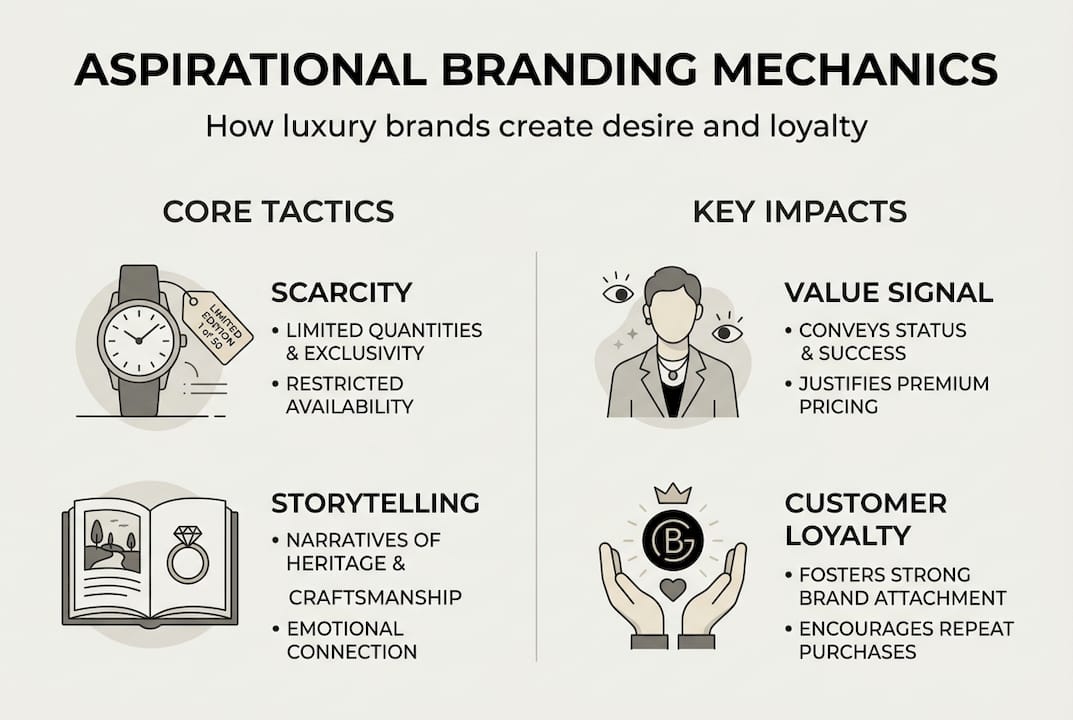
Scarcity signals value. When Hermès limits Birkin production, it isn’t just managing supply. It’s engineering desire. The waiting list becomes part of the product. Heritage storytelling connects the brand to a lineage of excellence, making every purchase feel like participation in something historic. Brand ambassadors function as living proof that the aspirational identity is real and achievable.
Here’s how key tactics map to business outcomes:
| Tactic | Psychological trigger | Business impact |
|---|---|---|
| Limited editions | Scarcity and urgency | Higher sell-through, price integrity |
| Heritage storytelling | Trust and identity | Long-term brand equity |
| Exclusive events | Belonging and status | Customer retention and advocacy |
| Iconic ambassadors | Social proof and aspiration | Reach and desirability |
Brands like Chanel, Tom Ford, and Bottega Veneta have built entire growth strategies around these mechanics. Storytelling in luxury isn’t a marketing add-on for these houses. It’s the core product. And experiential marketing examples from these brands show how immersive events convert passive admirers into loyal advocates.
Research confirms that multi-sensory experience design directly boosts brand love and perceived image quality. Engaging sight, sound, touch, and even scent in a retail or event environment creates memory traces that pure advertising cannot replicate.
Pro Tip: Don’t treat sensory design as decoration. Map every customer touchpoint and ask what emotion each one should trigger. Then design backward from that emotion.
The brands winning on aspiration right now are not the ones with the biggest advertising budgets. They’re the ones with the most coherent, emotionally resonant brand worlds. Every detail, from the multi-sensory experience research to the tone of a sales associate’s voice, contributes to or detracts from the aspiration you’re building.
Nuances and new dynamics: From perfect aspiration to authentic connection
With those tactics in play, it’s crucial to understand why pure aspiration isn’t always a win and how today’s luxury audience is shifting.
For decades, luxury aspiration meant perfection. Flawless campaigns. Unattainable lifestyles. Models who looked like they existed in a different dimension. That formula is breaking down, and the brands that don’t notice are paying for it in relevance.
Gen Z’s demand for authenticity is reshaping what aspiration means. Over-reliance on perfection can alienate this segment entirely. They don’t want to be shown a fantasy. They want to be shown a believable path. Aspiration still works, but it has to feel earned and real, not manufactured and distant.
This is where quiet luxury enters. Brands like Bottega Veneta have shifted the symbolism of status from loud logos to craft cues. The intrecciato weave communicates insider knowledge. You either recognize it or you don’t. That’s a more sophisticated form of aspiration, one that rewards attention rather than broadcasting status.
The new aspiration doesn’t shout. It whispers to the right people.
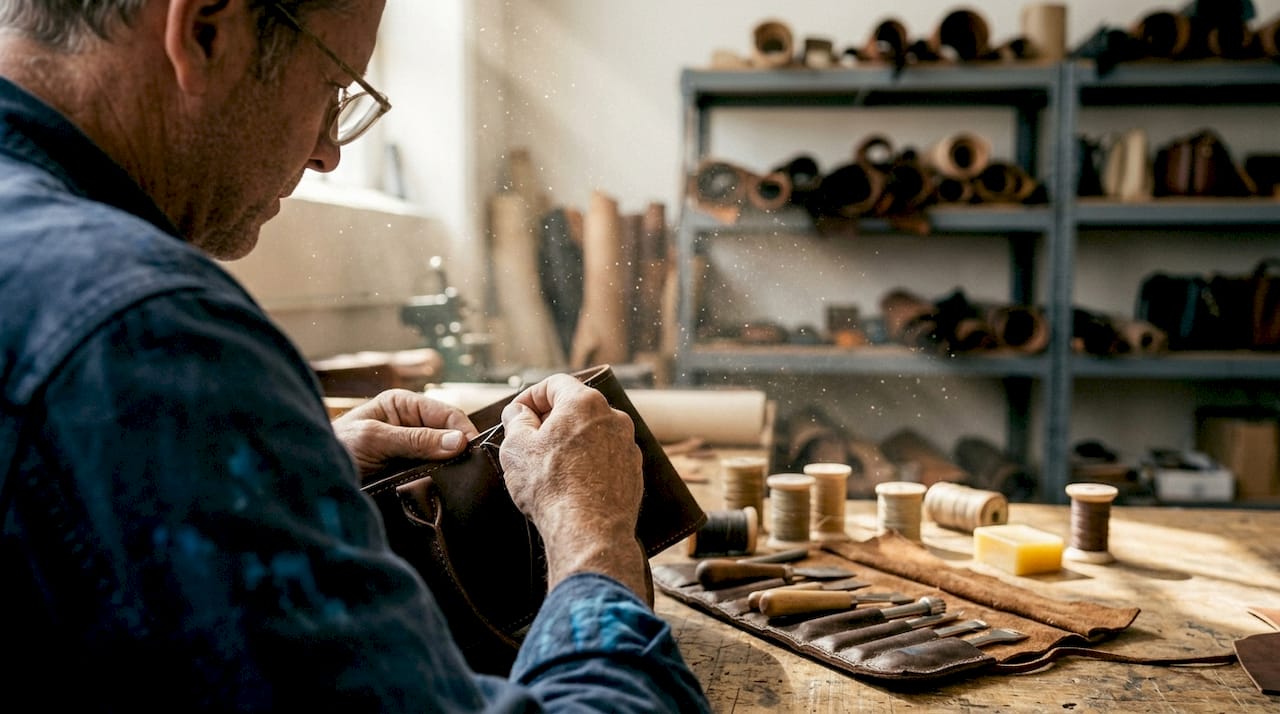
For luxury managers, the practical implication is this: your brand must balance manufactured exclusivity with visible craft and process. Showing how something is made, who makes it, and why it matters is now a competitive advantage, not a behind-the-scenes footnote.
Here’s a framework for recalibrating your aspiration strategy:
- Audit your current brand narrative for signs of over-idealization or disconnection from real consumer values.
- Identify two to three craft or process stories that can be told authentically across channels.
- Review your ambassador and influencer mix for narrative coherence with your brand identity.
- Test “attainable aspiration” messaging with a younger segment and measure emotional response.
- Adjust your visual language to include more texture, craft detail, and human presence.
Pro Tip: Process visibility is a powerful trust signal. A short film about your atelier doesn’t reduce mystique. It deepens it, because it shows mastery, not just outcome.
Best practices: Building aspirational branding for modern luxury
Given these new expectations, what are actionable steps for building strong, relevant aspirational brands today?
Strategic recommendations for modern luxury branding center on three pillars: tiered access, sensory experience design, and data-driven personalization. Together, these create an aspiration architecture that works at scale without losing the intimacy that makes luxury feel personal.
Tiered access is one of the most underused tools in luxury brand strategy. By creating layers of exclusivity, from public-facing campaigns to private client events to invitation-only previews, you give consumers a ladder to climb. Each tier feels aspirational relative to the one below it. This keeps desire alive at every level of the customer relationship.
Here’s a practical framework for tiered access:
| Tier | Audience | Experience | Goal |
|---|---|---|---|
| Open | General public | Campaigns, social content | Awareness and desire |
| Engaged | Loyal customers | Early access, newsletters | Retention and advocacy |
| Elite | VIP clients | Private events, bespoke services | Deep loyalty and referral |
Sensory experience design means treating every touchpoint as a branding opportunity. The sensory touchpoints in your boutiques, packaging, digital interfaces, and events should all reinforce the same emotional identity. Consistency here isn’t just aesthetic. It’s psychological.
Personalization is no longer a differentiator. It’s a baseline expectation. Co-creation strategies that invite high-value clients into the design or selection process create ownership and emotional investment that no campaign can manufacture.
Key practices to implement now:
- Use customer data to personalize communications without making them feel surveilled.
- Build effective brand storytelling frameworks that can flex across channels while maintaining a single emotional core.
- Align sustainability values with your aspiration narrative, because for modern luxury consumers, ethical production is part of the ideal self they’re buying into.
- Train your client-facing teams to embody the brand’s aspirational identity, not just recite product features.
Pro Tip: Narrative coherence is your most scalable asset. Document your brand’s emotional core and use it as a filter for every decision, from campaign concepts to retail design to social media tone.
A fresh lens: Why narrative coherence is the next luxury battleground
Having explored actionable strategy, let’s zoom out to a broader truth that many overlook and that separates the enduring icons from mere trendsetters.
Most conversations about aspirational branding focus on surface mechanics: the campaign, the ambassador, the limited drop. These matter. But the brands that sustain desire across decades are doing something deeper. They’re building narrative systems, not just narratives.
The risk of narrative fragmentation is real and growing. High content volume, especially in the social media era, can dilute a brand’s story until it says nothing clearly. Louis Vuitton faces this pressure constantly. Hermès and Miu Miu, by contrast, have maintained tighter narrative control, and their brand equity reflects it.
The conventional wisdom says: create more content, reach more people, stay relevant. The harder truth is that relevance without coherence is noise. Every piece of content, every collaboration, every campaign should be traceable back to the same emotional core. If it isn’t, you’re spending resources to confuse your audience.
The brands that will win the next decade of luxury are the ones that treat narrative coherence insights as a strategic priority, not a creative preference. Aspiration without a coherent story is just advertising. Aspiration with a coherent story is a brand.
Take your luxury brand’s aspiration further
For those ready to move beyond theory and achieve standout results, advanced resources are within reach.
Building aspirational branding that actually converts desire into loyalty requires more than frameworks. It requires a deep understanding of consumer psychology, precise execution across every touchpoint, and the kind of strategic clarity that only comes from experience in the luxury sector. If you’re looking to sharpen your approach, explore luxury brand growth tactics that go beyond surface-level strategy.
Corrado Manenti’s consulting work is built specifically for fashion and luxury brands that want to close the gap between where they are and where their brand could be. From psychology of luxury branding to luxury buyer behavior insights, the resources and bespoke services available are designed to help you build aspiration that lasts.
Frequently asked questions
What is the main goal of aspirational branding in luxury fashion?
The main goal is to sell an emotional identity and vision of the ideal self, not just products, creating deep desire and long-term loyalty that price alone cannot build.
How does aspirational branding drive premium pricing?
It justifies higher prices by attaching emotional value and exclusivity to the brand, so customers pay for status and identity as much as for the physical product itself.
Why is authenticity increasingly important in aspirational branding?
Consumers, especially Gen Z, now demand believable aspiration over perfection, which means brands must blend status signals with relatable, process-driven narratives.
What are some examples of successful aspirational branding?
Brands like Chanel, Bottega Veneta, and Hermès use scarcity and heritage storytelling to build desire that outlasts any single product or season.
How can luxury brands avoid narrative fragmentation?
Maintain consistent storytelling across all channels and resist the pressure to prioritize content volume over narrative coherence, which is the real driver of long-term brand equity.