


Many luxury fashion marketing directors wonder why certain brands evoke unwavering loyalty while others struggle to stand out in crowded European markets. The answer lies in understanding that brand equity is a complex psychological construct shaped by emotional connections, perceived quality, and cultural associations, not just financial measures. Exploring the genuine roots of brand equity and challenging outdated assumptions reveals new opportunities to build prestige, loyalty, and strategic advantage for forward-thinking luxury brands.
Table of Contents
- Defining Brand Equity And Common Myths
- Types Of Brand Equity In Luxury Fashion
- Key Drivers And Elements Of Brand Equity
- Measuring Brand Equity: Methods And Metrics
- Risks, Missteps, And Competitive Implications
Key Takeaways
| Point | Details |
|---|---|
| Understanding Brand Equity | It encompasses psychological connections, perceived quality, and brand loyalty, not just financial metrics. |
| Luxury vs. Mass-Market Brands | Luxury brands focus on emotional connections and heritage, while mass-market brands prioritize practical value and pricing. |
| Dynamic Measurement Approaches | Measuring brand equity requires balancing quantitative metrics with qualitative insights to reflect its complex nature. |
| Risks of Mismanagement | Poor brand equity management can lead to negative consumer perception and long-term reputation damage. |
Defining Brand Equity and Common Myths
Brand equity represents far more than a simple corporate asset or financial valuation. Decades of scholarly research reveal it as a complex psychological construct encompassing consumer perceptions, emotional connections, and strategic value. Understanding brand equity requires dismantling several persistent misconceptions.
At its core, brand equity emerges from multiple interconnected dimensions that extend well beyond traditional marketing metrics. Contemporary brand research highlights three fundamental components:
- Emotional Association: The psychological and cultural connections consumers form with a brand
- Perceived Quality: Consumers’ subjective evaluation of a brand’s performance and reliability
- Brand Loyalty: The degree of consistent consumer attachment and repeat engagement
Common myths about brand equity often oversimplify its intricate nature. Many business leaders mistakenly believe brand equity is:
- Simply a financial metric
- Solely determined by marketing spending
- Static and unchangeable
- Limited to product characteristics
In reality, brand equity is a dynamic, multi-dimensional construct continuously shaped by consumer experiences, cultural trends, and strategic brand management. It represents the cumulative psychological and commercial value generated through consistent positive brand interactions.

Pro tip: Regularly audit your brand’s emotional and psychological positioning to understand and enhance your brand equity beyond traditional performance indicators.
Types of Brand Equity in Luxury Fashion
In the intricate world of luxury fashion, brand equity transcends traditional marketing concepts. Contemporary research on brand experiences reveals a nuanced framework of brand equity types that go far beyond simple financial valuation.
Luxury fashion brands typically demonstrate four core types of brand equity:
- Brand Awareness: The recognition and familiarity consumers have with the brand’s identity and aesthetic
- Perceived Quality: The subjective evaluation of the brand’s performance, craftsmanship, and prestige
- Brand Associations: The psychological and emotional connections consumers form with the brand’s image
- Brand Loyalty: The depth of consumer commitment and repeat engagement with the brand
Consumer-based brand equity models highlight how these dimensions interact uniquely in luxury markets. Unlike mass-market brands, luxury fashion brands build equity through:
- Storytelling and heritage narratives
- Exclusive craftsmanship
- Emotional resonance
- Cultural significance
Each type of brand equity contributes to a complex psychological ecosystem that determines a luxury brand’s market positioning and consumer perception. The interplay between these components creates a holistic brand value that extends far beyond tangible product attributes.
The following table highlights how brand equity differs between luxury fashion brands and mass-market brands.
| Dimension | Luxury Fashion Brands | Mass-Market Brands |
|---|---|---|
| Cultural Influence | High emphasis on heritage | Limited cultural storytelling |
| Consumer Loyalty | Deep, emotional connection | Practical, price-focused |
| Product Craftsmanship | Exquisite and exclusive | Standardized, scalable |
| Market Positioning | Prestige and exclusivity | Value and accessibility |
Pro tip: Continuously track and nurture each dimension of brand equity to create a comprehensive and compelling luxury brand narrative.
Key Drivers and Elements of Brand Equity
Systematic literature reviews reveal brand equity as a multifaceted construct driven by complex psychological and strategic elements. Understanding these key drivers is critical for businesses seeking to build sustainable competitive advantages in increasingly sophisticated markets.
The core elements of brand equity can be categorized into several interconnected dimensions:
- Brand Identity: Visual and verbal representations that distinguish the brand
- Emotional Connection: Psychological and personal bonds consumers form with the brand
- Perceived Value: Consumers’ subjective assessment of the brand’s worth relative to alternatives
- Brand Performance: The actual delivery of brand promises and product quality
Brand elements research highlights additional critical components that shape brand equity:
- Authenticity of brand narrative
- Consistency in brand communication
- Unique brand positioning
- Emotional resonance with target audiences
These drivers work synergistically to create a comprehensive brand ecosystem. The most successful brands understand that brand equity is not a static concept, but a dynamic interaction between organizational strategy and consumer perception.
Brand equity represents the cumulative psychological and commercial value generated through consistent and meaningful brand interactions.
Pro tip: Conduct regular brand equity audits to identify and strengthen the unique psychological touchpoints that differentiate your brand in the marketplace.
Measuring Brand Equity: Methods and Metrics
Systematic review of brand equity models reveals the complexity of developing comprehensive measurement approaches. Traditional metrics often fall short of capturing the multidimensional nature of brand value, requiring sophisticated and integrated evaluation techniques.
Brand equity measurement typically involves multiple methodological approaches:
- Quantitative Metrics: Numerical indicators like market share, price premium, and customer lifetime value
- Qualitative Assessment: Consumer perception surveys, emotional connection analysis
- Financial Valuation: Revenue attribution, brand contribution to overall business performance
- Digital Engagement: Online interaction metrics, social media sentiment analysis
Digital era brand measurement research suggests evolving methodologies that incorporate emerging digital interaction patterns. Modern brand equity measurement now requires:
- Comprehensive data integration
- Real-time sentiment tracking
- Cross-platform performance analysis
- Adaptive measurement frameworks
Brand equity measurement is not a static process but a dynamic, continuously evolving strategic assessment that reflects changing market interactions.
Pro tip: Develop a holistic measurement framework that balances quantitative metrics with nuanced qualitative insights to capture the true complexity of brand value.
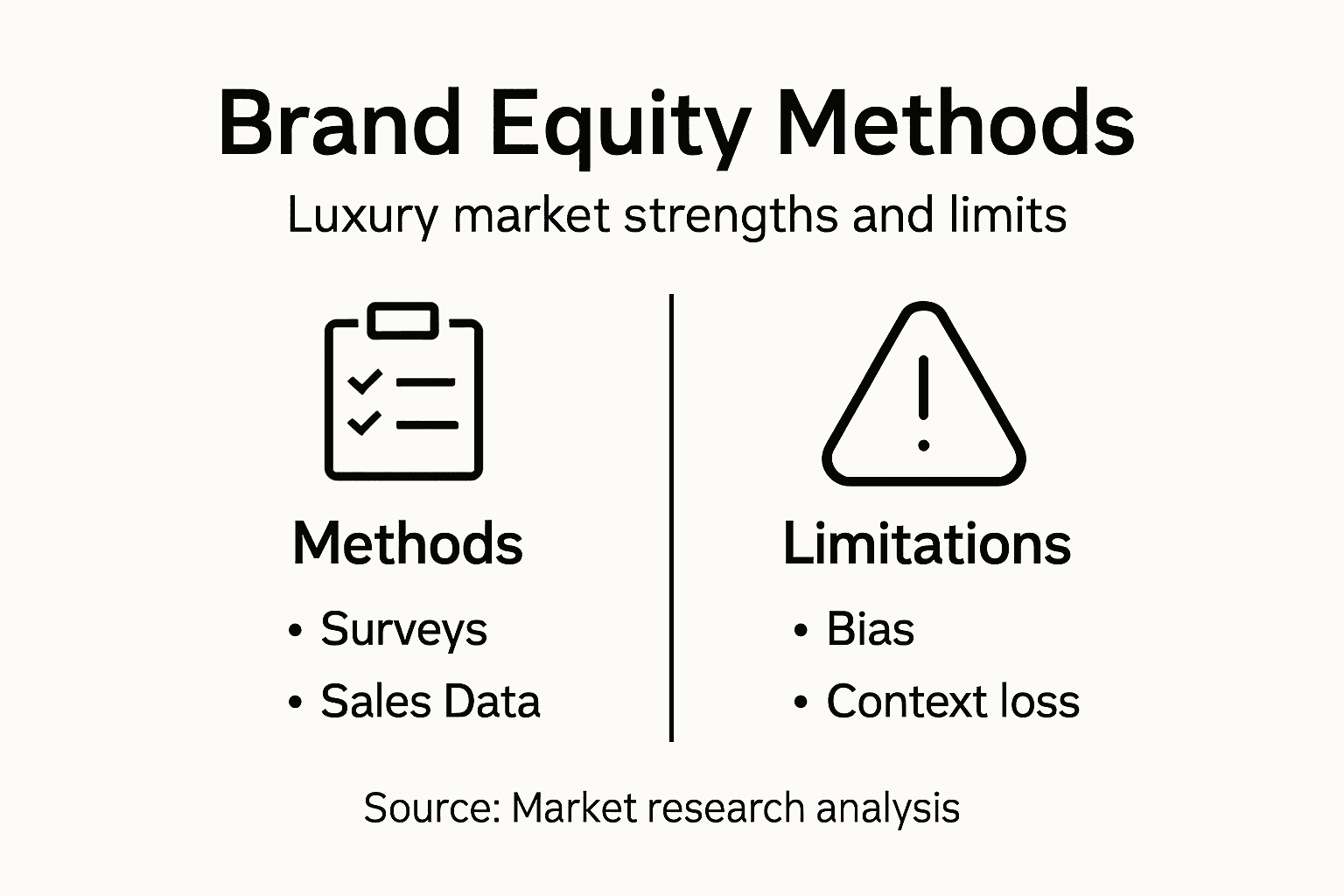
This table summarizes key methods for measuring brand equity, along with their strengths and limitations.
| Method | Strengths | Limitations |
|---|---|---|
| Quantitative Metrics | Clear financial impact | May miss emotional factors |
| Qualitative Assessment | Captures consumer sentiment | Subjective, harder to scale |
| Digital Engagement | Real-time insights, trends | Can be noisy and volatile |
| Financial Valuation | Supports strategic decisions | May overlook non-monetary value |
Risks, Missteps, and Competitive Implications
Business strategy research reveals critical vulnerabilities that can emerge when organizations mismanage their brand equity. Understanding these potential risks is fundamental to maintaining competitive positioning and preventing long-term brand erosion.
Potential risks and strategic missteps in brand equity management include:
- Measurement Gaps: Incomplete or superficial brand equity assessment
- Messaging Inconsistency: Misaligned communication across different platforms
- Cultural Insensitivity: Failure to recognize diverse consumer perspectives
- Strategic Rigidity: Inability to adapt to changing market dynamics
Brand transgression research highlights the severe consequences of strategic missteps:
- Negative consumer perception
- Reduced brand loyalty
- Potential market share decline
- Long-term reputation damage
Brand equity is a delicate ecosystem where strategic missteps can rapidly undermine years of carefully cultivated consumer trust.
Pro tip: Develop a robust, adaptive brand monitoring system that proactively identifies potential risks and allows for rapid strategic recalibration.
Unlock the Full Potential of Your Luxury Brand’s Equity
Building and sustaining brand equity in luxury marketing demands more than surface-level strategies. This article highlights the importance of emotional connection, perceived quality, and consistent storytelling to create lasting consumer loyalty. If you are facing challenges like measurement gaps, inconsistent messaging, or a lack of emotional resonance with your audience, expert guidance is crucial to transform these vulnerabilities into strengths.
Explore how Corrado Manenti’s tailored approach to Personal Branding integrates psychology and marketing to craft compelling narratives that speak directly to consumers’ hearts. His focus on detail and innovation ensures your brand stands out in a crowded luxury marketplace.
Discover personalized strategies that elevate your brand’s emotional and psychological value now. Visit Corrado Manenti to start building resilient brand equity grounded in human behavior insights. For those interested in the intersection of style and influence, the Mode VS Influencer category offers additional inspiration and tactics. Take action today to secure your brand’s premium positioning and long-term success.
Frequently Asked Questions
What is brand equity and why is it important in luxury marketing?
Brand equity refers to the value a brand adds to a product or service based on consumer perceptions and experiences. In luxury marketing, brand equity is crucial as it influences consumer choice, loyalty, and the perceived value of luxury products beyond their functional attributes.
How do luxury fashion brands build brand equity?
Luxury fashion brands build brand equity through storytelling, emphasizing heritage, exclusive craftsmanship, emotional resonance, and cultural significance. These elements create a compelling brand narrative that appeals to consumers’ psychological and emotional needs.
What are the key components of brand equity in luxury markets?
The key components of brand equity in luxury markets are brand awareness, perceived quality, brand associations, and brand loyalty. Each of these elements contributes to how consumers perceive and engage with luxury brands.
How can businesses measure brand equity effectively?
Businesses can measure brand equity through a combination of quantitative metrics (like market share and customer lifetime value), qualitative assessments (such as consumer surveys), financial valuation, and digital engagement metrics. A comprehensive measurement approach ensures an accurate understanding of brand value.
Recommended
- Blog – Corrado Manenti
- What Is Luxury Brand Equity? Complete Overview – Corrado Manenti
- Understanding Brand Differentiation in Luxury Markets – Corrado Manenti
- 7 Insights into Luxury Consumer Behavior Lists – Corrado Manenti
- Lus Hair Care: Transforming Hair Through AI Insights | MyHair
- Why Luxury Haircare Products Elevate Your Style – Joel C Ma Hair Studio