


Heritage remains one of luxury branding’s most underestimated assets. While many marketers chase fleeting trends, brands leveraging heritage see 15-25% price premiums and dramatically increased consumer engagement. This article reveals how heritage functions as a premium signal, the measurable impact on pricing and loyalty, and actionable strategies to leverage your brand’s story for enhanced prestige in 2026. You’ll discover evidence-based frameworks that transform historical narratives into competitive advantages, moving beyond superficial nostalgia to create authentic connections that justify premium positioning and drive sustained growth.
Table of Contents
- Understanding Heritage As A Premium Signal In Luxury Branding
- Quantifying Heritage’s Impact On Price Premiums And Consumer Engagement
- Contrasting Heritage-Heavy And Minimalist Luxury Branding Approaches
- Applying Heritage Strategically For Luxury Brand Growth And Loyalty
- Enhance Your Luxury Brand With Expert Heritage Strategies
- Frequently Asked Questions About Heritage In Luxury Branding
Key takeaways
| Point | Details |
|---|---|
| Heritage signals quality | Authentic brand history acts as a credible indicator of consistency, craftsmanship, and premium value in luxury markets. |
| Price premiums reach 25% | Strategic heritage integration drives measurable pricing power and justifies premium positioning versus competitors without historical narratives. |
| Consumer engagement increases | Heritage storytelling boosts brand interest by 74% as luxury consumers increasingly seek authentic origin stories and craftsmanship details. |
| Multiple positioning paths exist | Both heritage-heavy and minimalist luxury brands command premiums through different psychological mechanisms and brand equity dimensions. |
| Strategic application matters | Effective heritage leverage requires authentic integration aligned with brand identity rather than fabricated historical claims. |
Understanding heritage as a premium signal in luxury branding
Heritage functions as a powerful psychological mechanism in luxury markets, operating through signaling theory to communicate brand value. In contexts where consumers cannot easily verify quality before purchase, heritage enhances perceived brand quality by serving as a credible signal of consistency, clarity, and authenticity. This theoretical framework explains why established luxury houses command premiums that newer entrants struggle to justify.
The signaling power of heritage operates across multiple dimensions. First, it demonstrates temporal consistency, showing that a brand has maintained quality standards across decades or centuries. Second, heritage provides narrative clarity, offering consumers a coherent story about brand origins and values. Third, it signals authenticity in an era where luxury markets face increasing counterfeiting and brand dilution. These combined signals create psychological anchors that justify higher willingness to pay.
Consider how heritage differentiates luxury brands from premium alternatives:
- Temporal proof of craftsmanship excellence spanning generations
- Documented innovation history demonstrating category leadership
- Cultural significance embedded in brand narratives and archives
- Artisanal techniques preserved and refined over extended periods
The psychological impact extends beyond rational evaluation. Heritage taps into emotional drivers like nostalgia, aspiration, and the human desire for connection to something enduring. When you purchase a heritage luxury brand, you’re not simply buying a product but accessing a legacy. This emotional dimension creates brand attachment that transcends functional benefits and resists price sensitivity.
“Heritage acts as a quality guarantee that newer brands cannot replicate, regardless of their actual product quality, because it represents verified consistency across time.”
For marketing professionals in luxury sectors, understanding this signaling mechanism is essential. Storytelling in luxury becomes more than creative expression. It transforms into a strategic tool for activating heritage signals that influence purchase decisions and justify premium pricing structures in competitive markets.
Quantifying heritage’s impact on price premiums and consumer engagement
The business case for heritage leverage extends beyond theory into measurable market performance. Recent data reveals that brands leveraging heritage see 15-25% price premiums, with heritage campaigns generating a 7% lift in brand engagement metrics. Perhaps most striking, 74% of luxury consumers report increased interest in brand origin stories, signaling a fundamental shift in purchase decision factors.
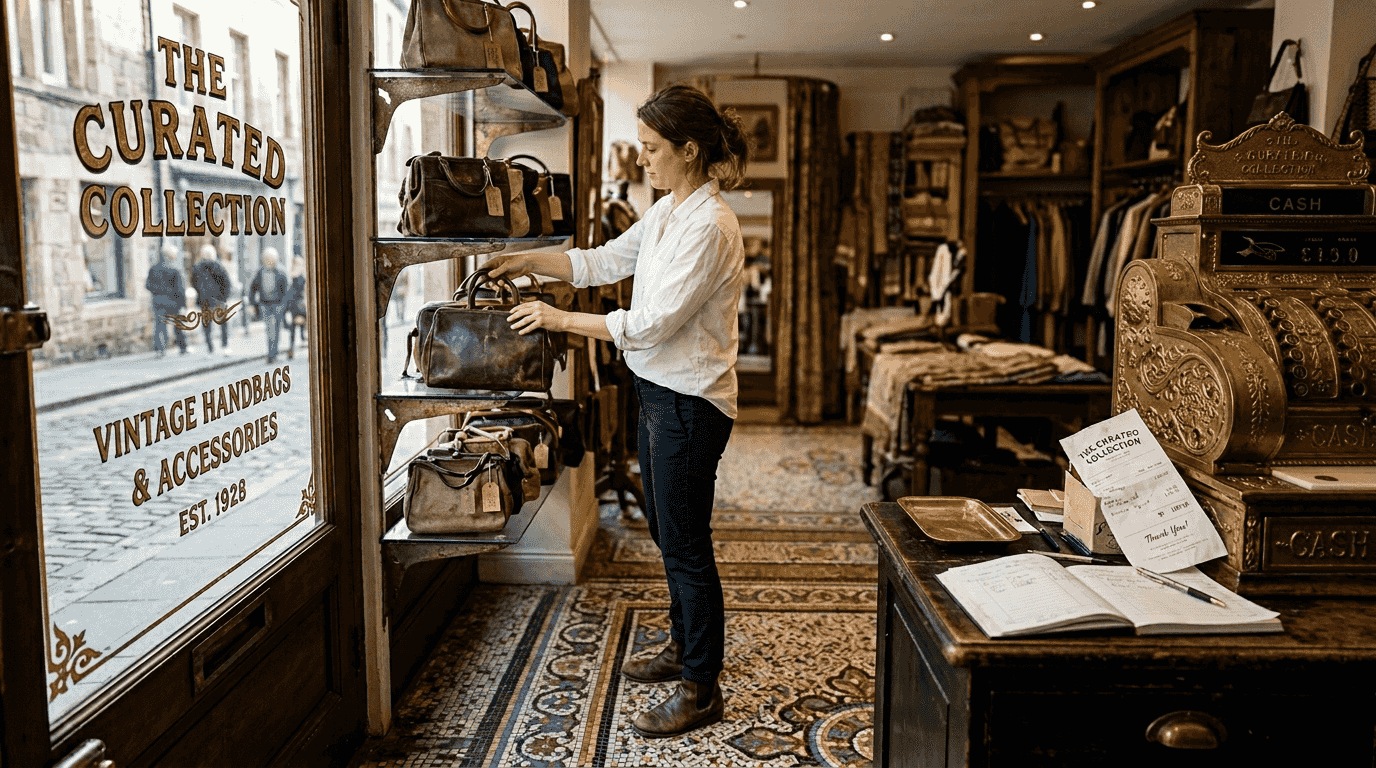
These numbers translate into concrete competitive advantages. A luxury handbag from a heritage house can command $3,000 to $5,000, while comparable quality from a newer brand struggles to exceed $1,500. The differential reflects heritage’s ability to justify premium positioning through perceived value rather than manufacturing cost alone.
| Metric | Heritage Impact | Market Context |
|---|---|---|
| Price premium range | 15-25% above comparable quality | Verified across accessories, apparel, watches |
| Consumer origin interest | 74% increased engagement | Driven by authenticity seeking behaviors |
| Campaign engagement lift | 7% above baseline | Measured across digital and traditional channels |
| Resale value retention | 30-40% higher | Heritage pieces maintain value versus contemporary |
The resale market provides particularly compelling evidence. Hermès bags from the 1980s and 1990s often sell for multiples of their original retail price, while contemporary luxury bags from brands lacking heritage depreciate immediately. This value retention reflects consumer recognition that heritage represents enduring worth rather than temporary fashion.
Consumer behavior research confirms this pattern. Luxury buyers increasingly seek brands with documented histories, viewing heritage as insurance against regrettable purchases. When spending significant sums, consumers want assurance that their investment reflects genuine quality and cultural significance rather than marketing hype.
The engagement lift from heritage campaigns deserves special attention. When brands showcase archival designs, founder stories, or craftsmanship traditions, consumer interaction rates spike across channels. This response indicates that heritage content satisfies deeper psychological needs than product features alone.
Pro Tip: Integrate specific heritage elements like founding year, original workshop locations, or signature techniques into product descriptions and campaign narratives. Authenticity matters more than elaborate storytelling. Simple, verifiable historical facts often outperform creative embellishments.
For premium branding examples, examine how established houses weave heritage into every customer touchpoint, from packaging to retail environments to digital experiences. This consistent reinforcement transforms heritage from historical footnote into active purchase driver.
Contrasting heritage-heavy and minimalist luxury branding approaches
Luxury markets accommodate multiple paths to premium positioning, with heritage representing just one strategic option. Silent or minimalist luxury brands demonstrate that prestige can be commanded without heavy heritage emphasis, often achieving higher price points through subtlety and exclusivity rather than historical narratives. Understanding these contrasting approaches clarifies when heritage leverage makes strategic sense.
Minimalist luxury brands like The Row or Bottega Veneta (in recent iterations) prioritize understated design and material quality over brand storytelling. These brands command premiums through different psychological mechanisms: insider knowledge, refined taste signaling, and rejection of logo-driven consumption. Their customers seek luxury that announces itself through quality rather than heritage narratives.
| Brand Approach | Average Handbag Price | Heritage Emphasis | Primary Value Signal |
|---|---|---|---|
| Heritage luxury (Hermès, Chanel) | $4,500-$8,000 | High | Historical continuity, craftsmanship legacy |
| Minimalist luxury (The Row, Bottega Veneta) | $3,000-$6,000 | Low to none | Material excellence, subtle sophistication |
| Contemporary luxury (newer houses) | $1,500-$3,000 | Emerging | Design innovation, cultural relevance |
The comparison reveals that multiple brand equity dimensions influence premium pricing beyond heritage alone. Perceived value stems from various sources:
- Material quality and construction excellence
- Design innovation and aesthetic leadership
- Brand reputation built through editorial coverage and celebrity endorsement
- Exclusivity created through limited production or distribution
- Cultural cachet from association with taste-making communities
Heritage-heavy brands leverage temporal depth as their primary differentiator, while minimalist brands emphasize refined taste and material perfection. Both approaches work, but they appeal to different consumer psychologies and require distinct marketing strategies.
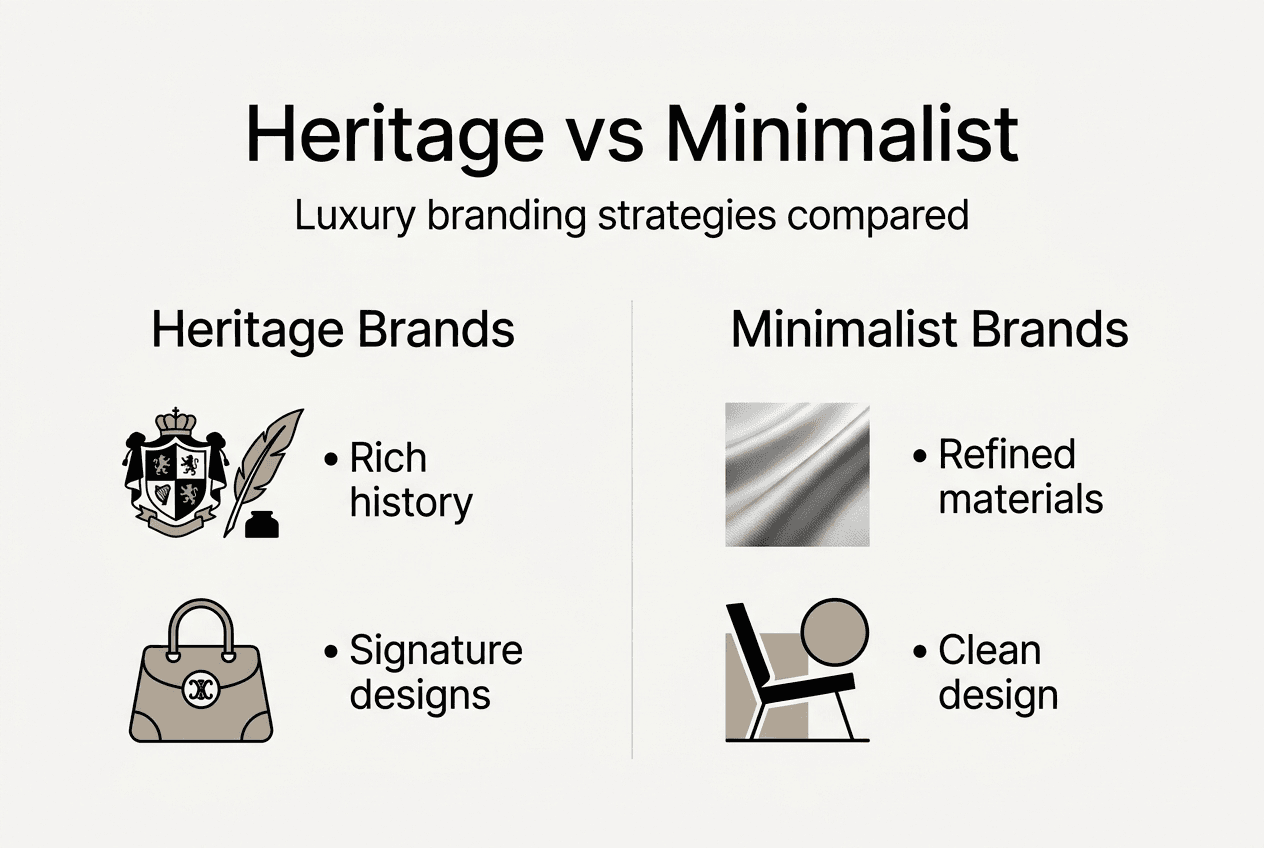
The choice between heritage emphasis and minimalist positioning depends on your brand’s authentic story. Fabricating heritage where none exists damages credibility, while ignoring genuine historical assets wastes competitive advantage. Successful premium positioning for luxury brands requires honest assessment of available brand equity sources.
Pro Tip: Conduct consumer research to understand whether your target audience values heritage narratives or prefers understated luxury signals. Generation and cultural background significantly influence these preferences, with some segments actively seeking heritage while others view it as outdated.
The data shows that heritage remains powerful but not universally necessary. Your strategic decision should reflect authentic brand assets rather than market trends alone. Brands with genuine heritage should leverage it actively, while newer brands can build prestige through alternative equity dimensions until they accumulate their own historical narrative.
Applying heritage strategically for luxury brand growth and loyalty
Transforming heritage from historical fact into competitive advantage requires deliberate strategic application. The most successful luxury brands don’t simply mention their founding date but weave heritage throughout their brand experience, creating coherent narratives that justify premium positioning and build lasting consumer loyalty. In 2026’s luxury market, this strategic integration separates heritage-rich brands that command premiums from those whose history remains dormant.
Brand equity dimensions like reputation and perceived value significantly influence luxury purchase decisions and justify premium pricing. Heritage activates these dimensions when properly integrated into brand strategy. The process requires moving beyond surface-level historical references to create meaningful connections between past and present.
Strategic heritage application follows these essential steps:
- Audit your authentic heritage assets, including founding stories, innovation milestones, craftsmanship techniques, and cultural contributions that differentiate your brand from competitors.
- Identify heritage elements that resonate with current consumer values like sustainability, craftsmanship, authenticity, and cultural significance rather than forcing irrelevant historical facts.
- Develop storytelling frameworks that connect heritage to contemporary brand benefits, showing how historical expertise translates into current product excellence and customer value.
- Integrate heritage consistently across touchpoints including product design, packaging, retail environments, digital experiences, and marketing communications to reinforce premium positioning.
- Train customer-facing teams to articulate heritage narratives authentically, enabling them to answer questions about brand history and connect products to broader brand stories.
- Measure heritage impact through consumer perception studies, price premium analysis, and engagement metrics to refine storytelling approaches and maximize return on heritage investment.
The storytelling component deserves particular attention. Effective heritage narratives don’t recite chronological facts but reveal how historical expertise solves contemporary consumer needs. When Hermès discusses saddle-making origins, the story emphasizes leather expertise and construction quality rather than equestrian nostalgia. This approach makes heritage relevant rather than antiquated.
Brand equity building through heritage requires patience and consistency. Unlike promotional campaigns that generate immediate response, heritage positioning accumulates value over time as consumers repeatedly encounter coherent narratives that reinforce brand distinctiveness. This long-term perspective aligns with luxury brand management principles but challenges marketers accustomed to quarterly metrics.
Data-driven analysis remains essential despite heritage’s emotional dimensions. Track how heritage content performs versus other messaging, monitor consumer sentiment toward brand history, and analyze whether heritage emphasis correlates with purchase intent and price acceptance. These insights enable optimization while maintaining authentic brand expression.
For practical implementation, explore fashion brand growth tactics for luxury markets that integrate heritage with contemporary marketing approaches. Combining historical authenticity with digital innovation creates powerful brand experiences that resonate across consumer segments.
Understanding how to analyze buyer behavior in luxury brands reveals which heritage elements drive purchase decisions versus those that generate interest without conversion. This distinction helps prioritize heritage investments for maximum business impact rather than pursuing historical accuracy as an end itself.
Enhance your luxury brand with expert heritage strategies
Leveraging heritage effectively requires specialized expertise in luxury brand psychology and strategic positioning. Corrado Manenti combines academic psychology background with practical luxury marketing experience to help brands transform historical assets into competitive advantages. His approach integrates consumer behavior analysis with heritage storytelling to create authentic narratives that justify premium pricing and build lasting loyalty.
Explore proven fashion brand growth tactics for luxury markets that combine heritage leverage with contemporary engagement strategies. Discover how to analyze buyer behavior in luxury brands to identify which heritage elements resonate most powerfully with your target audience. Access cutting-edge insights on psychology in luxury branding engagement for 2026 that reveal how heritage narratives activate emotional drivers and purchase intent in evolving luxury markets.
Frequently asked questions about heritage in luxury branding
What is the role of heritage in luxury brand pricing?
Heritage enables luxury brands to command 15-25% price premiums by signaling quality consistency, craftsmanship authenticity, and cultural significance that newer brands cannot replicate. This pricing power stems from consumer perception that heritage represents verified excellence across time, reducing purchase risk and justifying premium investment.
How does heritage storytelling increase consumer engagement?
Heritage narratives generate 74% increased consumer interest in brand origins and produce 7% engagement lifts in marketing campaigns by satisfying psychological needs for authenticity and connection. Consumers increasingly seek brands with documented histories as insurance against regrettable luxury purchases, making heritage content particularly compelling in decision processes.
Can luxury brands succeed without emphasizing heritage?
Yes, minimalist luxury brands demonstrate that premium positioning works through alternative signals like material excellence, subtle design, and exclusivity rather than historical narratives. The strategic choice depends on authentic brand assets and target audience preferences, with some consumer segments valuing understated sophistication over heritage storytelling.
How should brands integrate heritage authentically?
Authentic heritage integration requires auditing genuine historical assets, connecting past expertise to current product benefits, and consistently reinforcing narratives across all customer touchpoints. Fabricated heritage damages credibility, so brands should emphasize verifiable historical facts and demonstrate how traditional techniques translate into contemporary quality and value.
What metrics indicate successful heritage leverage?
Key performance indicators include price premium achievement versus comparable competitors, consumer perception scores for brand authenticity and quality, engagement rates on heritage content, and resale value retention for heritage products. Track these metrics alongside traditional marketing KPIs to assess whether heritage investment generates measurable business returns and justifies continued emphasis in brand strategy.