

TL;DR:
- Sensorial branding engages all five senses to create immersive experiences that boost emotional loyalty in luxury brands. Its strategic implementation, focused on subtlety and consistency, significantly enhances brand recall and long-term value. Successful brands treat it as a long-term investment aligned with their core values, ensuring coherence and emotional impact.
Most luxury brands have spent decades perfecting their visual identity, and yet multi-sensory experiences increase brand recall and impact by up to 70% compared to single-sense approaches. That gap between what brands invest in and what actually moves consumers is where the real opportunity lives. Sensorial branding, the practice of engaging all five senses to build immersive brand experiences, is no longer a novelty reserved for retail installations or art-driven campaigns. It is a strategic imperative for luxury fashion and lifestyle brands that want to earn lasting emotional loyalty, not just momentary admiration.
Table of Contents
- What is sensorial branding? Definitions and key components
- How sensorial branding works: Mechanics and strategy
- Sensorial branding in action: Success stories and empirical impact
- The psychology behind sensorial branding: What makes it work
- Risks, nuances, and how to future-proof your approach
- Perspective: Why luxury sensorial branding is about subtlety, not sensory overload
- How we help luxury brands elevate sensorial strategy
- Frequently asked questions
Key Takeaways
| Point | Details |
|---|---|
| Sensorial branding basics | Engaging multiple senses creates immersive and lasting connections with luxury consumers. |
| Key mechanics | Audit, prioritize, and consistently integrate 1-2 senses most congruent with your brand. |
| Proven success | Brands like Hermès and Singapore Airlines drive recall and loyalty through multi-sensory strategies. |
| Psychology matters | The most effective brands align sensory cues with emotional triggers and avoid hedonic overload. |
| Measure and refine | Future-proof your approach by tracking emotion-based metrics, iterating tactics, and focusing on subtlety. |
What is sensorial branding? Definitions and key components
Having set the stage about why visual branding is no longer enough, let’s clarify exactly what sensorial branding means for luxury and lifestyle brands.
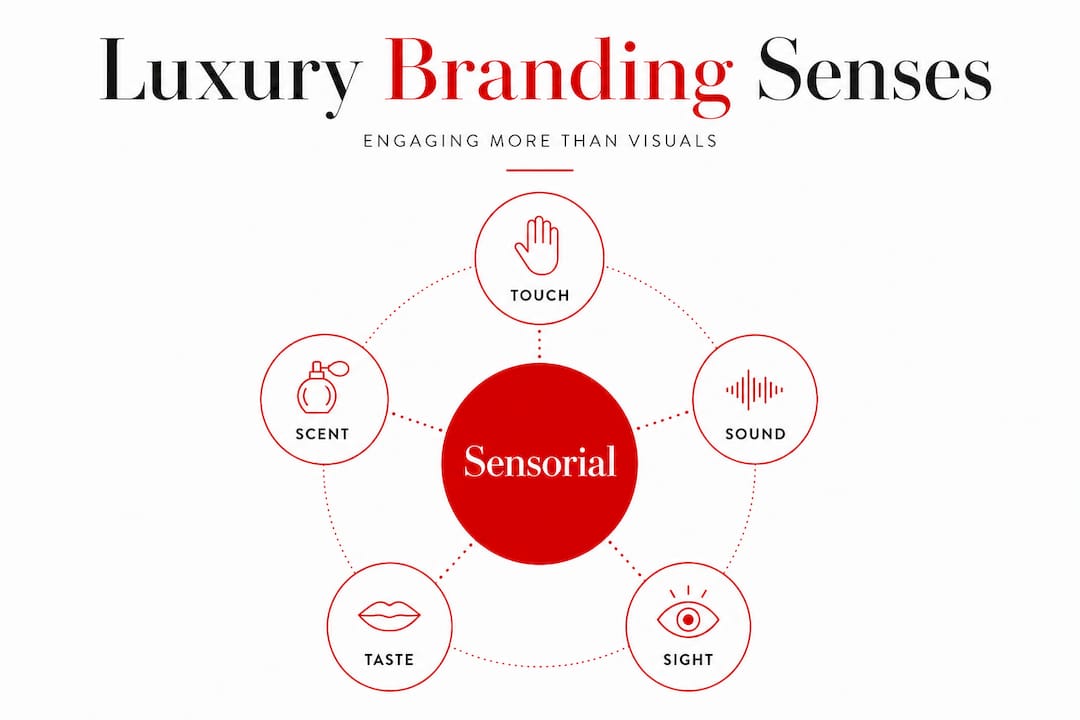
Sensorial branding, also known as sensory branding, is a marketing strategy that engages multiple human senses including sight, sound, touch, smell, and taste to create immersive, emotionally resonant brand experiences that go well beyond visual identity alone. The terms “sensorial” and “sensory” branding are fully interchangeable. You will find both used in academic literature and agency work. What matters is the underlying philosophy: that the human brain assigns meaning to brands through a mosaic of perceptual inputs, not just what the eye sees.
For luxury brands specifically, this distinction is critical. Your consumer is already aesthetically sophisticated. A striking logo or a beautifully shot campaign is expected, not differentiating. The brands that command genuine loyalty are the ones that make a person feel something the moment they walk into a store, open a package, or run their fingers across fabric.
Here is what sensorial branding actually encompasses across the five touchpoints:
- Sight: Beyond logos and color palettes, this includes lighting design, spatial layout, and visual rhythm in store environments and digital spaces
- Sound: Signature music genres, curated playlists, sonic logos, and even the sound packaging makes when opened
- Touch: Fabric weight, surface texture, the resistance of a door handle, the grain of a shopping bag, and the temperature of a fitting room
- Smell: Signature ambient scents, fragrance infused into packaging or tissue paper, and the olfactory atmosphere of retail spaces
- Taste: Offered refreshments in flagship stores, curated flavors at brand events, and even food partnerships that reinforce brand character
“A brand is no longer what we tell the consumer it is. It is what consumers experience it to be across every sense they bring to the encounter.”
The psychological objective of luxury sensorial branding is to build what researchers call emotionally resonant memory traces. When a consumer smells a specific scent and immediately recalls a brand feeling, the brand has achieved something visual identity simply cannot replicate on its own.
How sensorial branding works: Mechanics and strategy
Now that you understand what sensorial branding is, let’s break down how to actually implement it with a proven framework.
The operational process is not as abstract as many brand managers assume. According to a structured sensory branding approach, effective implementation involves auditing current sensory touchpoints, defining core sensory adjectives, prioritizing one to two senses aligned with brand essence, creating specific assets like sonic logos or signature scents, and integrating them consistently across all consumer touchpoints. Let’s walk through each step in practice.
-
Audit your current sensory environment. Walk through every physical and digital touchpoint your consumer encounters. What does your flagship store smell like right now? What sound plays in the background? Is it intentional or accidental? Most brands are surprised to discover their sensory environment has evolved by default, not by design.
-
Define your core sensory adjectives. These are the words that should describe how every sense feels in relation to your brand. For a bespoke tailoring house, adjectives might be “weighted,” “warm,” “precise,” and “hushed.” For a contemporary lifestyle brand targeting younger luxury consumers, they might be “crisp,” “clean,” “luminous,” and “energized.” These adjectives become your creative brief for every sensory asset.
-
Prioritize one to two senses for maximum impact. Trying to engineer all five senses simultaneously leads to inconsistency and diluted impressions. A bespoke fashion atelier should prioritize touch, because the physical quality of garments is their core proof point. A hospitality brand should lead with scent, because ambient fragrance is the fastest trigger for emotional memory.
-
Create dedicated sensory assets. This means commissioning a signature scent with a professional perfumer, working with a music curator to develop a sonic identity, or partnering with textile consultants to specify the exact tactile properties of every brand surface.
-
Integrate consistently across every touchpoint. The sonic identity should inform your social media video content. The signature scent should be present in packaging, retail, and VIP gifting. Consistency is what transforms a sensory tactic into a sensory brand.
| Sense | Luxury application | Brand example type |
|---|---|---|
| Touch | Fabric weight, packaging texture | Bespoke fashion, jewelry |
| Scent | Ambient store fragrance, tissue paper | Hospitality, beauty, fashion |
| Sound | Curated playlists, sonic logo | Retail, automotive, spirits |
| Sight | Lighting design, visual pacing | All luxury categories |
| Taste | Event refreshments, food partnerships | Hospitality, lifestyle |
Pro Tip: Start with the one sense most tightly connected to your product’s core value proposition. For fashion, that is almost always touch. Nail that first, then layer in a complementary sense like scent. Two well-executed senses outperform five mediocre ones every time.
The psychology-driven luxury branding framework makes clear that sensory choices must serve brand positioning before they serve novelty. Every sensory asset is a brand claim made without words.
Sensorial branding in action: Success stories and empirical impact
Once strategies are mapped, seeing them in action reveals how sensorial branding transforms real luxury brands and what measurable results it delivers.
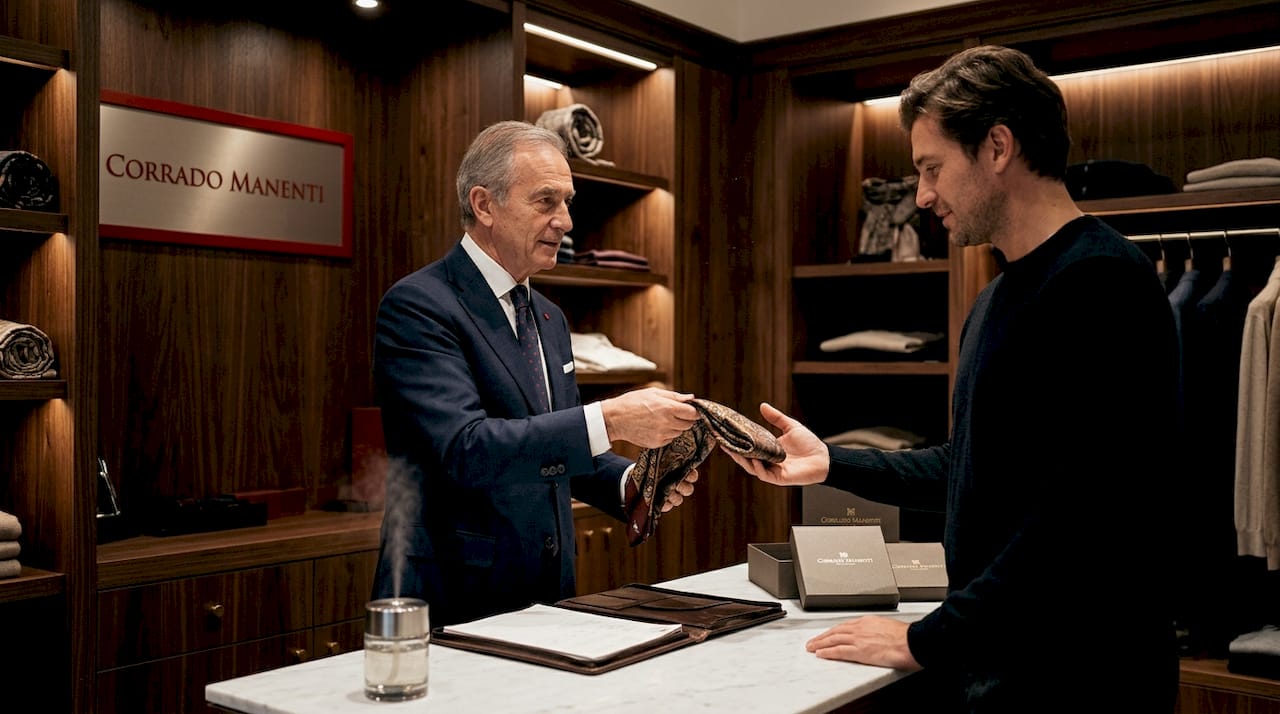
Few cases illustrate this better than Hermès. Hermès employs multi-sensory strategies through visual pattern innovation, tactile leather treatments designed for skin-like affinity, and olfactory elements including fragrance diffusers in perfume spaces that connect the brand image directly to consumer emotion. The tactile quality of an Hermès box, with its distinctive weight and the subtle resistance of the ribbon, is not accidental. It is a deliberate sensory claim that says “this is exceptional before you even see what is inside.”
Singapore Airlines provides equally compelling evidence. Singapore Airlines’ sensory strategy delivers a Net Promoter Score of approximately 40 compared to the industry average of 27, drives 65% customer retention representing roughly 145 million pounds in retained revenue, while Starbucks commands a 75 to 80% market share among its target segment with a transaction value 25% higher than competitors. Singapore Airlines systematically controls scent, sound, fabric texture, lighting, and food presentation across every cabin class. Each element is tested and validated before deployment. The result is not just a pleasant flight. It is a brand experience that passengers describe in emotional terms and book again specifically to recreate.
What set these brands apart from companies that tried sensory tactics and abandoned them?
- They treated sensory design as a long-term brand investment, not a campaign tactic
- They aligned every sensory choice with their stated brand values and positioning
- They maintained consistency across years, not just seasons
- They measured emotional and behavioral outcomes, not just immediate sales
- They trained staff to understand and protect the sensory environment as a brand asset
- They iterated gradually rather than overhauling their sensory identity all at once
The emotional branding case studies from leading luxury houses consistently show that multi-sensory consistency over time produces compounding returns in brand equity, not diminishing ones.
The psychology behind sensorial branding: What makes it work
The sensory strategies used by industry leaders are grounded in proven psychological mechanisms. Here is why sensorial branding truly shapes consumer perception and loyalty.
Scent is the most psychologically potent sensory channel available to brand managers. The olfactory system connects directly to the limbic system for emotion and memory, and crossmodal correspondences show that warmer smells paired with warmer colors increase perceived texture thickness, demonstrating that senses do not operate in isolation. This crossmodal effect is why a well-designed retail environment where the ambient scent, lighting warmth, and textile textures are congruent feels expensive without consumers being able to articulate exactly why.
But there is a critical caveat: hedonic overload. When scent intensity is pushed too high, consumer liking actually decreases despite the heightened signal strength. This is a counterintuitive but important finding for luxury brand managers who associate “more” with “better.”
Here is what the psychology tells us about building effective sensorial experiences:
- Emotional memory: Sensory inputs that occur during emotionally charged moments (a purchase, a gifting experience, a first fitting) are stored as vivid brand memories that persist far longer than rational product claims
- Crossmodal congruence: Senses interact. A mismatch between touch and sound, for example a sleek product surface paired with harsh industrial music, creates subtle dissonance that consumers feel without naming
- Hedonic adaptation: Consumers adapt to consistent stimuli over time. Subtle, quality sensory signals resist adaptation better than intense ones
- Priming effects: Sensory cues activate mental frameworks before a consumer consciously processes a product, meaning the right ambient scent or music tempo can prime a premium mindset before a sales conversation even begins
“The most powerful brand impressions are the ones consumers cannot fully explain. They just know they feel something.”
Pro Tip: Before finalizing any sensory asset, test it against your brand positioning statement. Ask: does this sound, scent, or texture reinforce the specific emotional promise our brand makes? If it feels neutral or generic, it will not build the emotional memory you need. The psychology tips for luxury marketing are explicit on this: congruence is the multiplier, not intensity.
Risks, nuances, and how to future-proof your approach
With the evidence and psychology understood, it is crucial to plan for the common challenges and adopt practices that future-proof your sensorial strategy.
The most instructive cautionary tale in sensory branding is Abercrombie and Fitch. Overly intense scents and music at 88 decibels, roughly 25% above conversational norms, created a powerful short-term identity for a youth audience but ultimately triggered significant controversy and required a full sensory overhaul as the brand tried to mature and broaden its appeal. Consistency builds equity, but only when the underlying sensory identity remains congruent with brand positioning over time.
Empirical research adds further nuance. Studies specifically flag risks like hedonic overload or sensory incongruence as factors that actively reduce perceived quality in luxury contexts. The research is clear: the source of failure is almost never the concept of sensorial branding itself. It is misalignment between sensory execution and brand positioning.
“A signature scent is a brand promise. Break the promise with inconsistency, and you have not just failed at scent. You have communicated that your brand does not hold itself to its own standards.”
Before rolling out any sensorial branding initiative, work through this checklist:
- Does every sensory element trace back to a specific brand value or positioning statement?
- Have you piloted the sensory experience in a controlled environment and gathered consumer emotion data?
- Is there a clear implementation guide so every touchpoint deploys the sensory identity consistently?
- Have you set a review cadence of six to twelve months to assess whether the sensory strategy still fits brand direction?
- Have you stress-tested intensity levels to ensure they enhance rather than overwhelm?
- Is staff trained to maintain and protect the sensory environment, not just the visual one?
The premium branding examples that endure are those where sensory choices were made with the same discipline applied to logo design or campaign messaging. Sensory branding is not a creative exercise. It is a strategic one.
Perspective: Why luxury sensorial branding is about subtlety, not sensory overload
The industry conversation about sensorial branding has a persistent bias toward maximalism. Immersive pop-ups, multi-room sensory installations, fragrance walls, spatial audio experiences. The assumption is that more immersive equals more impactful. In practice, for luxury brands specifically, the opposite is often true.
The luxury consumer is not searching for intensity. They are searching for rightness. The difference between a brand experience that feels luxurious and one that feels overwrought is almost always a question of restraint. When every sensory element is calibrated correctly, consumers do not notice the individual components. They simply feel a coherent, elevated emotion. That is the goal. The moment someone thinks “this store smells strongly,” you have already failed, because attention is now on the scent rather than on the brand.
What actually drives long-term loyalty in luxury sensory branding is the kind of subtle consistency that compounds over years. A consumer who has visited your flagship ten times over five years and always leaves feeling a specific emotion is building brand attachment that no campaign can manufacture. That attachment is the return on your sensory investment, and it shows up in lifetime value, advocacy, and resistance to competitive offers.
The practical implication for brand managers is to resist the pressure to “wow” with every sensory touchpoint. Instead, commit to a quiet, congruent sensory identity that holds steady across seasons and channels. Measure emotional responses at every piloting stage. Track brand recall against a sensory control group. Build the business case for subtlety with data, because subtle done consistently is the most defensible sensory moat available. For teams considering luxury rebranding guidance, the sensory audit should come before the visual refresh. What you feel is what you remember.
How we help luxury brands elevate sensorial strategy
Sensorial branding delivers its strongest results when strategy, psychology, and execution are aligned from the start. That alignment requires both sector-specific experience and a deep understanding of how luxury consumers actually process brand experience.
Corrado Manenti works directly with luxury fashion and lifestyle brands to build sensorial strategies that are grounded in psychology, tested in real environments, and measured with meaningful metrics. From auditing your current sensory footprint to developing signature assets and integration playbooks, the work is hands-on and specific to your brand positioning. Whether you are beginning with your fashion marketing guide, exploring brand growth tactics for a competitive market, or building a full psychology-driven engagement program, the right sensory strategy is built from your brand’s core values outward.
Frequently asked questions
What’s the difference between sensorial and sensory branding?
They are synonymous. Sensorial branding, also known as sensory branding, refers to using multiple senses to create immersive brand experiences that go beyond visual identity. The choice of term is stylistic, not conceptual.
Which senses matter most for luxury fashion brands?
Touch and scent carry the heaviest weight for luxury fashion. Touch and scent for premium quality signals work especially well because they communicate craftsmanship and emotional resonance, but your optimal sensory mix should always be anchored in your specific brand essence and positioning.
How do you measure ROI from sensorial branding?
Sales alone will not capture the full picture. Multi-sensory experiences increase brand recall and impact by up to 70%, so track recall rates, customer emotion scores, NPS, and retention alongside revenue metrics to build a complete ROI view.
What are the risks of sensorial branding done poorly?
Poor execution creates real brand damage. Risks like hedonic overload or sensory incongruence can actively reduce perceived quality, and inconsistency across touchpoints signals a lack of brand discipline that luxury consumers notice immediately, even if they cannot name the source.