
TL;DR:
- Brand rituals are repeated, emotionally meaningful actions that foster deep consumer loyalty and identity. Consistency in rituals creates emotional safety and strengthens brand relationships, while disruption weakens these bonds. Brands should design simple, repeatable gestures at intentional moments and let consumers own the rituals for lasting engagement.
Brand rituals are recurring, emotionally significant actions that transform customer interactions into deeply ingrained habits and identity expressions. For luxury brands, understanding why brand rituals matter is not optional. It is the difference between a brand that customers choose and one they belong to. Brands like Hermès, Cartier, and Guinness have built rituals that outlast campaigns, survive market shifts, and create the kind of loyalty that no discount can buy. This article breaks down the psychology, mechanics, and practical design of rituals that luxury brand strategists can apply immediately.
Why brand rituals matter: the core mechanism
Brand rituals are defined as repeated, meaningful gestures or experiences that a consumer associates with a specific brand. They are not marketing activations. They are not seasonal campaigns. They are behaviors that consumers repeat because the act itself carries emotional weight. The industry term for this practice is “ritual architecture,” the deliberate engineering of brand-linked behaviors that become habitual over time.
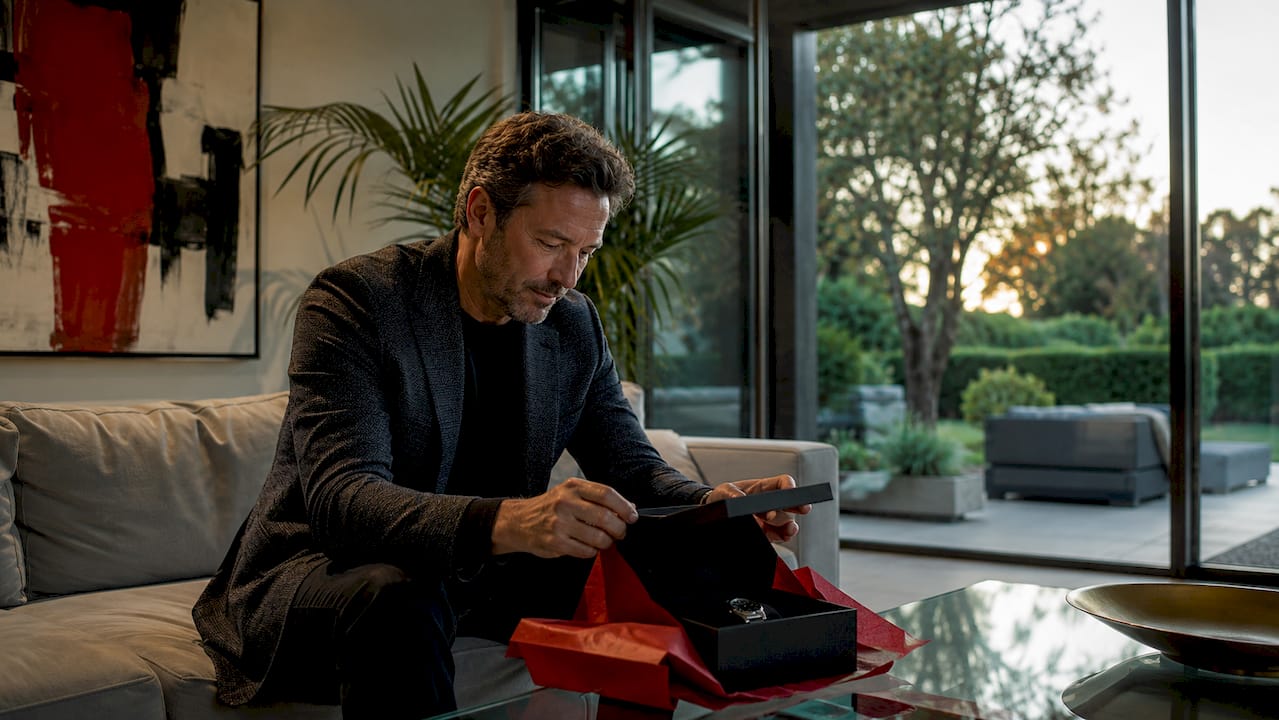
The significance of brand rituals lies in what they do to consumer identity. When a customer repeats a ritual, the brand stops being a product and starts being part of who they are. Hermès wrapping tissue, the Cartier red box, the Chanel No. 5 application before a significant evening: these are not accidents. They are designed emotional anchors. Brands integrated into rituals become cultural infrastructure, providing comfort and togetherness rather than functioning as mere utilities.
Luxury consumers are especially susceptible to ritual bonding because their purchases carry identity stakes. A Rolex buyer is not just buying a watch. They are buying a story they tell themselves and others. When a brand ritual reinforces that story consistently, it deepens the emotional contract between brand and buyer. This is why emotional branding delivers measurably stronger engagement than transactional marketing in the luxury sector.
How do brand rituals transform consumer behavior?
Ritual architecture works by converting a single emotional moment into a repeating behavioral loop. The mechanism has three stages: friction, anticipation, and reward. Friction is the deliberate effort built into the ritual. Anticipation is the emotional charge that friction creates. Reward is the satisfaction that follows completion.
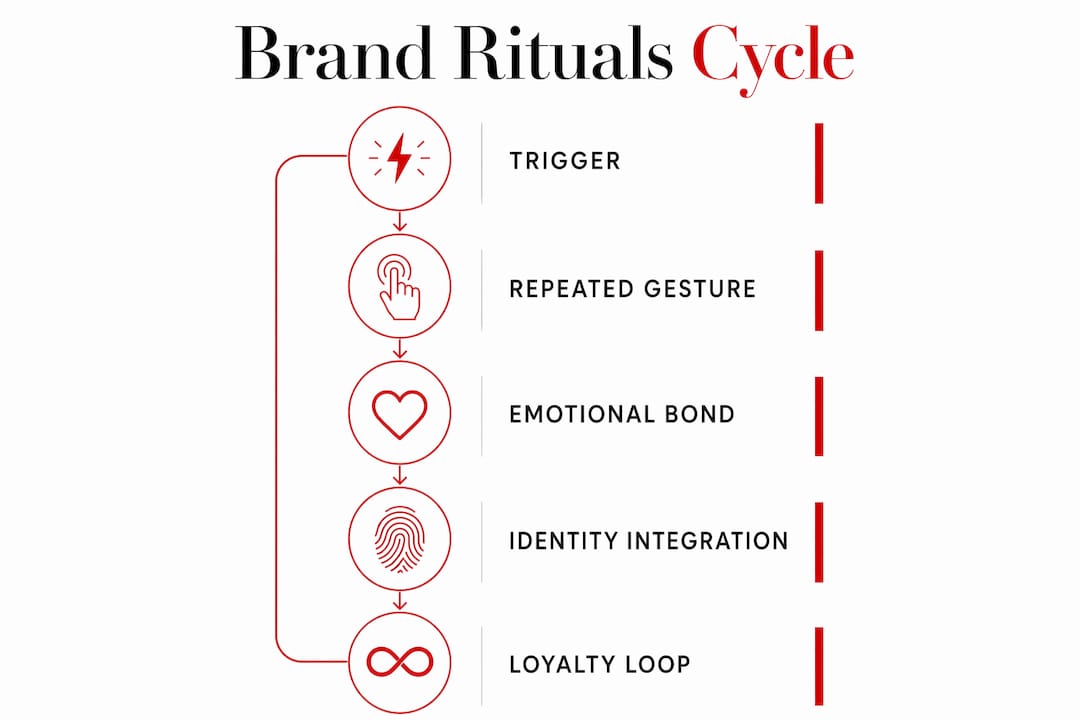
The Guinness two-part pour is the clearest non-luxury example. Bartenders are trained to pour the pint in two stages, waiting for the surge to settle before topping it off. The wait creates anticipation. The finished pint feels earned. Rituals transform transactions into craft events where friction generates perceived value that lasts far beyond a one-time activation. Oreo’s “twist, lick, dunk” ritual operates on the same principle at a mass-market scale.
For luxury brands, the stakes are higher and the rituals more personal. Consider these four stages of ritual adoption:
- Introduction. The brand introduces a gesture during a purchase or service moment, such as a specific unboxing sequence or a personalized engraving ceremony.
- Repetition. The customer repeats the gesture across multiple touchpoints, reinforcing the emotional association.
- Internalization. The ritual becomes part of the customer’s personal identity narrative.
- Advocacy. The customer shares the ritual publicly or privately, recruiting others into the brand’s emotional orbit.
Pro Tip: Design your ritual’s friction deliberately. A ritual that requires zero effort carries zero emotional weight. The pause, the fold, the wait: these are features, not flaws.
Does consistency or novelty drive stronger ritual loyalty?
Consistency wins. Consumers value ritual consistency more than novelty, perceiving it not as operational reliability but as emotional safety. This is a finding that contradicts most campaign-driven marketing logic, where freshness is treated as the primary engagement driver.
The psychology behind this is straightforward. Rituals help people create stability and emotional grounding amid an unpredictable world. When a luxury brand disrupts its own ritual, even with good intentions, it removes the emotional anchor the customer relied on. Burberry’s 2018 rebrand, which altered its signature check pattern and brand codes, triggered significant consumer backlash precisely because it broke a ritual expectation.
The benefits of brand rituals built on consistency include:
- Psychological protection. Familiar rituals reduce decision fatigue and create a sense of control for the consumer.
- Identity reinforcement. Repeated rituals confirm the consumer’s self-image as someone who belongs to this brand’s world.
- Reduced switching behavior. Rituals create automatic behaviors resistant to competitor switching, because the emotional cost of abandoning a ritual is higher than the rational cost of changing brands.
- Deeper brand equity. Consistency over time builds the emotional weight and familiarity necessary to move a brand into the consumer’s subconscious identity.
Novelty has a role, but it belongs at the edges of a ritual, not at its core. You can introduce a new limited-edition box. You cannot change the way the box opens.
What role should a luxury brand play in consumer rituals?
Luxury brands must calibrate their presence within consumer rituals across a spectrum. Brands must calibrate their role from leading to enabling, supporting, protecting, or disappearing entirely, depending on the ritual’s context. The brand that tries to dominate every ritual moment loses the consumer’s sense of ownership and breaks the emotional contract.
| Ritual type | Appropriate brand role | Example |
|---|---|---|
| Public, shared ritual | Lead or enable | Champagne toast at a brand event |
| Semi-public, social ritual | Support or enable | Gifting with signature packaging |
| Private, reflective ritual | Protect or disappear | Morning skincare routine with a luxury product |
| Identity-marking ritual | Enable, then step back | Wearing a luxury watch for a personal milestone |
Public rituals allow more brand leadership because the consumer wants the brand visible as a social signal. Private rituals require the brand to provide reliability and then vanish. A luxury skincare brand that inserts itself too aggressively into a customer’s morning routine, through app notifications or loyalty prompts, disrupts the meditative quality that made the ritual valuable in the first place.
Operational consistency is non-negotiable here. Operational consistency failures disrupt the emotional rhythm of rituals and weaken luxury brand relationships. A delayed delivery, a changed scent formula, a redesigned package insert: each one is a small rupture in the emotional safety net the brand has built. The consumer may not articulate the disappointment, but the bond weakens.
Pro Tip: Map your brand’s ritual touchpoints against the public-to-private spectrum. For each private ritual, ask: is the brand’s presence here serving the customer’s emotional need, or the brand’s visibility need? If it is the latter, pull back.
How can luxury brands identify and design new rituals?
The most practical entry point for ritual design is the ritualized category entry point, or CEP. Ritualized CEPs are superior growth drivers because they capture consumers at intentional, emotionally charged moments and scale those moments across entire customer populations. A CEP is the moment a consumer habitually reaches for a category: the evening wind-down, the pre-event preparation, the gift-giving occasion.
Luxury brands discover or engineer rituals by following these steps:
- Observe existing consumer behavior. Identify what customers already do before, during, and after engaging with your product. The ritual often exists before the brand formalizes it.
- Find the emotional charge. Locate the moment in the customer journey that carries the highest emotional weight. That is where a ritual gesture will take root.
- Design a simple, repeatable gesture. The most effective luxury rituals cost little to repeat, focusing on simple, recurring gestures rather than expensive moments. The gesture must be easy enough to repeat daily but meaningful enough to feel intentional.
- Avoid over-optimization. Innovation in luxury marketing must respect the irrational emotional core of rituals. Efficiency kills ritual. If you remove the friction to make the experience faster, you remove the emotional reward.
- Let the consumer own it. Brands must facilitate the ritual where the person is the hero. The brand is the trusted facilitator, not the protagonist.
Spotify Wrapped is the clearest modern example of a newly created ritual. Spotify Wrapped exemplifies a ritual combining nostalgia, reflection, and social connection to engage millions of users every year. Spotify did not discover this ritual. It engineered it by identifying an emotionally charged moment, the year-end reflection, and giving consumers a personalized, shareable artifact. Luxury brands can apply the same logic to their own category entry points, whether that is the seasonal wardrobe transition, the anniversary gift selection, or the first wear of a new piece.
The warning is equally clear. Brands that try to control rituals too tightly face rejection. Forced brand entry meets resistance. Alignment with emotional rhythms builds relevance. The goal is to make the brand feel like a natural part of the consumer’s own story, not an interruption in it. For deeper context on how luxury brand growth tactics connect to emotional engagement, the principles of ritual design sit at the center of every durable strategy.
Key Takeaways
Brand rituals build loyalty by embedding brands into consumer identity through consistent, emotionally meaningful gestures that competitors cannot easily replicate or displace.
| Point | Details |
|---|---|
| Rituals beat campaigns | Repeated emotional gestures create habitual loyalty that one-time activations cannot match. |
| Consistency is emotional safety | Consumers experience ritual disruption as a breach of trust, not just an operational change. |
| Calibrate brand presence | Public rituals allow brand leadership; private rituals require the brand to step back or disappear. |
| Design for simplicity | The most durable rituals are low-cost, easy to repeat, and high in emotional charge. |
| Let the consumer lead | Brands that position themselves as facilitators, not protagonists, earn deeper ritual ownership. |
The mistake most luxury brands make with rituals
I have worked with luxury clients who treat ritual design as a creative brief. They want something beautiful, something photographable, something that wins an award. That instinct is understandable. It is also wrong.
The rituals that actually build loyalty are rarely the ones that look good in a case study. They are the ones that feel right at 7 a.m. when no one is watching. The way a customer opens a box alone. The specific order in which they apply a product. The private moment before wearing something significant. These are the rituals that matter, and they are almost always invisible to the brand team.
The most common mistake I see is brands inserting themselves into private rituals with visibility-driven gestures: QR codes inside packaging, loyalty prompts at the wrong moment, social sharing nudges that break the meditative quality of the experience. The brand’s ego disrupts the consumer’s emotional rhythm. The result is a weakened bond that looks fine in the short-term data and shows up as churn six months later.
My advice is to start with the consumer’s emotional rhythm, not the brand’s communication calendar. Map the moments where your customer is already emotionally charged. Design the smallest possible gesture that honors that charge. Then step back and let the ritual belong to them. The brands that do this consistently, over years, are the ones that become genuinely irreplaceable.
— Corrado
Take your luxury brand ritual strategy further
Understanding why brand rituals matter is the foundation. Translating that understanding into commercial growth requires a complete view of how emotional engagement, ritual design, and luxury brand growth tactics connect across the full customer journey.
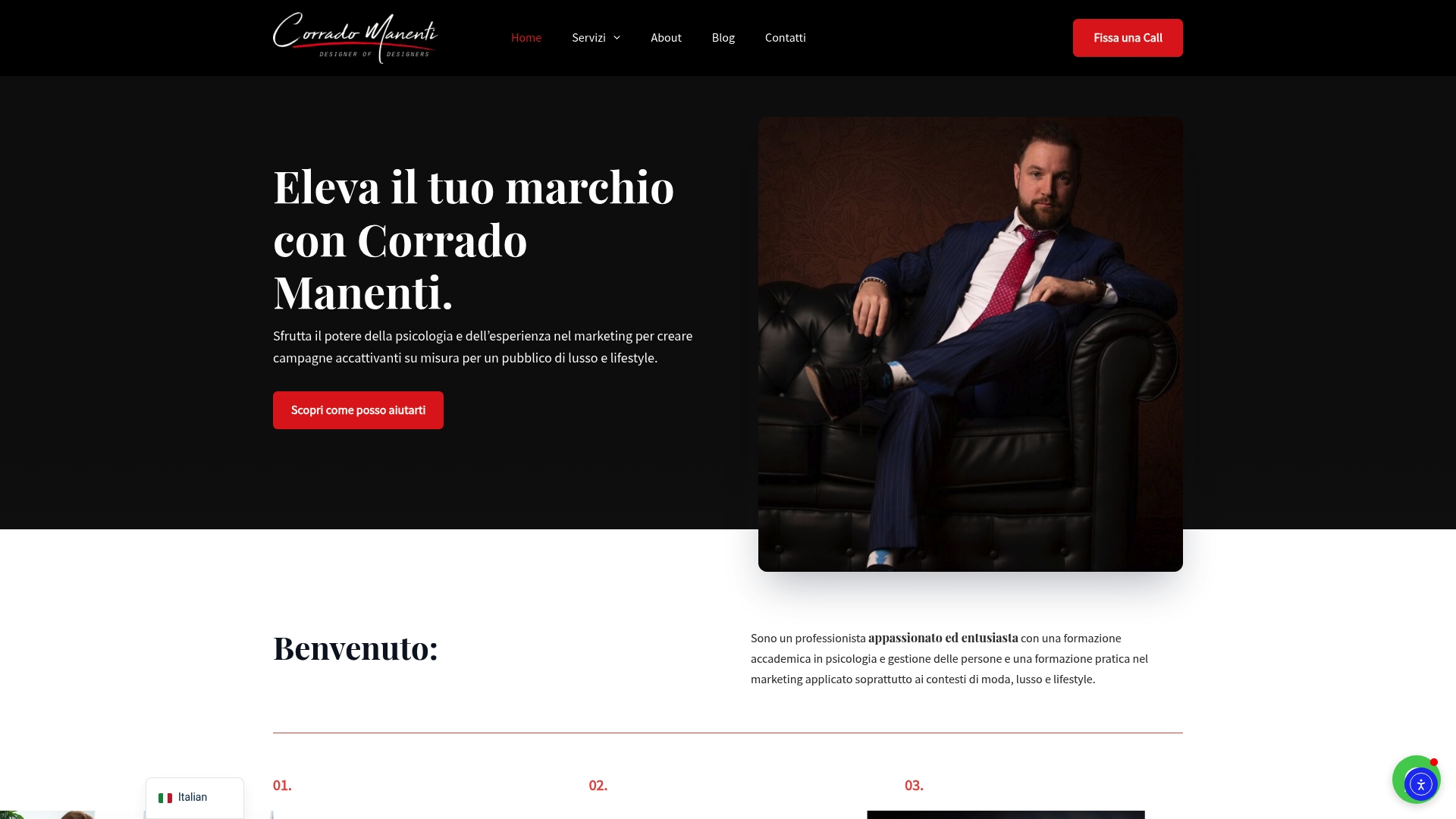
Corradomanenti works with luxury fashion and lifestyle brands to build psychologically grounded marketing strategies that turn emotional moments into lasting loyalty. If you are ready to move beyond campaigns and build rituals that compound over time, the resources and consulting frameworks at Corradomanenti are built specifically for that work. Start with the luxury brand growth guide to see how ritual integration fits into a broader brand strategy.
FAQ
What are brand rituals in luxury marketing?
Brand rituals are repeated, emotionally significant actions that consumers associate with a specific brand. In luxury marketing, they transform individual purchases into habitual, identity-affirming behaviors.
Why do brand rituals build stronger loyalty than campaigns?
Rituals create automatic, habit-based behaviors that are resistant to competitor switching, because the emotional cost of abandoning a ritual exceeds the rational appeal of an alternative brand.
How should luxury brands design a new ritual?
Identify an existing emotionally charged moment in the customer journey, design the simplest possible repeatable gesture to honor it, and then let the consumer own the ritual rather than controlling it.
What happens when a brand disrupts an established ritual?
Consumers experience ritual disruption as an emotional breach, not an operational change. Consistency failures weaken brand-consumer bonds even when the consumer cannot articulate why.
What is a ritualized category entry point?
A ritualized category entry point is a habitual, emotionally charged moment when a consumer reaches for a product category. Brands that align with these moments become part of the consumer’s daily rhythm rather than an interruption in it.