


Over eighty percent of American consumers say that authenticity is their top priority when choosing a luxury brand. With competition fierce in the premium market, understanding what truly motivates high-end buyers goes far beyond generic marketing. This guide walks you through a structured approach to pinpointing the specific psychological drivers and unique expectations of American luxury audiences so you can create deeply resonant, data-backed brand strategies.
Table of Contents
- Step 1: Assess Brand Identity and Premium Values
- Step 2: Analyze Psychographics and Behavior Drivers
- Step 3: Identify Key Market Segments and Exclusivity Cues
- Step 4: Validate Premium Audience Profiles with Data
- Step 5: Refine Targeting through Psychological Insights
Quick Summary
| Important Insight | Explanation |
|---|---|
| 1. Understand Brand Identity Deeply | Develop a strong grasp of your brand’s core values and emotional connections to attract premium consumers effectively. |
| 2. Decode Psychological Motivations | Explore deeper motivations and aspirations that drive luxury purchases beyond mere demographics to capture consumer interests. |
| 3. Create Multifaceted Consumer Profiles | Build comprehensive profiles that reflect diverse consumer behaviors and aspirations to better tailor your marketing strategies. |
| 4. Validate Insights with Data | Use data-driven approaches to ensure your consumer profiles are accurate, reflecting real trends and preferences. |
| 5. Align Messaging with Psychological Insights | Tailor marketing messages to resonate with psychological signals that reflect consumers’ social status and self-perception. |
Step 1: Assess Brand Identity and Premium Values
Defining your premium audience requires a deep understanding of your brand’s core identity and unique value proposition. At its essence, this means uncovering the psychological and emotional dimensions that transform your brand from merely a product or service into a compelling narrative that resonates with high-end consumers.
Begin by conducting a comprehensive brand perception audit that explores how your brand is perceived through its design elements and emotional dimensions. This involves examining the intricate relationship between your product design, brand image, and consumer expectations. Your goal is to map out the specific attributes that signal premium quality: aesthetic refinement, exclusivity, craftsmanship, and an almost intangible sense of prestige. Research suggests that luxury consumers do not just purchase products they purchase experiences and identities that align with their personal aspirations.
A strategic approach involves analyzing three critical brand image dimensions: mystery, sensuality, and intimacy. These elements transform your brand from a transactional entity into an aspirational symbol. Examine how consumers connect their self image with your brand perception, understanding that premium audiences seek brands that do not just meet functional needs but reflect their idealized sense of self. This requires going beyond surface level attributes and diving into the deeper psychological motivations that drive luxury consumption.
Warning: Authenticity is paramount. Premium audiences have sophisticated detection mechanisms for superficial branding attempts. Your brand identity must be genuine, consistent, and deeply rooted in real value propositions rather than manufactured exclusivity.
The next step involves translating these insights into a precise audience targeting strategy that speaks directly to your ideal consumers’ aspirations and self perception.
Step 2: Analyze Psychographics and Behavior Drivers
Understanding the psychological landscape of your premium audience goes far beyond traditional demographic profiling. The goal is to decode the complex motivations and aspirational drivers that influence luxury consumption behavior.
Begin by developing a nuanced psychographic segmentation framework that explores consumers’ lifestyles, values, and personality characteristics. This involves creating detailed consumer personas that capture not just surface level attributes but the deeper psychological motivations underlying their purchasing decisions. Luxury consumers are not simply buying products they are investing in experiences that reflect their ideal self image and social positioning.
A strategic approach requires examining how individual values and social factors create intricate patterns of brand attachment. This means mapping out the emotional and symbolic dimensions that transform a luxury purchase from a mere transaction into a meaningful personal statement. Consider factors like social status, self expression, personal achievement, and the complex social signaling that luxury brands represent.
Warning: Avoid oversimplification. Premium audiences have sophisticated and multilayered decision making processes that cannot be reduced to basic demographic categories. Each consumer represents a unique intersection of personal values, aspirational narratives, and social context.
The subsequent phase will involve translating these psychographic insights into targeted marketing strategies that speak directly to your audience’s deepest motivations and self perception.
Step 3: Identify Key Market Segments and Exclusivity Cues
Defining your premium audience requires a sophisticated approach to market segmentation that transcends traditional demographic boundaries. The goal is to uncover the nuanced characteristics that distinguish truly high-end consumers from casual luxury shoppers.
Begin by understanding how different generational cohorts perceive luxury through unique lenses. Recent research on social media marketing reveals critical insights into how Millennials and Generation Z interpret exclusivity cues, demonstrating that younger luxury consumers value authenticity, personal meaning, and social significance far more than previous generations. This means your segmentation strategy must go beyond age or income brackets and dive into psychological motivations, lifestyle aspirations, and personal values that drive luxury consumption.
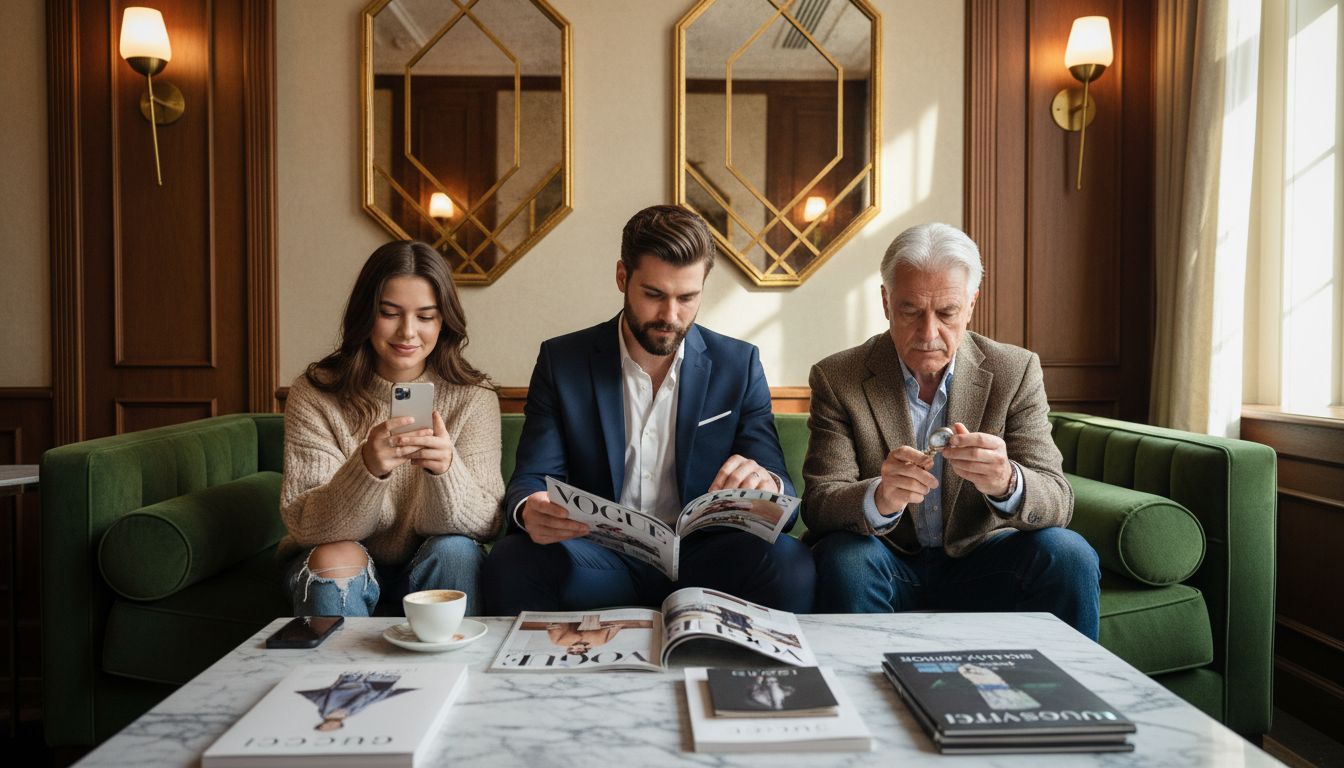
Effective market segmentation in luxury requires creating multidimensional consumer profiles that capture complex behavioral patterns. Consider factors like cultural capital, social networking influence, personal achievement trajectories, and symbolic consumption motivations. Your segments should reflect not just who these consumers are but who they aspire to become. Each segment represents a unique narrative of personal identity and social positioning that luxury brands can strategically address.
Warning: Avoid oversimplified categorizations. Premium audiences are sophisticated consumers who resist being placed into rigid demographic boxes. Your segmentation approach must remain flexible, adaptive, and deeply attuned to evolving cultural dynamics.
The next phase involves translating these segmentation insights into precise targeting strategies that resonate with each identified consumer group.
Step 4: Validate Premium Audience Profiles with Data
Validating your audience profiles requires a sophisticated approach that transforms intuitive insights into empirically grounded understanding. The goal is to move beyond assumptions and create data driven representations of your premium consumer segments.
Advanced clustering techniques can help explain brand preferences by integrating personality and socio demographic variables, providing a rigorous framework for understanding your audience. This means deploying statistical methods that go beyond surface level demographics and capture the complex psychological nuances that drive luxury consumption. Your validation process should incorporate multiple data sources including behavioral analytics, psychographic surveys, and advanced machine learning approaches.
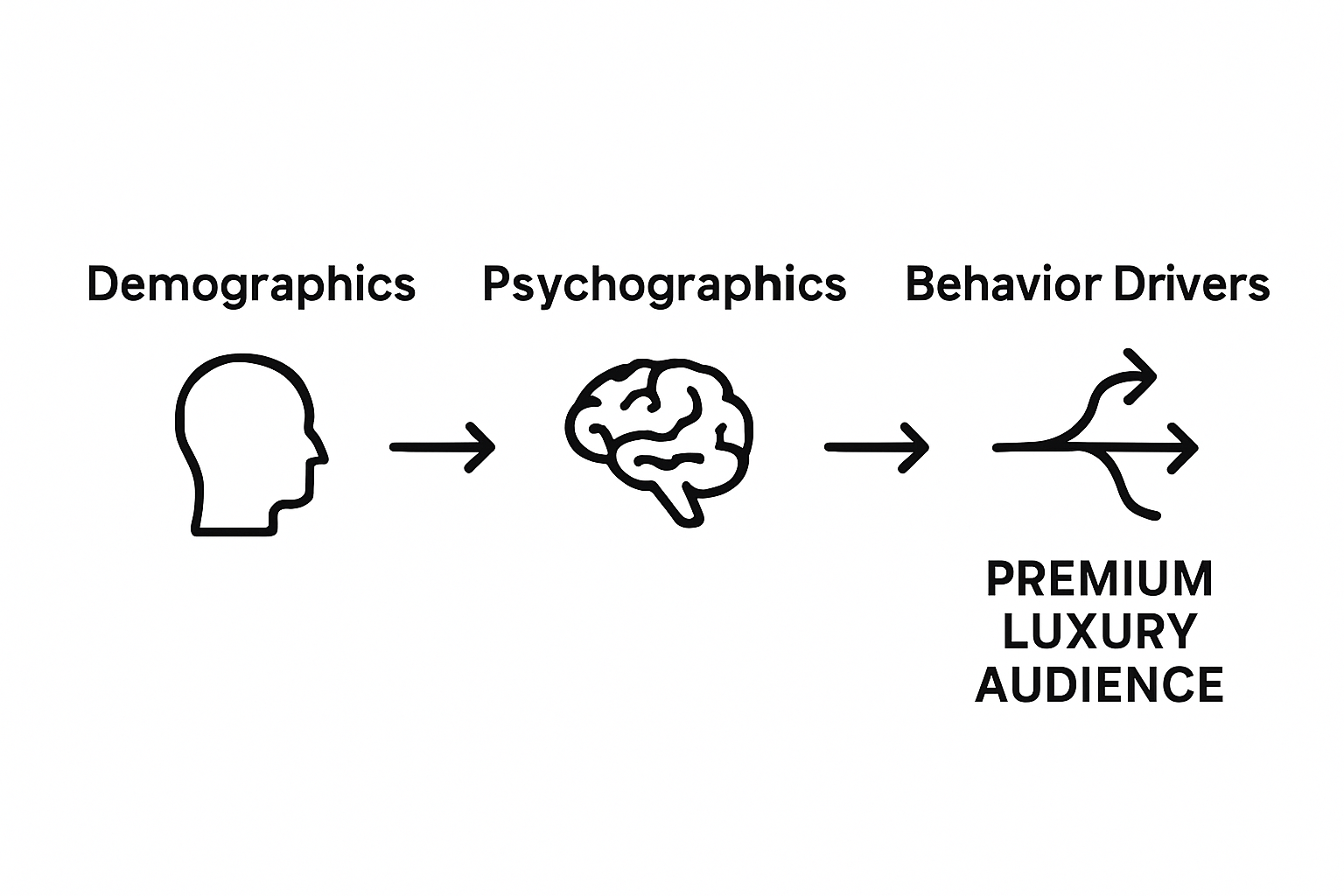
Moreover, emerging deep learning technologies offer unprecedented opportunities to analyze heterogeneous consumer aesthetics, enabling brands to create incredibly precise audience profiles. These technologies can uncover subtle patterns in consumer behavior that traditional research methods might miss. By integrating advanced computational techniques with qualitative insights, you can develop a multidimensional understanding of your premium audience that captures their evolving preferences, aspirational motivations, and complex decision making processes.
Warning: Data validation is not a one time exercise. Premium audience profiles are dynamic living representations that require continuous refinement and adaptation. Treat your segmentation models as evolving frameworks rather than static classifications.
The subsequent phase will involve translating these validated insights into targeted marketing strategies that resonate authentically with each consumer segment.
Step 5: Refine Targeting through Psychological Insights
Refined audience targeting in luxury markets requires a nuanced understanding of psychological motivations that transcend traditional demographic categorizations. Your goal is to decode the deeper emotional and aspirational drivers that transform consumers from passive observers to engaged brand advocates.
The VALS psychographic segmentation framework offers a sophisticated approach to understanding consumer behavior, categorizing individuals based on their core values, lifestyle preferences, and psychological orientations. This means moving beyond surface level characteristics and exploring the underlying psychological mechanisms that drive luxury consumption. Consider how different consumer archetypes express their identity through brand selection, personal achievements, and social positioning.
Costly signaling theory provides additional insights into how luxury goods function as powerful psychological signals, revealing the complex social dynamics underlying premium consumption. Luxury purchases are not merely transactional experiences but sophisticated communication tools that consumers use to articulate social status, personal achievement, and self perception. Your targeting strategy must recognize these subtle psychological mechanisms and develop messaging that speaks directly to consumers unconscious motivations.
Warning: Psychological insights are nuanced and dynamic. Avoid rigid categorizations that oversimplify human complexity. Your targeting approach must remain adaptable and sensitive to evolving cultural and individual psychological landscapes.
The next phase involves translating these psychological insights into precision marketing strategies that resonate authentically with each consumer segment.
Unlock the True Power of Defining Your Premium Audience for Luxury Brands
Understanding the intricate psychological and emotional drivers behind luxury consumers is essential for any brand aiming to stand out in a saturated market. This article highlights critical challenges such as authentic brand identity, sophisticated psychographic segmentation, and the need for continuous data validation to refine premium audience profiles. If your brand struggles with connecting on a deeper level beyond surface-level demographics or seeks to harness the full potential of exclusivity cues and psychological insights, you are not alone.
Corrado Manenti specializes in turning these complex concepts into actionable marketing strategies tailored for the fashion and luxury sectors. Through a unique combination of psychology-driven marketing, fashion and luxury consulting, and cutting-edge digital innovation, he helps brands like yours build authentic connections with high-end consumers. Discover how to translate your brand’s premium values into compelling narratives by partnering with a consultant who truly understands what moves luxury audiences.
Elevate your brand now by exploring Corrado Manenti’s approach at corradomanenti.it and see how his expertise can transform your audience targeting strategies. Visit Psychology-Driven Marketing to learn how deep consumer insights lead to effective campaigns or explore Fashion and Luxury Consulting to refine every detail of your brand experience.
Start defining your premium audience with precision and authenticity today.
Are you ready to translate psychological insights into compelling luxury marketing strategies?
Partner with Corrado Manenti and get targeted solutions that resonate deeply with your ideal consumers. Visit corradomanenti.it to take your luxury brand to the next level.
Frequently Asked Questions
How can I assess my brand’s identity to define a premium audience?
To assess your brand’s identity, conduct a brand perception audit that explores consumer perceptions and emotional connections to your brand. Examine elements like design, craftsmanship, and the emotional cues that can establish a narrative appealing to high-end consumers.
What are the key psychographic traits to consider for targeting a premium audience?
Key psychographic traits include consumers’ lifestyles, values, and personality characteristics that influence their luxury purchasing decisions. Create detailed consumer personas that highlight the deeper motivations and aspirations behind their buying choices.
How do social factors influence luxury consumption behavior in different market segments?
Social factors play a significant role in luxury consumption as they shape individual values, brand attachment, and self-expression. Analyze how different generational cohorts perceive luxury and what social dynamics drive their purchasing behavior to create effective marketing strategies.
What methods can I use to validate my audience profiles for premium markets?
To validate your audience profiles, utilize advanced data analytics techniques like clustering to integrate various consumer data points. Implement behavioral analytics and psychographic surveys to ensure your audience segmentation is empirical and reflective of actual consumer preferences.
How do psychological insights affect targeting strategies for luxury brands?
Psychological insights can significantly influence targeting strategies by providing a deeper understanding of consumer motivations and aspirations. Integrate psychological frameworks to refine messaging that resonates with consumers’ unconscious drivers and personal achievements, enhancing engagement and brand loyalty.
What steps should I follow to refine my targeting approach for luxury consumers?
To refine your targeting approach, start by decoding the emotional and aspirational drivers behind luxury purchases. Continuously adapt your strategies based on evolving consumer insights and market dynamics, ensuring your messaging remains relevant and impactful over time.