

Every luxury executive understands the challenge of proving prestige without diluting exclusivity. In a world where digitalization extends reach and consumer validation happens in real time, mastering social proof in luxury is the authentic validation of prestige that separates legendary brands from mere aspirational labels. Success means balancing selective endorsements, cultural relevance, and rare experiences, ensuring your brand remains both coveted and credible to a discerning global audience.
Table of Contents
- Defining Social Proof In The Luxury Sector
- Key Types And Variations In Luxury Contexts
- Psychological Drivers Of Luxury Social Proof
- Influencer Marketing And Brand Credibility
- Risks, Challenges, And Common Pitfalls
- Strategic Integration For Lasting Brand Impact
Key Takeaways
| Point | Details |
|---|---|
| Luxury Social Proof is Nuanced | In the luxury sector, social proof hinges on exclusivity and quality endorsements rather than volume, requiring a balance between authenticity and aspirational branding. |
| Understanding Audience Motivations Matters | Different psychological drivers influence luxury consumers; aligning social proof strategies to distinct motivations of status, uniqueness, or authenticity is crucial for effective engagement. |
| Influencer Strategy Requires Authenticity | Successful luxury influencer partnerships depend on authentic connections and shared values, rather than simply leveraging audience size, to preserve brand credibility. |
| Integrate Across Touchpoints | A cohesive social proof strategy should harmonize various marketing efforts, ensuring consistency in messaging and maximizing impact across all customer interactions. |
Defining Social Proof in the Luxury Sector
Social proof in luxury operates in a fundamentally different dimension than it does for mass-market brands. This isn’t about accumulating the highest number of reviews or the loudest customer testimonials. For luxury executives, social proof means something far more nuanced: the strategic demonstration of exclusivity, authenticity, and aspiration through carefully curated evidence of consumer validation. At its core, social proof in luxury is the authentic validation of prestige that reinforces why your brand remains desirable to both existing and aspirational clientele.
Traditionally, luxury thrived on scarcity and exclusion. Your grandfather’s generation bought a Rolex because few people could, and that rarity itself was the proof of value. Today, the equation has shifted. The luxury sector is evolving through digitalization, which means your customers now expect different validation mechanisms. They want to see how other discerning individuals validate your brand, but without the brand feeling accessible to everyone. This is the paradox you navigate daily: maintaining exclusivity while building credible endorsement in a connected world.
What makes social proof distinct in luxury is the balance between two seemingly opposing forces. First, consumers demand authentic evidence of cultural relevance and market prestige, which means they’re increasingly influenced by who endorses your products and how those endorsements align with aspirational values. Second, your brand must never appear to chase validation too aggressively. A Hermès handbag gains credibility when seen on influential shoulders, but it would lose credibility if Hermès itself were broadcasting every celebrity purchase. The social proof works because it’s organic, selective, and reflects a world of genuine expertise and taste rather than mass consumption.
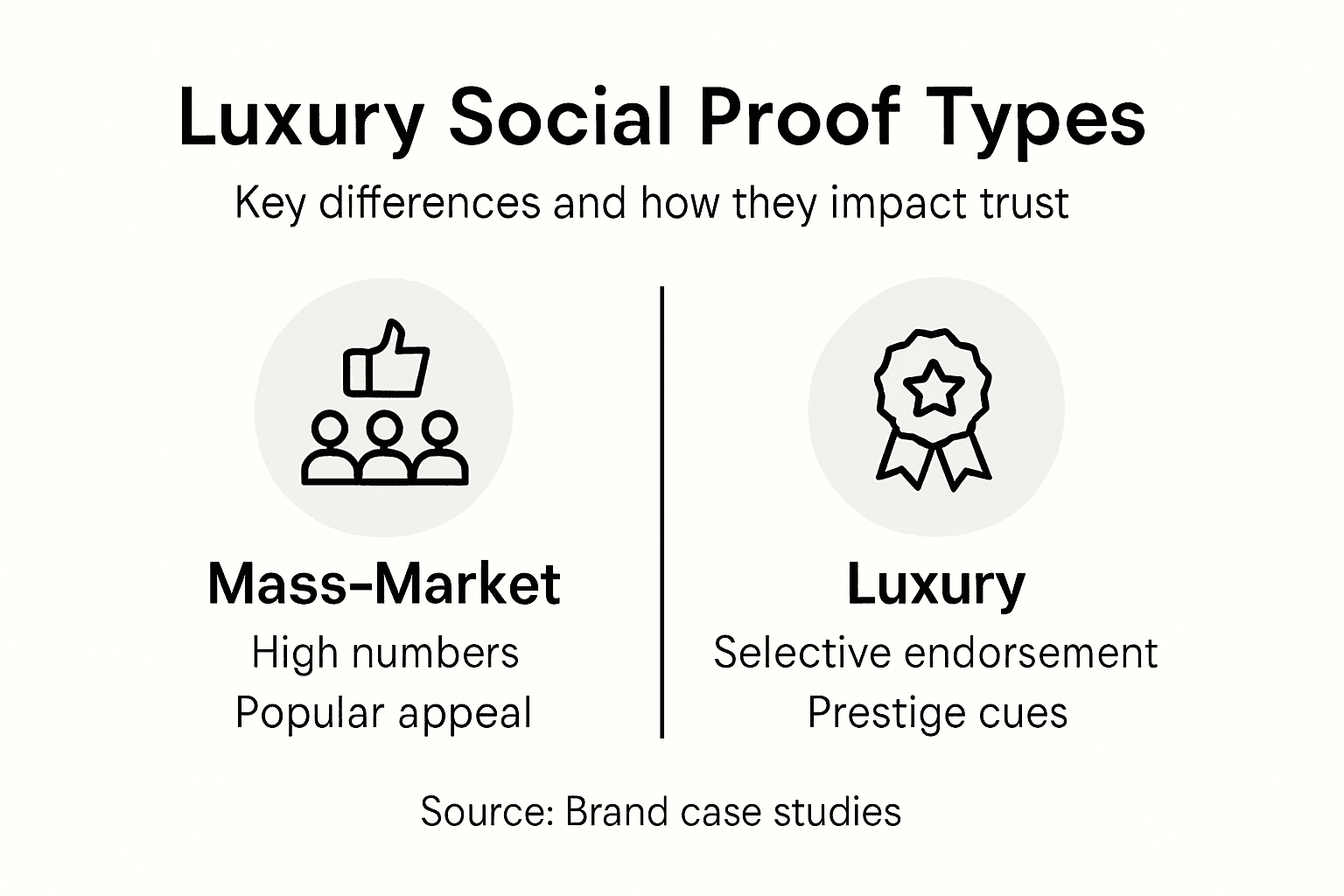
Consider the distinction this way: mass-market social proof says “millions of people bought this, so you should too.” Luxury social proof communicates something deeper: “People whose judgment you respect and whose lifestyle you aspire to have chosen this, which confirms its inherent value.” This shifts the foundation of trust from quantity of evidence to quality and alignment of that evidence with your target audience’s self-perception and aspirational identity.
Here’s a comparison of social proof approaches in luxury versus mass-market sectors:
| Dimension | Mass-Market Social Proof | Luxury Social Proof |
|---|---|---|
| Validation Mechanism | Large number of reviews | Selective endorsements |
| Perception of Value | Popularity-driven trust | Exclusivity-driven trust |
| Endorser Importance | Broad consumer testimonials | Recognized experts, tastemakers |
| Impact on Brand Image | Broad accessibility | Maintains prestige and rarity |
Pro tip: Map the specific validation sources that resonate with your target segment before building any social proof strategy—for ultra-high-net-worth clients, an architectural publication’s recognition matters far more than social media reach, while for emerging luxury customers, the right influencer endorsement or exclusive access narrative drives conversion differently.
Key Types and Variations in Luxury Contexts
Social proof in luxury doesn’t operate as a one-size-fits-all mechanism. The types of validation that work for a haute couture fashion house differ dramatically from those that drive purchases in fine jewelry or ultra-premium hospitality. What makes your approach effective depends on understanding how rarity and exclusivity function as distinct drivers of perceived value. Exclusivity fosters distinctiveness while rarity impacts desirability in ways that shape how consumers interpret social proof across different luxury categories.

Let’s break down the primary variations you’ll encounter. First, there’s functional social proof, which demonstrates how your product performs or operates at the highest level. When a watchmaker showcases the engineering precision of a timepiece through expert validation, that’s functional proof. Then comes social and emotional social proof, where consumers validate the status and identity benefits of ownership. A luxury bag isn’t just proof of craftsmanship—it’s proof that owning it signals belonging to an aspirational circle. Epistemic social proof appears when consumers seek knowledge or reassurance about hidden qualities—why does one handbag deserve triple the price of another? Experts and curators provide that explanatory validation. Finally, conditional social proof leverages scarcity or limited availability narratives. “Only three pieces available in this season” creates urgency through proof that others recognize value enough to secure it quickly.
What complicates your strategy is that different luxury value dimensions influence consumer outcomes across culture, gender, and industry contexts. A male executive purchasing a luxury watch responds to different social proof signals than a female collector acquiring high-end jewelry. Geographic context matters too. Ultra-high-net-worth individuals in Singapore may validate brand prestige through different channels than their counterparts in New York or Monaco. Your jewelry brand might rely heavily on heritage validation and craftsman expertise, while a luxury fashion house leans into celebrity and cultural moment validation. A premium automotive brand emphasizes performance benchmarks and owner sophistication, whereas a luxury skincare line might prioritize dermatologist endorsement and scientific credibility.
The mistake many executives make is treating all product categories within their luxury portfolio identically. A limited-edition handbag thrives on exclusivity-driven social proof and celebrity visibility. The same brand’s diffusion line handbags, positioned at lower price points but still premium, require different validation—emphasizing heritage connection and design consistency rather than extreme rarity. Understanding these variations means you’re not just deploying social proof; you’re orchestrating it strategically across distinct consumer psychology profiles and purchasing contexts.
Pro tip: Audit which value dimensions your target consumers actually prioritize—run small focus groups asking ultra-high-net-worth buyers and emerging luxury customers separately what validates their purchase decisions, then match your social proof strategy to those specific dimensions rather than applying generic approaches across all segments.
Psychological Drivers of Luxury Social Proof
Underlying every successful luxury social proof strategy are deep psychological mechanisms that operate beneath conscious awareness. Your customers aren’t simply buying products; they’re buying identity, status, and belonging. Understanding what actually motivates their decisions means grasping the two fundamental psychological forces at play: the desire for status and the paradoxical desire to stand apart. Status consumption motivates pursuit of social prestige through luxury ownership, while the need for uniqueness drives differentiation via exclusive items. These forces seem contradictory on the surface, yet they work together to shape purchasing behavior in nuanced ways.
Consider the tension this creates. A luxury executive wants to be recognized as someone with refined taste and elevated social standing. That recognition comes partly from owning what others admire, which explains status consumption. But simultaneously, that same person wants to feel distinctive, to own something that signals they possess taste others lack. A Patek Philippe watch appeals through both mechanisms: it signals status to those who recognize horology, and it signals exclusivity because relatively few people actually own one. Your job is recognizing that both drivers operate simultaneously in your target audience, and your social proof strategy must speak to both desires without letting one undermine the other.
The psychological picture gets richer when you layer in social attitudes, value expression, power distance beliefs, and self monitoring behaviors that influence identity expression through luxury. Some consumers buy luxury purely to signal wealth to their peer group, which we call the social adjustive function. Others buy to express their authentic values and personal identity, which we call value expression. Power distance beliefs shape whether someone views luxury consumption as natural self expression or as an inappropriate status display. Self monitoring describes how much someone consciously adjusts their behavior based on how others perceive them. A high self monitor notices when others admire luxury goods and adjusts their consumption accordingly. A low self monitor buys what aligns with their internal values regardless of external judgment.
Your marketing challenge intensifies because these psychological drivers operate differently across demographic segments. An ultra high net worth collector of fine wines operates from a place of epistemic motivation: they want knowledge and mastery validation more than peer approval. A newly wealthy entrepreneur exhibits higher self monitoring and social adjustive motivation: they care deeply about how peers perceive their luxury purchases. Understanding which psychological driver dominates in your specific target segment lets you craft social proof that resonates authentically rather than triggering skepticism or seeming tone deaf.
To clarify how psychological motivations differ among luxury consumers, consider the following summary:
| Motivation Type | Typical Luxury Consumer Behavior | Social Proof Preference |
|---|---|---|
| Status Seeking | Signals wealth or acclaim | Visible endorsements, prestigious names |
| Uniqueness Seeking | Seeks distinction | Limited editions, rare experiences |
| Value Expressive | Values authenticity and heritage | Expert opinions, craft stories |
| Social Adjustive | Prioritizes peer group approval | Influencer associations, social circles |
Pro tip: Segment your audience not just by wealth level but by psychological motivation type—create separate social proof strategies for status seekers versus uniqueness seekers, and for value expressive versus socially adjustive consumers, since the same endorsement or celebrity association that converts one segment may repel another.
Influencer Marketing and Brand Credibility
Influencer partnerships in luxury operate under entirely different rules than mass-market collaborations. You can’t simply hand a product to someone with millions of followers and expect conversion. What actually drives credibility in luxury influencer marketing is the alignment between three critical elements: the influencer’s perceived authority, their authentic connection to your brand values, and their audience’s genuine respect for their judgment. Influencers who establish strong emotional connections and trust with audiences amplify persuasive messaging and reinforce brand credibility. This distinction matters because luxury consumers are extraordinarily skeptical of obvious paid endorsements. They can sense inauthenticity instantly, and a misaligned influencer partnership doesn’t just fail to move the needle—it actively damages perception.
The mechanics of credibility work through specific influencer characteristics that your audience recognizes and values. Influencer attractiveness, expertise, and reliability positively impact consumer brand connection and word-of-mouth intentions, but here’s the critical nuance: these traits must align with both your brand identity and your target consumer’s expectations. An ultra-luxury jewelry brand partnering with a lifestyle influencer known for sustainability messaging creates instant cognitive dissonance if your brand hasn’t publicly committed to those values. Conversely, that same influencer becomes a powerful credibility amplifier if your brand authentically operates within that framework. The influencer isn’t just endorsing your product; they’re essentially certifying that your brand reflects their values and their audience’s values.
Demographics and audience composition matter more than follower count in luxury contexts. An influencer with 50,000 highly educated, ultra-high-net-worth followers who genuinely respect their aesthetic judgment drives significantly more credibility and conversion than someone with 500,000 followers from mixed demographics. Your target segment—whether established collectors, newly wealthy entrepreneurs, or aspirational consumers—responds differently to various influencer types. A fashion designer with credibility in haute couture carries different weight with ultra-wealthy collectors than a celebrity athlete, even if both have substantial followings. The influencer’s audience education level, income bracket, and purchasing power directly moderate how effectively their endorsement transfers credibility to your brand.
One mistake executives frequently make is treating influencer marketing as a one-way broadcast. Luxury credibility builds through parasocial relationships, meaning your chosen influencers must genuinely engage with their audiences over time. A single sponsored post from an influencer lacking authentic connection to their community looks transactional and damages both the influencer’s credibility and yours. The most effective luxury influencer partnerships involve longer-term relationships where the influencer becomes an authentic advocate, not a paid spokesperson. Your brand becomes woven into their actual lifestyle and creative output, which means audiences perceive the endorsement as genuine preference rather than commercial obligation.
Pro tip: Before approaching any influencer, audit their audience demographics and engagement patterns against your target segment—prioritize influencers whose followers demonstrate high-income levels and education similar to your customers, and verify that at least 60 percent of their recent content aligns authentically with your brand values before proposing any partnership.
Risks, Challenges, and Common Pitfalls
Social proof in luxury comes with a shadow side that catches many executives off guard. The same transparency that builds credibility can amplify damage when things go wrong. A negative review or critical post about your brand doesn’t simply disappear into the noise like it might for mass-market products. In luxury, one articulate critic with credibility can undermine months of carefully built social proof. Luxury brands face significant digital risks from reputational threats, product complaints, and sustainability concerns exposed through social media. The openness that makes social proof powerful becomes a liability when coordinated inauthentic behavior or genuine consumer grievances gain traction. Your brand is no longer insulated by scarcity; it’s vulnerable to the court of public opinion.
The most insidious pitfall in luxury social proof strategy is authenticity erosion. You start with genuine influencer partnerships, carefully curated testimonials, and earned credibility. Then pressure mounts to scale results, and the line between authentic endorsement and transactional sponsorship blurs. Suddenly you’re partnering with influencers who don’t genuinely align with your values, posting testimonials from consumers who barely know your products, and manufacturing scarcity narratives that feel forced. Your audience detects this shift immediately. Luxury consumers possess finely tuned skepticism detectors. They’ve built their identity around discerning taste and authentic judgment. When they sense that your social proof has become inauthentic or manufactured, they don’t just lose trust in that specific campaign. They question everything about your brand.
Sustainability communication presents a particularly treacherous minefield. Many luxury brands now recognize that social proof requires addressing environmental and ethical concerns. But sustainability messaging in luxury risks alienating consumers if claims lack credibility or clarity, and brands must avoid greenwashing while maintaining exclusivity and heritage. This creates a genuine bind. If you make bold sustainability claims without corresponding actions, you’re exposed as performative. If you make vague claims or fail to communicate transparently, savvy consumers dismiss your efforts as empty marketing. Yet if you commit too aggressively to sustainability without maintaining the heritage and craftsmanship narratives your brand built its prestige on, you risk alienating your core audience who view those values as irrelevant to luxury positioning.
The challenge multiplies globally. What reads as credible and authentic social proof in the European market may seem tone deaf in Asian markets with different cultural values around luxury, status, and sustainability. A sustainability narrative that resonates with Scandinavian ultra-high-net-worth consumers might trigger backlash among Middle Eastern clientele who view such messaging as cultural imposition. Managing social proof across diverse geographic markets with conflicting consumer expectations requires surgical precision, not blanket global campaigns. Most executives discover this mistake after damage occurs.
Pro tip: Before launching any major social proof campaign, conduct vulnerability mapping by identifying what negative narratives or criticisms already exist about your brand in social channels, then preemptively address those specific concerns rather than building optimistic messaging that ignores known vulnerabilities—this prevents your social proof from appearing tone deaf when critics inevitably bring those issues forward.
Strategic Integration for Lasting Brand Impact
Building lasting brand impact through social proof requires abandoning the siloed approach many luxury executives still employ. You can’t separate your influencer strategy from your email marketing, your customer testimonials from your heritage storytelling, your sustainability messaging from your product innovation announcements. The brands that dominate luxury markets today understand that social proof works through orchestrated integration across all touchpoints. Digital marketing strategies for luxury brands integrate e-commerce, social media, and personalized content to balance exclusivity with broader engagement through storytelling and influencer partnerships. Each channel reinforces the others. A customer testimonial that appears in a private email feels more intimate and credible than the same testimonial posted publicly. An influencer partnership gains power when supported by your owned content channels and amplified through direct communication with your most loyal customers. The magic happens at the intersections, not in isolation.
Your integration strategy must start with a clear central narrative that every channel communicates through different lenses. This narrative sits at the intersection of your brand’s heritage, your current innovation direction, and the values your target consumers actually prioritize. When you communicate through social media, you emphasize the cultural moment and aspirational identity components. Through influencer partnerships, you emphasize third-party validation and aesthetic alignment. Through owned channels like your website or customer communications, you emphasize heritage, craftsmanship, and the deeper story behind products. Through customer testimonials, you emphasize the emotional and functional benefits that matter to users like them. Different expressions of the same core narrative create coherence, not repetition.
Luxury brand management in the digital age requires harmonizing heritage with modern innovations like AI, VR, and relationship marketing while preserving exclusivity. Burberry’s digital transformation didn’t abandon its British heritage; it amplified it through new media. Louis Vuitton’s use of personalization technology enhanced exclusivity rather than democratizing it. Your integration strategy must balance innovation with authenticity. Data-driven personalization feels premium when it demonstrates your brand understands individual customer preferences at a sophisticated level. Virtual reality experiences feel authentic when they transport customers into the world your brand has built. Artificial intelligence recommendations feel credible when they reflect the curatorial taste your brand represents. The technology serves your brand narrative; the narrative never serves the technology.
Measurement and feedback loops close the integration circle. You need to understand which social proof tactics actually drive purchase intent and long-term loyalty for your specific segments. An influencer partnership that generates beautiful social media engagement may not move your ultra-high-net-worth customers toward purchase. A heritage narrative that resonates with established collectors may seem irrelevant to aspirational consumers. Test different approaches with different segments, measure actual business outcomes beyond vanity metrics like reach or impressions, and continuously adjust your integration strategy based on what works. This isn’t static; as consumer values evolve and competitive dynamics shift, your social proof strategy must evolve alongside them while maintaining core authenticity.
Pro tip: Create a social proof integration map that identifies every customer touchpoint from awareness through loyalty, then assign specific proof types to each stage—for instance, influencer content for awareness, expert credibility for consideration, customer testimonials for purchase decision, and heritage storytelling for loyalty—then verify that your messaging remains consistent in tone and values across all assigned channels.
Elevate Your Luxury Brand with Precision-Driven Social Proof
Navigating the complex balance between exclusivity and authentic validation in luxury marketing demands more than typical strategies. If your challenge is crafting social proof that resonates deeply without diluting prestige, then aligning your brand with psychologically-informed marketing is essential. This article highlights the pain of losing credibility through inauthentic endorsements and the opportunity to harness tailored social proof that speaks directly to luxury consumers’ identity and status desires.
Corrado Manenti offers specialized solutions that integrate psychology-driven marketing with expert luxury consulting to maintain your brand’s exclusivity while driving trust and aspiration. Discover how meticulous attention to consumer motivations and cultural nuances can make your social proof strategy not just effective but transformative. Explore Marketing Fashion – Corrado Manenti to see how high-end fashion and luxury brands benefit from this enlightened approach.
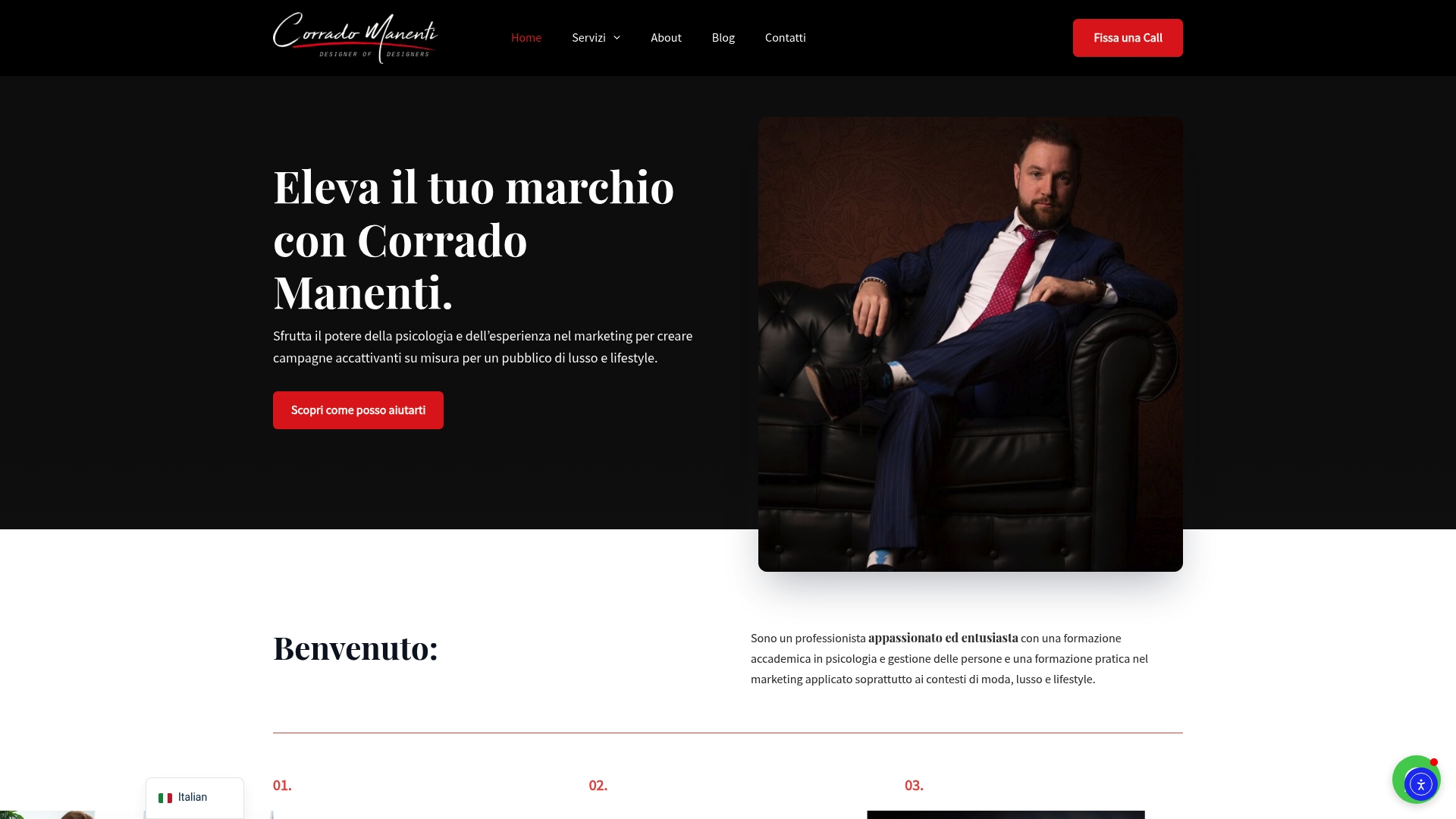
Ready to turn your social proof into a powerful strategic asset? Visit Corrado Manenti today and start crafting marketing campaigns that command prestige, foster genuine consumer trust, and position your luxury brand for lasting success. Take the step now to integrate authentic validation and elevate your brand impact with expert guidance from a proven fashion and luxury marketing consultant.
Frequently Asked Questions
What is social proof in the luxury sector?
Social proof in the luxury sector refers to the strategic demonstration of exclusivity, authenticity, and aspiration through curated evidence of consumer validation, reinforcing a brand’s prestige without sacrificing its exclusivity.
How does social proof in luxury differ from mass-market brands?
Unlike mass-market brands that rely on large numbers of reviews, luxury social proof focuses on selective endorsements from recognized experts or tastemakers, emphasizing quality and aspirational alignment over quantity.
What are the key types of social proof in the luxury context?
The primary types of social proof in luxury include functional social proof (demonstrating product performance), social and emotional social proof (validating status and identity), epistemic social proof (providing knowledge or reassurance), and conditional social proof (leveraging scarcity or exclusivity).
How do psychological drivers influence luxury social proof?
Psychological drivers in luxury social proof involve the desire for status and the need for uniqueness, where consumers seek products that signal both social prestige and distinction, shaping their preferences and purchase behaviors.