
What makes a luxury brand stand out in a rapidly changing European market? Strategic trend adoption for 2025 calls for more than just intuition. Luxury brands across Europe face mounting consumer demands for sustainability, digital innovation, and personalized experiences. By focusing on market readiness assessment, brands gain essential clarity to shape competitive positioning and deliver meaningful engagement. This guide helps you align your brand strategy with emerging 2025 trends while sustaining authentic luxury appeal.
Table of Contents
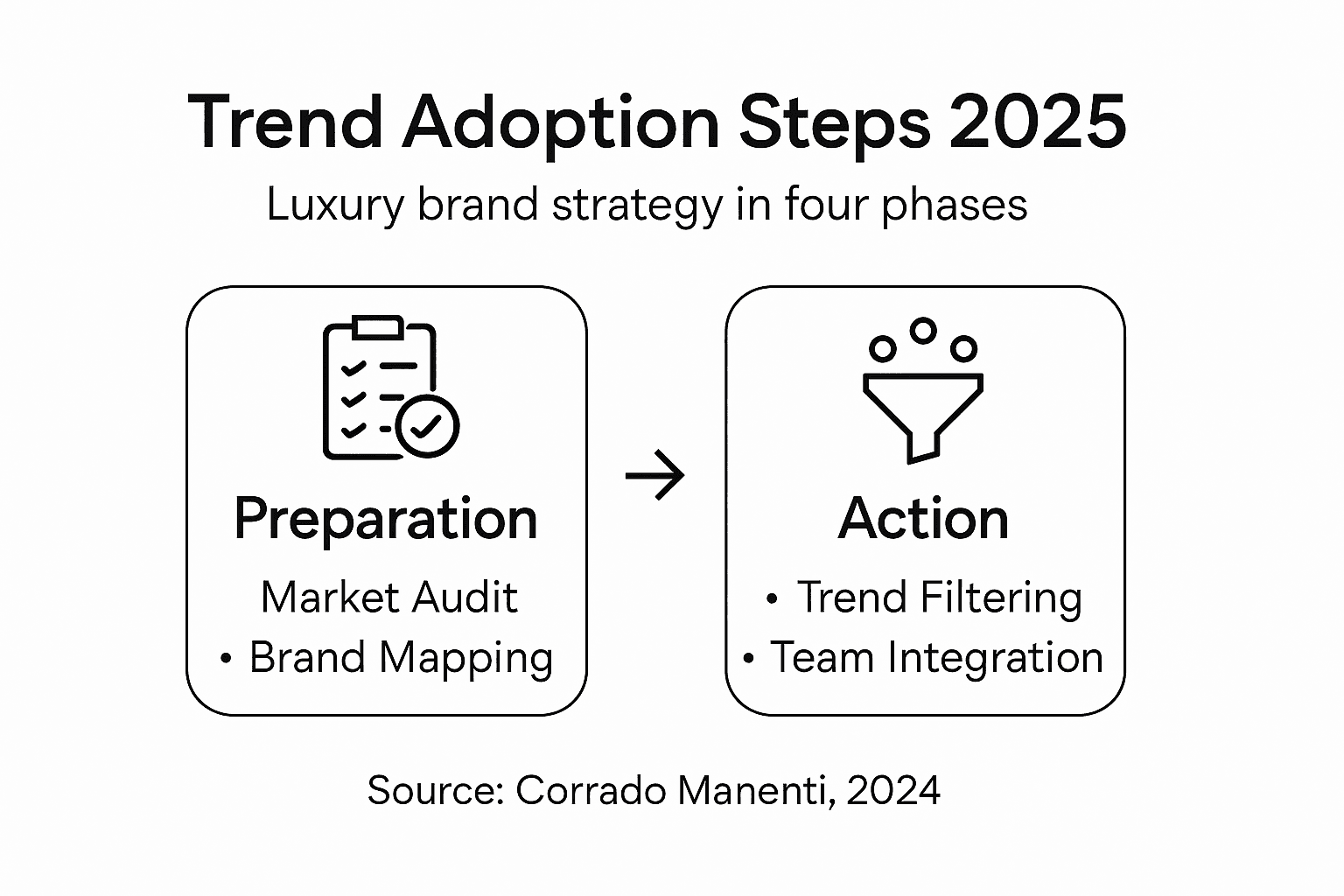
- Step 1: Assess Market Readiness And Align Your Brand
- Step 2: Identify And Filter Relevant 2025 Trends
- Step 3: Integrate Trends Into Marketing And Design Strategies
- Step 4: Activate Cross-Channel Launch And Audience Engagement
- Step 5: Evaluate Impact And Optimize Adoption Outcomes
Quick Overview
| Main Insight | Explanation |
|---|---|
| 1. Assess Market Readiness Regularly | Conduct quarterly audits to align brand capabilities with evolving luxury market trends and consumer expectations. |
| 2. Focus on Impactful Trends | Implement a rigorous trend filtering process to identify meaningful innovations that align with brand values and long-term relevance. |
| 3. Integrate Trends into Strategies | Map identified trends to your brand’s identity, ensuring marketing and design reflect both contemporary innovations and core heritage. |
| 4. Activate Multichannel Engagement | Develop a unified narrative and platform-specific strategies for engaging audiences across multiple touchpoints effectively. |
| 5. Evaluate and Optimize Regularly | Establish performance benchmarks and adaptive frameworks to continuously assess and refine trend adoption and brand performance. |
Step 1: Assess market readiness and align your brand
Successfully navigating the luxury market requires strategic assessment and precise brand alignment. This step will help you evaluate your brand’s positioning and adaptability for the critical 2025 market landscape.
To effectively assess market readiness, begin by examining the structural shifts happening in the luxury ecosystem. Luxury industry transformation demands strategic analysis, particularly around emerging consumer expectations and technological disruptions. Your assessment should focus on several key dimensions:
- Digital acceleration capabilities
- Cultural relevance and adaptability
- Consumer experience evolution strategies
- Sustainability and ethical positioning
Start by conducting a comprehensive market readiness audit that evaluates your current brand infrastructure against emerging trends. This involves analyzing:
- Technological integration potential
- Geographic market strengths
- Digital engagement metrics
- Innovation responsiveness
Strategic brand alignment requires understanding both your heritage and future potential.
Carefully map your brand’s existing strengths against projected market demands. Identify potential gaps between your current positioning and future consumer expectations. This diagnostic approach allows you to create targeted strategies that maintain your luxury brand’s competitive edge.

Pro tip: Conduct quarterly trend assessments to stay ahead of market shifts and maintain continuous brand relevance.
Step 2: Identify and filter relevant 2025 trends
Navigating the complex landscape of luxury trends requires a strategic and nuanced approach. This section will guide you through identifying and filtering the most impactful trends that will define the luxury market in 2025.
Global luxury trend analysis reveals a transformative ecosystem where innovation and heritage converge. To effectively identify and filter trends, develop a comprehensive framework that considers multiple strategic dimensions:
- Sustainability and circular fashion potential
- Digital innovation and technological integration
- Cultural and regional style dynamics
- Consumer experience and personalization
- Craftsmanship and design evolution
Implement a rigorous trend filtering process through these systematic steps:
- Conduct extensive trend research across multiple sources
- Score trends against your brand’s core values
- Evaluate scalability and market adaptability
- Assess long-term relevance beyond short-term novelty
Not all trends are created equal. Strategic filtration separates meaningful innovations from fleeting distractions.
Your trend identification should balance quantitative market data with qualitative cultural insights. Look beyond surface-level aesthetics to understand the deeper consumer motivations and technological shifts driving luxury evolution.
Pro tip: Create a dynamic trend scorecard that allows continuous reassessment and real-time trend filtering to maintain your brand’s competitive edge.
Here’s a summary of key strategic dimensions for luxury brands in 2025:
| Strategic Focus | Why It Matters | Example Implementation |
|---|---|---|
| Digital Innovation | Drives customer engagement | AI-driven personalization |
| Sustainability | Builds brand loyalty | Ethical material sourcing |
| Cultural Relevance | Attracts emerging audiences | Localized campaign messaging |
| Customer Experience | Differentiates brand | Immersive retail concepts |
| Craftsmanship | Supports luxury positioning | Limited edition collections |
Step 3: Integrate trends into marketing and design strategies
Successfully translating emerging luxury trends into cohesive marketing and design strategies requires a nuanced, forward-thinking approach. This step will help you transform trend insights into actionable brand experiences that resonate with sophisticated consumers.
Digital marketing strategies for luxury brands demand an innovative fusion of technology, storytelling, and authentic brand positioning. To effectively integrate trends, develop a comprehensive approach that encompasses multiple strategic dimensions:
- Technological innovation and digital experiences
- Sustainable design principles
- Personalized customer journey mapping
- Immersive storytelling techniques
- Cultural and regional brand adaptation
Implement trend integration through these systematic steps:
- Map trends against brand identity
- Develop adaptive design prototypes
- Create integrated marketing narratives
- Test and refine customer engagement approaches
Successful trend integration is not about following trends, but strategically interpreting them through your unique brand lens.
Your strategy should balance cutting-edge innovations with core brand heritage. Focus on creating seamless experiences that feel both contemporary and authentic, leveraging emerging technologies while maintaining the emotional connection that defines luxury brands.
Pro tip: Establish a cross-functional trend integration team that includes design, marketing, and consumer insights professionals to ensure comprehensive and holistic trend adoption.
The following table contrasts trend identification with trend integration in luxury strategy:
| Process Step | Main Objective | Key Outcome |
|---|---|---|
| Trend Identification | Discover impactful trends | Informed brand direction |
| Trend Integration | Apply trends to brand action | Differentiated brand growth |
Step 4: Activate cross-channel launch and audience engagement
Activating a successful cross-channel launch requires a sophisticated, integrated approach that connects with luxury consumers across multiple touchpoints. This step will help you create a cohesive and immersive brand experience that resonates deeply with your target audience.
Luxury brand cross-channel marketing strategies demand a nuanced approach to digital engagement. To effectively activate your launch, develop a comprehensive multichannel strategy that encompasses:
- Social media platform optimization
- Influencer partnership integration
- Virtual and augmented reality experiences
- Personalized content distribution
- Real-time customer interaction protocols
Implement your cross-channel launch through these strategic steps:
- Create a unified brand narrative
- Design platform-specific engagement tactics
- Develop adaptive content frameworks
- Establish real-time monitoring and response systems
Successful audience engagement transforms marketing from a monologue to a dynamic, interactive conversation.
Your activation strategy should blend digital innovation with emotional storytelling. Focus on creating seamless experiences that feel intuitive and personalized, leveraging emerging technologies to build genuine connections with your luxury audience.
Pro tip: Develop a centralized content management system that enables real-time content adaptation and synchronization across all marketing channels.
Step 5: Evaluate impact and optimize adoption outcomes
Successfully navigating trend adoption requires a sophisticated approach to measuring and refining your strategic outcomes. This step will help you develop a comprehensive evaluation framework that transforms insights into actionable improvements.
Luxury brand performance optimization strategies demand a holistic approach to measuring innovation impact. To effectively evaluate your trend adoption, develop a multidimensional assessment strategy that encompasses:
- Short-term performance metrics
- Long-term strategic positioning
- Customer engagement indicators
- Innovation integration effectiveness
- Sustainability commitment tracking
Implement your impact evaluation through these strategic steps:
- Establish clear performance benchmarks
- Develop comprehensive data collection protocols
- Conduct periodic strategic reviews
- Create adaptive optimization frameworks
True optimization is not about perfection, but continuous strategic refinement.
Your evaluation strategy should balance quantitative metrics with qualitative insights. Focus on creating a dynamic assessment model that allows for real-time adjustments and strategic pivots based on emerging market signals.
Pro tip: Implement a quarterly trend adoption scorecard that combines data-driven metrics with strategic narrative analysis to provide a comprehensive view of your brand’s evolution.
Master Luxury Trend Adoption with Expert Guidance
Adopting luxury trends for 2025 is not just about spotting new fashions but mastering the entire process—from assessing market readiness to activating cross-channel engagement. The challenge lies in aligning your brand’s heritage while embracing digital innovation and evolving consumer expectations. Key pain points include bridging the gap between tradition and technology, filtering meaningful trends amidst distractions, and creating authentic, personalized brand experiences that resonate deeply with sophisticated audiences.
At Corrado Manenti, we understand these challenges intimately. Our unique approach combines psychology-driven marketing with a meticulous focus on luxury and fashion consulting. We help you interpret trends strategically by integrating digital positioning and innovation into your brand DNA. By leveraging insights into consumer behavior and the luxury ecosystem, you will transform your trend adoption from uncertain attempts into confident, impactful actions.
Take control of your brand’s future today with tailored strategies in Marketing Fashion – Corrado Manenti designed specifically for luxury evolution.
Discover how to stay ahead with a partner who knows how to connect psychology, fashion, and digital innovation. Visit Corrado Manenti now to start mastering luxury trend adoption and unlock your brand’s full potential. For insider insights on the latest industry shifts, explore Fashion in Pillole – Corrado Manenti and deepen your competitive edge with precise Digital Positioning – Corrado Manenti. Act now to elevate your luxury brand before 2025 arrives.
Frequently Asked Questions
What are the key steps to assess market readiness for luxury brands in 2025?
To assess market readiness, conduct a comprehensive market readiness audit focusing on technological integration, geographic strengths, digital engagement metrics, and innovation responsiveness. Begin by mapping your brand’s existing strengths against projected market demands within 30 days to identify any potential gaps.
How can I effectively identify relevant trends for 2025 in the luxury sector?
To identify relevant trends, start by conducting extensive research and score trends against your brand’s core values. Create a dynamic trend scorecard to continuously reassess trends every quarter, ensuring you focus on impactful innovations rather than fleeting distractions.
What processes should I follow to integrate trends into my marketing strategies?
Integrate trends by mapping them against your brand identity, developing adaptive design prototypes, and creating integrated marketing narratives. Focus on testing customer engagement approaches within 60 days to refine your strategy and enhance brand resonance with consumers.
How can I activate a successful cross-channel launch for my luxury brand?
To activate a successful cross-channel launch, create a unified brand narrative and design platform-specific engagement tactics. Implement these strategies quickly and efficiently to connect with your audience across multiple touchpoints, enhancing their overall brand experience.
What metrics should I use to evaluate the impact of trend adoption?
Evaluate impact by establishing clear performance benchmarks, measuring customer engagement indicators, and tracking innovation integration effectiveness. Conduct periodic strategic reviews every quarter to ensure continuous improvement and adaptation of your luxury brand’s strategies.
Recommended
- Blog – Corrado Manenti
- 7 Key Luxury Marketing Trends 2025 for Global Brands – Corrado Manenti
- 7 Key Luxury Marketing Trends for 2025 – Corrado Manenti
- 7 Essential Branding Trends in 2025 for Luxury Leaders – Corrado Manenti
- 7 Smart Luxury Travel Budgeting Tips for Savvy Globetrotters – PilotTravelDeals.com