

Every luxury brand faces a turning point where understanding customer nuance becomes the edge in a saturated marketplace. With the competitive pulse of the European fashion scene, brands seek not just to attract high-net-worth individuals but to truly engage them through advanced market segmentation. Exploring how precise consumer targeting empowers luxury houses to reach exclusive audiences, this guide reveals the core frameworks and cutting-edge strategies reshaping luxury marketing today.
Table of Contents
- Defining Market Segmentation In Luxury Fashion
- Segmentation Types And Key Customer Profiles
- How Segmentation Enhances Personalization
- Driving Roi Through Targeted Strategies
- Common Pitfalls And How To Avoid Them
Key Takeaways
| Point | Details |
|---|---|
| Importance of Market Segmentation | Luxury brands benefit from sophisticated market segmentation to effectively engage distinct consumer groups with tailored marketing strategies. |
| Dynamic Customer Profiles | Understanding customer motivations requires multidimensional segmentation frameworks that incorporate psychological and behavioral insights. |
| Drive Personalization and Experience | Advanced analytics and technology enhance personalization in luxury fashion, allowing for customized consumer interactions that resonate deeply. |
| Avoiding Segmentation Pitfalls | Brands should regularly update segment profiles and avoid one-size-fits-all approaches to maintain effectiveness and relevance in a competitive market. |
Defining Market Segmentation in Luxury Fashion
Market segmentation represents a strategic approach for luxury fashion brands to systematically divide their complex consumer landscape into distinct, targeted groups. In the intricate world of luxury fashion, this methodology goes far beyond basic demographic categorization, instead diving deep into nuanced consumer psychographics, purchasing behaviors, and lifestyle preferences.
At its core, market segmentation enables precise consumer targeting by breaking down heterogeneous markets into smaller, more manageable subgroups with similar characteristics. For luxury fashion brands, this approach allows for hyper-personalized marketing strategies that resonate with specific consumer personas.
Luxury fashion market segmentation typically encompasses multiple strategic dimensions:
- Demographic Segmentation: Analyzing age, income, education, and geographic location
- Psychographic Segmentation: Understanding lifestyle, values, attitudes, and aspirations
- Behavioral Segmentation: Examining purchasing patterns, brand loyalty, and consumption frequency
- Lifestyle Segmentation: Mapping consumer interests, social groups, and personal identities
The global luxury fashion landscape is increasingly competitive, making precise market segmentation more critical than ever. Conceptual segmentation frames divide luxury markets into distinct categories such as premium, high-end, prêt-à-porter, and haute couture. Each segment requires unique strategic approaches to effectively engage target consumers.
Pro tip: Develop detailed consumer personas that go beyond basic demographics, incorporating psychological insights and lifestyle nuances to create truly resonant marketing strategies.
Segmentation Types and Key Customer Profiles
Luxury fashion brands must develop sophisticated customer profiling strategies that transcend traditional demographic boundaries. Multidimensional segmentation frameworks enable brands to understand the complex motivations and behaviors driving high-end consumer purchasing decisions.
Customer profiles in luxury fashion typically emerge from several critical segmentation dimensions:
-
Economic Status Segments:
- Ultra High Net Worth Individuals (UHNWI)
- High Income Professionals
- Affluent Young Professionals
- Established Wealth Consumers
-
Psychographic Luxury Archetypes:
- Status Seekers
- Aesthetic Connoisseurs
- Experience-Driven Consumers
- Heritage and Tradition Enthusiasts
Each customer segment represents a unique combination of psychological drivers, economic capabilities, and brand interaction patterns. Understanding these nuanced profiles allows luxury brands to craft hyper-targeted marketing strategies that resonate with specific consumer motivations and expectations.

Here’s a summary highlighting key luxury fashion customer segments and their marketing implications:
| Segment Type | Typical Profile | Key Motivation | Marketing Opportunity |
|---|---|---|---|
| Ultra High Net Worth | Billionaires, royals | Exclusivity, legacy | Bespoke experiences |
| Affluent Young Professionals | Millennials, Gen Z in top roles | Status, social value | Digital engagement |
| Aesthetic Connoisseurs | Art and design lovers | Craftsmanship, uniqueness | Limited editions |
| Experience-Driven | World travelers, influencers | Memorable moments | VIP events, immersive retail |
The most successful luxury fashion brands recognize that customer segmentation is not a static process but a dynamic, continuously evolving methodology. By constantly refining their understanding of consumer personas, brands can adapt their positioning, communication, and product offerings to maintain relevance in a rapidly changing marketplace.
Pro tip: Invest in advanced analytics and consumer research tools that provide deep psychological insights beyond traditional demographic data to truly understand your luxury market segments.
How Segmentation Enhances Personalization
Personalization in luxury fashion represents more than just tailored product recommendations. Big data and market segmentation enable brands to create deeply emotional, individualized consumer experiences that transcend traditional marketing approaches.
The personalization process through advanced segmentation involves multiple sophisticated strategies:
-
Communication Personalization:
- Customized messaging matching individual consumer profiles
- Targeted content reflecting specific lifestyle preferences
- Language and tone aligned with segment psychological characteristics
-
Experience Customization:
- Personalized shopping journeys
- Individualized product recommendations
- Tailored customer service interactions
- Exclusive engagement based on consumer segment
Luxury brands can leverage segmentation to transform generic interactions into memorable, emotionally resonant experiences. By understanding the nuanced differences between consumer archetypes, brands can craft communications and offerings that feel intimately crafted for each unique customer.
Technology plays a crucial role in this personalization evolution. Advanced analytics, machine learning algorithms, and comprehensive data collection enable luxury brands to move beyond surface-level demographic insights, creating rich, multidimensional consumer profiles that capture the complexity of individual preferences and aspirations.
Pro tip: Continuously update your consumer segmentation models by integrating both quantitative data and qualitative emotional insights to maintain accuracy and relevance.
Driving ROI Through Targeted Strategies
Luxury brands are increasingly recognizing that targeted market segmentation is not just a marketing strategy, but a critical financial imperative. By precisely identifying and focusing on specific customer segments, brands can dramatically improve their return on investment and create more meaningful consumer connections.
The financial benefits of strategic segmentation manifest through multiple key channels:
-
Revenue Enhancement Strategies:
- Increased customer lifetime value
- Higher conversion rates
- Reduced customer acquisition costs
- Improved pricing optimization
-
Cost Optimization Approaches:
- More efficient marketing spend
- Targeted communication channels
- Reduced marketing waste
- Precision in resource allocation
Successful ROI-driven segmentation requires a holistic approach that combines sophisticated data analytics with deep consumer psychology. Luxury brands must move beyond superficial demographic categorizations and develop nuanced understanding of consumer motivations, aspirations, and behavioral patterns.
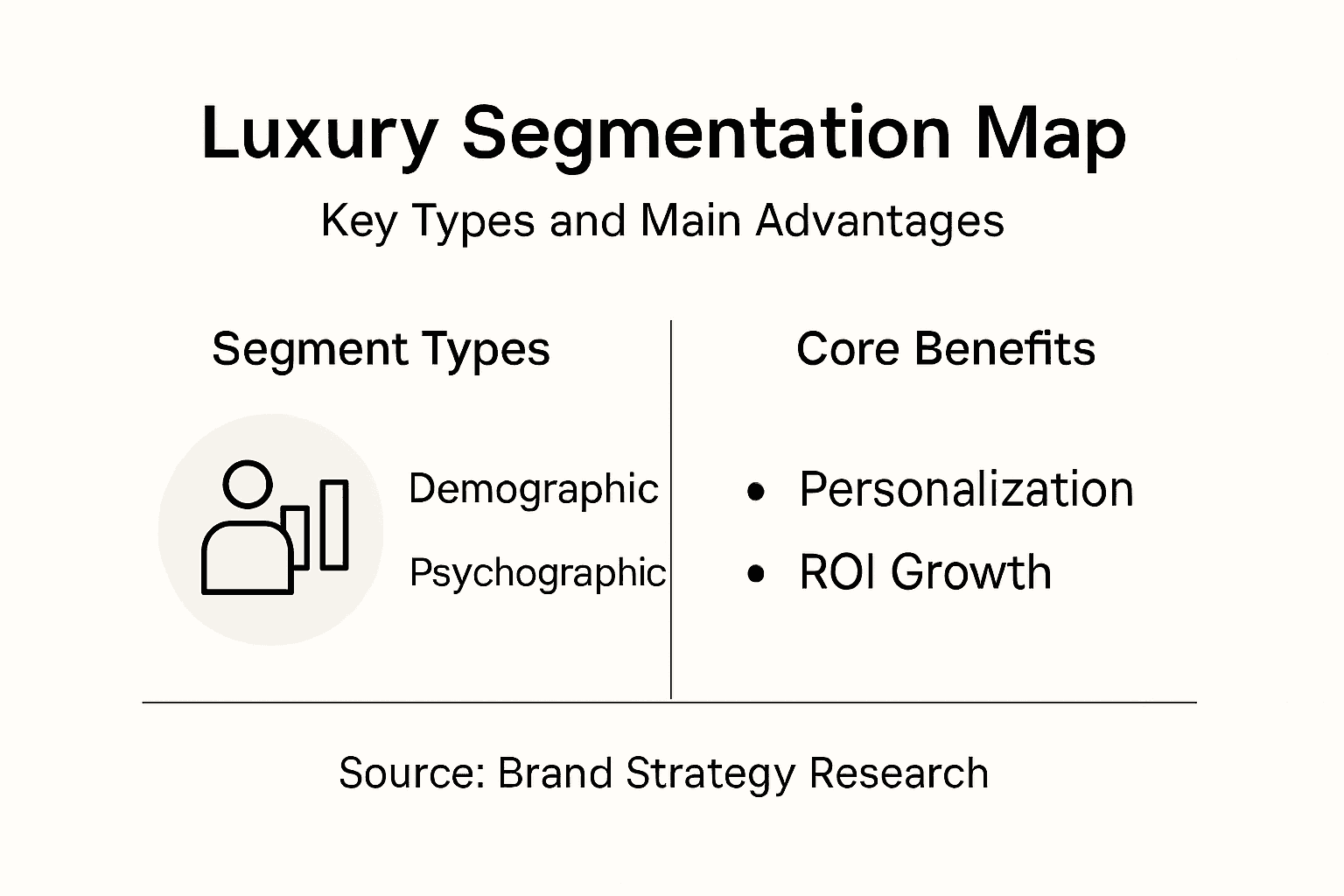
Technology plays a transformative role in this strategic evolution. Advanced machine learning algorithms, predictive analytics, and comprehensive data integration enable luxury brands to create increasingly precise consumer models. These models allow for hyper-targeted marketing approaches that significantly improve financial performance and brand engagement.
Pro tip: Invest in developing comprehensive data infrastructure that integrates both quantitative metrics and qualitative consumer insights to create truly dynamic market segmentation strategies.
Common Pitfalls and How to Avoid Them
Luxury fashion brands often encounter critical challenges when implementing market segmentation strategies. Segmentation strategy pitfalls can significantly undermine marketing effectiveness and brand positioning if not carefully navigated.
The most prevalent segmentation mistakes include:
-
Diagnostic Segmentation Errors:
- Oversimplifying consumer complexity
- Relying on outdated demographic data
- Ignoring intersectional consumer identities
- Failing to update segment profiles regularly
-
Strategic Implementation Mistakes:
- Neglecting resource allocation constraints
- Developing one-size-fits-all marketing approaches
- Underestimating segment heterogeneity
- Misaligning segment insights with brand positioning
Successful segmentation requires a dynamic, nuanced approach that recognizes consumer segments as living, evolving entities. Luxury brands must develop sophisticated frameworks that balance quantitative data with qualitative consumer insights, ensuring segments remain relevant and actionable.
The table below outlines common segmentation pitfalls and effective mitigation techniques:
| Pitfall | Negative Impact | Mitigation Strategy |
|---|---|---|
| Outdated segment data | Missed trends, poor targeting | Regular data refreshes |
| One-size-fits-all approach | Diluted brand positioning | Tailored campaigns |
| Ignoring intersectionality | Overlooked market gaps | Inclusive segment modeling |
| Resource misallocation | Wasted budget, low ROI | Prioritized investment based on data |
Technology and advanced analytics play a crucial role in mitigating segmentation risks. Machine learning algorithms, predictive modeling, and real-time data integration enable brands to create more adaptive, responsive segmentation strategies that can quickly adjust to changing market dynamics and consumer behaviors.
Pro tip: Implement a quarterly segmentation review process that combines data analytics with direct consumer feedback to maintain the accuracy and relevance of your market segments.
Unlock Precision in Luxury Market Segmentation with Expert Guidance
The article highlights the challenge luxury brands face in navigating complex market segmentation to create truly personalized consumer experiences. Key pain points like avoiding oversimplified demographics, integrating psychological insights, and continuously refining consumer profiles are crucial for brands seeking to elevate their positioning and ROI. If you want to move beyond generic marketing and embrace psychology-driven strategies that resonate at an emotional level, expert support is indispensable.
At Corrado Manenti, we specialize in bridging the gap between deep consumer psychology and luxury branding excellence. Our tailored consulting solutions empower your brand to:
- Craft sophisticated segmentation models
- Deliver hyper-personalized marketing campaigns
- Leverage the latest digital innovations to stay competitive
Experience how our expertise in psychology-driven marketing and luxury consulting can transform your market segmentation approach into a strategic advantage.
Take control of your brand’s future and start transforming challenges highlighted in the article into opportunities for growth.
Are you ready to make market segmentation your competitive edge?
Connect with Corrado Manenti today at https://corradomanenti.it and turn complex luxury segmentation into powerful consumer connections.
Frequently Asked Questions
What is market segmentation in luxury fashion?
Market segmentation in luxury fashion refers to the strategic process of dividing the consumer market into distinct groups based on various characteristics such as demographics, psychographics, behaviors, and lifestyles. This allows luxury brands to tailor their marketing strategies to resonate with specific consumer personas.
Why is market segmentation important for luxury brands?
Market segmentation is crucial for luxury brands because it enables them to create hyper-personalized marketing strategies that connect with finely defined consumer groups. By understanding the complexities of their audience, brands can improve their marketing effectiveness and enhance customer experiences.
What are the main types of market segmentation used in luxury fashion?
The main types of market segmentation in luxury fashion include demographic segmentation (age, income, education), psychographic segmentation (values and lifestyles), behavioral segmentation (purchasing patterns), and lifestyle segmentation (interests and identities).
How can luxury brands enhance personalization through market segmentation?
Luxury brands can enhance personalization by using advanced segmentation strategies to tailor communications and customer experiences. This includes custom messaging that aligns with consumer profiles, personalized shopping journeys, and targeted content that reflects specific lifestyle preferences.