
Most American luxury consumers do not just seek exclusivity, they pursue profound emotional connections with their chosen brands. In markets where over 60 percent of high-net-worth clients cite brand narrative as their main loyalty driver, standard rewards or transactional perks are no longer enough. For European and North American managers, understanding these emotional triggers is essential for crafting loyalty strategies that resonate deeply and offer true long-term value.
Table of Contents
- What Customer Loyalty Means in Luxury
- Types of Loyalty in High-End Markets
- Psychological and Emotional Drivers Explained
- Key Strategies for Fostering Long-Term Loyalty
- Common Pitfalls and How to Avoid Them
Key Takeaways
| Point | Details |
|---|---|
| Emotional Engagement is Key | Luxury brands must create deep emotional connections with consumers to foster loyalty that goes beyond transactions. |
| Understand Loyalty Types | Recognizing the different types of loyalty in luxury markets can guide brands in crafting targeted strategies that resonate with their consumers. |
| Personalization is Essential | Implementing precision personalization through data-driven insights will enhance customer experiences, making them feel valued and understood. |
| Mitigate Emotional Risks | Brands should proactively address potential post-purchase regrets and emotional insecurities to maintain consumer trust and long-term loyalty. |
What Customer Loyalty Means in Luxury
Customer loyalty in the luxury market transcends traditional transactional relationships, representing a profound psychological connection between discerning consumers and exceptional brands. Unlike standard retail interactions, luxury loyalty emerges from a complex interplay of emotional resonance, personal identity, and brand perception. Luxury customer experiences fundamentally differ from mainstream consumer markets by emphasizing deep emotional engagement rather than mere product exchange.
In the luxury domain, customer loyalty is a nuanced construct rooted in brand personification and experiential quality. Academic research reveals that luxury consumers seek brands that not only deliver superior products but also communicate a compelling narrative and create immersive experiences. Comprehensive brand loyalty studies demonstrate that high-net-worth individuals evaluate brands through intricate lenses of heritage, craftsmanship, and emotional connection.
The psychological dimensions of luxury loyalty involve multiple sophisticated elements: brand perception, personal status signaling, and an ongoing relationship that extends beyond single transactions. Luxury consumers do not simply purchase products they invest in experiences that reflect their personal aspirations and social identity. Brands that understand this dynamic can cultivate extraordinary loyalty by consistently delivering personalized interactions, maintaining impeccable service standards, and creating meaningful connections that transcend conventional marketing approaches.
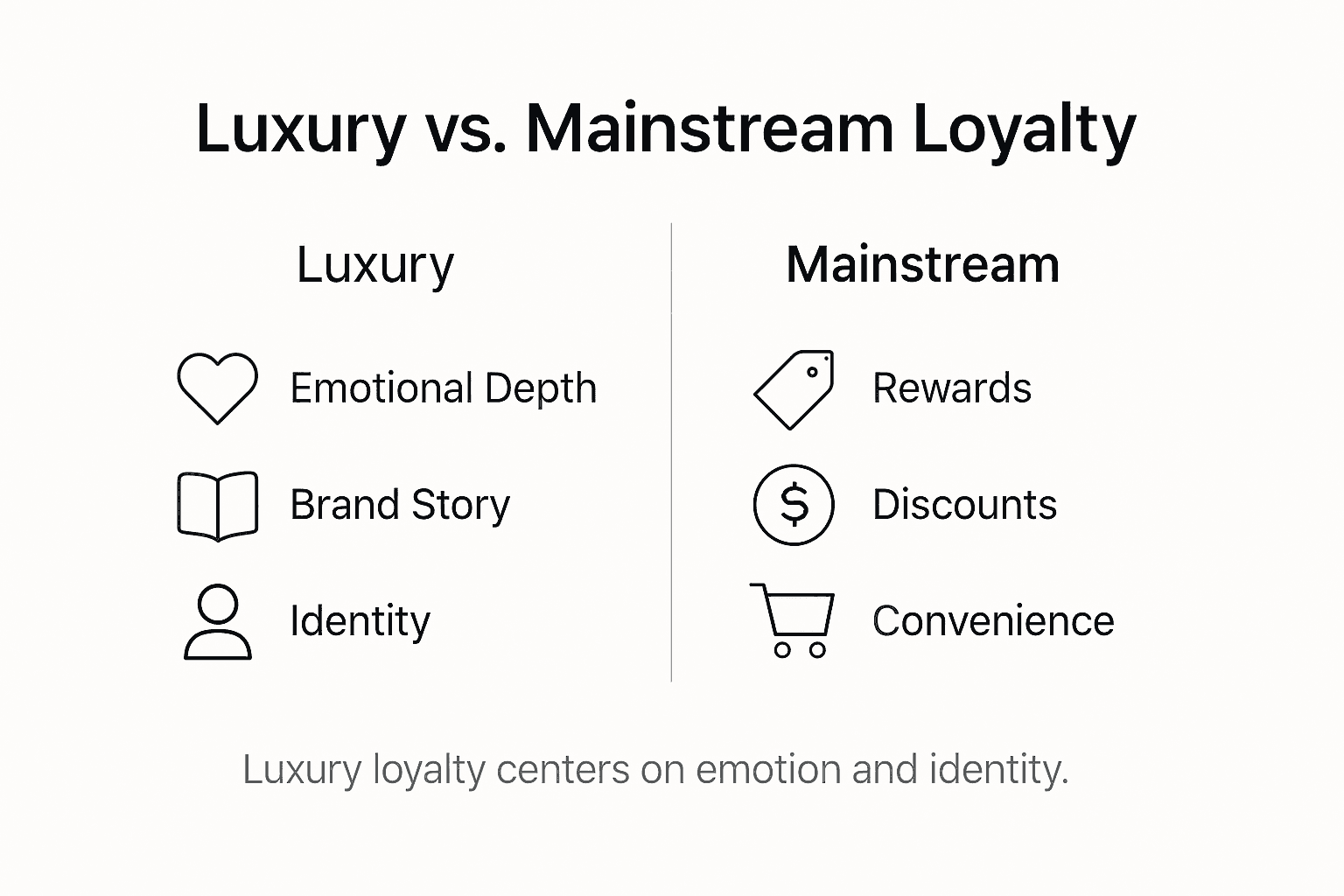
Here’s a look at how luxury loyalty differs fundamentally from mainstream customer loyalty:
| Key Aspect | Luxury Market Focus | Mainstream Market Focus |
|---|---|---|
| Emotional Depth | Prioritizes emotional resonance and connection | Relies on utility and convenience |
| Brand Relationship | Long-term, personal, narrative-driven engagement | Transactional, promotion-driven |
| Loyalty Drivers | Heritage, exclusivity, craftsmanship | Price, rewards, ease of purchase |
| Experience Design | Tailored, immersive, VIP experiences | Standardized, mass customer approach |
Professional Insight: Luxury brand managers should focus on creating holistic experiences that engage customers emotionally, not just transactionally, by understanding the deeper psychological motivations driving high-end consumer behavior.
Types of Loyalty in High-End Markets
Luxury markets reveal complex loyalty dynamics that extend far beyond traditional consumer engagement models. Contemporary loyalty research demonstrates that high-end consumers experience multiple sophisticated loyalty types, each representing a unique psychological connection with premium brands. These nuanced loyalty categories reflect intricate emotional and rational decision-making processes that distinguish luxury consumer behavior.
Five primary loyalty types emerge in high-end markets: inherited loyalty, which stems from generational brand appreciation and cultural heritage; ethical loyalty, connecting consumers through shared values and brand principles; true loyalty, representing genuine emotional attachment; silent loyalty, characterized by consistent repeat purchases without vocal enthusiasm; and incentivized loyalty, driven by exclusive rewards and personalized experiences. Advanced loyalty studies suggest that emotional and ethical loyalty types carry significantly more long-term value compared to transactional reward-based approaches.
Understanding these loyalty types requires recognizing that luxury consumers do not merely purchase products but invest in brand narratives, personal identity expressions, and lifestyle representations. High-net-worth individuals evaluate brand relationships through multidimensional lenses that incorporate heritage, craftsmanship, social signaling, and personal resonance. Successful luxury brands navigate these complex loyalty landscapes by creating immersive experiences that transcend traditional marketing strategies and forge deep, meaningful connections with their discerning clientele.
Professional Insight: Luxury brands should focus on cultivating emotional and ethical loyalty by consistently demonstrating authentic values, maintaining exceptional quality standards, and creating personalized experiences that reflect customers’ sophisticated expectations.
Psychological and Emotional Drivers Explained
Luxury consumer psychology represents a complex landscape of intricate emotional mechanisms that drive brand engagement and loyalty. Groundbreaking consumer research reveals that emotional drivers in high-end markets extend far beyond simple transactional interactions, encompassing profound psychological dimensions like intimacy, sensuality, and deep personal connection.
The most powerful psychological drivers in luxury markets include brand intimacy, which represents the emotional depth of consumer relationship with a brand, and brand respect, emerging from consistent performance and reputation. Consumers do not merely purchase luxury products they form intricate emotional narratives that integrate personal identity, social signaling, and aspirational self-perception. These emotional connections are characterized by nuanced psychological elements such as trust, sensory experience, personal meaning, and the ability of a brand to reflect the consumer’s ideal self-image.
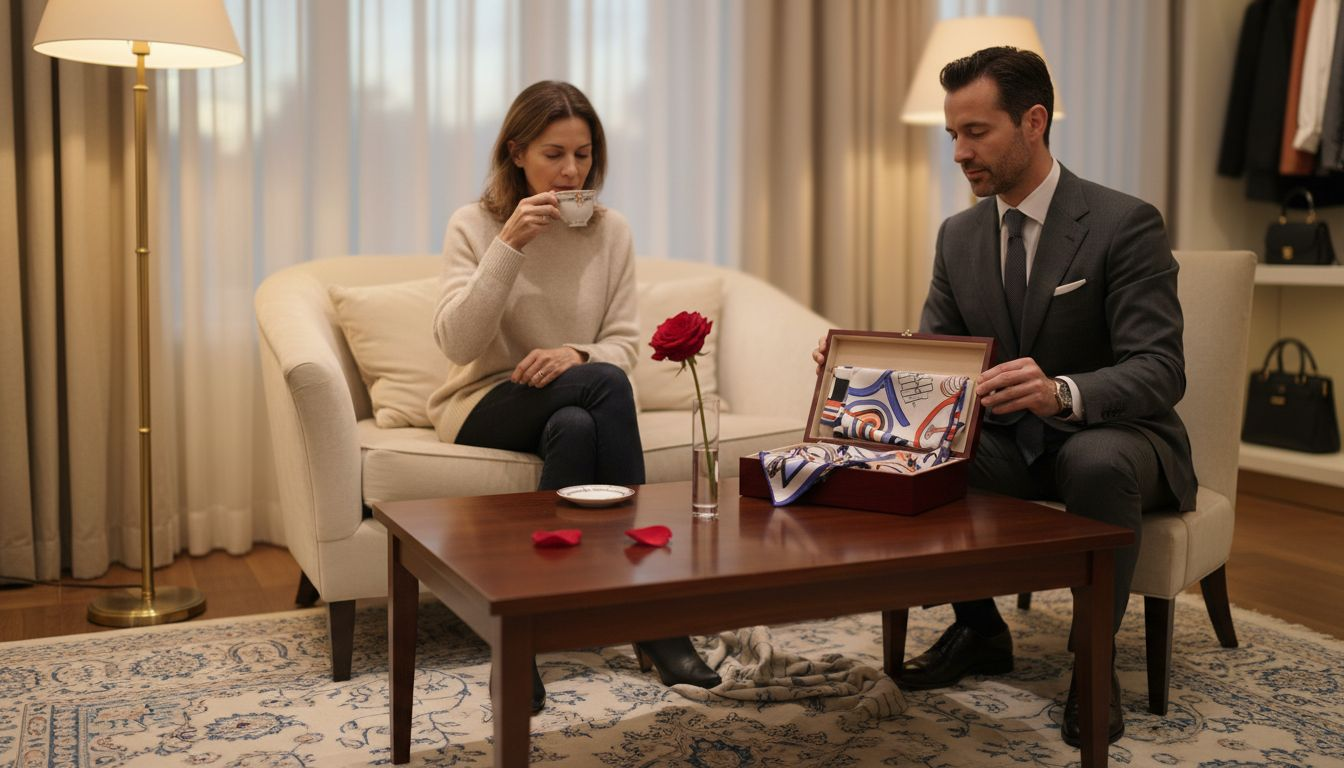
Understanding these psychological drivers requires recognizing that luxury consumers seek more than material possession they desire transformative experiences that validate their self-concept and social positioning. Emotional engagement in luxury markets is fundamentally about creating a sense of belonging, exclusivity, and personal validation. Brands that successfully navigate these psychological landscapes do so by crafting immersive experiences that resonate deeply with individual consumer motivations, creating emotional pathways that transcend traditional marketing approaches and establish profound, lasting connections.
Professional Insight: Develop brand strategies that prioritize emotional resonance by understanding individual consumer psychology, creating personalized experiences that speak directly to personal aspirations and identity narratives.
Key Strategies for Fostering Long-Term Loyalty
Fostering long-term customer loyalty in luxury markets demands a sophisticated, multifaceted approach that transcends traditional marketing techniques. Advanced digital strategies reveal that successful luxury brands must integrate data-driven personalization, immersive digital experiences, and emotionally resonant storytelling to create meaningful connections with discerning consumers.
Key strategies for cultivating enduring loyalty include precision personalization, which involves leveraging advanced analytics to create hyper-tailored experiences that reflect individual consumer preferences and aspirations. This approach requires brands to develop sophisticated data collection and interpretation mechanisms that go beyond demographic segmentation, instead creating deeply individualized engagement pathways. Successful luxury brands recognize that personalization is not about mass customization but about creating unique, emotionally meaningful interactions that make each consumer feel uniquely understood and valued.
The most effective loyalty cultivation strategies integrate technological innovation with profound emotional intelligence. Brands must create holistic ecosystems that provide exclusive access, personalized communication, and experiences that extend far beyond traditional transactional relationships. This means developing digital platforms that offer insider perspectives, behind-the-scenes content, and interactive experiences that make consumers feel like privileged participants in the brand’s narrative rather than passive purchasers. By blending technological sophistication with emotional depth, luxury brands can transform customer interactions into meaningful, long-term relationships built on trust, understanding, and shared values.
Professional Insight: Implement a comprehensive loyalty strategy that combines data-driven personalization with emotionally intelligent storytelling, creating experiences that feel simultaneously exclusive and deeply personal.
Common Pitfalls and How to Avoid Them
Navigating customer loyalty in luxury markets requires an astute understanding of potential psychological and strategic pitfalls that can undermine brand relationships. Comprehensive research on post-purchase experiences reveals that emotional risks such as social comparison and perceived overpayment can significantly erode consumer confidence and long-term brand commitment.
One of the most critical loyalty destruction mechanisms emerges from misaligned customer service approaches. Brands frequently stumble by treating loyalty programs as transactional instruments rather than relationship-building platforms. Advanced customer retention studies demonstrate that loyalty initiatives failing to cultivate genuine emotional connections often result in superficial engagement. High-net-worth consumers seek experiences that transcend monetary incentives, demanding nuanced interactions that validate their unique identity and aspirational self-perception.
Successful luxury brands must proactively mitigate potential loyalty risks by developing sophisticated emotional intelligence strategies. This involves creating robust mechanisms to address potential post-purchase regrets, implementing transparent communication protocols, and designing experiences that consistently reaffirm the consumer’s decision. Brands need to recognize that loyalty is not a destination but a continuous journey of mutual understanding, requiring constant adaptation, personalized attention, and a deep commitment to exceeding consumer expectations at every interaction point.
The table below highlights common pitfalls in luxury loyalty programs and ways to avoid them:
| Pitfall | Impact on Loyalty | Proactive Solution |
|---|---|---|
| Overly transactional rewards | Superficial engagement | Foster emotional connections |
| Inconsistent service experiences | Erodes trust and confidence | Ensure robust quality controls |
| Lack of transparent communication | Creates uncertainty and regret | Provide clear post-purchase follow-up |
| Ignoring emotional feedback | Missed improvement opportunities | Actively respond to consumer concerns |
Professional Insight: Develop comprehensive emotional risk mitigation strategies that anticipate and proactively address potential consumer uncertainties before they transform into loyalty-threatening perceptions.
Elevate Customer Loyalty with Psychology-Driven Luxury Marketing
Understanding the deep psychological connections that define customer loyalty in luxury is essential for brands aiming to build lasting relationships. This article highlights the challenges luxury brands face in nurturing emotional resonance, personal identity alignment, and immersive experiences. If you want to move beyond traditional transactional loyalty programs and create authentic, emotionally charged brand engagements, then expert guidance rooted in consumer psychology is key.
Discover how Corrado Manenti’s unique approach integrates academic insights in psychology with practical luxury marketing strategies. Specializing in fashion and luxury sectors, his services focus on crafting personalized marketing campaigns and elevating brand experiences that truly resonate with high-net-worth clients. Ready to transform your loyalty initiatives into meaningful emotional journeys? Explore Marketing Fashion – Corrado Manenti to learn how targeting psychological drivers can maximize your luxury customer retention. Visit https://corradomanenti.it now and start building loyalty that lasts beyond the purchase.
Frequently Asked Questions
What is customer loyalty in the luxury market?
Customer loyalty in the luxury market refers to a deep psychological connection between consumers and brands, characterized by emotional engagement and a focus on exceptional experiences rather than just products.
How does luxury customer loyalty differ from mainstream loyalty?
Luxury customer loyalty is rooted in personal identity, emotional depth, and narrative-driven experiences, while mainstream loyalty typically focuses on transactional relationships driven by convenience and promotions.
What are the types of loyalty in the luxury market?
The luxury market features several types of loyalty, including inherited, ethical, true, silent, and incentivized loyalty, each reflecting unique emotional connections with premium brands.
What psychological drivers influence loyalty among luxury consumers?
Key psychological drivers include brand intimacy, emotional connection, perceived heritage, and the ability of a brand to reflect a consumer’s self-image, all of which shape consumer loyalty in the luxury sector.