

Most American luxury shoppers do not simply buy expensive products, they invest in symbols that express identity, status, and ambition. In a market where perception shapes every decision, brands face the challenge of creating powerful narratives that resonate on a personal and social level. With over 60 percent of luxury consumers motivated by emotional experiences rather than pure functionality, understanding the psychology behind luxury perception is key to building lasting connections and maintaining prestigious brand value.
Table of Contents
- Defining Perception In Luxury Markets
- How Consumer Psychology Shapes Desire
- Branding And Storytelling In Premium Sectors
- Experiential Value Beyond Material Goods
- Risks Of Misalignment And Brand Dilution
Key Takeaways
| Point | Details |
|---|---|
| Perception in Luxury Markets | Understanding consumer psychology is critical as it shapes how luxury products are perceived and valued based on emotional and symbolic meanings. |
| Consumer Desire Dynamics | Individual self-perception and societal signals play a vital role in shaping consumer desires for luxury products, highlighting the importance of psychological congruence. |
| Brand Storytelling Importance | Crafting authentic narratives that resonate with consumers’ emotions fosters deep connections and enhances brand loyalty in the luxury market. |
| Mitigating Brand Dilution Risks | Consistency in branding across all markets is essential; misalignment can damage perceived exclusivity and brand value, necessitating robust governance strategies. |
Defining Perception in Luxury Markets
Perception in luxury markets represents a complex psychological mechanism that transforms product experiences into emotional and symbolic narratives. Unlike standard consumer goods, luxury products transcend mere functionality, becoming powerful mediums of personal and social communication. Understanding the psychology behind luxury consumption reveals how consumers construct intricate meaning around premium products and experiences.
At its core, perception in luxury markets operates through a delicate interplay between individual identity and external social signals. Consumers do not simply purchase luxury items; they acquire carefully curated symbols of status, aspiration, and self-representation. The psychological tensions between personal desires and societal expectations shape how individuals interpret and engage with luxury offerings. These tensions manifest through nuanced decision-making processes where emotional resonance often outweighs rational economic considerations.
The perception framework in luxury markets is fundamentally multidimensional, encompassing sensory, emotional, and cognitive components. Sensory perception involves the immediate aesthetic and tactile experience of luxury products – the quality of materials, craftsmanship, and design details. Emotional perception connects these sensory experiences with deeper psychological needs for recognition, belonging, and personal achievement. Cognitive perception represents the intellectual understanding of a product’s heritage, craftsmanship, and cultural significance.
Here’s a comparison of the core dimensions of luxury perception and their unique roles:
| Dimension | Definition | Business Impact |
|---|---|---|
| Sensory | Physical qualities like design and materials | Drives first impressions and appeal |
| Emotional | Feelings evoked during product experience | Fosters loyalty and personal linkage |
| Cognitive | Knowledge of brand heritage and meaning | Enhances perceived value and prestige |
Pro Tip: Luxury Perception Strategy: Develop a holistic understanding of your target consumers’ psychological landscape by conducting deep psychological research that goes beyond traditional demographic segmentation, focusing instead on emotional drivers and symbolic meanings.
How Consumer Psychology Shapes Desire
Consumer psychology in luxury markets operates through intricate emotional mechanisms that transform product experiences into profound psychological narratives. Brand awe plays a critical role in shaping consumer desire, where luxury brands strategically evoke powerful emotional responses that transcend traditional product appreciation. This psychological phenomenon involves creating experiences of euphoria, enthrallment, and a sense of vastness that captivates potential consumers.
The formation of desire emerges from a complex interplay between individual self-perception and external social signals. Consumers do not merely purchase luxury items; they acquire symbolic representations of identity, status, and personal aspiration. Psychological congruence becomes a fundamental driver, where individuals seek products that align with their idealized self-image. Research demonstrates that when a luxury brand’s perceived image matches a consumer’s internal identity construct, the likelihood of purchase dramatically increases.
Understanding consumer psychology requires examining the multilayered emotional architecture behind luxury consumption. Psychological motivations range from seeking social recognition and expressing personal achievement to experiencing aesthetic pleasure and emotional fulfillment. Luxury brands that successfully decode these nuanced psychological triggers can create powerful narrative experiences that resonate deeply with their target consumers. By strategically designing products and marketing narratives that speak to fundamental human emotional needs, brands can transform simple transactions into meaningful psychological journeys.
Pro Tip: Emotional Mapping Strategy: Invest in advanced psychological research techniques that map consumers’ emotional landscapes, focusing on understanding the subconscious drivers and symbolic meanings that transform product interactions from transactional experiences to profound personal statements.
Branding and Storytelling in Premium Sectors
Luxury and prestige brand marketing represents a sophisticated art form that transcends traditional product promotion, transforming consumer experiences into immersive narrative journeys. Unlike mass-market communication strategies, premium sector branding relies on intricate storytelling techniques that weave together heritage, craftsmanship, and emotional resonance. These narratives are meticulously designed to create profound connections that extend far beyond transactional interactions.

The architecture of premium brand storytelling is built upon several foundational pillars: authenticity, exclusivity, and emotional engagement. Each narrative must communicate the brand’s unique heritage while simultaneously creating a sense of aspiration and personal connection. Successful premium brands craft stories that invite consumers into an exclusive world, where each product represents a chapter in a larger, more meaningful experience. This approach transforms ordinary purchases into symbolic representations of personal identity and social positioning.
At the core of effective premium sector storytelling lies the ability to balance universal human emotions with unique brand-specific narratives. Brands must navigate complex cultural landscapes, understanding that storytelling approaches differ across global markets. Some narratives might resonate powerfully in Western contexts while requiring nuanced adaptation for Asian consumer segments. The most sophisticated premium brands develop flexible storytelling frameworks that maintain core brand essence while allowing for cultural sensitivity and localized interpretation.
Pro Tip: Narrative Engineering Strategy: Develop multi-layered brand stories that provide depth, mystery, and personal connection, allowing consumers to see themselves as active participants in the brand’s ongoing narrative rather than passive recipients of marketing messages.
Experiential Value Beyond Material Goods
Research on brand perception reveals that luxury experiences transcend physical product attributes, creating multidimensional value that resonates deeply with consumers’ emotional and psychological landscapes. Modern luxury consumers seek transformative interactions that go far beyond traditional transactional exchanges, demanding immersive experiences that communicate meaning, status, and personal identity through sophisticated sensory and emotional engagement.
The experiential architecture of luxury consumption involves intricate psychological mechanisms where products become conduits for emotional storytelling. Each interaction represents an opportunity to craft a profound narrative that connects individual consumer aspirations with brand heritage. Visual elements, service interactions, and environmental design collaborate to generate complex perceptual experiences that transform material objects into symbolic representations of personal achievement, social positioning, and individual aesthetic sensibilities.
Understanding experiential value requires recognizing that luxury consumers are not purchasing products but investing in curated moments of personal significance. These experiences are characterized by their ability to generate emotional resonance, creating feelings of euphoria, wonder, and personal transformation. Sophisticated luxury brands strategically design interactions that engage multiple sensory channels, creating holistic experiences that stimulate intellectual curiosity, emotional connection, and psychological fulfillment beyond the immediate material context of the product itself.
Pro Tip: Experiential Design Strategy: Create multilayered brand experiences that engage consumers through sensory, emotional, and intellectual touchpoints, ensuring that each interaction feels uniquely personalized and profoundly meaningful.
Risks of Misalignment and Brand Dilution
Brand image consistency research demonstrates that luxury brands face critical challenges when their perceived identity becomes fragmented across different markets and consumer segments. Misalignment occurs when a brand’s core narrative, visual language, and experiential promise become inconsistent, potentially destroying the carefully constructed perception of exclusivity and premium value that defines luxury positioning.
The strategic vulnerabilities of brand dilution emerge through multiple complex pathways. These include inconsistent messaging across international markets, misaligned product positioning, inappropriate marketing communications, and uncontrolled brand extensions. Each deviation from the established brand narrative risks undermining the intricate psychological construct that makes luxury brands powerful. Consumer perception is extraordinarily sensitive, with even minor inconsistencies potentially triggering significant shifts in brand loyalty and perceived value.
The following table summarizes strategic risks facing luxury brands and their potential business consequences:
| Strategic Risk | Description | Potential Consequence |
|---|---|---|
| Brand Inconsistency | Mixed messaging or visual language | Erodes perceived exclusivity |
| Product Misalignment | Offerings deviate from core brand values | Confuses target audience, reduces trust |
| Uncontrolled Extension | Excessive new products dilute brand identity | Weakens premium perception, harms value |
| Cross-market Fragmentation | Narrative differs across global markets | Damages global identity, breeds confusion |
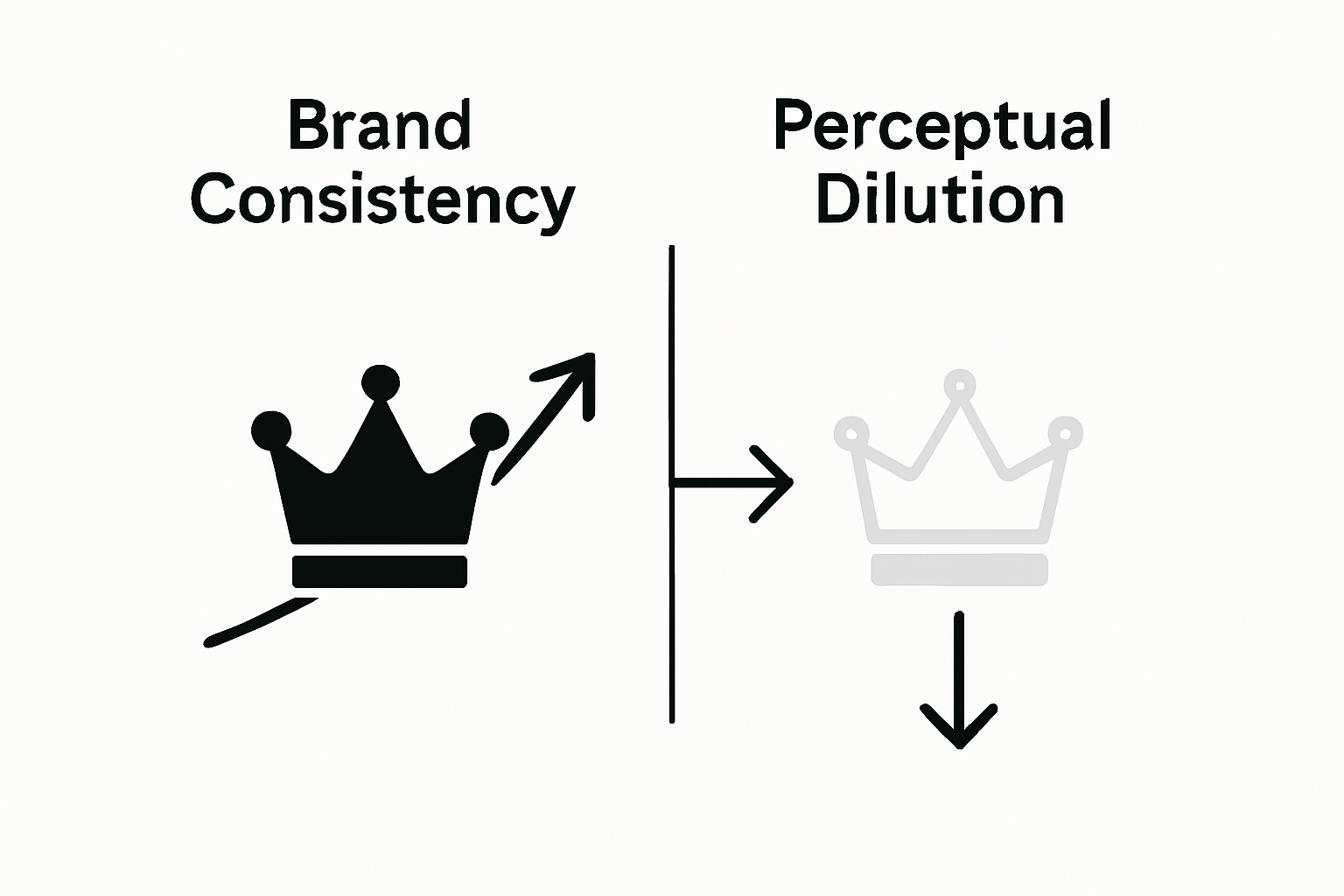
Understanding the mechanics of brand dilution requires recognizing the profound psychological mechanisms that underpin luxury consumption. Consumers do not merely purchase products but invest in symbolic representations of identity, status, and aspiration. When brands fail to maintain a coherent, authentic narrative, they risk transforming from exclusive, desirable symbols into generic, replaceable commodities. The most sophisticated luxury brands continuously monitor and meticulously manage their perceptual landscape, ensuring that every touchpoint reinforces their core brand promise with precision and emotional intelligence.
Pro Tip: Perceptual Alignment Strategy: Develop a comprehensive brand governance framework that systematically audits and synchronizes all brand communications, ensuring absolute consistency in messaging, visual language, and experiential delivery across all consumer touchpoints.
Unlock the Power of Perception to Elevate Your Luxury Brand
The article reveals that luxury market perception is a complex blend of sensory appeal, emotional resonance, and cognitive recognition. Many luxury brands struggle with creating authentic connections that capture these dimensions without risking brand dilution or misalignment. If your challenge is to develop a psychologically-driven marketing strategy that deepens consumer desire while maintaining brand consistency, it is essential to blend detailed insight with precise execution.
At Corrado Manenti, we specialize in merging consumer psychology with luxury marketing strategies to solve these exact pain points. Our approach ensures your brand story engages deeply by:
- Crafting narratives that resonate emotionally and intellectually
- Maintaining unwavering brand alignment across every market and touchpoint
- Innovating digital and experiential strategies to elevate consumer perception
Explore our focused expertise in Marketing Fashion – Corrado Manenti and discover how attention to psychological drivers can transform your brand presence.
Ready to position your luxury brand at the pinnacle of perception and prestige? Visit Corrado Manenti now to partner with a consultant who understands the delicate art of luxury branding and consumer psychology. Take the next step to create marketing that does not just sell but speaks to the heart of your ideal customer.
Frequently Asked Questions
What is the role of perception in luxury markets?
Perception in luxury markets is a complex psychological mechanism that connects product experiences to emotional and symbolic narratives, transcending mere functionality and transforming products into symbols of status and aspiration.
How does consumer psychology influence luxury purchasing decisions?
Consumer psychology influences luxury purchasing through emotional mechanisms, where individuals seek products that align with their idealized self-image, often driven by psychological congruence between the brand’s image and their personal identity.
What are the key dimensions of luxury perception?
The key dimensions of luxury perception include sensory, emotional, and cognitive components, which together shape how consumers experience and engage with luxury brands, affecting their decision-making processes.
What strategies can luxury brands use to enhance their storytelling?
Luxury brands can enhance their storytelling by developing multi-layered narratives that emphasize authenticity, exclusivity, and emotional engagement, allowing consumers to feel like active participants in the brand’s journey.