


Brand awareness fills rooms. Brand desirability fills waiting lists. Many luxury marketing leaders invest heavily in visibility campaigns, assuming that recognition translates directly into preference and profit. It rarely does. Brand desirability is the extent to which consumers actively want and prefer a brand as their first choice, beyond mere awareness or utility. It is the force that makes customers seek you out, pay full price without hesitation, and tell others about you without being asked. This guide breaks down what desirability really means, how to measure it, what drives it in the luxury sector, and the practical steps you can take to build it intentionally.
Table of Contents
- Defining brand desirability: Beyond awareness and utility
- How brand desirability is measured: Metrics, rankings, and methodologies
- Drivers of brand desirability in luxury: What really matters
- Brand desirability in the AI era: Navigating risks and opportunities
- Action plan: Practical steps to build and sustain brand desirability
- A hard look at brand desirability: What most luxury playbooks miss
- Enhance your brand desirability with expert strategy
- Frequently asked questions
Key Takeaways
| Point | Details |
|---|---|
| Definition matters | Brand desirability focuses on being the preferred first choice, not just being known. |
| Measurement is multifaceted | Luxury brands use surveys, behavioral metrics, and proprietary frameworks to track desirability. |
| Emotional drivers win | Storytelling, exceptional service, and exclusivity are critical for driving desirability. |
| AI raises the bar | Brands must defend their desirability or risk being commoditized by algorithms. |
| Action is required | Cross-functional strategies from staff to storytelling can sustainably boost desirability. |
Defining brand desirability: Beyond awareness and utility
Awareness tells you that someone knows your name. Preference tells you they would choose you over a competitor. Desirability tells you something far more powerful: that they want you, regardless of price or convenience. These are not interchangeable metrics, and confusing them is one of the most costly mistakes a luxury brand can make.
Consider the difference in consumer behavior. A customer who is aware of a brand might walk past the store. A customer who prefers it might buy when it is on sale. A customer who desires it will pay full price, join a waitlist, and feel genuine loss if the product sells out. That last behavior is the one that drives margin.
Emotional connection and premium value are what brand desirability signals at its core. It shows up in organic brand searches, full-price conversions, and waitlist signups, as well as in low return rates and positive social chatter. These are not vanity metrics. They are leading indicators of pricing power and long-term margin health.
“Desirability drives pricing power, lower acquisition cost, and higher margins.”
Understanding UX desirability levels also helps clarify the emotional spectrum involved. Desirability is not binary. It exists on a scale, and luxury brands need to know exactly where they sit on it.
| Metric | What it measures | Luxury relevance |
|---|---|---|
| Awareness | Brand recognition | Baseline, not differentiating |
| Preference | Choosing over alternatives | Useful but price-sensitive |
| Utility | Functional value | Commoditizes the offer |
| Desirability | Active want and emotional pull | Core driver of premium positioning |
For luxury marketers, the goal is to move customers from the top rows of that table to the bottom one. A strong emotional branding guide and a clear brand storytelling in luxury framework are foundational tools for making that shift happen.
How brand desirability is measured: Metrics, rankings, and methodologies
With a clear definition in hand, understanding how desirability gets measured is key to benchmarking and improving your own brand. The good news is that several rigorous, data-driven frameworks already exist. The challenge is knowing which one fits your strategic context.
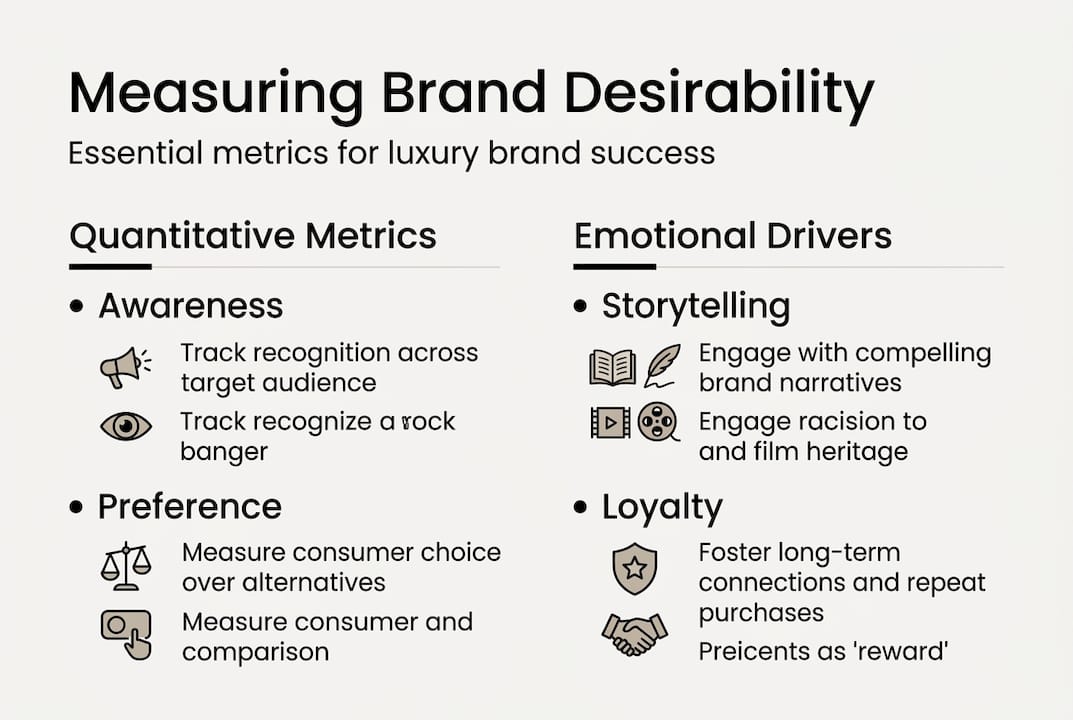
YouGov BrandIndex measures brand health using an Index score that combines Impression, Quality, Value, Satisfaction, Recommend, and Reputation through daily consumer surveys. It gives luxury brands a real-time pulse on how they are perceived relative to competitors across multiple markets.
Interbrand’s Role of Brand Index (RBI) takes a different angle. It quantifies how much of a purchase decision is driven by brand versus price or product features. A high RBI score means customers are choosing you because of who you are, not just what you cost or what you offer functionally. That is the clearest financial signal of genuine desirability.
Brands like Porsche and Chanel consistently lead global luxury brand ranking benchmarks precisely because their RBI scores remain high even as markets shift. Their customers are not making rational trade-off decisions. They are making identity-driven ones.
Here is how a brand typically moves up in desirability rankings:
- Audit current behavioral signals: search volume, full-price sell-through, return rates, NPS.
- Run qualitative desirability surveys using emotional word selection exercises.
- Benchmark against your own historical data first, then against category leaders.
- Identify the specific emotional attributes customers associate with your brand versus competitors.
- Test messaging and experience changes, then re-measure at 90-day intervals.
| Method | Data type | Best for |
|---|---|---|
| YouGov BrandIndex | Quantitative, daily surveys | Ongoing tracking and competitive benchmarking |
| Interbrand RBI | Financial and behavioral | Linking brand strength to business value |
| Desirability testing | Qualitative, emotional | Diagnosing resonance gaps in creative and experience |
How storytelling elevates prestige is directly reflected in these scores. Brands that invest in narrative consistency tend to see measurable improvements in both RBI and survey-based desirability indexes within two to three quarters.
Drivers of brand desirability in luxury: What really matters
Now let’s dig into what truly drives desirability, especially for customers choosing between multiple luxury options. The answer is not always what brands expect.
The Accenture Luxe Eternal survey found that customers choose their favorite luxury brands for exceptional quality, elegance, and emotional connection. These are not abstract ideals. They translate directly into specific brand behaviors and investments.
The same research reveals a striking picture of what customers actually value:
- 43% choose a brand for exceptional quality and craftsmanship
- 38% cite elegance and aesthetic coherence
- 36% point to emotional resonance and personal meaning
- 69% value delivery speed and operational excellence
- 76% value staff expertise as a key part of the experience
Those last two numbers are often underestimated. Desirability is not built only in campaigns. It is built in every human interaction a customer has with your brand.
The evidence from European marketing leaders also points to a growing resonance gap. According to Accenture, 37% of customers see weakening brand resonance, and 50% perceive luxury brands as increasingly profit-driven rather than values-driven. That perception erodes desirability faster than any competitor campaign ever could.
Pro Tip: Never benchmark your desirability goals only against competitors. Use your ideal customer’s aspirations as the primary reference point. Competitors show you where the floor is. Your customer’s emotional world shows you where the ceiling can be.
A strong luxury storytelling guide and a deliberate approach to building emotional resonance are not optional extras. They are the infrastructure of desirability itself.
Brand desirability in the AI era: Navigating risks and opportunities
The rise of AI brings new challenges but also new chances to differentiate in ways tech cannot replicate. For luxury brands, the stakes are particularly high.
Interbrand’s RBI research warns directly that low desirability means AI treats brands as interchangeable commodities, reducing pricing power and collapsing the premium that luxury brands depend on. When an AI recommendation engine cannot distinguish your brand emotionally, it defaults to price. That is a race you cannot win.
The risks are real and worth naming clearly:
- Algorithmic sameness: AI surfaces brands based on data patterns, not emotional depth, flattening differentiation.
- Loss of premium positioning: Without strong desirability signals, AI routes customers toward cheaper alternatives.
- Erosion of mystery: Over-optimization for search and recommendation can strip away the scarcity and intrigue that luxury depends on.
But the opportunities are equally significant. Brands with strong desirability become brand desirability insights that AI systems reinforce rather than undermine. High search intent, strong social signals, and loyal behavioral data all feed AI systems in ways that amplify rather than commoditize.
“Luxury brands must be chosen by humans, not just AI, to avoid commoditization.”
Pro Tip: Blend digital touchpoints with irreplaceable in-person luxury experiences. The physical encounter is the one AI cannot replicate, and it is where the deepest desirability signals are created and reinforced.
For branding strategies in 2026, the priority is identifying and amplifying the brand signals that are uniquely human: craftsmanship stories, staff relationships, sensory experiences, and rituals that no algorithm can shortcut.
Action plan: Practical steps to build and sustain brand desirability
Ready to act? Here is how to put desirability theory into practice inside your own organization.
Desirability testing, pioneered by Microsoft, offers a structured way to quantify emotional resonance using randomized word lists. It gives you a precise, repeatable method for measuring how customers feel about your brand at any given moment, and where those feelings are drifting.
Here is a practical roadmap:
- Audit current desirability signals. Pull behavioral data: organic search volume, full-price conversion rates, waitlist activity, return rates, and NPS scores. These are your baseline.
- Run internal alignment sessions. Desirability starts from within. Every team member who touches the customer experience must understand and embody the brand’s emotional promise.
- Test storytelling resonance. Use desirability testing and customer language analysis to identify which narratives create genuine emotional pull versus which ones feel generic or transactional.
- Invest in staff expertise. Given that 76% of customers value staff knowledge, training is a direct desirability investment, not just an operational cost.
- Innovate touchpoints deliberately. Introduce one new experiential element per quarter, whether digital or physical, and measure its emotional impact before scaling.
- Benchmark against customer emotion, not just competitors. Track how your brand makes customers feel over time, using both quantitative indexes and qualitative feedback loops.
Pro Tip: Run customer language analysis every six months. The words your most loyal customers use to describe your brand are your most accurate desirability map. When that language shifts, your strategy needs to shift with it.
Every step in this roadmap connects directly to ROI. Higher desirability means stronger pricing power, lower customer acquisition costs, and margins that hold even in a softening market. Explore effective storytelling strategies to strengthen the narrative layer of this plan.
A hard look at brand desirability: What most luxury playbooks miss
Most luxury brands confuse desirability with recognition or status symbolism. They invest in visibility and assume the emotional work follows automatically. It does not.
The real edge in building lasting desirability lies in staying ahead of customer emotion, not market trends. Trends are visible to everyone. Your customer’s evolving emotional world is not. Brands that track how their customers feel rather than what they buy are the ones that sustain desirability through market cycles.
Over-benchmarking competitors is one of the most common and damaging mistakes. When you optimize against what others are doing, you gradually become a variation of them. Uniqueness erodes. Emotional resonance follows.
Luxury desirability is won through trust, ongoing surprise, and a carefully maintained element of scarcity. Not manufactured scarcity, but genuine rarity in experience, access, and meaning. The brands that endure are the ones that customers would genuinely miss if they disappeared. That is the real test.
“Desirable brands are not just bought. They are missed when gone.”
Success is not measured only at the point of purchase. It shows up in organic advocacy, in customers who defend the brand unprompted, and in resilience when markets contract. Building that kind of emotional branding in luxury requires a sharper mindset than most playbooks acknowledge.
Enhance your brand desirability with expert strategy
For leaders ready to transform brand perception into industry-leading desirability, expert guidance can be the catalyst that moves strategy from insight to measurable impact.
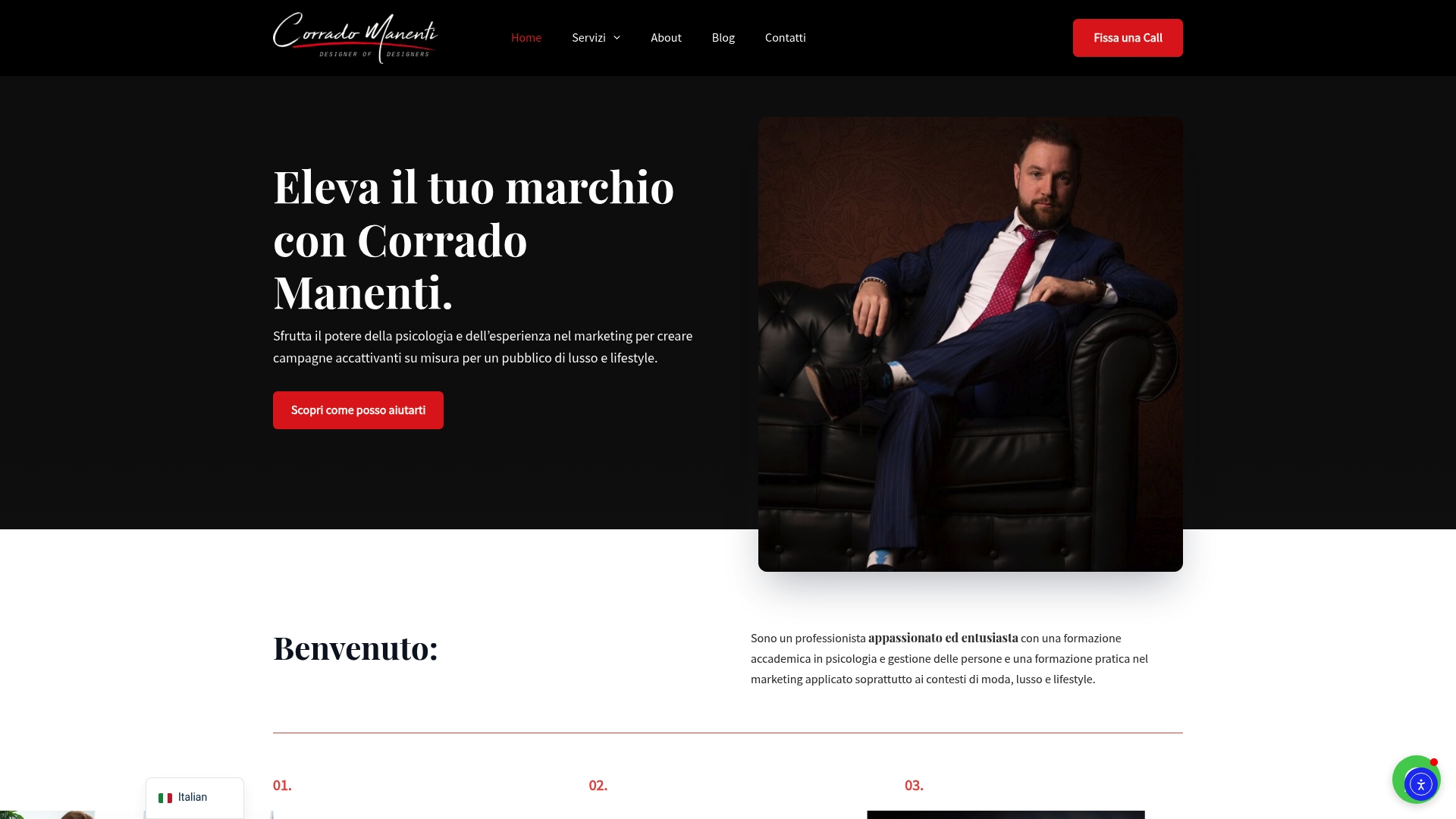
Corrado Manenti works with luxury and fashion brands to audit, build, and sustain desirability across every touchpoint, from digital presence to in-store experience. His psychology-driven approach identifies exactly where emotional resonance is strong, where it is leaking, and what to do about it. Whether you need a full desirability audit, a storytelling overhaul, or a targeted experiential strategy, the work is always grounded in behavioral insight and luxury market expertise. Explore growth tactics for the luxury market and innovative branding strategies for 2026 to take the next step.
Frequently asked questions
What makes a luxury brand desirable?
Exceptional quality, emotional storytelling, exclusivity, and extraordinary customer experience are the core pillars that make a luxury brand genuinely desirable rather than simply recognized.
How do you measure brand desirability?
YouGov BrandIndex tracks brand health through daily survey indexes, while Interbrand RBI measures how much brand identity, rather than price, drives purchase decisions. Together they give a full picture of desirability strength.
Why is brand desirability more important than awareness for luxury brands?
Awareness without desirability produces no pricing power or loyalty. Desirability drives pricing power, lower customer acquisition costs, and higher margins, which are the financial outcomes that awareness alone cannot deliver.
How does AI impact luxury brand desirability?
Low RBI scores mean AI systems treat brands as interchangeable, routing customers to cheaper options. Strong desirability keeps luxury brands human-chosen and premium, even as AI becomes a dominant discovery channel.