


TL;DR:
- Behavioral segmentation in fashion groups consumers based on their interactions rather than demographics, enabling more targeted marketing. It improves conversion rates, reduces acquisition costs, and aligns cross-team strategies through real-time, predictive data analysis. Implementing dynamic, integrated segments focused on actual behavior provides a competitive advantage in fast-changing fashion markets.
Behavioral segmentation in fashion is defined as the practice of grouping consumers by their observed interactions with a brand, including purchase frequency, browsing patterns, and engagement history, to deliver intent-driven marketing. Unlike demographic or psychographic segmentation, behavioral data acts as a closer proxy for purchase intent, making it the most actionable segmentation method available to fashion marketers. Brands like ALO Yoga and platforms like Woveninsights and HubSpot have built entire personalization frameworks around this approach. The result is higher conversion rates, stronger loyalty, and marketing spend directed at consumers who are already signaling readiness to buy. If you manage a fashion brand and still rely primarily on age brackets or lifestyle personas, this guide will show you exactly what you are missing.
What is behavioral segmentation in fashion, and why does it matter?
Behavioral segmentation in fashion categorizes consumers based on actual brand interactions rather than assumed characteristics. Purchase history, category browsing, cart abandonment, email open rates, and loyalty program activity all feed into this model. The core advantage is precision. Two customers with identical demographics can behave completely differently based on their engagement histories, which means demographic targeting alone will consistently misfire.
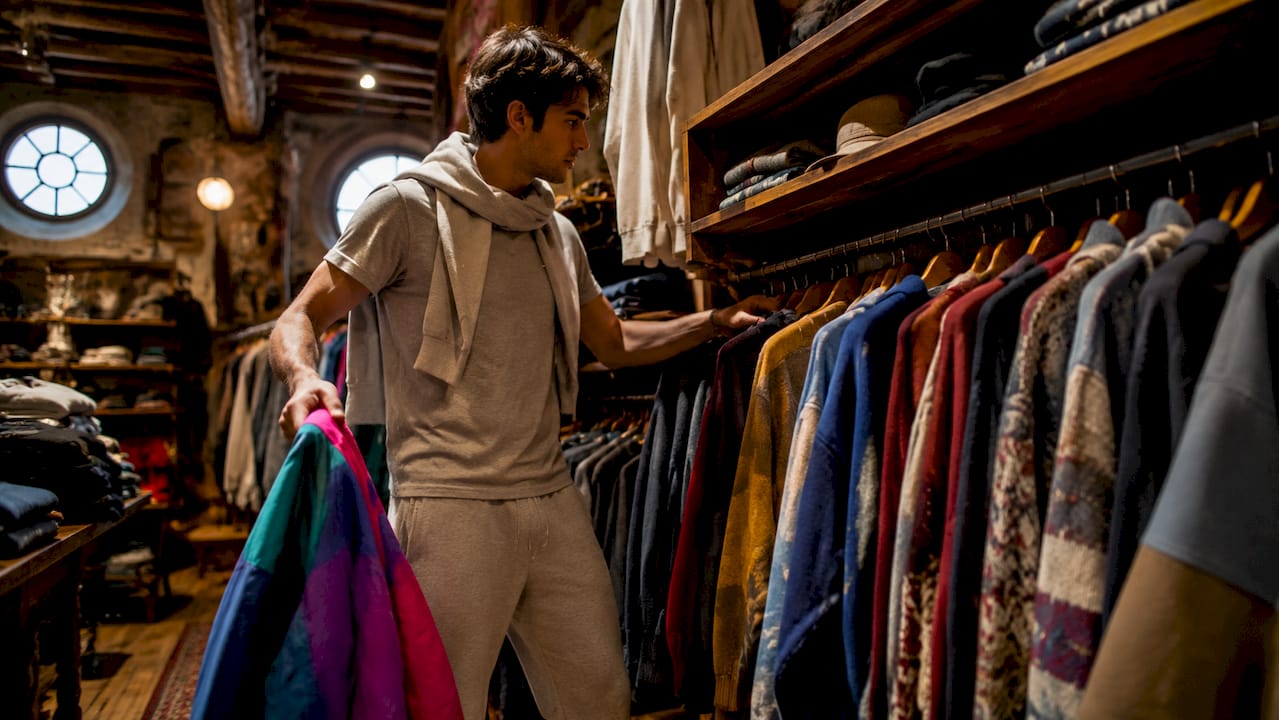
The importance of behavioral segmentation becomes clearest when you look at acquisition costs. Targeting specific behavior signals like product views and abandonment patterns reduces acquisition costs by focusing spend on high-intent users rather than broad demographic assumptions. For fashion brands operating on tight margins, that efficiency is not optional. It is the difference between a profitable campaign and a wasted budget.
Behavioral market segmentation also improves cross-team alignment. Behavioral data reveals how customers actually use products, giving merchandising, CRM, and creative teams a shared language grounded in real actions rather than projections. That alignment speeds up campaign execution and reduces the guesswork that kills good ideas before they launch.
What are the main behavioral segments used in fashion marketing?
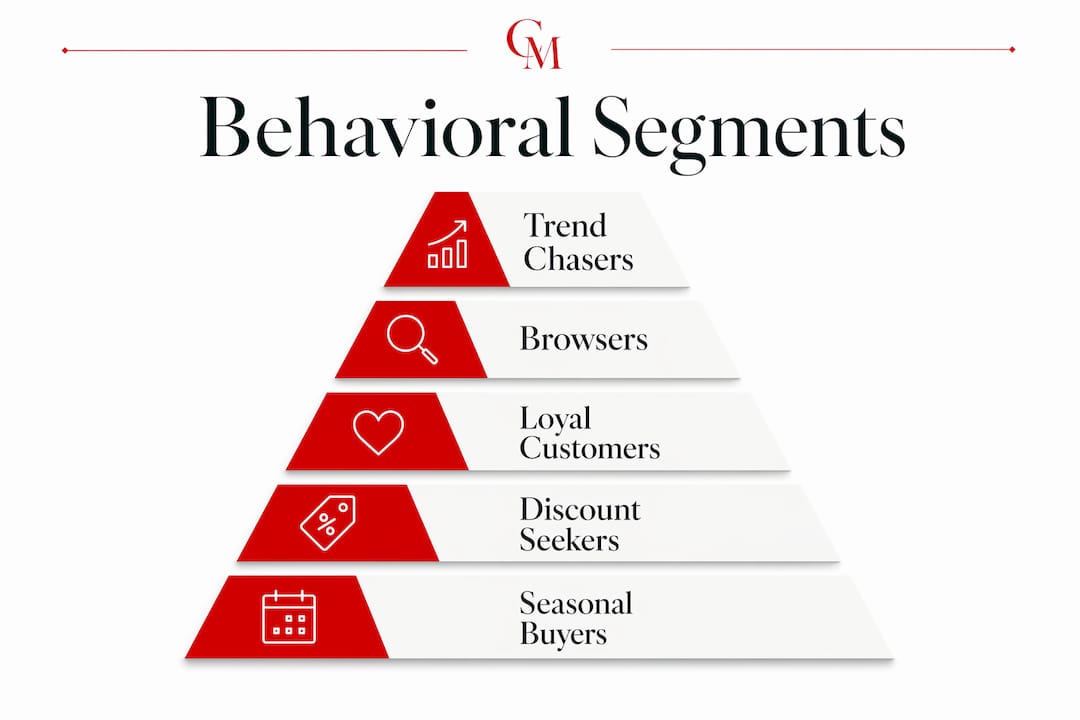
Fashion brands typically identify 3–5 core behavior-based personas to optimize spend and inventory. Each segment requires a distinct marketing approach because the motivations and purchase triggers differ significantly.
The four most common segments are:
- Trend Chasers: These shoppers buy new arrivals within days of launch. They respond to exclusivity signals, early access drops, and limited-edition messaging. Urgency is their primary trigger.
- Practical/Basics Buyers: These consumers purchase replenishment items on a predictable cycle. They respond to restocking alerts, bundle offers, and loyalty discounts rather than trend-driven content.
- High-Value Loyalists: These are repeat buyers with high average order values. They respond to VIP treatment, personalized style recommendations, and early access to collections. Retention investment here delivers the highest lifetime value.
- Browsers: These users engage frequently but convert rarely. They need social proof, retargeting, and time-limited incentives to move from consideration to purchase.
| Segment | Key behavior signal | Best marketing approach |
|---|---|---|
| Trend Chasers | Early category browsing, fast purchase cycles | Exclusive drops, countdown timers, early access emails |
| Practical/Basics Buyers | Repeat SKU purchases, predictable intervals | Replenishment reminders, bundle deals, loyalty rewards |
| High-Value Loyalists | High AOV, multi-category purchases | VIP programs, personalized lookbooks, private sales |
| Browsers | High sessions, low conversion, cart abandonment | Retargeting ads, social proof, urgency triggers |
Pro Tip: Never lump Browsers and Trend Chasers into the same retargeting pool. Trend Chasers need exclusivity messaging; Browsers need reassurance. Mixing the two dilutes both.
Understanding fashion segmentation at this level lets you match creative assets, channel selection, and offer type to the actual psychology of each group. That specificity is what separates a 2% conversion rate from a 6% one.
How is behavioral segmentation implemented in fashion brands?
Implementation follows a structured process. The five steps below reflect how leading fashion brands move from raw data to personalized campaigns.
- Aggregate behavioral data. Pull data from your e-commerce platform, CRM, email system, and mobile app into a single customer data platform. Tools like Segment or Salesforce Marketing Cloud handle this consolidation. Without unified data, every downstream step is compromised.
- Identify predictive metrics. Not all behaviors carry equal weight. Purchase frequency, days since last purchase, category affinity, and return rate are the four metrics most predictive of future behavior in fashion retail. Define which metrics matter most for your brand before building segments.
- Build dynamic segments. Static segments built on last quarter’s data are already wrong. Dynamic, intent-driven segments evolve in real-time based on user interactions, which is critical in fast fashion where trend cycles can shift in weeks.
- Apply AI and machine learning modeling. Platforms like Woveninsights use AI to predict next purchase probability, churn risk, and category affinity at scale. This step transforms segmentation from descriptive to predictive, enabling anticipatory marketing rather than reactive campaigns.
- Run A/B tests by segment. Test subject lines, offer types, and creative formats separately for each segment. A win-back offer that converts Browsers may actively annoy High-Value Loyalists who expect premium treatment, not discounts.
For anticipatory marketing to work, real-time browse behavior must be blended with historical purchase data. A customer who has bought outerwear twice in October and is now browsing new arrivals in September is signaling intent before they even add to cart. That signal is invisible without integrated data.
Pro Tip: Integrate your CRM with your web and app analytics before building any segments. Data silos between CRM and analytics cause you to miss patterns like a customer who buys accessories consistently but returns apparel due to fit issues. That nuance changes your entire approach to that person.
What nuances and challenges exist in behavioral segmentation for fashion?
The most common mistake fashion marketers make is treating behavioral segments as fixed categories. A Trend Chaser who starts a family may shift into a Practical Buyer within a single season. Most successful brands use automated, hyper-personalized offers powered by real-time behavioral segmentation precisely because static models fail to catch these transitions.
Three additional challenges deserve attention:
- Data silos. When your CRM and e-commerce analytics do not communicate, you lose the ability to detect nuanced patterns. A customer who buys accessories at full price but returns every apparel item due to fit is a different segment than their purchase frequency alone suggests.
- Correlation versus causation errors. Demographic data correlates with behavior but does not cause it. Assuming all 35-year-old women in a certain income bracket behave the same way is the exact error behavioral segmentation exists to correct.
- Ignoring behavioral silence. Inactivity is data. Behavioral silence of 30–60 days is a reliable churn signal. Brands that identify disengaged customers early and trigger win-back campaigns consistently outperform those focused solely on active segments.
“Negative segmentation, the practice of identifying who is not engaging, is one of the most underused tools in fashion marketing. Win-back campaigns targeting lapsed customers often deliver better ROI than new customer acquisition, yet most brands spend 80% of their budget on the latter.”
Negative segmentation requires courage because it means acknowledging customer loss. The brands that act on it build more sustainable revenue than those who only chase new acquisition.
How can fashion brands use behavioral data to personalize marketing?
Personalization powered by behavioral segments moves well beyond first-name email greetings. The most effective applications map specific tactics to specific segments and measure outcomes at the segment level.
ALO Yoga is a clear example. The brand saw a 22% increase in click-through rates and higher repeat purchase rates by applying behavioral email segmentation. That result came from matching message type to segment behavior, not from sending the same promotional email to everyone.
| Segment | Personalization tactic | Expected outcome |
|---|---|---|
| Trend Chasers | Early access emails, new arrival push notifications | Higher open rates, faster purchase cycles |
| Practical/Basics Buyers | Replenishment reminders, size-specific restocking alerts | Increased repeat purchase frequency |
| High-Value Loyalists | Personalized lookbooks, exclusive event invitations | Higher AOV, stronger brand affinity |
| Browsers | Retargeting with social proof, abandoned cart sequences | Improved conversion from consideration stage |
Homepage personalization is another high-impact application. A returning Trend Chaser should land on a new arrivals page. A Practical Buyer should see their most-purchased categories front and center. This level of customization requires behavioral segmentation implementation connected to your content management system, but the conversion lift justifies the integration work.
Influencer messaging also benefits from segment data. A brand working with micro-influencers can direct Trend Chaser content toward early adopters while routing lifestyle-focused content toward Practical Buyers. The same product, positioned differently, converts two distinct audiences without additional production cost.
Pro Tip: Build your luxury email segmentation process around behavioral triggers, not calendar dates. A replenishment email sent when a customer’s purchase cycle predicts they are running low converts far better than a generic seasonal promotion.
Why behavioral segmentation is the sharpest tool in fashion marketing
I have worked with fashion and luxury brands long enough to see the same mistake repeated: teams invest in beautiful creative and then send it to the wrong people. Demographic targeting feels safe because the data is easy to collect and easy to explain in a boardroom. But it is a blunt instrument in a market that rewards precision.
The brands I have seen grow fastest are the ones that stopped asking “who is our customer?” and started asking “what is our customer doing right now?” That shift in question changes everything downstream. It changes which channels you prioritize, which offers you build, and which customers you decide are worth retaining versus releasing.
The challenge I see most often is not a lack of data. It is a lack of integration. Brands have CRM data, web analytics, and email engagement data sitting in three separate systems, none of which talk to each other. The result is segmentation built on incomplete pictures. Fixing that integration is unglamorous work, but it is the foundation everything else depends on.
I also want to push back on the idea that behavioral segmentation is only for large brands with enterprise budgets. A mid-size fashion label with a well-configured email platform and a basic customer data setup can build four meaningful behavioral segments and see measurable results within a single campaign cycle. The methodology scales down as well as it scales up.
The future of fashion consumer behavior analysis points toward AI-driven hyper-personalization where segments update in near real-time. That is where the competitive advantage will concentrate. The brands building those capabilities now will be very difficult to catch in two years.
— Corrado
Work with Corradomanenti on behavioral segmentation strategy
Fashion brands that understand behavioral segmentation conceptually but struggle to implement it at scale face a specific problem: the gap between knowing what to do and having the systems, frameworks, and expertise to do it consistently.
Corradomanenti works directly with fashion and luxury brands to build psychology-driven segmentation strategies that connect behavioral data to real marketing outcomes. From identifying your highest-value segments to designing personalized campaign workflows, the approach is grounded in both consumer psychology and practical execution. If you are ready to move beyond demographic assumptions and build marketing that responds to what your customers actually do, explore the fashion brand growth tactics framework developed specifically for luxury and premium fashion markets.
Key takeaways
Behavioral segmentation in fashion is the most precise method available for matching marketing to consumer intent, and brands that implement it dynamically outperform those relying on static demographic models.
| Point | Details |
|---|---|
| Behavioral data beats demographics | Actual purchase and browsing behavior predicts intent more accurately than age, income, or location. |
| Four core segments drive fashion strategy | Trend Chasers, Practical Buyers, High-Value Loyalists, and Browsers each require distinct messaging and offer types. |
| Dynamic segments outperform static ones | Real-time behavioral updates keep segments accurate as consumer habits shift across seasons and life stages. |
| Data integration is non-negotiable | Connecting CRM and web analytics prevents the silos that cause misclassification and wasted spend. |
| Behavioral silence signals churn risk | Inactivity of 30–60 days is a measurable trigger for win-back campaigns that often outperform new acquisition efforts. |
FAQ
What is behavioral segmentation in marketing?
Behavioral segmentation in marketing is the practice of grouping consumers by their observed actions, such as purchase frequency, browsing patterns, and brand engagement, rather than by demographic or psychographic characteristics. It produces more precise targeting because it reflects actual intent rather than assumed preferences.
How does behavioral segmentation differ from psychographic segmentation?
Psychographic segmentation groups consumers by values, attitudes, and lifestyle, while behavioral segmentation groups them by what they actually do. Behavioral data is more directly tied to purchase readiness, making it more reliable for conversion-focused campaigns.
What tools do fashion brands use for behavioral segmentation?
Fashion brands commonly use platforms like Woveninsights, HubSpot, Salesforce Marketing Cloud, and Segment to collect, integrate, and analyze behavioral data. AI-powered tools within these platforms enable predictive modeling and real-time segment updates.
How often should behavioral segments be updated?
Behavioral segments should update continuously or at minimum weekly in fast fashion contexts. Static segments built on quarterly data miss the rapid shifts in consumer behavior that define trend-driven markets.
What is negative behavioral segmentation?
Negative behavioral segmentation identifies customers who have gone silent, typically after 30–60 days of inactivity, and uses that signal to trigger win-back campaigns. These campaigns frequently deliver stronger ROI than campaigns targeting new customer acquisition.