
TL;DR:
- Effective fashion loyalty programs combine points, tiers, and experiential rewards that match brand positioning. Luxury brands focus on exclusivity and emotional engagement rather than discounts to retain customers. Implementing personalized, experience-driven programs within the first 90 days enhances long-term loyalty and brand value.
Fashion customer loyalty is defined as the measurable tendency of a customer to repeatedly choose one brand over competitors, driven by emotional connection, perceived value, and consistent experience. Brands like Nike and Lululemon have proven that loyalty programs for fashion produce compounding returns. Loyal fashion customers spend 220% more annually and are six times more likely to make repeat purchases. That gap between a loyal customer and a one-time buyer is the single most important number in your retention budget. These fashion customer loyalty tips focus on what actually moves that number in the luxury sector.
What are the essential components of effective loyalty programs for fashion?
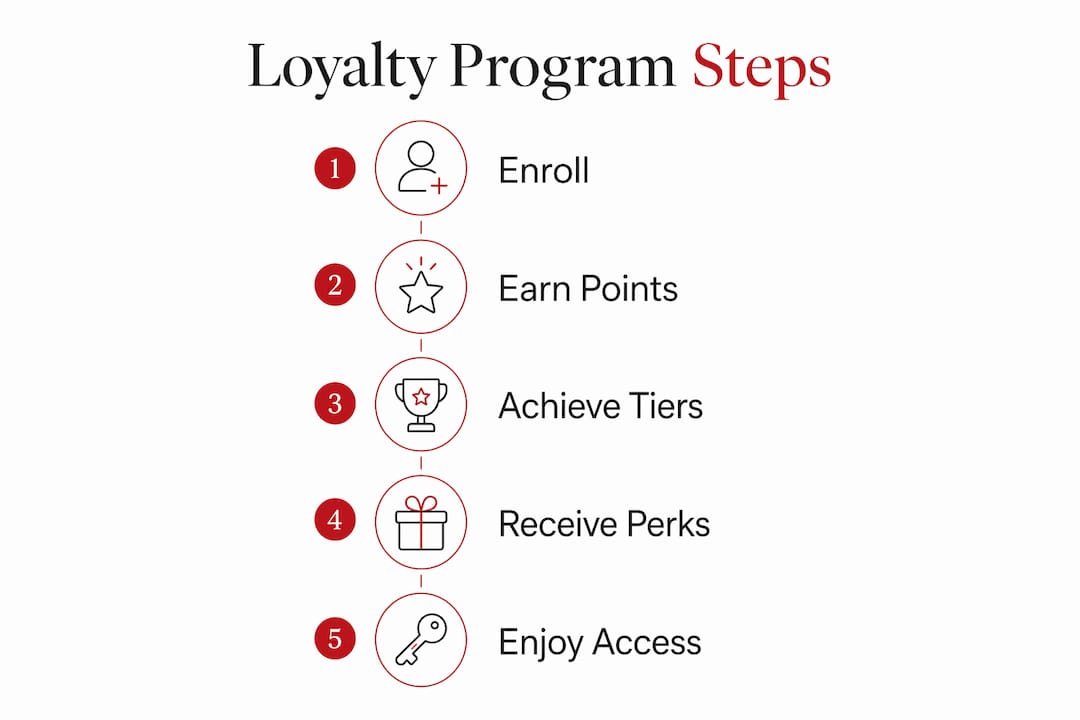
The most successful programs combine points, tiers, and experiential perks to match brand positioning and customer expectations. A points-only program is table stakes. What separates high-performing loyalty programs for fashion from average ones is the architecture of rewards beyond the transaction.

Points and tiered reward structures
Points systems give customers a clear, immediate reason to return. Tiered structures add aspiration. When a customer knows that reaching Gold status unlocks private sale access or a personal stylist session, the next purchase carries emotional weight beyond the product itself. Brands like Sephora with Beauty Insider and Nordstrom with Nordy Club use tier progression to create status-driven motivation that keeps customers spending upward.
Experiential rewards and early access
Experiential rewards drive loyalty more effectively than price cuts. Exclusive access to new collections, invitations to brand events, simplified returns, and priority customer service all reinforce the premium positioning a luxury brand needs to protect. These perks cost less than blanket discounts and generate stronger emotional attachment.
Non-transactional rewards
Rewarding customers for social shares, product reviews, and garment recycling builds emotional loyalty and advocacy. This approach aligns with modern consumer values and extends engagement well beyond the purchase moment. Brands that reward non-purchase actions report stronger community cohesion and higher organic referral rates.
| Reward type | Primary benefit | Best for |
|---|---|---|
| Points on purchases | Drives repeat transactions | All fashion segments |
| Tiered status | Motivates higher spend | Premium and luxury |
| Experiential perks | Builds emotional connection | Luxury and lifestyle |
| Non-transactional rewards | Grows advocacy and community | DTC and values-led brands |
| Referral bonuses | Acquires high-quality new customers | Growth-stage brands |
- Integrate loyalty programs across in-store, app, and e-commerce touchpoints so points and status are visible everywhere.
- Use omnichannel data to personalize reward offers based on where and how each customer shops.
- Communicate tier progress proactively. Customers who know they are close to the next tier spend more to reach it.
Pro Tip: Show customers their points balance and tier progress in every post-purchase email. Visibility is the single cheapest driver of repeat visits.
How to implement a loyalty program in the first 90 days
Fashion DTC brands face their highest churn risk in the first 90 days after acquisition. Enrolling customers immediately in a loyalty program at the moment of purchase confirmation is the highest-impact action for long-term retention. The message must include a concrete points statement, not a vague promise.
The 90-day window is not just about preventing churn. It is the period when purchase habits form. Get the sequence right and you convert a first-time buyer into a recurring customer before a competitor gets the chance.
- Day 1: Enroll at purchase confirmation. Send a loyalty welcome message inside the order confirmation email. State the exact points earned on this purchase. Anchor the value proposition immediately.
- Day 7–10: Request a product review. Offer bonus points for leaving a review. Reviews generate social proof and give you behavioral data. Customers who engage at this stage show significantly higher 90-day retention.
- Day 14: Send a personalized styling recommendation. Complementary item suggestions based on the specific purchase outperform generic best-seller lists. Address a real styling need, not a general inventory push.
- Day 30–45: Ask for a referral. A customer who has received their order, reviewed it, and engaged with your content is primed to refer. Offer a meaningful reward for both referrer and new customer.
- Day 60: Send a re-engagement prompt. Highlight tier progress and any expiring points. Create urgency without discounting.
- Day 90: Conduct a satisfaction check. Use a short NPS or CSAT survey. Route negative responses to a private resolution channel immediately. Managing negative feedback privately prevents public reputation damage and builds trust.
| Day | Action | Goal |
|---|---|---|
| 1 | Loyalty enrollment with points statement | Anchor value, reduce churn risk |
| 7–10 | Review request with bonus points | Social proof and engagement data |
| 14 | Personalized product recommendation | Drive second purchase |
| 30–45 | Referral ask | Acquire high-quality new customers |
| 60 | Tier progress and points reminder | Re-engage and create urgency |
| 90 | NPS or CSAT survey | Identify at-risk customers early |
Pro Tip: Personalization must use specific purchase data. If a customer bought a tailored blazer, recommend trousers or a pocket square. Generic “you might also like” carousels destroy the credibility of your personalization effort.
What are best practices for luxury fashion loyalty without eroding brand value?
Continuous discounting trains customers to wait for sales. It erodes brand prestige and cheapens brand equity in ways that take years to repair. The luxury sector requires a fundamentally different approach to customer retention strategies in fashion.
Luxury brand loyalty programs succeed by emphasizing exclusivity and emotional engagement over discounts. The goal is to make customers feel recognized, not just rewarded. Status, access, and service are the currencies that matter at the premium end of the market.
What to do in luxury loyalty program design
- Build tier names that carry prestige. “Platinum Member” or “Maison Circle” signals status. “Level 3” does not.
- Offer service-based perks: personal styling appointments, complimentary alterations, dedicated client advisors.
- Create private sale access for top-tier members only. Scarcity reinforces desirability.
- Reward values alignment. Offer points or recognition for sustainable choices like garment recycling or repair programs.
- Use handwritten notes or personalized packaging for top-tier customers. Physical gestures carry outsized emotional weight.
What to avoid
- Never make discounts the primary reward. Price cuts signal that the product was overpriced to begin with.
- Avoid making the program feel transactional. If every communication is about points, the relationship feels mercenary.
- Do not ignore non-buyers. Customers who engage with content, attend events, or refer friends deserve recognition even without a recent purchase.
- Avoid complex redemption rules. If customers cannot easily understand how to use their rewards, they disengage entirely.
Pro Tip: Tier progression is a psychological motivator. When a customer is 80% of the way to the next tier, send a personalized message showing exactly what they need to get there. This single tactic drives measurable spend increases without any discount.
How to measure and optimize fashion loyalty programs
Tracking repeat purchase rate, average order value, redemption rate, and churn rate gives you a complete picture of program health. Each metric tells a different story. Repeat purchase rate shows whether the program is working at all. Average order value shows whether it is driving higher spend. Redemption rate shows whether customers find the rewards worth pursuing. Churn rate shows where the program is failing.
The most revealing comparison is revenue per member versus revenue per non-member. That gap is the direct financial case for your loyalty investment. If members do not outspend non-members significantly, the program structure needs revision.
- Use NPS scores segmented by loyalty tier to identify which rewards drive genuine satisfaction versus which are merely tolerated.
- Run A/B tests on reward thresholds. Test whether offering 200 points for a review outperforms 100 points before scaling.
- Monitor redemption rate closely. A low redemption rate means customers do not value the rewards or find them too hard to access.
- Track engagement with non-transactional reward opportunities. Low participation signals a disconnect between your reward menu and your customers’ actual values.
- Review customer retention strategies quarterly and adjust tier thresholds based on actual spending distribution, not assumptions.
Personalization and A/B testing are not optional refinements. They are the mechanism by which a good program becomes a great one. Brands that treat their loyalty program as a static structure leave significant lifetime value on the table.
Key takeaways
The most effective fashion loyalty programs combine immediate enrollment, experiential rewards, and data-driven personalization to build retention that compounds over time.
| Point | Details |
|---|---|
| Enroll on day one | Include a concrete points statement in the purchase confirmation email to anchor value immediately. |
| Prioritize experiential rewards | Exclusive access and service perks build stronger loyalty than discounts in the luxury segment. |
| Avoid discount dependency | Tiered status and service rewards protect brand prestige while motivating higher spend. |
| Measure member vs. non-member revenue | This comparison is the clearest proof of your loyalty program’s financial impact. |
| Personalize with purchase data | Recommendations based on specific items bought outperform generic suggestions every time. |
Why most luxury loyalty programs underperform
The programs I see fail most often share one trait: they were designed by finance teams, not by people who understand why luxury customers buy in the first place. A luxury customer does not need a discount. They need to feel seen.
The brands I work with that get this right treat their loyalty program as an extension of their brand identity, not a retention mechanic bolted on after the fact. When Lululemon invites top members to exclusive fitness events, it is not running a promotion. It is reinforcing a community identity that makes leaving feel like a social loss. That is the psychology that drives luxury client retention at the highest level.
The trend I am watching most closely in 2026 is gamification combined with sustainability incentives. Brands that reward customers for returning worn garments, choosing slower shipping, or participating in repair programs are building loyalty that is genuinely values-aligned. That is harder to replicate than a points multiplier and far more durable.
My practical advice: audit your program against one question. Does every reward reinforce why your brand is worth the premium? If the answer is no for even one reward tier, redesign it. The loyalty marketing principles that work in luxury are not complicated. They require discipline, not complexity.
— Corrado
How Corradomanenti helps luxury fashion brands build lasting loyalty
Corradomanenti works with fashion and luxury brands that want to grow customer lifetime value through psychology-informed retention strategies, not generic discount programs.
The approach combines consumer behavior analysis with fashion brand growth tactics built specifically for the luxury market. Every loyalty program design starts with understanding why your customers buy, what status signals matter to them, and where the emotional triggers for repeat purchase actually live. If you are ready to build a retention program that protects your brand equity while compounding revenue, Corradomanenti offers the expertise to make it work.
FAQ
What makes fashion customer loyalty different from other retail sectors?
Fashion loyalty is driven by identity and status, not just convenience or price. Customers return to brands that reinforce how they see themselves, which means experiential and emotional rewards outperform discounts.
How soon should a fashion brand enroll customers in a loyalty program?
Enrollment should happen at the purchase confirmation stage, with a clear statement of points earned. Delayed enrollment significantly reduces engagement and long-term retention.
Do luxury fashion brands need a points-based loyalty program?
Points systems work in luxury only when paired with status tiers and experiential perks. Points alone feel transactional and can undermine the premium positioning a luxury brand depends on.
What is the best metric to track loyalty program success?
Revenue per loyalty member versus revenue per non-member is the clearest indicator of program impact. Pair it with redemption rate and repeat purchase rate for a complete picture.
How do fashion brands build loyalty without discounting?
Tier-based status rewards, exclusive event access, personalized styling services, and sustainability incentives all build loyalty without training customers to wait for price cuts.