


TL;DR:
- Luxury brands succeed by engineering desire through scarcity, choice architecture, and signaling that foster perceived exclusivity.
- Authentic application of these psychological levers builds long-term trust, while overuse risks consumer fatigue and damage to brand integrity.
Luxury fashion marketing has never been just about a logo on a bag or a runway show that captures magazine covers. The brands pulling the furthest ahead are doing something far more precise: they are engineering desire at the psychological level. Consumer psychology for luxury relies on scarcity, choice architecture, and signaling effects like high-price anchoring to shape desirability and perceived value. Most marketing professionals know these terms in passing. Far fewer build systematic strategies around them. This guide changes that, offering frameworks, real-world examples, and actionable techniques grounded in behavioral economics.
Table of Contents
- Core principles of luxury consumer psychology
- From framework to execution: Essential strategies for luxury fashion marketers
- Comparing successful approaches: What works (and what to watch out for)
- Integrating consumer psychology and brand longevity: Best practices
- The uncomfortable truth about fashion marketing psychology: What most guides miss
- Unlock deeper strategies with our expert resources
- Frequently asked questions
Key Takeaways
| Point | Details |
|---|---|
| Psychology drives desirability | Scarcity, signaling, and choice architecture turn luxury marketing tactics into desired experiences. |
| Balance trust and urgency | Strategic nudges increase engagement, but overuse can erode consumer trust and long-term loyalty. |
| Strategy must evolve | Continually audit, test, and update campaigns to keep desirability and credibility in sync. |
| Authenticity is essential | Align scarcity, value messaging, and pricing with genuine brand principles to avoid perception risks. |
Core principles of luxury consumer psychology
Understanding why a consumer reaches for a Birkin bag over an equally beautiful alternative requires more than taste analysis. It requires a clear view of the psychological mechanisms at work. The good news: these mechanisms are identifiable, measurable, and actionable.
The first mechanism is scarcity. When supply is perceived as limited, desire intensifies. This is not a new observation, but luxury brands apply it with remarkable sophistication. A limited-edition capsule collection does not just create buzz; it triggers loss aversion, one of the most powerful cognitive biases in behavioral economics. Consumers feel more urgency to acquire something they might lose access to than to pursue something freely available.
The second is choice architecture, which refers to how options are presented, not just what options exist. Placing a flagship product between two lower-tier options and one ultra-premium option creates an anchoring effect that guides consumers toward the desired purchase tier. The arrangement of choice shapes perception of value more than the product specifications alone.
The third is signaling. High prices are not simply a revenue mechanism; they function as social signals. A consumer purchasing a piece from a maison like Chanel or Hermès is communicating identity, belonging, and status. The psychology behind this draws on analyzing high-end consumer behavior, which reveals that the desire to signal is often stronger than the desire for the product’s functional attributes.
Here are the core psychological levers luxury marketers rely on:
- Scarcity signaling: Limited editions, seasonal collections, and waitlists create urgency and exclusivity.
- Price anchoring: Flagship or ultra-premium products set reference points that make other items feel like reasonable value.
- Social signaling: Brand identity and visible branding communicate status, tribe, and aspiration.
- Loss aversion: Time-limited access or exclusive membership tiers activate fear of missing out.
- Choice architecture: Product lineup sequencing and presentation guide purchase decisions without overt persuasion.
There is, however, a two-sided nature to these levers. Overusing scarcity, for instance, can train consumers to wait for drops rather than buy at full price. Overusing signaling can make a brand feel transactional rather than aspirational. The psychological triggers for luxury engagement that work best are those applied with precision and restraint.
“The brands that last are not those that manufacture desire most aggressively. They are those that make desire feel inevitable.”
From framework to execution: Essential strategies for luxury fashion marketers
Principles without execution are just theory. The real work is translating behavioral economics into campaign architecture, touchpoint design, and product strategy. Here is how that translation works in practice.
-
Construct scarcity authentically. Limited-run collections work best when the scarcity is tied to a genuine constraint, whether craftsmanship time, material rarity, or artisan capacity. A waitlist for a bespoke shoe or a numbered print run of a silk scarf feels earned. An arbitrary “only 10 left” counter on a product page does not. Consumers in the luxury segment are sophisticated; they detect manufactured urgency quickly, and it damages trust.
-
Deploy anchoring through pricing architecture. Structure your product lineup so that the most visible item at the highest price point recalibrates what “reasonable” looks like for the tier below it. If a brand’s most publicized piece is a $15,000 coat, a $2,500 cashmere sweater from the same collection appears accessible by comparison. This is not accidental; it is strategic psychology-driven lead generation applied to product architecture.
-
Align brand narrative with signaling theory. Every piece of communication, from lookbook photography to social media captions, should reinforce the identity consumers are signaling when they choose your brand. Ask yourself: what does owning this product say about the person wearing it? The answer should be consistent across every touchpoint, from the packaging tissue paper to the flagship store atmosphere.
-
Sequence tactics by campaign phase. In an awareness phase, lead with signaling and aspirational identity content. In a consideration phase, introduce scarcity cues and social proof. In a conversion phase, deploy choice architecture through product presentation and pricing strategy. Mixing these out of sequence undermines their effectiveness.
-
Build relationship touchpoints that do not depend on urgency. The best way to counteract nudge fatigue is to ensure that a significant portion of your consumer communication is purely relational: editorials, behind-the-scenes craft content, brand heritage storytelling. These moments elevate customer experience without relying on psychological pressure.
Scarcity, nudges, and anchoring bias drive value perception, but they require credibility and trust as their foundation. Without that foundation, these tactics produce short-term spikes and long-term erosion.
Pro Tip: Audit your last three campaign cycles and count how many consumer touchpoints were purely relational versus urgency-driven. If urgency-driven touchpoints outnumber relational ones by more than two to one, you are building toward nudge fatigue. Rebalance before perception shifts.
Comparing successful approaches: What works (and what to watch out for)
Real brands provide the clearest lessons. Let’s look at how three leading luxury players have applied consumer psychology, and what their experiences reveal for your strategy.

Hermès is the canonical example of authentic scarcity. The Birkin bag waitlist is not a marketing gimmick; it is tied to the genuine time required for artisan construction. Because the scarcity is credible, it amplifies desire without eroding trust. Hermès also practices extreme restraint in digital marketing, which reinforces exclusivity by making the brand feel less accessible online than its competitors.
Supreme built an entire brand architecture around drop culture, combining scarcity signaling with social identity in a way that created near-religious consumer behavior. The weekly drop model generated both urgency and ritual, turning purchase events into communal experiences. The lesson: scarcity works best when it creates belonging, not just acquisition.
LVMH operates across a portfolio of brands and demonstrates sophisticated choice architecture at the group level. By maintaining distinct positioning tiers across houses like Louis Vuitton, Dior, and Celine, the group allows consumers to signal different levels of aspiration while remaining within the same ecosystem of trust.
| Strategy | Psychological basis | Brand example | Outcome | Risk |
|---|---|---|---|---|
| Authentic waitlists | Scarcity and loss aversion | Hermès Birkin | Sustained desirability | Low if credible; high if artificial |
| Drop culture | Scarcity plus social identity | Supreme | Community and urgency | Consumer fatigue over time |
| Portfolio tiering | Choice architecture | LVMH group | Cross-brand conversion | Brand dilution if tiers blur |
| Price anchoring | Anchoring bias | Most luxury fashion houses | Perceived value uplift | Backlash if disconnected from quality |
Nudges and scarcity can increase desirability but can also create long-term perception risks, including training customers to wait for drops or reducing trust if the value proposition lacks credibility. Supreme’s post-VF Corporation acquisition challenges illustrate exactly this: when drop culture scales beyond its original community context, the psychological glue weakens.
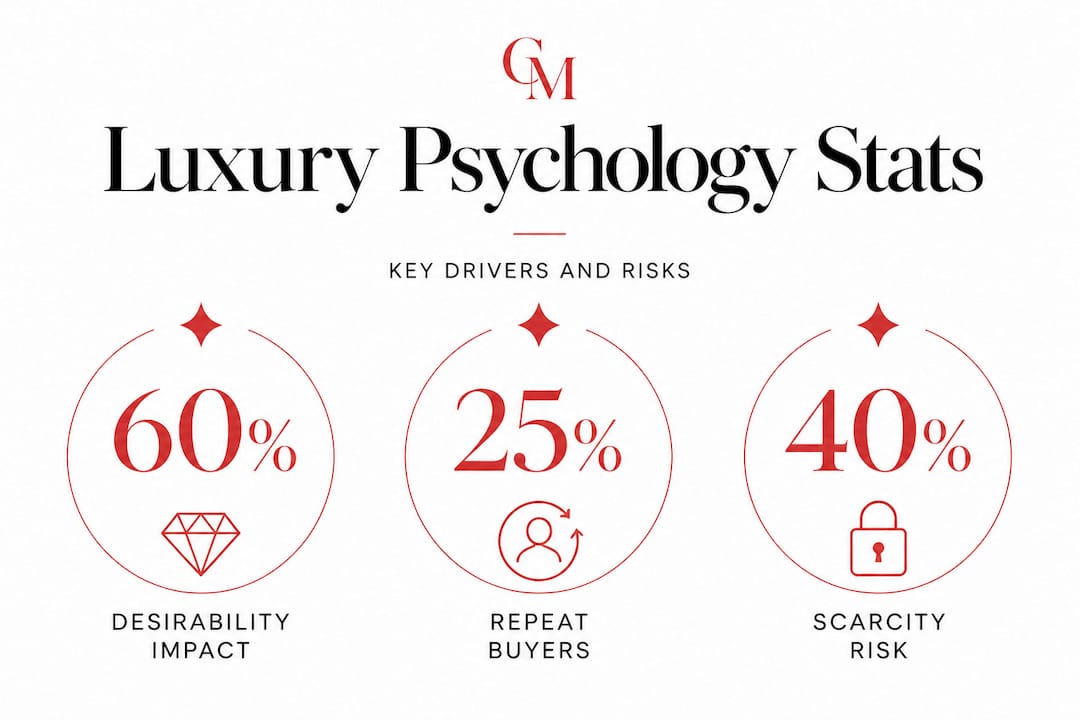
Understanding luxury fashion engagement psychology in depth helps you spot these inflection points before they become brand crises.
Pro Tip: Conduct a perception audit every six months. Survey a sample of your existing customers with one simple question: “What does owning this brand say about you?” If the answers are diverging from your intended signaling narrative, your psychological levers may be drifting out of alignment with your brand positioning.
Integrating consumer psychology and brand longevity: Best practices
Short-term desirability and long-term brand health are not competing goals, but they require different management rhythms. The brands that sustain premium positioning across decades do not choose between psychological tactics and trust; they integrate both.
Reconciling desirability with trust is emphasized consistently across industry outlook sources, and for good reason. The moment a luxury brand is perceived as manipulative rather than aspirational, the psychological contract with the consumer breaks. Recovery from that break is expensive and slow.
Five best practices for integration:
- Tie scarcity to craft, not calendar. Limit editions because something takes time to make well, not because a quarterly drop schedule demands it.
- Make transparency a brand asset. Share the process: the atelier, the materials sourcing, the artisans. This builds the credibility that makes all other psychological levers more effective.
- Segment your psychological tactics by consumer tenure. New consumers need signaling and aspirational content. Long-term loyalists need recognition, personalization, and access, not urgency.
- Review consumer perception data quarterly, not annually. Sentiment shifts faster than most annual review cycles catch. Building review rhythms into your calendar prevents drift.
- Educate internal teams on the ethics of psychological influence. Marketing professionals who understand where the line between persuasion and manipulation sits make better tactical decisions on a daily basis.
| Tactic | Short-term win | Long-term risk | Mitigation |
|---|---|---|---|
| Aggressive scarcity marketing | Immediate sales spike | Consumer distrust | Tie scarcity to authentic constraints |
| Pure price anchoring | Higher average order value | Perception of inaccessibility | Balance with entry-tier storytelling |
| Continuous drop cadence | Sustained engagement | Urgency fatigue | Mix with relationship-building content |
| Identity-only signaling | Strong community building | Alienation of new audiences | Layer aspiration with craft narrative |
The luxury consumer behavior analysis process is most valuable when it is continuous. Brands that run one-time studies and then coast on those insights for years miss the subtle shifts in consumer identity and aspiration that redefine the competitive landscape. Build the analysis into your operational rhythm, not just your strategic planning cycle.
The uncomfortable truth about fashion marketing psychology: What most guides miss
Here is what the standard playbook leaves out: psychological tactics are not a shortcut to brand equity. They are amplifiers. They make strong brands stronger and weak brands more brittle.
The brands I see struggle most with consumer psychology are not those that ignore it; they are those that apply it mechanically, without grounding it in genuine brand truth. You can deploy a flawless scarcity campaign and still lose ground if what is being made scarce is not actually worth wanting. The urgency creates desire, but desire without substance creates disappointment, and disappointed luxury consumers do not quietly move on. They talk.
The contrarian view worth holding: the most effective scarcity in luxury is not engineered at all. It is the natural result of making something exceptionally well. When a brand cannot produce more because production quality demands it, scarcity becomes a brand value rather than a marketing tactic. That is the difference between Hermès and a brand running artificial “limited edition” drops every other week.
What industry veterans actually track is not engagement rate or drop-day sales volume. They track repeat purchase rate, average tenure of the customer relationship, and qualitative perception shifts over multi-year windows. These are the metrics that tell you whether your psychological strategy is building something or slowly consuming it.
The practical action today: bring your marketing team and your product team into the same room and ask whether your scarcity messaging is matched by your product reality. If the answer is no, you are spending psychological capital you do not have. Explore advanced psychological triggers that are grounded in authentic brand value, not in manufactured urgency. That is where durable competitive advantage actually lives.
Unlock deeper strategies with our expert resources
If this framework has shifted how you think about luxury brand positioning, the next step is turning that thinking into structured strategy.
Corrado Manenti’s practice offers consulting services, downloadable guides, and tailored frameworks specifically built for marketing professionals and brand managers in fashion and luxury. Whether you want to audit your current psychological strategy or build a new campaign architecture from the ground up, the resources are designed to move you from insight to execution. Explore luxury market growth tactics that are grounded in real brand behavior, work through a step-by-step marketing guide built for the premium segment, or start with tools that help you analyze buyer behavior at the level your strategy actually requires.
Frequently asked questions
What is the most effective psychological tactic for luxury fashion marketing?
Scarcity and signaling, including limited editions and high-price anchoring, are highly effective when applied authentically and backed by genuine brand credibility. Consumer psychology for luxury shows that desirability is shaped by perceived exclusivity and social value, not price alone.
How can luxury brands avoid perception risks with scarcity marketing?
Brands should ground scarcity in real production or craft constraints rather than artificial limits, and continuously reinforce trust through quality and transparency. Nudges and scarcity increase desirability but carry long-term perception risks when the value proposition lacks genuine credibility.
Why is choice architecture important for luxury positioning?
Choice architecture frames how options are perceived, guiding customers toward premium lines and shaping their sense of what represents reasonable value. Consumer psychology for luxury identifies this as one of the most subtle and effective tools for steering purchase decisions without direct persuasion.
Are nudges and scarcity always beneficial for sales and engagement?
They consistently boost short-term desirability, but overuse leads to consumer fatigue and eroded trust, both of which damage long-term brand equity. Consumer psychology nuance makes clear that sustainable luxury engagement requires balancing urgency with authentic relationship-building.