Over 60 percent of American luxury shoppers say they expect more than just exceptional products when choosing their favorite brands. In a market where personal identity, value alignment, and emotional connection drive decisions, understanding what inspires true loyalty has become critical. This article unpacks how luxury brands are redefining loyalty, exploring the psychological and experiential factors that keep American consumers coming back for more.
Table of Contents
- Defining Luxury Consumer Loyalty Today
- Psychological Motivations Behind Repeat Purchases
- Brand Heritage and Emotional Engagement
- Personalization and Experiential Strategies
- Digital Innovation’s Role in Loyalty Programs
- Mistakes That Undermine Brand Loyalty
Key Takeaways
| Point | Details |
|---|---|
| Luxury Consumer Loyalty Evolves | Loyalty today is about emotional connections and value alignment, moving beyond traditional transactions to meaningful experiences. |
| Psychological Drivers of Repeat Purchases | Consumers are influenced by identity projection and emotional fulfillment, highlighting the need for brands to tap into deeper psychological motivations. |
| Brand Heritage Matters | Effective luxury brands leverage their heritage to create emotional engagement, weaving narratives that align with consumer aspirations. |
| Digital Innovation Enhances Loyalty | Advanced technologies enable personalized and intelligent engagement, transforming loyalty programs into sophisticated relationship tools. |
Defining Luxury Consumer Loyalty Today
Luxury consumer loyalty represents a complex psychological and emotional commitment that transcends traditional transactional relationships. Modern luxury consumers seek deeper connections with brands that align with their personal values, aspirations, and sense of identity. Contemporary research on consumer behavior reveals that loyalty is no longer about simple product satisfaction, but about creating meaningful experiences that resonate on multiple levels.
The psychological landscape of luxury loyalty involves intricate emotional and rational components. Consumers now evaluate brands through a multifaceted lens that includes brand authenticity, ethical practices, personalized engagement, and the ability to fulfill not just material desires, but emotional and social expectations. Studies examining consumer attitudes towards luxury goods indicate that loyalty emerges from a sophisticated interplay between individual psychological intentions and brand perception.
Key dimensions of contemporary luxury consumer loyalty include:
- Emotional Connection: Brands must create deep, personalized relationships that go beyond product transactions
- Value Alignment: Consumers seek brands that reflect their personal ethics and worldview
- Experiential Consistency: Seamless, high-quality interactions across all brand touchpoints
- Adaptive Personalization: Tailored experiences that make consumers feel uniquely understood
Understanding these nuanced drivers requires a sophisticated approach to consumer engagement. Insights into luxury brand loyalty demonstrate that successful luxury brands recognize loyalty as an ongoing dialogue, not a one-time conversion. The most effective strategies focus on creating holistic experiences that integrate emotional resonance, exceptional service, and continuous innovation.
Psychological Motivations Behind Repeat Purchases
Luxury consumer psychology is a nuanced landscape where emotional triggers and rational decision-making intersect to drive repeat purchases. Advanced research on consumer behavior reveals that luxury buying is far more complex than simple material acquisition. Consumers are motivated by a sophisticated blend of psychological factors including social validation, personal identity expression, and emotional fulfillment.
The core psychological drivers of luxury repeat purchases encompass multiple interconnected dimensions. Psychological studies examining luxury purchasing intentions demonstrate that consumers are influenced by intricate emotional mechanisms such as social comparison, status signaling, and the profound human desire for uniqueness. These motivations extend beyond mere product ownership to represent deeper psychological needs for recognition, belonging, and self-actualization.
Key psychological motivations driving luxury repeat purchases include:
- Identity Projection: Using luxury purchases as a mechanism for personal brand and self-representation
- Social Validation: Seeking approval and recognition through strategic consumption
- Emotional Compensation: Purchasing luxury items as a form of personal reward or emotional fulfillment
- Status Signaling: Communicating social standing and personal achievements through consumption choices
Understanding these intricate psychological mechanisms requires a holistic approach. Insights into luxury consumer psychology suggest that successful luxury brands must develop sophisticated strategies that address not just material desires, but complex emotional and social expectations. The most effective approach involves creating experiences that resonate deeply with individual consumer narratives and aspirational identities.
Brand Heritage and Emotional Engagement
Brand heritage represents a powerful psychological anchor that transforms luxury consumer relationships from transactional interactions to deeply meaningful emotional connections. Luxury brand marketing strategies reveal that successful brands leverage their historical narrative as a critical mechanism for creating profound emotional resonance with consumers. This approach goes beyond simple storytelling, instead weaving a rich tapestry of cultural significance, craftsmanship, and legacy that speaks directly to consumers’ aspirational identities.

The intricate dynamics of emotional engagement are fundamentally rooted in the brand’s ability to communicate authenticity and continuity. Contemporary research on luxury brand experiences demonstrates that consumers seek brands that offer more than products – they desire narrative connections that reflect their personal values and psychological aspirations. These emotional pathways are constructed through meticulous storytelling that highlights brand evolution, commitment to craftsmanship, and sustained cultural relevance.
Key components of effective brand heritage and emotional engagement include:
- Narrative Depth: Creating multilayered stories that transcend product features
- Authentic Storytelling: Communicating brand origins and philosophical foundations
- Cultural Continuity: Demonstrating ongoing relevance and adaptation
- Generational Resonance: Connecting past achievements with contemporary consumer expectations
Understanding the psychology behind luxury branding suggests that successful emotional engagement requires a nuanced approach. Brands must balance historical reverence with contemporary innovation, creating a dynamic narrative that feels both timeless and immediate. The most effective strategies transform brand heritage from a static historical record into a living, breathing ecosystem of emotional connection and shared values.
Personalization and Experiential Strategies
Luxury consumer engagement has evolved dramatically, with personalization becoming the cornerstone of modern brand interactions. Digital transformation in the luxury industry reveals that sophisticated consumers now expect experiences tailored precisely to their individual preferences, moving far beyond traditional one-size-fits-all marketing approaches. This paradigm shift demands brands create deeply individualized journeys that feel simultaneously exclusive and intimately personal.
The psychological underpinnings of experiential strategies are complex and nuanced. Consumer psychology research demonstrates that luxury consumers seek experiences that go beyond transactional exchanges, craving interactions that validate their unique identities and aspirational self-perceptions. Successful personalization requires brands to develop sophisticated data-driven approaches that anticipate consumer desires before they are explicitly expressed, creating a sense of intuitive understanding.
Key components of effective personalization and experiential strategies include:
- Predictive Personalization: Anticipating individual consumer needs through advanced data analytics
- Contextual Customization: Adapting experiences to specific consumer contexts and emotional states
- Sensory Engagement: Creating multidimensional experiences that activate multiple perception channels
- Emotional Resonance: Designing interactions that connect deeply with individual psychological profiles
Designing high-end marketing experiences requires a holistic approach that integrates technological sophistication with profound human understanding. The most innovative brands are transforming personalization from a technical capability into an art form, creating experiences that feel simultaneously cutting-edge and intimately human.
Digital Innovation’s Role in Loyalty Programs
Digital innovation has fundamentally transformed luxury brand loyalty programs, creating sophisticated ecosystems that transcend traditional transactional relationships. Modern loyalty strategies leverage advanced technologies to craft highly personalized, intelligent engagement platforms that anticipate and fulfill consumer desires before they are explicitly expressed. These next-generation programs utilize artificial intelligence, predictive analytics, and immersive digital experiences to create seamless, emotionally resonant connections with high-value consumers.
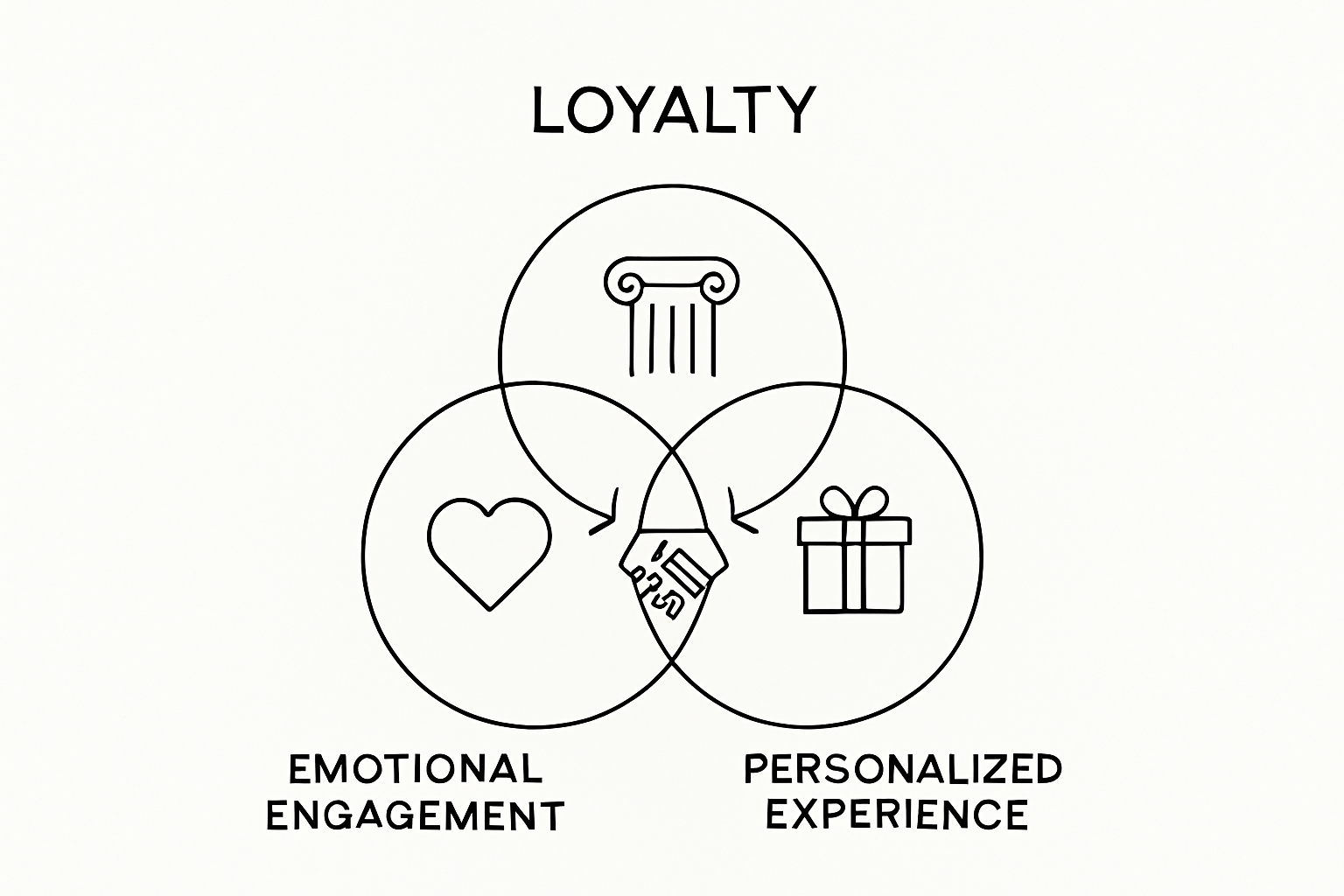
The technological infrastructure supporting contemporary loyalty programs represents a complex intersection of data science, consumer psychology, and strategic design. Luxury brands now deploy intricate digital mechanisms that track consumer behavior across multiple touchpoints, generating nuanced insights that enable hyper-personalized interactions. By integrating machine learning algorithms with deep psychological understanding, these systems can create experiences that feel simultaneously cutting-edge and intimately human.
Key technological components driving innovative loyalty programs include:
- Predictive Personalization: Real-time customization of consumer experiences
- Omnichannel Integration: Seamless interactions across digital and physical platforms
- Emotional Intelligence: AI-driven systems that understand and respond to consumer sentiment
- Adaptive Reward Mechanisms: Dynamic incentive structures that evolve with individual consumer preferences
Exploring innovative loyalty program strategies reveals that the most successful approaches treat loyalty not as a transactional mechanism, but as an ongoing dialogue. The most advanced digital platforms transform loyalty from a simple points-based system into a sophisticated relationship management tool that anticipates, responds to, and delights consumers in increasingly sophisticated ways.
Mistakes That Undermine Brand Loyalty
Brand loyalty is a delicate ecosystem that can be rapidly destabilized by seemingly minor strategic missteps. Consumer attitudes towards luxury services reveal that luxury brands are particularly vulnerable to loyalty erosion, with consumers maintaining exceptionally high expectations for brand performance and emotional resonance. The most catastrophic errors often emerge not from dramatic failures, but from subtle misalignments between brand promises and actual consumer experiences.
Research on luxury repurchase intentions highlights the sophisticated psychological mechanisms underlying consumer decision-making, demonstrating that loyalty is fundamentally about trust, consistency, and emotional connection. Brands that fail to understand these nuanced dynamics risk triggering profound psychological disengagement, transforming potential long-term advocates into transient, opportunistic consumers.
Critical mistakes that systematically undermine brand loyalty include:
- Inconsistent Brand Messaging: Creating cognitive dissonance through misaligned communication
- Emotional Disconnection: Treating consumers as transactions rather than relationship partners
- Lack of Personalization: Failing to recognize individual consumer’s unique preferences
- Broken Trust Mechanisms: Compromising transparency and authenticity in brand interactions
Understanding customer retention strategies demonstrates that successful brands view loyalty not as a destination, but as an ongoing journey of mutual understanding and respect. The most resilient luxury brands continuously evolve their approach, transforming potential loyalty pitfalls into opportunities for deeper, more meaningful consumer connections.
Unlock Lasting Luxury Consumer Loyalty with Psychology-Driven Marketing
Building genuine luxury consumer loyalty today requires more than just exceptional products. It demands a deep emotional connection, authentic brand storytelling, and personalized experiences that speak directly to consumers’ identities and values. If your brand struggles with inconsistent messaging, emotional disconnect, or lacks adaptive personalization, you are not alone. These obstacles can prevent your luxury brand from evolving into a trusted and cherished partner in your consumers’ lives.
At Corrado Manenti, we specialize in solving these challenges through psychology-driven marketing strategies that decode the complex motivations behind luxury consumer behavior. Our approach integrates consumer psychology with meticulous brand curation and innovative digital transformation to craft emotionally resonant, tailored brand experiences that inspire repeat purchases and foster unwavering loyalty.
Discover how to elevate your luxury brand by partnering with Corrado Manenti today. Visit https://corradomanenti.it to explore our Marketing Fashion solutions and unlock the power of consumer psychology to build lasting loyalty and sustained business growth.
Frequently Asked Questions
What are the key dimensions of luxury consumer loyalty today?
Key dimensions include emotional connection, value alignment, experiential consistency, and adaptive personalization, which are essential for creating meaningful relationships between luxury brands and consumers.
How does emotional engagement impact luxury brand loyalty?
Emotional engagement transforms transactional relationships into meaningful connections. Brands that successfully communicate authenticity and cultural relevance foster deeper emotional ties, enhancing consumer loyalty.
What psychological factors drive repeat purchases in luxury consumption?
Psychological factors such as identity projection, social validation, emotional compensation, and status signaling motivate consumers to make repeat purchases, reflecting their desire for uniqueness and self-expression.
How can luxury brands effectively personalize consumer experiences?
Luxury brands can effectively personalize experiences by employing predictive personalization, contextual customization, sensory engagement, and emotional resonance to cater to individual consumer preferences and desires.