


Bold storytelling is redefining luxury fashion marketing. As traditional channels like print and celebrity endorsements lose impact, global luxury brands now rely on authentic narrative techniques that build emotional trust and drive purchasing behavior. Luxury marketers and experience managers need to understand why well-crafted stories resonate deeper, inspire brand loyalty, and transform consumers into lasting advocates. This guide brings together proven insights on strategic storytelling that set premier fashion houses apart worldwide.
Table of Contents
- Defining Storytelling In Fashion Marketing
- Types Of Fashion Brand Narratives
- Psychological Impact On Luxury Consumers
- Storytelling Strategies In Global Fashion
- Common Pitfalls And What To Avoid
Key Takeaways
| Point | Details |
|---|---|
| Storytelling as a Strategy | Effective storytelling in fashion marketing creates emotional connections, guiding consumer behavior towards purchases by aligning brand values with customer aspirations. |
| Authenticity and Transparency | Authentic narratives are crucial; consumers demand honesty about brand practices, especially regarding ethics and sustainability. |
| Types of Narratives | Selecting the right narrative type—heritage, artisan, founder’s journey, or values-driven—enhances brand perception and aligns with consumer expectations. |
| Avoiding Pitfalls | Brands must avoid inauthentic narratives, greenwashing, cultural insensitivity, and over-storytelling to maintain trust and engagement with consumers. |
Defining Storytelling in Fashion Marketing
Stopwords don’t describe fashion storytelling. When a luxury marketer talks about storytelling, they mean something far more precise than just telling a nice story about their brand. At its core, storytelling in fashion marketing represents a strategic narrative technique that bridges the gap between consumer intentions and actual purchasing behavior by evoking emotions and building authentic trust. It’s the deliberate crafting of narratives that make your audience feel something, understand your brand’s values, and ultimately choose your collection over competitors.
In the fashion industry specifically, storytelling has become essential because traditional marketing channels are losing their grip on consumer attention. Printed advertisements, standard product descriptions, and celebrity endorsements alone no longer drive the emotional connection that generates loyal customers. Instead, storytelling serves as a narrative bridge between your brand’s heritage, values, and the individual aspirations of your target audience. When you tell a story about where your fabrics come from, the hands that crafted each seam, or the inspiration behind a seasonal collection, you’re not just selling garments. You’re selling an experience, a lifestyle, and a set of values that resonate with your consumer’s self-image.
What distinguishes fashion storytelling from generic brand narratives is its emphasis on authenticity and transparency. Consumers today, particularly in the luxury segment, can detect manufactured narratives instantly. They want to know the real story behind your brand. This means revealing the artisanal processes, the sustainable sourcing practices, or the personal journey of your creative director. Authentic storytelling conveys this transparency in a way that aligns your brand’s values with consumer expectations, especially among environmentally conscious markets. When done correctly, this transparency doesn’t diminish your brand’s prestige; it strengthens it by proving that quality and ethics go hand in hand.
The psychological mechanics underlying this approach matter tremendously. Humans process narratives differently than they process facts. A story activates multiple regions of the brain simultaneously, creating stronger memory retention and emotional engagement than a list of features ever could. When your customer reads about the Italian linen weavers behind your new summer collection, their brain engages language processing, sensory regions, and emotional centers all at once. This multi-sensory engagement transforms a potential customer into someone who feels personally connected to your brand’s story, making them far more likely to complete a purchase and become a repeat client who actively advocates for your brand within their networks.
Pro tip: Identify one authentic story from your production process or brand heritage this month and test it across one marketing channel—whether that’s Instagram content, email campaigns, or your website. Measure engagement metrics against non-narrative content to validate the emotional resonance in your specific market segment.
Types of Fashion Brand Narratives
Not all brand stories are created equal. The narrative you choose to tell shapes how your audience perceives your brand, influences their purchasing decisions, and determines whether they become loyal advocates or one-time buyers. Fashion brands typically deploy four distinct narrative types, each serving different strategic purposes and resonating with specific consumer segments. Understanding these categories helps you select the right storytelling approach for your brand position, market segment, and target audience expectations.
The heritage narrative tells the origin story of your brand. This approach works exceptionally well for established luxury houses with decades or centuries of history. You’re essentially saying, “We’ve been perfecting our craft since 1952,” or “Our founder’s vision still guides every collection.” Heritage narratives build credibility and prestige by anchoring your brand in tradition and expertise. They appeal to consumers who value legacy and craftsmanship. The second major type is the artisan narrative, which focuses on the people and processes behind your products. Rather than talking about your brand’s age, you’re highlighting the skilled hands that create each piece, the sustainable practices you employ, or the innovative techniques your team developed. This narrative type emphasizes authenticity and transparency, making it particularly effective for brands positioning themselves around ethical production or local craftsmanship.
The founder’s journey narrative centers on the personal story of the person or people who created the brand. This might involve overcoming obstacles, pursuing a creative vision, or addressing a market gap they identified. Consumers connect emotionally with human stories, making founder narratives powerful for building brand affinity. When your creative director’s personal struggle or passion becomes the story you tell, customers feel they know the person behind the brand, creating a deeper relationship than any product description could achieve. The fourth type is the values-driven narrative, which focuses on what your brand stands for rather than its history or people. This approach works when your brand champions sustainability, inclusivity, social justice, or other causes that resonate with your target market. Brands like those emphasizing environmental responsibility or diversity in fashion use this narrative to align with consumer values and differentiate themselves in crowded markets.

Research demonstrates that narrative-based brand storytelling enhances perceived authenticity and builds stronger trust compared to traditional image-focused advertising approaches. When you choose a narrative type and commit to it consistently across all touchpoints, consumers recognize the authenticity in your messaging. The key distinction here matters tremendously: a well-crafted narrative outperforms standard product advertising by activating emotional responses and creating memorable brand associations. However, the narrative you select must align authentically with your actual brand practices. Choosing a values-driven narrative about sustainability while your supply chain remains opaque will damage trust faster than avoiding the narrative altogether.
These narrative types aren’t mutually exclusive either. Many successful global fashion brands weave multiple narrative types into their marketing ecosystem. A luxury house might use heritage narratives in print campaigns, artisan narratives in behind-the-scenes content, and founder’s journey storytelling in video interviews. The sophistication comes from knowing which narrative resonates most strongly with each customer segment and deploying accordingly. Your luxury clientele might respond most strongly to heritage and craftsmanship narratives, while younger, socially conscious consumers might connect more deeply with values-driven storytelling.
Here’s a comparison of four major fashion brand narrative types and how each enhances brand perception:
| Narrative Type | Core Focus | Primary Consumer Appeal | Strategic Benefit |
|---|---|---|---|
| Heritage | Brand origin and tradition | Legacy and trust | Positions brand as established and prestigious |
| Artisan | Craftsmanship and processes | Authenticity and transparency | Highlights ethical and local production practices |
| Founder’s Journey | Personal story of creator | Emotional connection | Builds deep affinity through relatable stories |
| Values-Driven | Brand ethics and causes | Shared values | Differentiates with social and environmental impact |
Pro tip: Map your brand across these four narrative types and identify which two or three feel most authentic to your actual business practices and values. Test each narrative type with a small segment of your target audience using surveys or focus groups before committing substantial marketing budget, ensuring genuine resonance rather than assumed appeal.
Psychological Impact on Luxury Consumers
Luxury consumers operate differently than mass market shoppers. Their purchasing decisions involve complex psychological mechanisms that go far beyond functional need. When you deploy storytelling in luxury fashion marketing, you’re not simply informing customers about product availability. You’re triggering deep psychological responses that influence trust, loyalty, and perceived brand authenticity at a neurological level. Understanding these mechanisms transforms storytelling from a nice marketing tactic into a strategic competitive advantage.
The psychological foundation of storytelling in luxury markets centers on emotional resonance and trust building. When a luxury consumer encounters a well-crafted brand narrative, their brain processes information differently than when viewing standard product advertisements. Storytelling strategies enhance emotional engagement and create stronger consumer-brand relationships by activating multiple neural pathways simultaneously. A narrative about your atelier’s heritage or your artisans’ dedication creates what psychologists call “narrative transportation,” where the reader becomes mentally absorbed in the story. This absorption state reduces skepticism and increases openness to brand messaging. The luxury consumer’s skepticism specifically decreases because stories feel more authentic than corporate messaging. Your high-net-worth audience has encountered countless sales pitches; they’ve developed sophisticated filters against traditional advertising. Storytelling bypasses these filters by appealing to emotional and psychological needs rather than logical product features.
Trust, particularly in luxury segments, operates as a psychological prerequisite for purchase decisions. Your clients are investing substantial sums into products that represent personal identity and status. They need to believe that your brand shares their values and understands their aspirations. Authentic storytelling fosters emotional resonance and reduces skepticism among luxury audiences by demonstrating alignment between brand values and consumer expectations. When you tell genuine stories about sustainable sourcing, inclusive design practices, or ethical production, you’re not just communicating facts. You’re signaling to the consumer that your brand operates with integrity. This signal builds psychological safety, making the purchase decision feel less risky. The luxury consumer can justify their investment internally by anchoring it to a brand narrative they believe in and respect.
The psychological impact extends beyond the purchase itself into brand loyalty and advocacy. Consumers who feel emotionally connected to a brand narrative become what researchers call “brand advocates.” They don’t just purchase; they defend the brand against criticism and actively recommend it within their networks. This advocacy stems from a psychological phenomenon called “cognitive consonance,” where people defend choices they’ve made once they’ve emotionally invested in supporting narratives. A luxury client who has read your brand’s story about family heritage and craftsmanship excellence will naturally defend that investment in conversation because their self-image becomes intertwined with the brand narrative. They view recommending your brand as a reflection of their own refined taste and values.
One critical psychological distinction affects luxury storytelling specifically: the role of perceived exclusivity and scarcity. Luxury consumers experience psychological satisfaction from owning items that represent selectivity and rarity. Storytelling that emphasizes limited production runs, bespoke customization, or exclusive access activates the psychological desire for status and uniqueness. When your narrative conveys that only 50 pieces were created using a specific technique known to three artisans, the consumer experiences a psychological shift in perceived value. The story creates a sense of scarcity that justifies the premium price point in the consumer’s mind.
To clarify key psychological effects of storytelling on luxury consumers, see the following summary:
| Psychological Effect | Consumer Response | Business Impact |
|---|---|---|
| Emotional Resonance | Increased connection | Greater loyalty and engagement |
| Trust Building | Reduced skepticism | Higher purchase justification |
| Narrative Transportation | Absorbed attention | Enhanced brand advocacy |
| Perceived Exclusivity | Desire for rarity | Supports premium pricing |
Pro tip: Conduct a psychological audit of your current brand narratives by testing them with small segments of your target luxury audience through one-on-one interviews or focus groups. Ask specifically what emotions they felt and what trust signals they picked up from your storytelling. Use their feedback to reinforce emotional triggers that resonated most strongly, making your narratives increasingly sophisticated in their psychological impact.
Storytelling Strategies in Global Fashion
Global fashion marketing demands more sophistication than simply translating a domestic narrative into multiple languages. When your brand operates across North America, Europe, Asia, and beyond, your storytelling strategy must account for cultural nuances, regional values, and local interpretations of luxury while maintaining consistent brand identity. The challenge becomes balancing global coherence with local relevance. Your heritage narrative might resonate powerfully with European customers who value tradition and craftsmanship, but the same story requires different emphasis or framing for Japanese consumers who interpret luxury through different cultural lenses. This strategic tension shapes how successful global fashion brands approach storytelling.
Digital platforms fundamentally changed how brands deploy global storytelling. Digital platforms enable brands to craft dynamic narratives tailored for diverse international markets by allowing real-time customization and cultural adaptation while maintaining core brand messaging. Instagram, TikTok, YouTube, and emerging platforms create opportunities to tell different story angles simultaneously. You can share behind-the-scenes artisan content for one audience while showcasing innovative design processes for another, all under the same brand umbrella. What matters strategically is that each narrative variation derives from authentic brand elements rather than appearing as disconnected messaging. The most effective global fashion brands identify core narrative pillars that remain consistent everywhere, then adapt supporting details to resonate with specific regional audiences. For instance, your commitment to ethical production remains constant globally, but the storytelling emphasis shifts. In Scandinavia, you might highlight environmental sustainability practices. In South Africa, the same commitment emphasizes fair wages and community development. Same core value, different storytelling entry point for cultural relevance.
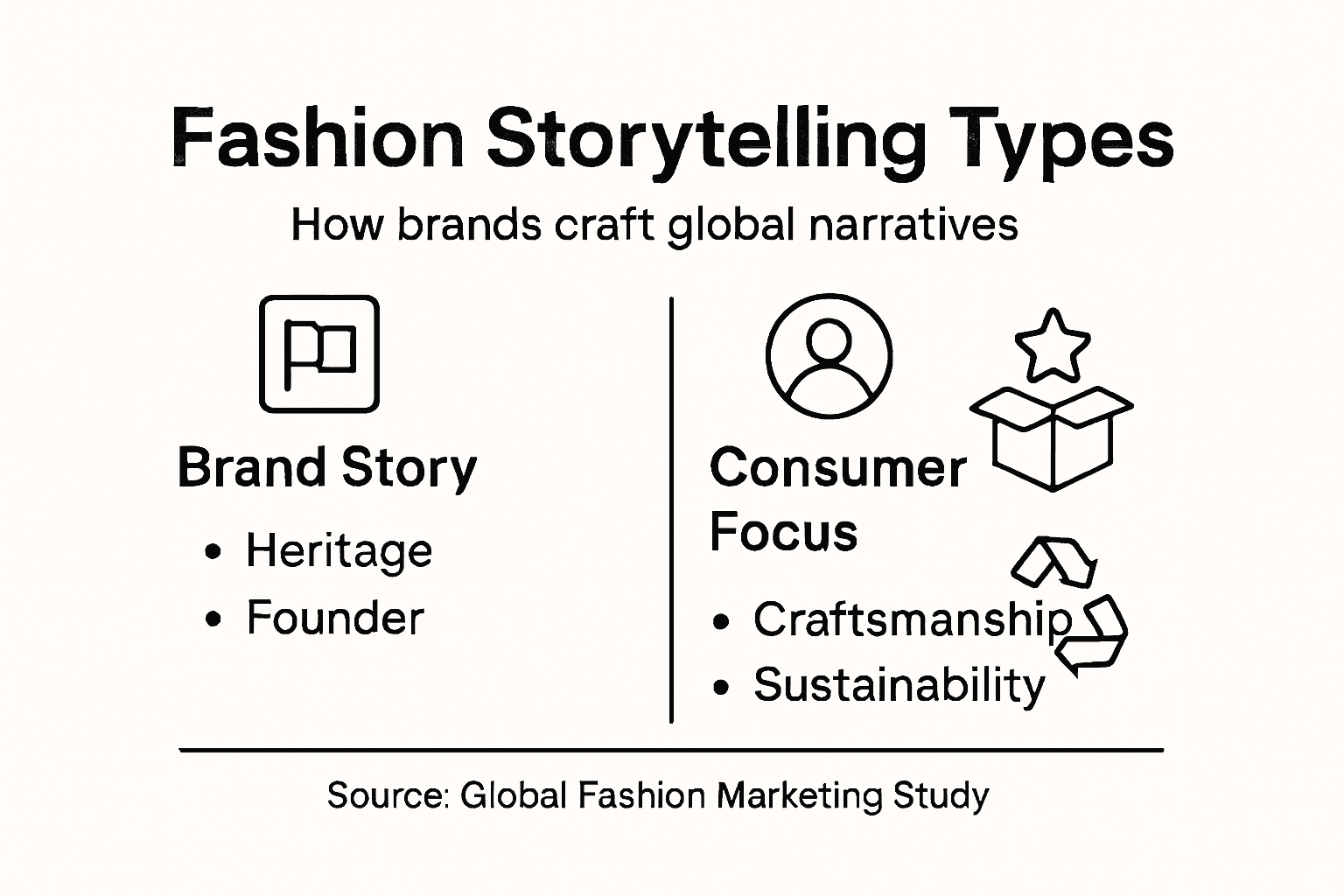
Social media platforms specifically require adapted storytelling frameworks that account for platform mechanics and cultural context. Storytelling creates emotional connections and cultural relevance through social media frameworks adapted to diverse cultural contexts, demonstrating how narrative techniques must evolve across channels. Instagram favors visual storytelling with minimal text, making aesthetic narrative paramount. TikTok demands rapid-fire narrative hooks and entertainment value that works differently than longer-form YouTube storytelling. WeChat in China operates as both social platform and commerce channel, requiring storytelling that seamlessly integrates product information within narrative content. The strategic sophistication comes from understanding that each platform doesn’t just change distribution method; it fundamentally alters how audiences consume and interpret narratives. A heritage story told through 30 images on Instagram tells differently than the same story narrated across five 10-minute YouTube videos. Both approaches need intentional design rather than simple adaptation of identical content.
Regional storytelling strategies must account for competitive positioning within each market. When entering the Asian luxury market, you’re competing against established local brands with deeper cultural understanding and centuries of regional heritage. Your storytelling strategy cannot simply replicate what works in Western markets. Instead, successful global brands identify where their narrative holds unique advantage. Perhaps your Italian heritage genuinely appeals to aspirational Chinese consumers seeking European sophistication. Your brand story becomes meaningful precisely because it offers something local competitors cannot authentically claim. This requires deep market research before committing storytelling resources. Understanding what storytelling angles already saturate your target market helps you identify white space where your brand’s authentic narrative can stand out.
Implementation across global markets demands centralized narrative governance with decentralized execution. Your brand guidelines should define non-negotiable narrative elements that appear consistently everywhere. These might include specific language around heritage, founder vision, or production values. Simultaneously, regional teams need autonomy to adapt storytelling execution, format, and emphasis based on local market knowledge. A global campaign framework might specify the core narrative about artisanal techniques, but regional teams determine whether that story emphasizes heritage, innovation, quality, or exclusivity based on what resonates locally. This balance prevents both the risk of disconnected brand identity and the risk of tone-deaf messaging that ignores local sensibilities.
Pro tip: Before expanding storytelling to a new geographic market, conduct a competitive narrative audit mapping what stories your competitors already tell successfully in that region. Identify narrative gaps where your authentic brand story offers something genuinely different, then emphasize those elements rather than repeating stories that already saturate the market.
Common Pitfalls and What to Avoid
Storyelling power comes with responsibility. When executed poorly, brand narratives don’t just fail to drive sales; they actively damage trust and alienate your target audience. Luxury marketers often encounter the same critical mistakes repeatedly because the temptation to tell aspirational stories outweighs the discipline required to tell authentic ones. Understanding these pitfalls before they derail your brand strategy prevents costly reputation damage and wasted marketing investment.
The most dangerous pitfall is narrative inauthenicity. This occurs when your storytelling doesn’t align with observable brand reality. You cannot tell a heritage story about craftsmanship while outsourcing production to factories with questionable labor practices. You cannot emphasize ethical sourcing while your supply chain remains opaque. Consumers, particularly luxury consumers with disposable income to research brands thoroughly, detect these disconnects instantly. Inauthentic narratives and affordability disconnects undermine consumer trust and brand preference by creating cognitive dissonance between what your brand claims and what customers can verify. When a luxury house tells elaborate stories about artisanal production while selling items at price points that make artisanal production mathematically impossible, the narrative collapses. Smart consumers recognize this contradiction and interpret it as manipulation rather than marketing. The damage extends beyond lost sales; it converts potential customers into vocal critics who share their skepticism within their networks.
A closely related but distinct pitfall is greenwashing and false transparency. This specifically afflicts sustainable fashion brands where storytelling about environmental commitment doesn’t match actual sustainability outcomes. Greenwashing and lack of transparency damage consumer trust in sustainable fashion through superficial narratives that fail to engage consumers authentically, creating potential for global brand image erosion. You might tell compelling stories about recycled materials while using conventional synthetic dyes that pollute waterways. You might emphasize fair wages while relying on subcontractors who don’t meet those standards. The storytelling feels authentic because you’re describing real elements of your production, but you’re highlighting select positive aspects while omitting contradictory realities. This partial truth feels worse to consumers than complete honesty because it implies deliberate deception rather than incomplete knowledge. When exposed, greenwashing narratives trigger intense backlash specifically because consumers feel manipulated. They didn’t just reject your marketing; they feel foolish for believing it initially.
A third critical pitfall involves cultural tone deafness in global storytelling. When you deploy identical narratives across diverse markets without cultural adaptation, you risk appearing either insensitive or ignorant. A heritage narrative emphasizing European craftsmanship might feel culturally insensitive to Asian markets where audiences have their own equally rich artistic traditions. Storytelling that celebrates individual creative vision might alienate cultures that prioritize collective value creation. More problematically, you might inadvertently reference cultural symbols, imagery, or language that carries negative connotations in specific markets. What reads as sophisticated in one region can seem pretentious or offensive elsewhere. This pitfall particularly threatens global expansion where your marketing team may lack deep cultural knowledge of emerging markets.
A fourth mistake many luxury brands make is over-storytelling. You don’t need a narrative for every product interaction. Some customers simply want to browse, purchase, and receive their items without encountering elaborate stories. Over-storytelling creates friction in the purchasing experience, making simple transactions feel manipulative. Your storytelling should enhance customer experience, not obstruct it. The balance requires restraint and strategic selectivity about when and where you deploy narrative content.
Finally, avoid the pitfall of static storytelling that never evolves. Your brand narrative should remain rooted in core truth, but supporting details, emphasis, and presentation should adapt as your brand grows, markets change, and consumer values shift. A narrative that resonated five years ago might feel dated today. Brands that fail to refresh storytelling approaches risk appearing disconnected from contemporary conversations, especially among younger luxury consumers who expect brands to engage with current cultural moments.
Pro tip: Before launching any brand narrative campaign, conduct an internal authenticity audit by listing the specific operational or product realities that support each story claim. If you cannot document evidence for a narrative element, remove it rather than risk credibility damage when consumers fact-check your claims.
Elevate Your Fashion Brand with Storytelling That Truly Connects
Struggling to bridge the emotional gap between your luxury fashion brand and discerning global consumers? This article reveals how authentic storytelling driven by psychological insight is key to building trust, enhancing exclusivity, and inspiring lasting brand loyalty. If you want your fashion business to stand out by crafting narratives that resonate deeply and drive real purchasing behavior explore expert strategies in Marketing Fashion.
Take your brand beyond just quality products and standard advertising by partnering with Corrado Manenti, a specialist in psychology-driven marketing for high-end fashion and luxury sectors. Visit Corrado Manenti now to discover how his detail-focused, innovative approach helps fashion startups and global brands alike craft authentic stories that captivate emotionally and convert effectively. Start transforming your marketing today with proven strategies at Fashion Start up and unlock your brand’s full potential through expert storytelling guidance.
Frequently Asked Questions
What is storytelling in fashion marketing?
Storytelling in fashion marketing is a strategic narrative technique that creates an emotional connection between the brand and the consumer, bridging the gap between consumer intentions and purchasing behavior by highlighting the brand’s values and heritage.
How does storytelling enhance consumer trust in luxury fashion brands?
Effective storytelling enhances consumer trust by demonstrating authenticity and transparency. When consumers see genuine narratives about a brand’s practices, values, and history, they are more likely to believe in the brand’s integrity, reducing skepticism and fostering loyalty.
What are the main types of fashion brand narratives?
The primary types of fashion brand narratives include heritage narratives (origin story), artisan narratives (craftsmanship), founder’s journey narratives (personal stories of the creators), and values-driven narratives (brand ethics and social causes). Each appeals to different consumer segments and serves unique strategic purposes.
Why is authenticity important in fashion storytelling?
Authenticity is crucial because consumers, particularly in the luxury sector, can easily identify inauthentic narratives. A story that aligns with actual brand practices builds credibility, strengthens consumer trust, and creates a lasting emotional connection with the brand.
Recommended
- 7 Powerful Examples of Fashion Brand Storytelling to Inspire – Corrado Manenti
- 7 Powerful Examples of Fashion Brand Storytelling to Inspire – Corrado Manenti
- Complete Guide to the Role of Brand Storytelling – Corrado Manenti
- Complete Guide to Lifestyle Brand Storytelling – Corrado Manenti
- ELLE MODE | The Bradery