

Luxury customers expect more than beautiful products. They crave authentic stories, personal connection, and the feeling of belonging to an elite club. This emotional demand is why European marketing directors must master emotion-driven campaigns that create loyalty beyond fleeting trends. Discover how emotional storytelling, sensory branding, and personalized experiences turn your brand into a lasting source of aspiration and trust in the luxury market.
Table of Contents
- Emotion-Driven Campaigns In Luxury Marketing
- Types And Techniques Of Emotional Campaigns
- How Emotional Branding Drives Engagement
- Risks And Challenges In The Luxury Sector
- Maximizing Customer Loyalty And Lifetime Value
Key Takeaways
| Point | Details |
|---|---|
| Emotional Branding is Essential | Luxury customers seek emotional connections, making authentic storytelling vital for building loyalty. |
| Focus on Key Pillars | Effective campaigns should integrate authenticity, personalization, and experience design to resonate deeply with customers. |
| Measure Emotional Engagement | Use metrics like brand sentiment and repeat purchases to gauge the success of emotion-driven strategies instead of traditional metrics alone. |
| Avoid Authenticity Pitfalls | Be cautious of inauthentic narratives; alignment between brand values and actual practices is crucial to maintain credibility. |
Emotion-Driven Campaigns in Luxury Marketing
Luxury customers don’t buy products. They buy feelings, aspirations, and a sense of belonging to an exclusive world. Emotional appeals in luxury marketing create deeper connections that transcend price points and product features, transforming casual purchasers into devoted brand advocates.
Emotional branding works differently in luxury than in mass-market fashion. Your customers expect authenticity paired with aspiration, heritage blended with innovation, and exclusivity wrapped in relatability. This balance is where most campaigns fail.
Why Emotions Matter More in Luxury
Luxury operates in a psychological space. Your client isn’t comparing your €5,000 handbag to a competitor’s €5,200 handbag based on materials alone. She’s asking: Does this brand understand who I am? Does it reflect my values? Will owning it make me feel part of something meaningful?
Here’s what separates emotion-driven luxury campaigns from standard marketing:
- Storytelling over features: Narratives about craftsmanship heritage resonate more than technical specifications
- Values alignment: Customers choose brands that reflect their personal ethics, not just their taste
- Exclusivity perception: Emotional connection creates a sense of insider status that money alone cannot buy
- Long-term loyalty: Emotional bonds survive price fluctuations and trend changes
Emotional connection through authentic storytelling builds loyalty that transcends transactional relationships and creates lifelong brand advocates in the luxury market.
The Three Pillars of Emotion-Driven Luxury Campaigns
Successful campaigns combine three core elements that work together. Each pillar strengthens the others, creating campaigns that feel cohesive rather than scattered.
Authenticity means your brand’s story must be genuine. European luxury customers have refined BS detectors. They know when a heritage narrative is fabricated or when sustainability claims lack substance. Share real stories about your artisans, your production process, your brand’s evolution.
Personalization goes beyond using a customer’s name in an email. It means understanding that the Milanese director purchasing your collection has different aspirations than the Barcelona entrepreneur. Emotional storytelling and personalized experiences drive loyalty by making each customer feel uniquely understood.
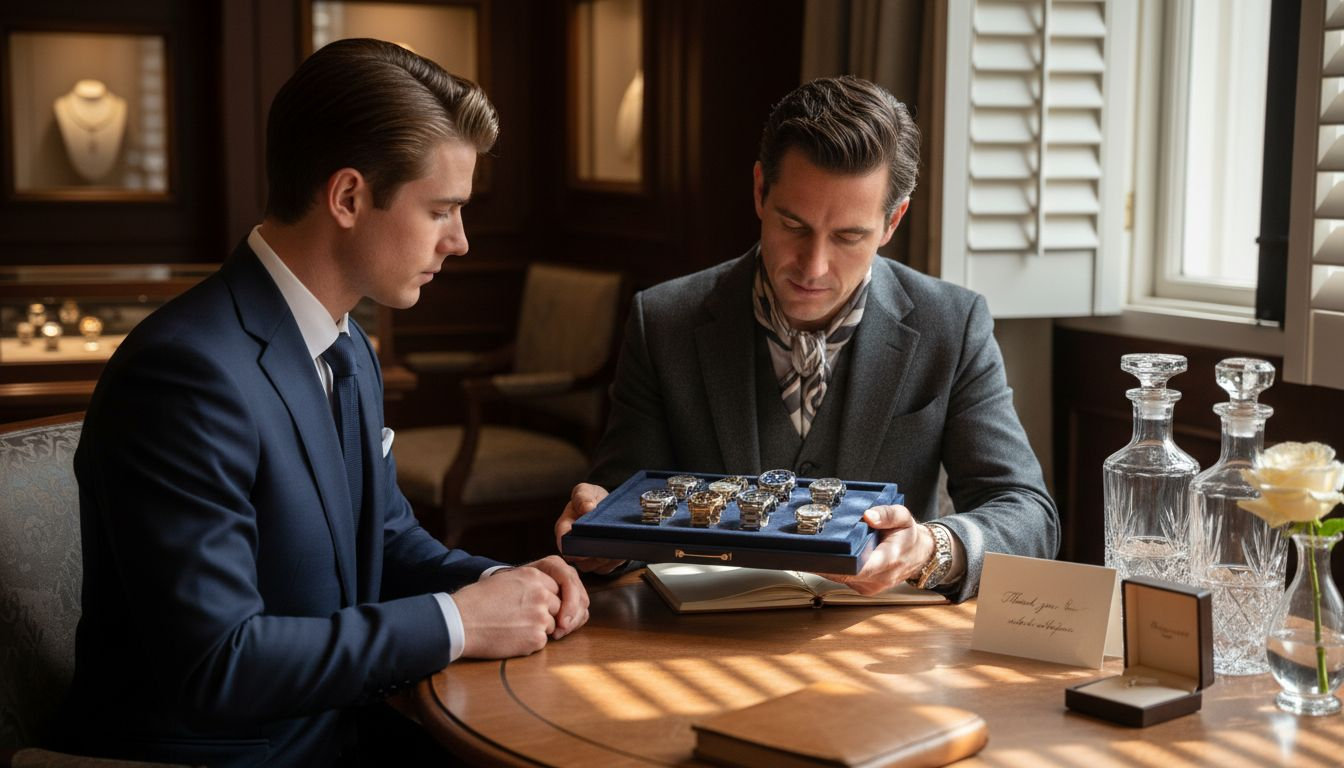
Experience design transforms touchpoints into memorable moments. Whether it’s a private preview, a handwritten note with your collection, or an exclusive event, these interactions create emotional residue that digital advertising cannot match.
Implementing Emotion-Driven Strategies
Start by mapping your customer’s emotional journey, not just their purchase journey. Where do they feel inspired? When do they doubt themselves? Which moments matter most to them?
Then align your campaign across these touchpoints:
- Identify the core emotion you want to evoke (confidence, belonging, sophistication, liberation)
- Develop authentic narratives that connect your brand to that emotion
- Design experiences that reinforce the emotional message
- Measure emotional engagement, not just clicks and conversions
Measuring emotional impact differs from standard metrics. Look at brand sentiment shifts, customer lifetime value increases, referral rates, and repeat purchase velocity rather than just conversion rates.
Pro tip: Create a “brand emotion map” that documents which feelings your campaign should trigger at each customer touchpoint. Share this internally so every team member—from customer service to social media—reinforces the same emotional narrative consistently.
Types and Techniques of Emotional Campaigns
Not all emotions drive the same purchasing behavior. In luxury marketing, your choice of emotional trigger determines whether a customer feels inspired to buy or simply entertained. Understanding which emotions work for your brand is foundational to campaign success.
The most effective luxury campaigns combine multiple emotional techniques rather than relying on a single approach. This layered strategy creates campaigns that feel rich, complex, and deeply resonant with your target audience.
The Core Emotional Triggers for Luxury
Emotional appeals like joy, nostalgia, fear, trust, and empathy each serve different strategic purposes in luxury marketing. Your job is matching the right emotion to your campaign objective and brand positioning.
Here’s how each emotional trigger functions:
Here’s how key emotional triggers in luxury marketing differ in purpose and impact:
| Emotional Trigger | Typical Use in Luxury | Customer Response | Strategic Benefit |
|---|---|---|---|
| Nostalgia | Linking to heritage, legacy | Trust and sentimental value | Reinforces brand tradition |
| Aspiration | Signaling exclusivity and achievement | Desire to belong, emulate | Drives premium positioning |
| Belonging | Creating community or VIP programs | Feeling of insider status | Fosters loyalty and referrals |
| Trust | Transparency in sourcing/ethics | Confidence and security | Reduces hesitation, boosts retention |
| Joy | Celebrating milestones, delight | Happiness, positive sharing | Increases emotional recall |
- Nostalgia: Connects customers to heritage, craftsmanship, and timeless elegance. Perfect for established European luxury houses with multi-generational stories.
- Trust: Built through transparency about production, materials, and brand values. Increasingly important as customers demand authenticity.
- Aspiration: Positions your brand as a marker of success, refinement, and exclusivity that customers want to attain.
- Belonging: Creates insider status and community. Exclusive events, VIP programs, and limited access activate this emotion powerfully.
- Joy: Celebratory and liberating, often paired with milestone moments or personal achievements in your customer’s life.
Techniques That Amplify Emotional Impact
Emotional storytelling combined with sensory elements like colors, music, and visuals creates stronger brand recall than rational messaging alone. Your campaigns should engage multiple senses simultaneously.
Consider these practical techniques:
Visual design: Colors communicate emotion before words do. Deep jewel tones suggest luxury and exclusivity. Warm golds evoke nostalgia and prestige. Choose your palette strategically.
Sonic branding: A signature sound or music piece activates emotional memory. When customers hear your brand’s audio signature, they should immediately feel the emotion you’ve cultivated.
Narrative structure: Tell stories about real people, not fictional characters. Feature your artisans, your customers, your heritage. Authenticity creates emotional credibility.
Scarcity and exclusivity: Limited editions and exclusive access trigger both aspiration and urgency. This technique works especially well combined with trust-building transparency.
Emotional connection through sensory storytelling dramatically outperforms rational product benefits in driving luxury purchase decisions and brand loyalty.
Practical Application for Your Campaigns
Start by mapping which emotions align with your brand identity and customer aspirations. Then select 2-3 core techniques to weave throughout your campaign.
A single campaign might combine nostalgia (heritage storytelling) plus belonging (exclusive access) plus aspiration (positioning your product as a marker of success). This layering creates depth.
Test your emotional messaging with a small audience segment before full rollout. Measure emotional response through sentiment analysis, not just conversion rates. Track how emotional connection translates into repeat purchases and referrals over time.
Pro tip: Create a sensory campaign brief that specifies the exact color palette, music tone, visual style, and narrative voice your campaign will use. Share this with every team member—designers, copywriters, photographers, and event planners—so emotional consistency shines through every touchpoint.
How Emotional Branding Drives Engagement
Engagement isn’t just about clicks and shares. In luxury marketing, real engagement means your customers are emotionally invested in your brand story, actively participating in your community, and voluntarily advocating for you to others.
Emotional branding creates the conditions where engagement happens naturally rather than through aggressive sales tactics. When customers feel understood and valued, they show up repeatedly.
The Engagement Chain: From Emotion to Action
Emotional attachment, self-expression, and status motivation drive consumer-brand interactions on social media in ways that rational messaging never can. Your customers engage because they’re emotionally invested, not because you asked them to.
Understand how emotions translate into specific engagement behaviors:
- Emotional attachment: Customers who feel connected to your brand’s values spend more time with your content and share it within their networks.
- Self-expression: Luxury customers use your brand to communicate their identity and values to others. This drives both digital and offline engagement.
- Status signaling: Association with your brand becomes a statement about who they are. This motivates participation in exclusive experiences and VIP programs.
- Trust building: Emotional content that feels authentic deepens trust, making customers more likely to engage repeatedly over time.
Creating Engagement Through Emotional Touchpoints
Engagement happens at specific moments where emotional connection deepens. Your job is designing these moments strategically across every channel.
Consider where your luxury customers naturally congregate and what emotional needs they have in those spaces:
Social media: Share behind-the-scenes content showing artisans at work, heritage stories, and customer moments. This creates emotional connection and drives sharing.
Exclusive events: Private previews, masterclasses, and invitation-only experiences activate belonging and status emotions. Attendees become your most engaged advocates.
Personalized communication: Handwritten notes, custom recommendations, and one-on-one engagement make customers feel individually valued rather than part of a mass audience.
Community building: Create spaces where your customers connect with each other around shared values, not just around your products. This deepens emotional loyalty significantly.
Emotional content that fosters trust generates future engagement far more effectively than promotional messaging or product-focused advertising.
Measuring Emotional Engagement
Traditional engagement metrics miss what actually matters. Move beyond vanity metrics to measure what indicates genuine emotional connection.
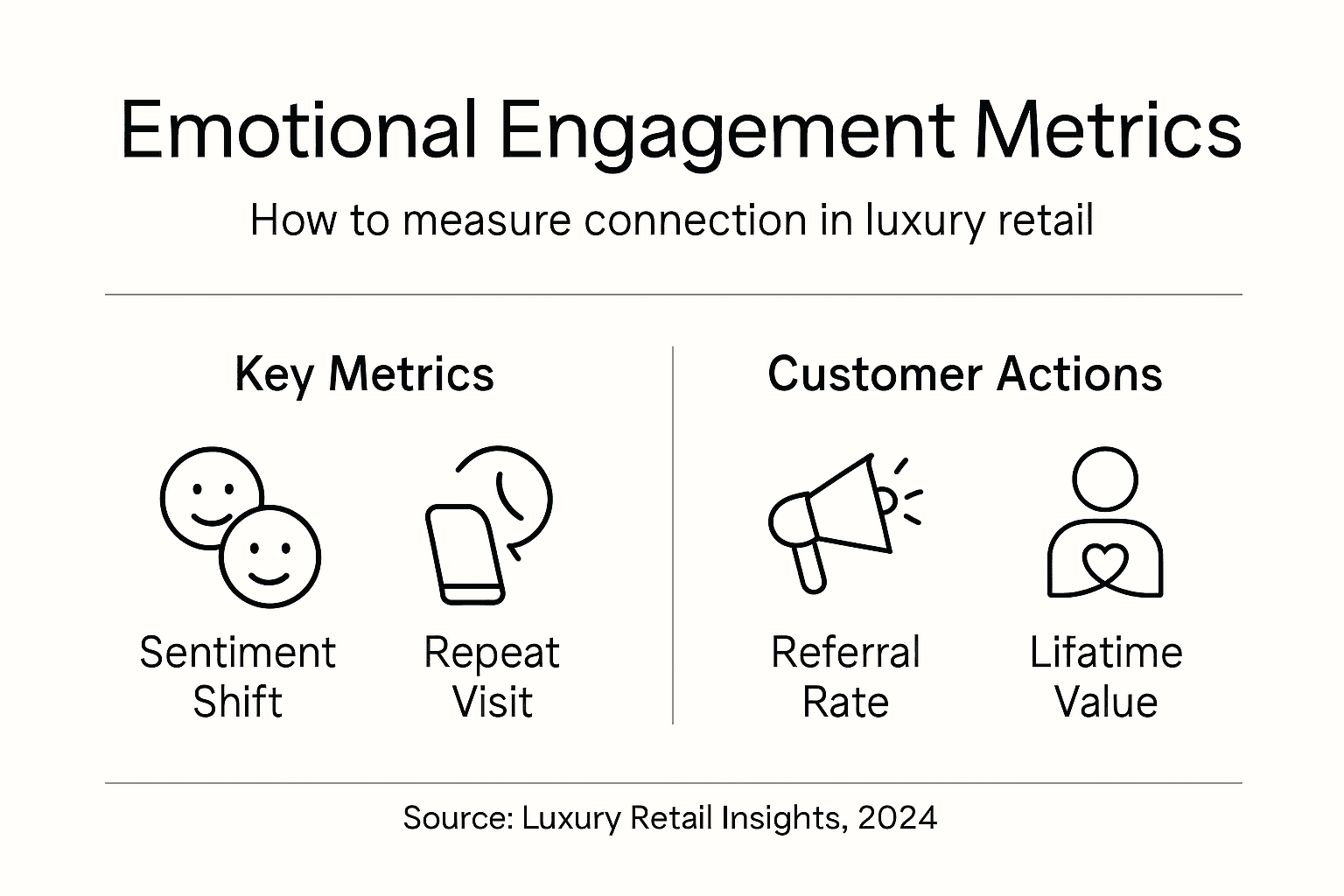
Track these indicators:
Compare traditional and emotional engagement metrics to understand their business value:
| Metric Type | Traditional Example | Emotional Example | Business Impact |
|---|---|---|---|
| Quantity | Click-through rate | Sentiment analysis | Surface-level interest vs. deeper brand bond |
| Quality | Number of shares | Comment tone | Broad reach vs. meaningful interaction |
| Loyalty | Transaction count | Repeat purchase rate | One-time sale vs. lasting loyalty |
| Advocacy | Referral code use | Organic recommendations | Tracked promo use vs. true brand advocacy |
- Repeat interaction: How often do customers return to engage with your content across weeks and months?
- Share velocity: Are customers sharing your content within their networks, indicating pride in association?
- Sentiment quality: Analyze comment tone and language. Are interactions warm and personal or transactional?
- Lifetime value growth: Do emotionally engaged customers spend more over time and make repeat purchases?
- Referral generation: Are engaged customers actively recommending your brand to others without incentive?
Emotionally engaged customers show higher retention, increased spending, and stronger advocacy than those engaged through discounts or promotions alone.
Pro tip: Create an “engagement journey map” that identifies the emotional moments where your customers interact with your brand most meaningfully. Design specific touchpoints at each stage to deepen emotional connection, then measure how that investment translates into repeat purchases and referrals over 6-12 months.
Risks and Challenges in the Luxury Sector
Emotional campaigns are powerful, but they come with real risks. When emotions drive your strategy, missteps damage your brand more severely than in mass-market sectors. Your luxury customers have higher expectations, longer memories, and louder voices.
Understanding where emotion-driven campaigns can backfire helps you avoid costly mistakes that erode the loyalty you’ve worked hard to build.
The Authenticity Problem
Fake emotional narratives destroy luxury brands faster than silence ever could. Your customers detect inauthenticity instantly because they’ve seen countless campaigns and marketing plays throughout their lives.
Common authenticity failures include:
- Heritage fabrication: Claiming a 50-year tradition when your brand launched five years ago tanks credibility permanently.
- Values misalignment: Promoting sustainability while using exploitative labor practices creates scandal when exposed.
- Manufactured stories: Customers recognize when emotional narratives are focus-grouped rather than genuine.
- Influencer mismatches: Partnering with influencers whose actual values conflict with your brand message creates cognitive dissonance.
One viral exposé of inauthenticity can obliterate years of emotional brand building. European luxury customers in particular hold brands accountable for walking their talk.
Emotional Manipulation and Backlash
There’s a line between emotional connection and manipulation. Crossing it triggers strong negative reactions in your audience.
Risks of over-emotional campaigns:
- Sentiment fatigue: Constant emotional appeals feel manipulative and trigger audience resentment rather than loyalty.
- Exploitation perception: Using personal struggles or social causes purely for profit generates backlash.
- Tone deafness: Emotional campaigns that ignore current events or audience sensibilities feel offensive.
- Forced intimacy: Treating customers too familiarly when you don’t have that relationship level creates discomfort.
Emotional authenticity requires alignment between your brand’s stated values and actual business practices across your entire supply chain.
Market Saturation and Differentiation
Every luxury brand now talks about emotional connection. When everyone claims authenticity and emotional resonance, those claims lose power.
You face intense competition in the emotional branding space. Standing out requires:
- Genuine differentiation: What emotional story is uniquely yours that competitors cannot claim?
- Consistency over time: One campaign doesn’t build emotional loyalty. Sustained messaging over years does.
- Multi-generational appeal: Emotional narratives must resonate with both established customers and emerging luxury consumers.
- Cultural sensitivity: Global emotional campaigns often miss local nuances and cultural contexts.
Digital Permanence and Crisis Risk
Emotional content shared digitally lives forever. A campaign that resonates today can become embarrassing or offensive within months as cultural attitudes shift.
Digital risks include:
- Screenshot permanence: Old posts resurface. Ensure your emotional messaging ages well or consider content lifecycle planning.
- Context collapse: Content meant for one audience group reaches unintended audiences with different interpretations.
- Viral amplification: A single misstep in emotional messaging spreads globally before you can respond.
Understanding luxury market segmentation helps you target emotional messages precisely and avoid broad-brush appeals that miss audience nuances.
Measuring What Actually Matters
Many brands chase emotional engagement metrics that don’t correlate with actual loyalty or sales.
False success indicators:
- High social media engagement that doesn’t convert to purchases
- Positive sentiment that disappears when price increases happen
- Customer advocacy that remains theoretical rather than actual referrals
- Emotional connection that doesn’t translate into repeat business
Measure real business outcomes: repeat purchase rates, customer lifetime value growth, referral quality, and retention during competitive pressure.
Pro tip: Before launching an emotion-driven campaign, conduct a “authenticity audit” that honestly assesses whether your brand’s actual practices match your emotional narrative. Involve team members from operations, supply chain, and customer service, not just marketing. Address gaps before they become public scandals.
Maximizing Customer Loyalty and Lifetime Value
Loyalty in luxury isn’t transactional. A customer who buys once is a transaction. A customer who returns repeatedly, spends more over time, and refers others is an asset worth protecting fiercely.
Emotional branding increases loyalty by forging deep emotional attachment with consumers, creating relationships that survive competitive pressure and price increases. This emotional foundation transforms how customers value your brand and what they’re willing to invest.
The Emotional Foundation of Lifetime Value
Customer lifetime value (CLV) measures total profit a customer generates across their relationship with your brand. In luxury markets, emotional connection directly determines CLV more than product quality alone.
Here’s why emotion matters:
- Repeat purchase acceleration: Emotionally connected customers buy more frequently than rational customers.
- Price tolerance: They accept premium pricing because they perceive emotional value beyond functional benefits.
- Cross-category expansion: They purchase across your entire collection when emotionally invested in your brand.
- Advocacy generation: They voluntarily recommend you to others, reducing your customer acquisition costs significantly.
- Churn resistance: They stay loyal during competitive threats and price wars.
A single emotionally loyal customer can be worth 10 times more than a price-conscious, transactional buyer over their lifetime.
Building Emotional Attachment Strategically
Personalized luxury experiences, emotional storytelling, and consistent brand values resonate emotionally and enhance loyalty over time. Your job is making each customer feel uniquely understood and valued.
Focus on these high-impact touchpoints:
Recognition and status: Make customers feel seen. Remember their preferences, their milestones, their values. Surprise them with personalized gestures that show you understand who they are.
Consistent brand values: Don’t shift your emotional positioning based on trends. Stable, authentic brand values create predictability that customers trust and deepen relationships around.
Exclusive experiences: Offer access that money alone cannot buy. Private events, early access, bespoke services create emotional memories that deepen attachment.
Transparent communication: Share your brand’s journey, challenges, and evolution. Vulnerability and authenticity deepen emotional bonds more than perfection.
Emotional loyalty compounds over time; customers become more valuable, more forgiving, and more vocal advocates as emotional attachment deepens.
Measuring and Optimizing for Lifetime Value
Traditional CLV calculations miss emotional dimensions. Track these metrics to understand emotional loyalty’s impact:
- Repeat purchase rate: What percentage of customers buy again within 12 months? Compare emotionally engaged vs. transactional segments.
- Average order value growth: Do emotionally loyal customers spend progressively more per transaction over time?
- Category expansion: How many customers purchase beyond their initial category after emotional engagement?
- Net Promoter Score (NPS) by segment: Which customer segments show highest referral intent?
- Retention rate during price increases: Do emotionally connected customers stay when you raise prices?
- Customer acquisition cost recovery: How quickly do emotionally acquired customers pay back their acquisition cost through repeat spending?
These metrics reveal which emotional strategies actually drive CLV, not just engagement metrics that feel good but don’t translate to profitability.
Creating Systematic Emotional Engagement
Don’t rely on sporadic emotional moments. Build emotional engagement into your customer relationship system systematically.
Design loyalty programs around emotional value, not just transaction rewards:
- Tiered emotional experiences: Higher tiers receive increasingly exclusive, personalized experiences that deepen emotional attachment.
- Milestone recognition: Celebrate customer achievements and brand anniversaries with meaningful, personal gestures.
- Value alignment opportunities: Give customers ways to express shared values through limited editions, sustainable options, or charitable giving tied to purchases.
- Community building: Create spaces where your most loyal customers connect with each other, deepening both brand loyalty and peer loyalty.
Pro tip: Create a “lifetime value roadmap” for your top 20% of customers that maps their emotional journey over 3-5 years. Identify specific emotional touchpoints you’ll deliver at each stage, the investment required, and expected CLV impact. Review and adjust quarterly based on actual customer behavior and spending patterns.
Elevate Your Luxury Brand with Emotion-Driven Marketing Expertise
Understanding that luxury customers seek emotional connections beyond product features is essential in crafting campaigns that build authentic loyalty and long-term lifetime value. If your luxury marketing challenges include creating genuine narratives, aligning brand values with customer aspirations, and designing unforgettable personalized experiences then expert guidance is critical to avoid pitfalls like inauthenticity or sentiment fatigue.
Corrado Manenti specializes in psychology-driven marketing tailored for the fashion and luxury sectors. His approach integrates consumer psychology insights with meticulous attention to detail and innovative digital strategies to help you create emotion-driven campaigns that resonate deeply, foster customer trust, and maximize repeat purchase rates. Discover how his unique methods can help your brand authentically connect with customers at every touchpoint.
Take the next step to transform emotional engagement into lasting luxury loyalty. Visit Corrado Manenti to explore consulting services in Fashion and Luxury Consulting and Psychology-Driven Marketing. Act now to build strategic campaigns that speak to your customers’ hearts and elevate your brand’s premium positioning.
Frequently Asked Questions
What is the significance of emotional branding in luxury marketing?
Emotional branding in luxury marketing creates deeper connections with customers by appealing to their feelings, aspirations, and values, transforming casual buyers into loyal brand advocates.
How do authenticity and emotional connection influence luxury customer loyalty?
Authenticity in storytelling builds trust and emotional connections that resonate with customers, leading to long-term loyalty and greater customer lifetime value.
What are the core emotional triggers used in luxury marketing campaigns?
Core emotional triggers include nostalgia, aspiration, belonging, trust, and joy, each serving distinct strategic purposes to elicit specific customer responses.
How can brands effectively measure the impact of emotional engagement?
Brands can measure emotional engagement by tracking metrics like sentiment analysis, repeat purchase rates, and customer lifetime value, rather than just focusing on clicks and conversions.
Recommended
- Defining Customer Loyalty in Luxury: A Psychological Lens – Corrado Manenti
- Defining Customer Loyalty in Luxury: A Psychological Lens – Corrado Manenti
- 7 Inspiring Examples of Emotional Branding for Luxury Brands – Corrado Manenti
- 7 Inspiring Examples of Emotional Branding for Luxury Brands – Corrado Manenti