


Most American luxury brands achieve longer client relationships by understanding what truly motivates high-end buyers. For European brand managers, meeting these rising expectations is key to lasting loyalty and reputation. Combining behavioral science with premium service uncovers hidden client motivations, helping you create memorable experiences that drive retention. In this guide, uncover practical ways to apply psychology-driven strategies that align with both emotional needs and the refined standards of luxury clients.
Table of Contents
- Step 1: Identify Core Client Expectations Using Behavioral Insights
- Step 2: Personalize Engagement Strategies For Premium Experiences
- Step 3: Implement Proactive Value-Driven Communication Channels
- Step 4: Monitor Client Satisfaction With Tailored Feedback Methods
- Step 5: Refine Retention Programs Based On Measured Outcomes
Quick Summary
| Main Insight | Explanation |
|---|---|
| 1. Understand Client Behavior | Analyze consumer behavior patterns to extract insights about luxury client motivations. |
| 2. Personalize Engagement | Develop detailed client personas that capture psychological motivations and preferences for tailored experiences. |
| 3. Proactive Communication | Establish flexible communication channels that anticipate client needs and provide valuable content. |
| 4. Tailored Feedback Methods | Implement advanced feedback mechanisms that capture both quantitative and qualitative client satisfaction insights. |
| 5. Data-Driven Retention Strategies | Use advanced analytics to refine retention approaches based on client engagement metrics and behavior. |
Step 1: Identify core client expectations using behavioral insights
Understanding your luxury brand’s client expectations requires a strategic approach rooted in behavioral science. By analyzing consumer behavior patterns, you can develop precise insights into what truly motivates your high-end clientele.
The process begins with systematic observation and data collection. Start by mapping out your current client interactions across multiple touchpoints websites, in-store experiences, customer service channels, and digital communications. Look for subtle behavioral cues that reveal deeper motivational drivers rather than relying solely on surface level feedback. Pay special attention to micro-interactions where clients demonstrate emotional engagement or hesitation.
To extract meaningful insights, leverage psychological frameworks that decode decision making patterns. This means going beyond traditional demographic segmentation and exploring the underlying cognitive processes that influence luxury purchasing behaviors. Behavioural economic research tools can help you understand not just what clients say they want, but what they actually value at a subconscious level.
Pro tip: Conduct periodic client experience mapping sessions with cross functional teams to continuously refine your understanding of evolving client expectations.
Step 2: Personalize engagement strategies for premium experiences
Crafting personalized engagement strategies demands a nuanced understanding of your luxury brand’s unique client ecosystem. By implementing targeted behavioral frameworks, you can transform standard interactions into extraordinary premium experiences.

Start by segmenting your client base beyond traditional demographic markers. Develop comprehensive client personas that capture psychological motivations, lifestyle preferences, and emotional triggers. This means creating detailed profiles that go deeper than age or income level exploring personal aspirations, communication preferences, and subtle emotional drivers that influence purchasing decisions. Utilize advanced data analytics and qualitative research techniques to uncover these nuanced insights.
Implement a flexible engagement approach that adapts to individual client preferences. This involves creating multiple communication channels and interaction models that can be dynamically adjusted based on real time client feedback. Develop customized touchpoints that feel intuitive and personally curated rather than generic or mass produced. Consider technologies like AI driven personalization, predictive communication modeling, and adaptive client interaction platforms that can provide seamless, individualized experiences.
Pro tip: Create a dynamic client preference database that continuously updates and refines personalization strategies based on evolving interaction data.
Step 3: Implement proactive value-driven communication channels
Establishing effective communication channels requires a strategic approach that anticipates and addresses client needs before they become explicit demands. Proactive communication strategies transform traditional client interactions into meaningful engagement opportunities that demonstrate your brand’s commitment and understanding.
Develop a multilayered communication ecosystem that adapts to individual client preferences and communication styles. This means creating flexible channels that can seamlessly transition between digital and personal interactions digital platforms, personalized emails, exclusive mobile applications, and curated physical touchpoints. Integrate advanced analytics to track client interaction patterns, enabling you to predict communication preferences and timing. Analyze response rates, engagement metrics, and feedback loops to continuously refine your communication approach.
Construct communication content that provides genuine value beyond transactional interactions. Behavioral research insights reveal that clients respond most positively to messages that solve problems, offer exclusive knowledge, or enhance their lifestyle experience. Develop a content strategy that includes personalized recommendations, insider insights, industry trends, and anticipatory support that makes clients feel uniquely understood and appreciated.
Pro tip: Create a communication preference center where clients can customize their interaction frequency and content types to maximize engagement.
Step 4: Monitor client satisfaction with tailored feedback methods
Designing a comprehensive client satisfaction monitoring system requires a sophisticated approach that goes beyond traditional survey methods. Behavioral measurement techniques enable luxury brands to capture nuanced emotional and psychological signals that reveal deeper insights into client experiences.
Implement a multidimensional feedback framework that combines quantitative metrics and qualitative insights. This approach involves creating adaptive assessment tools that can dynamically adjust based on individual client interaction patterns. Develop sophisticated feedback mechanisms including contextual microsurveys, sentiment tracking technologies, AI driven analysis of communication interactions, and personalized response channels. These tools should capture not just numeric ratings but emotional subtext client confidence levels underlying satisfaction drivers and potential friction points in their brand experience.
Establish a continuous feedback loop that transforms collected insights into actionable strategic improvements. Engagement research frameworks emphasize the importance of creating responsive mechanisms that demonstrate your brand actively listens and evolves based on client perspectives. Develop transparent reporting systems that show clients how their feedback directly influences service enhancements creating a sense of collaborative partnership and mutual investment in the brand experience.
Pro tip: Implement a closed feedback cycle where clients can track how their suggestions have been translated into concrete improvements.
Step 5: Refine retention programs based on measured outcomes
Transforming client retention strategies requires a disciplined approach to analyzing performance data and implementing targeted improvements. Behavioral outcome measurement techniques provide the critical framework for understanding what truly drives client loyalty in your luxury brand ecosystem.
Develop a comprehensive analytics dashboard that tracks multiple dimensions of client engagement and retention performance. This means creating granular metrics that go beyond traditional retention rates including emotional engagement scores behavioral loyalty indicators client lifetime value trajectory and predictive churn risk assessments. Use advanced statistical modeling and machine learning algorithms to identify subtle patterns and emerging trends that traditional analysis might overlook. Your goal is to build a dynamic intelligence system that can anticipate client needs and proactively adjust retention strategies in real time.
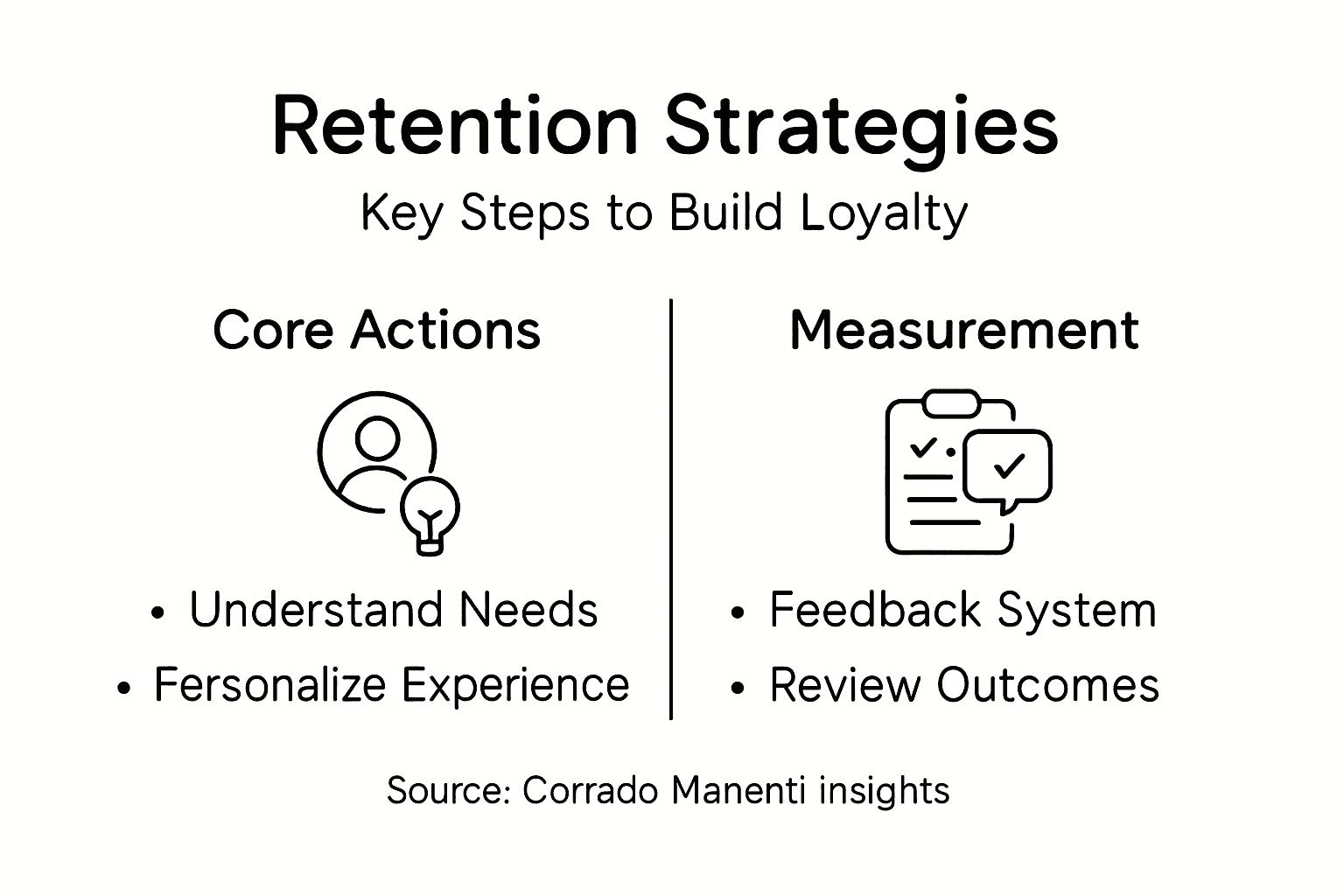
Establish a systematic review process that transforms data insights into actionable strategic interventions. Policy evaluation frameworks emphasize the importance of creating adaptive mechanisms that continuously refine program design based on empirical evidence. This requires creating cross functional teams that can quickly interpret complex data signals and translate them into targeted retention initiatives experimental pilot programs and personalized engagement strategies.
Pro tip: Create quarterly strategic review sessions where retention data directly informs program redesign with clear accountability for implementing measured improvements.
Compare traditional vs. advanced client retention approaches:
| Approach Type | Data Source | Customization Level | Outcome Reliability |
|---|---|---|---|
| Traditional Retention | Retention rates | Generic, broad | Basic, often incomplete |
| Advanced Behavioral | Engagement scores | Dynamic, individual | Predictive, highly accurate |
Here’s a summary of behavioral strategies and their effects for luxury client engagement:
| Strategy Focus | Example Method | Business Impact |
|---|---|---|
| Behavioral Observation | Multi-touchpoint mapping | Reveals hidden client motivations |
| Psychological Profiling | Cognitive segmentation | Drives targeted personalization |
| Proactive Communication | Personalized recommendations | Builds loyalty and satisfaction |
| Adaptive Feedback | Sentiment tracking | Enables rapid service improvement |
Elevate Your Luxury Client Retention with Psychology-Driven Marketing
Achieving lasting brand loyalty in the luxury sector requires more than tracking retention rates. It demands deep insights into client behavior, proactive communication, and personalized engagement strategies that resonate on an emotional level. If you are looking to translate behavioral data into dynamic retention programs that truly connect with your high-end clientele, understanding these key elements is essential.
At Corrado Manenti, we specialize in combining psychology-driven marketing with meticulous attention to detail to help luxury brands craft meaningful client experiences. Explore expert strategies tailored for the fashion and luxury markets in our Marketing Fashion – Corrado Manenti category.
Ready to transform your luxury client retention steps into measurable loyalty gains? Visit our website at Corrado Manenti today and discover how our innovative, behavioral insight–based marketing consulting can empower your brand to engage premium clients with authenticity and precision. Take the first step to sustaining your brand’s elite status through strategic, psychologically informed marketing solutions.
Frequently Asked Questions
How can I understand my luxury clients’ expectations better?
To understand your luxury clients’ expectations, start by analyzing their behavior across various touchpoints such as your website and in-store experience. Collect data through client interactions and observe subtle behavioral cues to reveal their deeper motivations.
What strategies can I use to personalize engagement with luxury clients?
To personalize engagement, segment your client base by developing detailed profiles that capture psychological motivations and emotional triggers. Utilize advanced data analytics to create customized touchpoints that feel intuitive and uniquely tailored to each client.
What proactive communication methods enhance client retention?
Establish proactive communication channels that adapt to individual client preferences, such as personalized emails or exclusive apps. By integrating analytics, track client interaction patterns and adjust your communication style to fit their needs seamlessly.
How should I measure client satisfaction accurately?
Accurately measure client satisfaction by implementing a multidimensional feedback framework combining quantitative metrics and qualitative insights. Use advanced tools like sentiment tracking to capture emotional signals, enabling you to make data-driven improvements in real time.
What are effective ways to retain luxury clients based on data?
To effectively retain luxury clients, analyze retention performance data with a comprehensive metrics dashboard that includes emotional engagement scores. Conduct quarterly reviews to adapt your strategies based on emerging trends and client feedback, ensuring you address their evolving needs.