

Luxury fashion brands across Europe now compete not just on product excellence but on delivering a truly seamless experience at every customer touchpoint. The challenge lies in transforming fragmented digital and physical channels into a unified, intentional journey that matches the high expectations of your clientele. As technological innovations like AI and augmented reality reshape consumer behavior, mastering omni-channel integration becomes the difference between brands that inspire loyalty and those that get left behind.
Table of Contents
- Defining Omni-Channel Luxury In 2026
- Key Differences: Omni-Channel Vs. Multichannel
- Luxury Consumer Expectations And Behaviors
- Core Elements Of A Seamless Brand Experience
- Risks Of Misalignment In Luxury Retail
- Future Trends: Innovation, AI, And Personalization
Key Takeaways
| Point | Details |
|---|---|
| Omni-Channel Luxury Integration | True omni-channel involves seamless integration across all platforms to enhance customer experiences and eliminate friction. |
| Focus on Personalization | Luxury consumers demand personalized interactions that reflect their preferences and past engagements across all touchpoints. |
| Consistency is Key | A coherent brand narrative across digital and physical channels reinforces brand identity and customer trust. |
| Tackle Misalignment Risks | Misalignment between channels can erode trust and customer loyalty, making it crucial to ensure all operations communicate effectively. |
Defining Omni-Channel Luxury in 2026
Omni-channel luxury isn’t just a buzzword anymore. It’s the operational framework that separates dominant players from those struggling to maintain relevance in today’s market. At its core, omni-channel luxury means creating a seamless customer experience across every touchpoint, whether your audience discovers your brand on Instagram, tries it in a flagship store in Milan, or purchases through your mobile app from their home in Stockholm. The distinction that matters here is integration. True omni-channel isn’t simply having a website plus physical stores plus social media. It’s ensuring that every channel feeds information into a unified customer understanding, so that a customer’s journey feels intentional and personalized regardless of where they engage with your brand.
The transformation accelerating into 2026 centers on how technological innovations like AI and augmented reality are reshaping what luxury customers expect. Your clientele no longer accepts disconnected experiences. They want their personal styling session with your boutique consultant accessible through a digital appointment system. They expect the shoes they viewed in your Instagram Stories to appear in their personalized feed on your app. They demand that loyalty points earned online transfer seamlessly to in-store purchases without friction. This shift demands that your digital and physical channels function as a single organism rather than separate departments competing for attention.
What complicates this further is the psychological dimension. Luxury customers pursue experiences that fulfill aspirations beyond functional needs. They want heritage and craftsmanship stories told consistently across every platform. They crave the prestige of exclusivity while enjoying the convenience of digital access. The balance between timelessness and digital engagement determines whether your omni-channel strategy elevates the customer experience or diminishes your brand’s cachet. A luxury watch brand that treats its digital presence as merely transactional loses the narrative power that made the product desirable in the first place. A fashion house that uses omni-channel to tell a deeper story about its Italian heritage, its artisanal production methods, and its vision for contemporary design strengthens customer loyalty and justifies premium pricing.
The competitive reality for your organization is straightforward. Customers now evaluate your brand across an expanded surface area. They judge you not only on product quality but on whether they can move fluidly between channels without repeating themselves, whether your digital experience reflects your brand values, and whether your team across all touchpoints truly understands their preferences. Building omni-channel capability requires alignment between your marketing, retail, e-commerce, and customer service teams that many European luxury brands haven’t yet achieved. This isn’t a technology problem. It’s an organizational one.
Pro tip: Map your customer journey across all touchpoints, then identify the 3-5 friction points where customers must repeat information or experience inconsistency, and prioritize eliminating those first before pursuing broader digital transformation.
Key Differences: Omni-Channel vs. Multichannel
Your European luxury brand probably has multiple channels already. A website. Physical boutiques in Paris, London, and Vienna. Maybe a presence on Instagram and TikTok. A customer service email inbox. What you might not have is true omni-channel integration. This distinction matters enormously because many brands confuse having multiple channels with actually orchestrating them. The difference between multichannel and omni-channel determines whether your customer experience feels fragmented or cohesive, and for luxury brands, that perception directly impacts revenue and brand equity.
Multichannel means you operate several sales and communication channels in parallel, but each functions as its own silo. Your e-commerce team optimizes the website for conversion. Your retail team focuses on in-store experience. Your social media manager builds engagement independently. Each channel pursues its own metrics and performance targets. When a customer contacts your brand through one channel, that information rarely flows to another. A person who browses your collection on your website, then visits your flagship store, must introduce themselves again. They lose their styling preferences, their purchase history, their communication preferences. This approach works when customers operate within single channels, but modern luxury customers refuse that constraint. They want continuity.
Omni-channel integration merges online and offline channels into a unified ecosystem where data and experience flow seamlessly across touchpoints. A customer who explores your new collection through your mobile app should find their personalized recommendations waiting when they arrive at your boutique. Their personal shopper should see their browsing history and previous purchases. When they buy online and choose to return items in-store, the process feels effortless because the systems talk to each other. The seamless customer experience created through channel integration relies on unified customer data platforms, inventory visibility across all channels, and coordinated messaging that reinforces your brand narrative consistently everywhere.
For luxury brands specifically, the stakes are higher. Your customers expect exclusivity and personalization. They notice when you fail to remember their preferences. They resent being treated as a new prospect in one channel after spending significantly in another. Multichannel operations fragment the customer view, making personalization nearly impossible at scale. Omni-channel capabilities allow you to deliver what luxury demands: the feeling that your brand has been waiting for this specific customer, knows their taste, anticipates their needs, and serves them with the same excellence across every interaction, whether that happens in a marble-floored boutique or through a mobile application at midnight. This connectivity, innovativeness, and operational flexibility separate brands that merely sell to those that build lasting customer relationships.
Here’s a clear comparison of omni-channel and multichannel approaches for luxury brands:
| Aspect | Omni-Channel Integration | Multichannel Operation |
|---|---|---|
| Customer Data Flow | Unified and transparent | Siloed, often inaccessible |
| Personalization | Seamless, cross-channel experience | Limited to single channel |
| Team Collaboration | Aligned across departments | Fragmented between teams |
| Impact on Loyalty | Higher due to coherent service | Lower from inconsistent touchpoints |
| Brand Perception | Cohesive, intentional brand image | Fragmented, risk of confusion |
Pro tip: Audit your current customer journey by following the path of a single customer across all touchpoints and identify exactly where information gets lost or duplicated between channels, then prioritize connecting those specific pain points before broader omni-channel investment.
Luxury Consumer Expectations and Behaviors
Luxury consumers operate by different rules than mainstream buyers. They don’t simply want products. They want experiences that validate their status, reflect their refined taste, and align with carefully constructed identities. Understanding what drives their behavior across channels is not optional for your marketing strategy. It’s the foundation of every decision you make. The gulf between what luxury consumers expect and what most brands deliver has widened significantly. Your competitors are probably making the same assumptions about customer preferences that they made five years ago. Your advantage lies in recognizing how expectations have shifted.

Modern luxury shoppers expect consistent, high-quality experiences across all channels that reflect brand exclusivity. This isn’t about convenience alone. It’s about coherence. When a customer experiences your brand through Instagram Stories, then visits your boutique, then browses your app, they’re evaluating whether you’ve made a single choice or seventeen disconnected decisions. They notice when your website’s tone differs from your in-store messaging. They recognize when your personal shoppers don’t know what they viewed online. They compare the speed of customer service across channels and judge you harshly when one channel responds in hours while another takes days. Seamless service and personalized engagement aren’t nice-to-haves. They’re baseline expectations that influence whether customers trust your brand enough to spend significant money.
The behavioral paradox of luxury shopping reveals another critical insight. Your customers want the tactile reassurance of physically evaluating products, yet they also demand digital convenience and information access. A customer shopping for a handbag wants to feel the leather, assess the craftsmanship in person, and discuss details with a knowledgeable consultant. Simultaneously, they want to research similar pieces online, compare options through social media, read reviews, and access your inventory without visiting a store. The brands winning market share are those that honor both needs rather than forcing customers to choose. Your omni-channel strategy must acknowledge that luxury shoppers balance offline quality assessment with online information gathering, creating what feels like a sophisticated, integrated journey rather than separate transactions.
Psychologically, luxury consumers are investing in emotional and aspirational rewards alongside functional benefits. They want to feel discovered and understood. They expect your brand to anticipate their needs based on past interactions. They’re more forgiving of higher prices when they feel genuinely valued as individuals rather than as transaction numbers. The brands your European competitors are struggling to compete with share one characteristic: they make customers feel like insiders who belong to an exclusive community. Your omni-channel infrastructure should enable that feeling across every touchpoint. Customer data, personalization engines, and coordinated messaging aren’t just operational tools. They’re the mechanics that create the psychological experience of being known and valued.
Pro tip: Interview 10 of your highest-value customers and ask them to walk you through their actual shopping journey across channels over the past six months, then note exactly where they felt understood versus confused or disappointed, using their language to guide your omni-channel priorities.
Core Elements of a Seamless Brand Experience
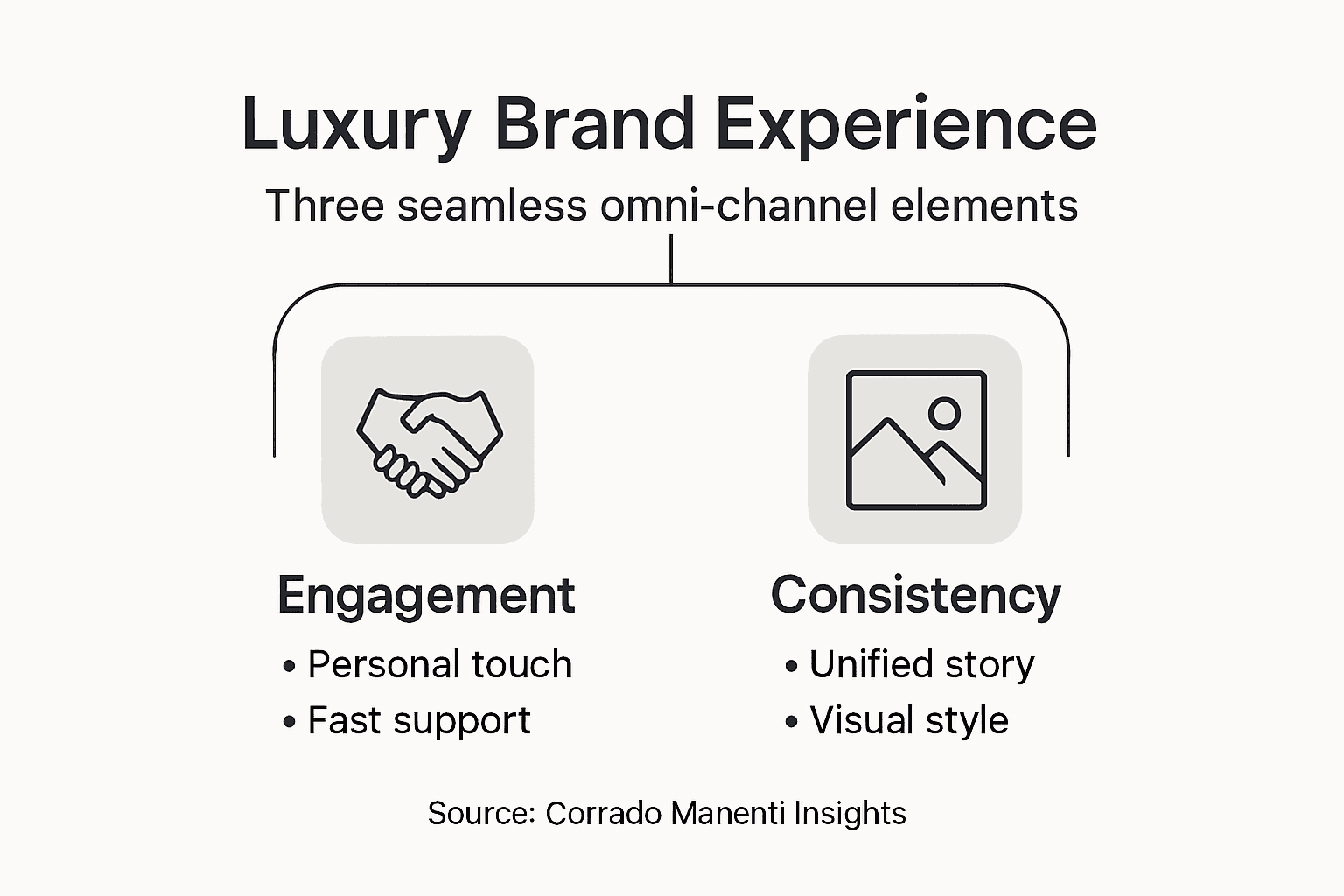
Building a seamless brand experience across channels isn’t about deploying technology and hoping for results. It’s about orchestrating three critical elements that work in concert. Miss one, and your entire omni-channel strategy becomes disjointed. Get all three right, and you create what your luxury customers actually crave: a feeling that your brand exists as a singular entity, regardless of where they encounter it. These elements aren’t optional add-ons. They’re the structural foundation that determines whether your omni-channel investment generates returns or becomes an expensive exercise in complexity.
The first element is precision in customer engagement through personalized interactions. This means moving beyond basic segmentation and truly understanding individual customers at a psychological level. When a customer lands on your website after viewing your collection in-store, your system should recognize them and surface recommendations aligned with what their personal shopper discussed, their purchase history, and their stated style preferences. When they contact customer service via email, the agent should see their complete interaction history across all channels without the customer needing to repeat information. This level of personalization requires investment in unified customer data platforms, but more importantly, it requires your teams to be trained and incentivized to use that data thoughtfully. Personalization that feels invasive or incorrect damages trust. Personalization that feels anticipatory and respectful builds loyalty that justifies premium pricing.
The second element is strategic narrative consistency across digital and physical platforms. Your brand story, visual identity, tone of voice, and value propositions must feel coherent whether a customer encounters them through a product page, a social media post, an email, a print advertisement, or a conversation with a sales associate. This isn’t about rigid repetition. It’s about ensuring that every touchpoint reinforces the same core narrative about who your brand is and what it stands for. A luxury watch brand that emphasizes Swiss heritage and precision engineering should reinforce that narrative consistently. The website copy should echo the language your boutique staff uses. Your social media should tell stories about craftsmanship and tradition, not just push sales. Narrative consistency creates the psychological impression of a unified brand that has made deliberate choices about its values and communicates them with conviction.
The third element is data-driven decision making that fosters loyalty. You need real-time visibility into customer behavior across channels so you can identify patterns, optimize experiences, and make strategic adjustments. Which products drive the most online research before in-store purchases? Which customer segments prefer email communication versus phone contact? Where do customers experience friction that causes them to abandon journeys? Connectivity, innovativeness, and flexibility depend on understanding these patterns and using them to improve continuously. The brands winning in luxury aren’t those with the most advanced technology. They’re those using data to make smarter decisions about customer experience faster than competitors.
Pro tip: Map your three core elements by auditing whether your customer data platform is truly unified, whether your brand narrative sounds identical across channels, and whether your team members have access to data that helps them serve customers better, then fix the weakest element first.
This table highlights core elements for building a seamless luxury brand experience:
| Element | Purpose | Business Impact |
|---|---|---|
| Precision Personalization | Tailors all interactions to customer preferences | Increases loyalty and spend |
| Narrative Consistency | Maintains clear brand identity everywhere | Strengthens brand exclusivity |
| Data-Driven Decisions | Uses cross-channel insights to improve service | Boosts efficiency and retention |
Risks of Misalignment in Luxury Retail
Misalignment in your omni-channel strategy isn’t a minor operational hiccup. It’s a threat to your brand’s core value proposition. Luxury operates on the foundation of trust, exclusivity, and meticulous attention to detail. When your channels operate at cross purposes, customers notice immediately. They evaluate your brand based on coherence across touchpoints, and misalignment sends a message that contradicts everything you claim to stand for. The brands most at risk are those with the strongest heritage and reputation, because they have the furthest to fall when customer trust erodes.
Inconsistencies across channels directly damage the psychological factors that drive luxury purchasing. When a customer researches your product online and finds premium imagery and detailed storytelling, then visits your boutique and encounters rushed service or staff unfamiliar with your digital marketing claims, they experience cognitive dissonance. They question whether your brand actually values quality and thoughtfulness or whether those are just marketing narratives. Misalignment risks eroding customer trust and reducing cognitive involvement, which undermines the psychological commitment that justifies premium pricing. A customer who feels confused or disappointed becomes a customer who considers competitors. Worse, they become detractors who share their negative experience within their social circles. In luxury, word of mouth carries enormous weight because your customer base is relatively concentrated and influential.
Brand exclusivity dilutes when channels send conflicting messages about what your brand represents. Imagine a luxury fashion house that positions itself as avant-garde and boundary pushing on Instagram, yet maintains conservative, traditional messaging on its website and in stores. Customers become confused about your actual positioning. Which narrative is authentic? That confusion erodes the psychological clarity that makes exclusivity feel meaningful. Poor integration and lack of seamless experiences risk damaging luxury brand exclusivity and desirability, particularly when customers expect consistent brand identity across every platform. The luxury market already faces pressures from inflation and shifting consumer expectations. Your competitors are winning market share by maintaining crystal-clear brand identities across all channels. You’re losing share by creating confusion about what your brand actually stands for.
Operationally, misalignment creates inefficiencies that ultimately damage customer relationships. When your inventory systems don’t sync between online and retail, customers encounter frustration. They’re told items are in stock when they’re not. They attempt to purchase products online that are only available in-store. They experience delayed shipping because your warehouse wasn’t notified of inventory changes. These operational failures directly undermine customer satisfaction and loyalty. More critically, they accumulate into a broader perception that your brand is disorganized, which contradicts the precision and excellence that luxury demands. The financial impact compounds because retaining a luxury customer costs far less than replacing them, and misalignment accelerates customer churn toward better-integrated competitors.
Pro tip: Conduct an unannounced mystery shopping experience across all your channels as a single customer trying to accomplish a transaction, then document exactly where information inconsistencies and operational friction points emerge to prioritize alignment investments most strategically.
Future Trends: Innovation, AI, and Personalization
The luxury landscape is shifting toward a future where technology becomes invisible while its effects become unmistakable. Your customers won’t marvel at your AI or your data analytics. They’ll simply experience shopping that feels effortless, intuitive, and deeply attuned to their preferences. The competitive advantage over the next three years belongs to brands that master the integration of innovation, artificial intelligence, and personalization without sacrificing the human touch that defines luxury. This isn’t a choice between high-tech and high-touch. It’s about using technology to deliver high-touch experiences at scale.
Artificial intelligence is moving beyond basic recommendation engines into territory that fundamentally reshapes how luxury brands engage customers. Advanced technologies like data analytics, virtual reality, and AI-driven marketing enable brands to understand not just what customers buy, but why they make those choices at psychological and emotional levels. Generative AI applications allow you to create personalized content, styling recommendations, and shopping experiences that feel individually crafted rather than algorithmically generated. A customer visiting your website sees product recommendations based not just on their purchase history but on their style preferences, browsing patterns, lifestyle signals, and even seasonal needs. Virtual reality tools let them visualize how pieces work in their homes or coordinate with existing wardrobes before purchasing. These technologies work because they solve real customer problems while maintaining the sense of exclusivity that luxury demands.
Personalization has evolved from simply knowing a customer’s name to understanding their aesthetic philosophy, their shopping journey, and their unspoken expectations. E-commerce dominance, generative AI applications, and personalized shopping experiences represent the emerging standard in luxury retail, particularly as affluent consumers expect comprehensive service across all touchpoints. This means your personal shopper in Paris knows what recommendations your digital stylist made in London. It means your mobile app remembers not just past purchases but the items a customer researched but didn’t buy, surfacing them at strategically relevant moments. It means your email communications reflect individual customer preferences for communication frequency and content type. Personalization at this level requires unified customer data platforms, but more importantly, it requires your teams to view customers as individuals with unique preferences rather than as members of demographic segments.
The critical challenge ahead involves maintaining brand uniqueness while deploying standardized technologies that every competitor can access. Your innovation strategy must focus on proprietary applications of technology rather than the technology itself. How do you use AI to tell brand stories that competitors cannot replicate? How do you leverage virtual reality to create experiential moments that deepen emotional connection? How do you personalize in ways that feel exclusive rather than invasive? The brands succeeding in this transition are investing in understanding the psychological dimensions of their customer relationships, then using technology to amplify and scale those human insights. Your data security infrastructure must also strengthen significantly as you collect and analyze more customer information. Luxury customers expect their preferences and behaviors to remain confidential. Breaching that trust through data mishandling would damage your brand more severely than declining to offer personalization at all.
Pro tip: Start with personalization pilots in your highest-value customer segments before scaling broadly, testing which types of AI-driven recommendations and content feel authentic to your brand voice while genuinely improving the customer experience rather than simply increasing transaction volume.
Transform Your Luxury Brand with Omni-Channel Mastery
The challenge many luxury brands face today is creating a seamless and personalized customer experience that feels truly connected across all platforms. This article highlights the importance of omni-channel integration to eliminate fragmented interactions and build lasting customer loyalty through storytelling, precision personalization, and consistent brand identity. If your brand struggles with disjointed channels, missed customer preferences, or diluted exclusivity, you are not alone.
Marketing Fashion – Corrado Manenti offers strategic solutions grounded in psychology-driven marketing and innovation. Our approach ensures your brand speaks directly to the refined tastes and emotional needs of your luxury clientele. By uniting data insights with expert narrative consistency, we help your teams deliver flawless experiences online and offline, reinforcing brand prestige at every touchpoint.
Take the next step to elevate your luxury brand’s omni-channel capabilities. Visit Corrado Manenti today to discover how tailored, psychology-based marketing strategies can transform your customer journey. Embrace innovation without sacrificing the human touch and start delivering the seamless, exclusive experience your customers expect now.
Frequently Asked Questions
What is omni-channel luxury?
Omni-channel luxury refers to the integration of all customer touchpoints—such as online platforms and physical stores—into a seamless shopping experience that feels cohesive and personalized for the customer.
How does technological innovation impact luxury customer experiences?
Technological innovations like AI and augmented reality are reshaping customer expectations in luxury retail by enabling personalized services, consistent brand storytelling, and the ability to provide seamless interactions between online and offline channels.
What are the core elements of a seamless brand experience in luxury?
The core elements include precision in customer engagement through personalized interactions, strategic narrative consistency across all platforms, and data-driven decision making that fosters customer loyalty.
What are the risks of misalignment in an omni-channel strategy?
Misalignment can lead to inconsistencies across customer touchpoints, eroding trust and loyalty. It may also create operational inefficiencies, resulting in customer frustration and dissatisfaction with the brand.