


Every global luxury brand faces the challenge of connecting authentically with today’s diverse, evolving consumer base. Recognizing that status, self-expression, and exclusivity drive many luxury purchases, behavioral segmentation lets marketers move beyond surface-level demographics for deeper insights. By understanding the unique motivations and real-time actions across every touchpoint, you can sharpen your brand’s personalization strategy and create connections that lead to lasting loyalty and profit.
Table of Contents
- Behavioral Segmentation in Luxury Marketing
- Key Types of Behavioral Segmentation
- How Behavioral Segmentation Works
- Real-World Examples in Fashion and Luxury
- Risks and Limitations for Premium Brands
Key Takeaways
| Point | Details |
|---|---|
| Behavioral Segmentation Enhances Targeting | Luxury brands should implement behavioral segmentation to classify consumers based on interactions and preferences for more precise marketing efforts. |
| Leverage Advanced Analytics | Utilize machine learning and analytics to decode consumer behaviors, transforming data into actionable insights for personalization. |
| Privacy Considerations Are Essential | Brands must address data privacy concerns while implementing segmentation strategies to maintain customer trust and brand integrity. |
| Continuous Updates Needed | Adapt segmentation models frequently to reflect evolving consumer behaviors and to ensure relevance in marketing strategies. |
Behavioral Segmentation in Luxury Marketing
Luxury marketing is experiencing a transformative shift driven by evolving consumer behaviors and sophisticated targeting strategies. Understanding consumer motivations requires deep insights into the psychological drivers behind luxury consumption decisions.
Behavioral segmentation in luxury marketing represents a strategic approach to categorizing consumers based on their specific interactions, preferences, and purchase patterns. Key behavioral dimensions include:
- Purchase frequency: Identifying high-value, repeat luxury customers
- Engagement level: Tracking interaction depth across digital and physical channels
- Brand loyalty: Measuring emotional connection and repeat purchase likelihood
- Spending patterns: Analyzing transaction sizes and discretionary spending habits
Luxury brands can leverage these behavioral insights to create highly personalized marketing experiences. By mapping consumer behaviors, marketers can develop targeted strategies that resonate with specific customer segments, ultimately driving more meaningful and profitable engagements.
The complexity of behavioral segmentation demands a nuanced approach. Sophisticated luxury brands now utilize advanced analytics and machine learning techniques to decode intricate consumer behaviors, transforming raw data into actionable marketing intelligence.
Pro tip: Invest in robust customer data platforms that can integrate behavioral insights across multiple touchpoints to create comprehensive consumer profiles.
Key Types of Behavioral Segmentation
Behavioral segmentation represents a sophisticated approach to customer categorization that goes beyond traditional demographic analysis. Clustering techniques reveal complex consumer behaviors by examining dynamic interaction patterns across multiple marketing touchpoints.
Luxury brands can leverage several critical types of behavioral segmentation:
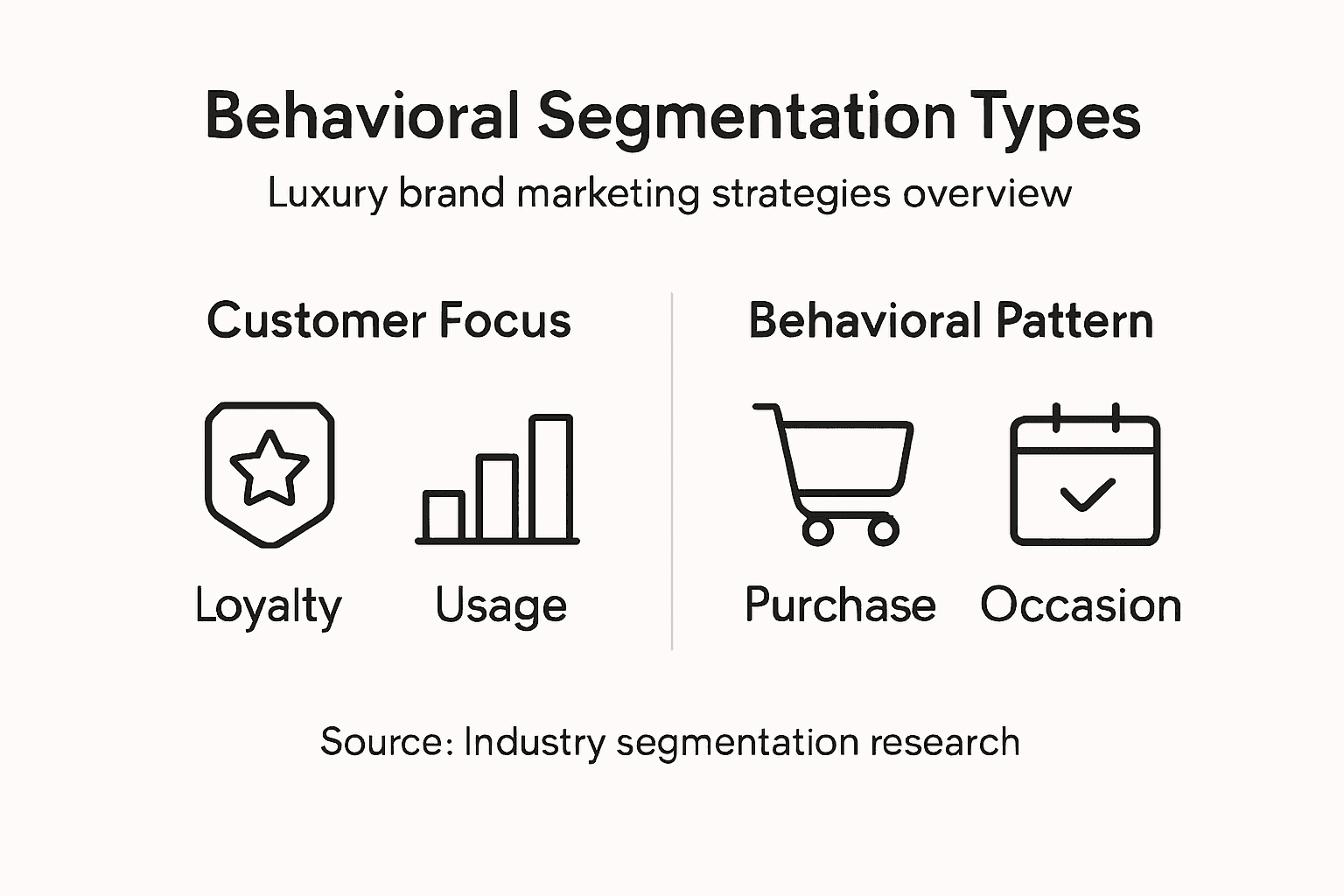
- Purchase Behavior: Analyzing transaction patterns, frequency, and product preferences
- Usage Rate: Categorizing customers by intensity of brand interaction
- Loyalty Status: Identifying and nurturing high-value repeat customers
- Occasion-Based Behaviors: Understanding context-specific purchasing motivations
- Engagement Level: Tracking digital and physical interaction depth
Each behavioral segment offers unique insights that enable marketers to craft precision-targeted strategies. Customer interaction data allows brands to move beyond surface-level demographics and develop nuanced understanding of consumer psychology.
The table below compares key behavioral segmentation types and their impact on luxury marketing success:
| Segmentation Type | Main Focus | Marketing Impact |
|---|---|---|
| Purchase Behavior | Transaction patterns | Drives tailored product offers |
| Usage Rate | Interaction frequency | Informs loyalty program targeting |
| Occasion-Based | Contextual motivations | Enables event-specific campaigns |
| Engagement Level | Depth of interaction | Boosts personalized messaging |
Advanced segmentation techniques utilize machine learning algorithms to decode intricate behavioral patterns. These sophisticated models transform raw interaction data into actionable marketing intelligence, enabling luxury brands to create deeply personalized customer experiences that resonate on an emotional level.

Pro tip: Regularly update behavioral segmentation models to ensure they reflect the most current customer interaction patterns and emerging consumer trends.
How Behavioral Segmentation Works
Behavioral segmentation transforms raw customer data into strategic marketing insights through a sophisticated, multi-stage process. Advanced clustering algorithms analyze complex consumer interactions to uncover nuanced patterns that drive personalized marketing strategies.
The behavioral segmentation process typically involves several critical stages:
- Data Collection: Gathering comprehensive customer interaction data
- Digital touchpoint interactions
- Purchase history
- Engagement metrics
- Customer feedback
- Feature Selection: Identifying the most meaningful behavioral indicators
- Transaction frequency
- Product preferences
- Interaction intensity
- Channel usage
- Clustering and Analysis: Applying sophisticated analytical techniques
- Machine learning algorithms
- Statistical modeling
- Predictive analytics
- Segment identification
Luxury brands can leverage these insights to create highly targeted marketing approaches that resonate with specific customer groups. The goal is to move beyond generic targeting and develop laser-focused strategies that speak directly to individual customer motivations and preferences.
Modern behavioral segmentation transcends traditional demographic boundaries. By continuously analyzing dynamic customer behaviors, brands can develop real-time adaptive strategies that anticipate and meet evolving consumer expectations with unprecedented precision.
Here’s how advanced behavioral segmentation benefits luxury brands:
| Benefit | Description | Business Outcome |
|---|---|---|
| Real-Time Adaptation | Segment updates based on live data | Higher campaign relevance |
| Actionable Insights | Detects subtle behavior changes | Improved retention rates |
| Emotional Personalization | Connects with core customer motivations | Strengthens brand loyalty |
Pro tip: Invest in robust data analytics platforms that can integrate multiple data sources and provide real-time behavioral insights.
Real-World Examples in Fashion and Luxury
Behavioral segmentation transforms theoretical marketing concepts into powerful real-world strategies for luxury brands. Global fashion brands leverage consumer insights to create deeply personalized marketing experiences that resonate with specific customer motivations.
Successful behavioral segmentation strategies in luxury marketing often manifest through multiple approaches:
- Status-Driven Segmentation: Targeting consumers seeking social recognition
- Experience-Focused Segments: Identifying customers prioritizing unique interactions
- Emotional Connection Segments: Developing strategies around personal brand relationships
- Loyalty-Based Targeting: Creating personalized retention programs
One remarkable example demonstrates how sophisticated customer analytics can revolutionize brand engagement. A leading global fashion brand utilized advanced data analytics to map customer behaviors, enabling hyper-personalized marketing strategies that dramatically improved customer retention and engagement.
Luxury brands can transform raw data into strategic insights by understanding the psychological drivers behind consumer behavior. This approach goes beyond traditional demographic analysis, focusing instead on the nuanced motivations that truly drive purchasing decisions in the luxury market.
Pro tip: Continuously update your behavioral segmentation models to capture evolving consumer preferences and emerging market trends.
Risks and Limitations for Premium Brands
Behavioral segmentation offers powerful insights, but luxury brands must navigate complex challenges carefully. Privacy and ethical data concerns create potential risks that can undermine brand trust and customer relationships.
Key limitations for premium brands include:
-
Data Privacy Challenges
- Stringent regulatory compliance requirements
- Potential customer privacy invasion concerns
- Complex multi-channel data integration
-
Segmentation Risks
- Over-segmentation leading to fragmented marketing
- Potential loss of brand cohesiveness
- Resource allocation inefficiencies
Operational complexities emerge when implementing behavioral segmentation strategies. Rapidly changing consumer behaviors can quickly render carefully constructed segments obsolete, demanding continuous model updates and sophisticated analytical capabilities.
Luxury brands must strike a delicate balance between personalization and maintaining brand integrity. The most successful approaches integrate behavioral insights without compromising the brand’s core emotional connection and perceived exclusivity.
Pro tip: Develop flexible segmentation models that can adapt quickly to changing consumer behaviors while maintaining strict data privacy and ethical standards.
Unlock the Power of Behavioral Segmentation to Elevate Your Luxury Brand Engagement
Behavioral segmentation offers luxury brands a pathway to deeply understand and engage their most valued customers by analyzing purchase behavior, engagement level, and brand loyalty. The challenge many premium brands face is translating these intricate consumer insights into effective, psychologically informed marketing strategies that maintain exclusivity while driving growth. If you want to transform raw data into emotionally resonant campaigns that captivate your audience, then integrating psychology-driven approaches is key.
Corrado Manenti specializes in bridging this gap with a unique blend of academic expertise in psychology and real-world luxury marketing experience. His services focus on crafting personalized, detail-oriented strategies that make your brand stand out in a competitive marketplace. By embracing innovation and digital trends, Corrado ensures your brand remains relevant while building lasting emotional connections with customers. Learn how to leverage advanced behavioral segmentation techniques and deliver tailored experiences by visiting Corrado Manenti.
Elevate your fashion or luxury brand by embracing the future of marketing that speaks directly to the heart of your customers.
Ready to take the next step and harness behavioral segmentation for your luxury brand’s success Visit Corrado Manenti now to start crafting marketing strategies grounded in deep consumer psychology and proven to generate impactful results. Discover how psychology-driven marketing and fashion and luxury consulting can transform your engagement and loyalty outcomes today.
Frequently Asked Questions
What is behavioral segmentation in luxury marketing?
Behavioral segmentation in luxury marketing refers to categorizing consumers based on their interactions, preferences, and purchase patterns, allowing brands to create personalized marketing strategies that resonate with specific customer segments.
How can luxury brands leverage behavioral segmentation?
Luxury brands can leverage behavioral segmentation by analyzing data on purchase frequency, engagement levels, brand loyalty, and spending patterns to develop targeted marketing experiences that enhance customer interactions and drive loyalty.
What are the main types of behavioral segmentation in luxury marketing?
The main types of behavioral segmentation include purchase behavior, usage rate, loyalty status, occasion-based behaviors, and engagement level. Each type provides insights to tailor marketing tactics effectively.
What are the risks associated with behavioral segmentation for luxury brands?
Risks associated with behavioral segmentation include data privacy challenges, potential over-segmentation leading to ineffective marketing, and the need for continuous updates to models to keep pace with rapidly changing consumer behaviors.