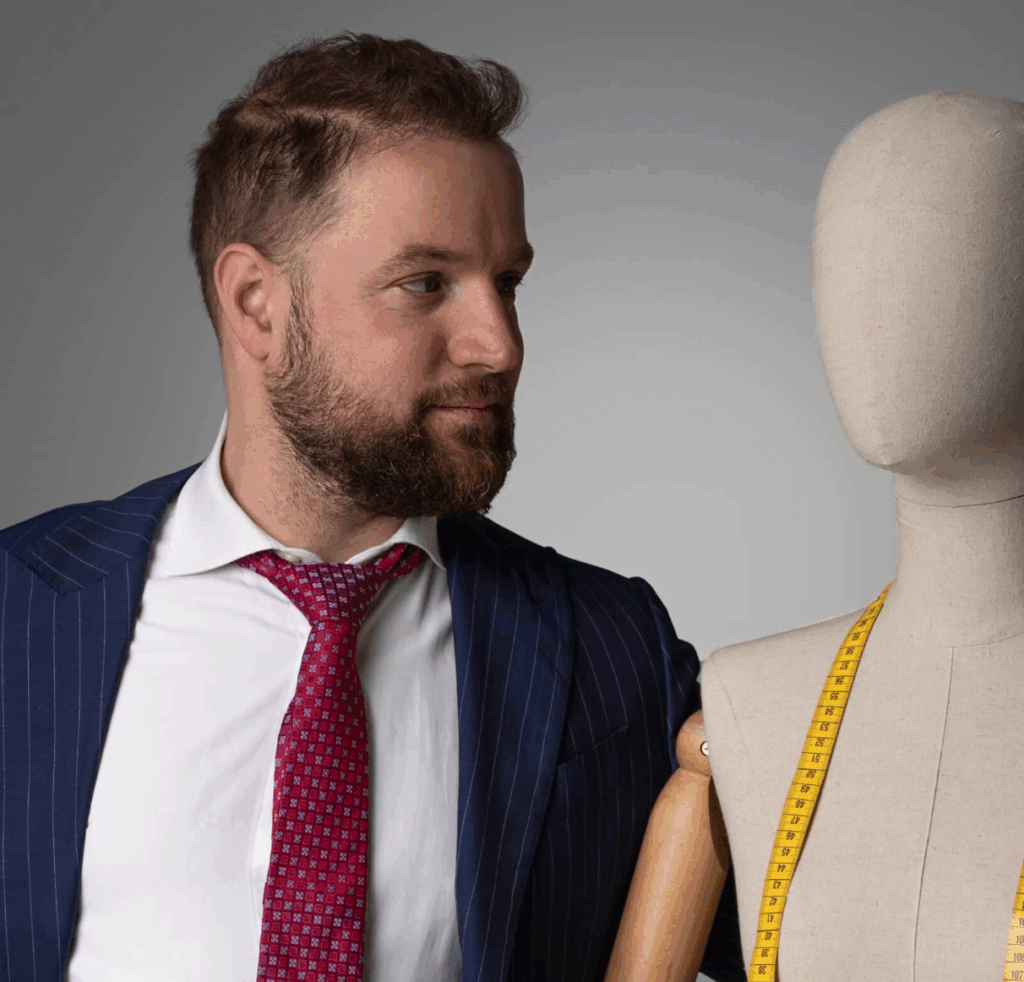


Pressure to predict what discerning buyers will want next is rapidly intensifying for luxury fashion brands as consumer tastes shift with remarkable speed. For a Canadian or European brand competing globally, guessing is not an option. Instead, trend forecasting in luxury markets blends cultural insight and advanced data to anticipate desires before they become obvious. This article reveals how mastering these forecasting methods empowers your brand to stay ahead, resonate deeply with high-net-worth customers, and avoid costly mistakes.
Table of Contents
- Defining Trend Forecasting in Luxury Markets
- Types of Forecasts: Short-Term Vs. Long-Term
- How Trend Forecasting Drives Consumer Connection
- Integrating Forecasts Into Marketing Strategy
- Risks and Pitfalls in Trend Prediction
Key Takeaways
| Point | Details |
|---|---|
| Importance of Trend Forecasting | Trend forecasting is essential in luxury markets to predict consumer desires before they emerge, allowing brands to stay ahead of shifts in preferences. |
| Short-Term vs Long-Term Forecasts | Luxury brands should utilize both short-term and long-term forecasts to optimize immediate campaigns and inform long-term strategic decisions. |
| Psychological Connection | Understanding consumer psychology through trend forecasting helps luxury brands build emotional loyalty by aligning products with evolving values. |
| Integrating Forecasts into Strategy | Successful luxury brands convert forecast insights into actionable marketing strategies, ensuring all teams work collaboratively toward common goals. |
Defining Trend Forecasting in Luxury Markets
Trend forecasting in luxury markets means predicting what affluent consumers will desire before they fully realize it themselves. It’s the intersection of data analysis, cultural insight, and psychological understanding applied to the world’s most selective buyers.
This isn’t about guessing. Rather, it’s a structured methodology that examines emerging consumer behaviors, macroeconomic shifts, and cultural movements to anticipate market evolution. Luxury spending patterns are shaped by shifting consumer preferences and external economic factors, making forecasting essential for staying ahead.
What Separates Luxury Trend Forecasting From Mainstream Prediction
Luxury consumers operate differently than mass-market buyers. Their decision-making involves deeper psychological motivations tied to status, heritage, exclusivity, and personal identity.
Key differences include:
- Complexity of motivations: Luxury purchases reflect aspirational values, cultural belonging, and self-expression rather than functional need alone.
- Extended decision cycles: High-net-worth individuals research extensively before committing to premium purchases, creating longer trend adoption windows.
- Cultural and demographic nuance: Consumer motivations in luxury segments vary significantly across different demographics and geographic markets.
- Exclusivity expectations: Luxury buyers want emerging trends before mass adoption occurs, creating urgency for early forecasting.
Why Luxury Brands Need Forecasting Now
Market uncertainty has increased significantly. Consumer preferences shift faster than ever due to social media, global connectivity, and generational wealth transfers. Luxury brands that fail to anticipate these shifts risk appearing outdated or tone-deaf to their target audience.
Forecasting allows your brand to:
- Position collections ahead of competitor awareness
- Align messaging with evolving consumer values
- Avoid costly inventory mistakes in seasonal lines
- Maintain relevance across diverse geographic markets
Accurate trend forecasting transforms luxury marketing from reactive response into strategic leadership, allowing brands to shape consumer desire rather than chase it.
The luxury market rewards brands that understand tomorrow’s desires today. This requires moving beyond surface-level observation into deeper psychological and cultural analysis.
Pro tip: Start building your trend forecasting infrastructure by integrating consumer psychology insights with market data, allowing you to identify emerging preferences at the earliest stages before they become obvious to competitors.
Types of Forecasts: Short-Term vs. Long-Term
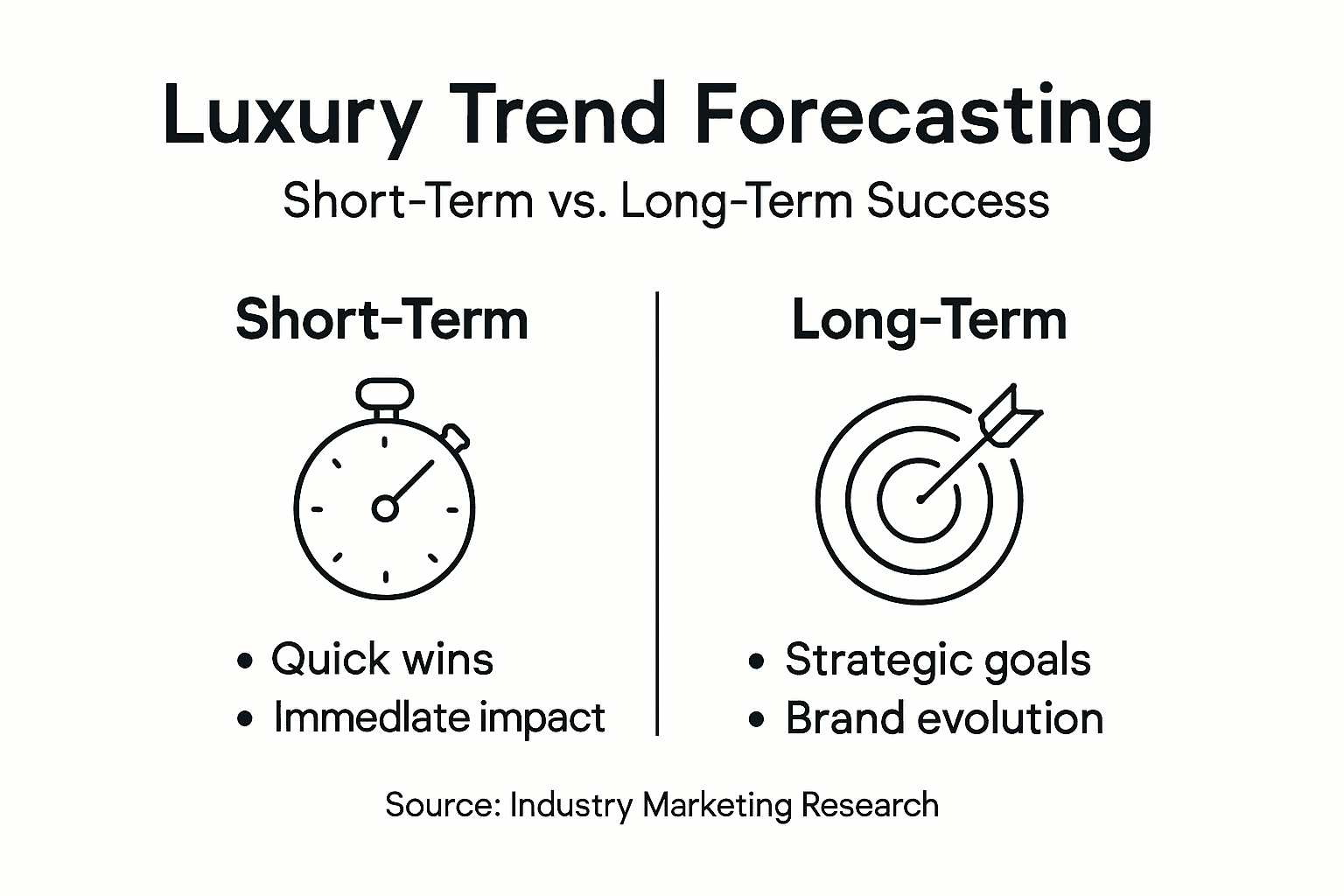
Luxury marketing requires two distinct forecasting approaches working in parallel. Short-term forecasts guide your immediate collection launches and seasonal campaigns. Long-term forecasts shape your brand positioning and investment decisions for years ahead.
These aren’t competing strategies. They’re complementary tools that address different business challenges.
Short-Term Forecasting: Tactical Precision
Short-term forecasts cover the next 3 to 12 months. They rely on recent, high-frequency data to predict immediate consumer behavior and market conditions. Short-term methods use recent data for operational decisions, enabling rapid adjustments to your marketing mix.
Use short-term forecasting for:
- Predicting which color palettes will resonate in next season’s campaign
- Adjusting inventory based on emerging demand signals
- Timing social media content to align with near-term trend peaks
- Planning influencer partnerships that match current momentum
- Optimizing pricing strategies for upcoming product launches
Your luxury buyers make decisions within compressed timeframes. A trend can shift perception in weeks, not months. Short-term forecasting keeps you responsive.
Here’s a comparison of short-term versus long-term trend forecasting and their roles for luxury brands:
| Dimension | Short-Term Forecasting | Long-Term Forecasting |
|---|---|---|
| Time Horizon | 3 to 12 months | 2 to 5 years or more |
| Main Purpose | Tactical campaign optimization | Strategic brand and product vision |
| Data Focus | Recent high-frequency consumer data | Historical, macroeconomic, cultural trends |
| Key Risks | Overreacting to short-lived fads | Missing urgent emerging shifts |
Long-Term Forecasting: Strategic Foundation
Long-term forecasts span 2 to 5 years or more. They integrate extensive historical data, macroeconomic trends, and cultural shifts to inform major strategic bets. These forecasts support collection development, brand identity evolution, and market expansion decisions.
Long-term forecasting addresses:
- Whether luxury consumers will prioritize sustainability or exclusivity in the next five years
- How generational wealth shifts will reshape your target demographic
- Which geographic markets will drive growth in coming years
- How digital integration should evolve within your brand experience
- Whether new product categories align with emerging consumer values
Long-term forecasts are less precise but guide bigger investments, while short-term forecasts are more accurate but serve immediate tactical needs. Both drive marketing success when deployed strategically.
Different forecast types complement marketing strategy by balancing precision with foresight. Short-term forecasts keep collections fresh. Long-term forecasts keep your brand relevant across decades.
Most luxury brands fail because they neglect one approach. They chase quarterly trends while ignoring where the market is headed. Or they invest heavily in long-term visions that miss immediate shifts in consumer preference.
Pro tip: Establish a dual forecasting calendar: monthly short-term reviews for tactical adjustments to current campaigns, and quarterly long-term strategy assessments that inform major investment decisions and brand positioning shifts.
How Trend Forecasting Drives Consumer Connection
Trend forecasting isn’t just about predicting what will sell. It’s about understanding what your customers truly value and delivering it before they consciously recognize the desire themselves.

This creates a psychological advantage. When a luxury consumer sees your brand offering exactly what they didn’t know they wanted, they experience a moment of recognition. That moment builds emotional loyalty.
Understanding the Psychology Behind Trend-Driven Connection
Luxury purchases are deeply personal. Your consumers buy to express identity, signal belonging, and validate their self-perception. Personalizing experiences through trend forecasting helps luxury brands align product offerings and messaging with what consumers actually value in that moment.
When you predict trends accurately, you’re essentially speaking your customer’s language before they’ve fully articulated it. This creates several psychological benefits:
- Recognition effect: Consumers feel understood when your brand reflects their emerging values
- Exclusivity perception: Early access to trends makes customers feel like insiders
- Trust amplification: Brands that “get it right” gain credibility and authority
- Emotional resonance: Products aligned with current values trigger stronger attachment
Connecting Forecasts to Real Consumer Needs
Shifting consumer priorities demand responsive brand strategies. Today’s luxury buyers increasingly prioritize sustainability, digital engagement, and authentic storytelling. Missing these shifts means appearing tone-deaf to your audience.
Trend forecasting bridges the gap between what consumers say they want and what they actually purchase. Accurately anticipating consumer priorities in areas like sustainability helps brands deliver relevant products and experiences that build meaningful relationships.
Consider this: A luxury customer might say they value affordability. But through trend forecasting, you discover they actually value smart spending—investing in timeless pieces over fast-rotating collections. That insight completely changes your marketing approach.
Building Loyalty Through Anticipated Relevance
Consumer connection deepens when brands consistently deliver what matters to their audience. Trend forecasting enables this consistency by removing guesswork.
Your luxury customers engage with brands that:
- Anticipate their evolving style preferences
- Align with their cultural and social values
- Offer products before competitors recognize the demand
- Communicate in ways that resonate emotionally
Accurate trend forecasting transforms marketing from pushing products to answering unspoken customer needs, creating genuine emotional connection rather than transactional relationships.
The strongest luxury brands don’t follow trends. They lead them by understanding consumer psychology deeply enough to predict what will matter next.
Pro tip: Conduct quarterly consumer insight sessions analyzing not just what luxury customers buy, but why their values are shifting, allowing you to forecast emotional drivers of purchase decisions before competitors catch up.
Integrating Forecasts into Marketing Strategy
Forecasts are only valuable when they drive decisions. Too many luxury brands commission trend reports and file them away. The real competitive advantage comes from translating forecast insights into actionable marketing moves.
This requires a systematic approach that connects forecasting outputs to product development, messaging, and customer engagement.
From Insights to Action: The Integration Framework
Forecasting guides product development and promotional tactics by providing data-driven direction for what to create and how to market it. But the connection must be deliberate and structured.
Start by asking: What specific marketing decision does this forecast inform? Without a clear decision owner, even brilliant forecasts collect dust.
Your integration framework should address:
- Product pipeline: Which categories, colors, or materials align with predicted consumer preferences?
- Campaign messaging: How should brand storytelling evolve to reflect emerging values?
- Channel strategy: Which platforms and touchpoints will reach consumers at the right moment?
- Pricing approach: Should your value proposition shift based on anticipated demand?
- Partnership decisions: Which collaborators align with forecasted trend directions?
Building Adaptive Marketing Strategies
Adjusting strategies based on forecast insights enables personalized targeting and competitive advantage in luxury markets. This means treating forecasts as living guidance, not static plans.
Adaptation requires three elements. First, establish forecast review cycles aligned with your marketing calendar. Second, create clear trigger points where forecasts prompt strategy shifts. Third, build flexibility into campaigns so adjustments don’t require complete overhauls.
A luxury brand launching a capsule collection shouldn’t wait for perfect alignment with forecasts. Instead, they should monitor emerging trends in real time and adjust sizing, storytelling, or launch timing based on early consumer response.
Aligning Teams Around Forecast Insights
Forecasts fail when marketing, product, and retail teams operate independently. The forecast that predicts demand for sustainable luxury must inform product sourcing, marketing narratives, and store experience simultaneously.
Break down silos through:
- Cross-functional forecast review meetings with clear decision authority
- Shared KPIs that reward teams for acting on forecast insights
- Monthly trend briefings that cascade insights throughout the organization
- Marketing plans built explicitly around forecasted consumer needs
Successful integration transforms forecasts from static reports into dynamic strategic guidance that drives coordinated action across product, marketing, and retail functions.
Luxury brands that win operationalize their forecasts. They build systems, assign accountability, and measure whether forecast-informed decisions actually drove results.
Pro tip: Create a “forecast decision log” where each major trend forecast is mapped to specific marketing actions and responsible owners, then track whether those actions generated expected outcomes, continuously refining your forecasting accuracy.
Risks and Pitfalls in Trend Prediction
Trend forecasting isn’t foolproof. Even sophisticated analysis can miss the mark, sometimes spectacularly. Understanding where forecasts fail helps you build safeguards into your strategy.
Luxury brands that acknowledge forecasting risks outperform those that treat predictions as certainties.
The High Cost of Inaccurate Forecasts
Market volatility and shifting consumer sentiment create unpredictable forecasting challenges in luxury marketing. When your forecast misses, the consequences ripple through product development, inventory, and brand perception.
Consider a luxury house that invests heavily in a forecasted sustainability trend, only to discover their affluent customers prioritize heritage craftsmanship instead. Suddenly, your messaging alienates your audience, inventory becomes dead stock, and competitors who hedged their bets gain market share.
Common forecasting failures include:
Below is a summary of proactive steps luxury brands can take to minimize major forecasting risks:
| Risk Factor | Mitigation Approach | Expected Benefit |
|---|---|---|
| Over-investment in trends | Pilot small collections first | Limit costly missteps |
| Inventory misalignment | Flexible supply chain processes | Faster response to real demand |
| Geographic blind spots | Local market validation | Better regional alignment |
| Timing errors | Real-time trend monitoring | Improved campaign timing |
- Over-investment in wrong trends: Committing significant resources to predictions that don’t materialize
- Inventory misalignment: Manufacturing excess stock in predicted colors or styles that don’t sell
- Messaging disconnects: Brand communications that feel forced or inauthentic to consumers
- Timing errors: Predicting trends accurately but launching 6 months too early or late
- Geographic blindness: Assuming trends transfer equally across different markets
Why Luxury Forecasting Fails
Luxury markets present unique prediction challenges. Overreliance on historical data and underestimation of cultural shifts plague even sophisticated forecasting efforts. Yesterday’s data may not predict tomorrow when cultural values shift rapidly.
Specific pitfalls in luxury prediction:
- Treating niche segments as monolithic: Ultra-high-net-worth buyers in Hong Kong don’t behave like ultra-high-net-worth buyers in London
- Ignoring geopolitical shocks: Political instability, trade disruptions, or currency fluctuations invalidate forecasts instantly
- Confusing visibility with adoption: Social media creates illusion of trend momentum that never translates to purchase behavior
- Assuming linear progression: Trends don’t always accelerate smoothly; they can plateau or reverse suddenly
Building Forecasting Resilience
The solution isn’t abandoning forecasting. Rather, build systems that absorb forecast errors.
Implement these safeguards:
- Combine quantitative and qualitative methods to catch blind spots each approach misses alone
- Test assumptions with small-scale pilots before major investments
- Maintain flexible supply chains that pivot quickly when forecasts diverge from reality
- Build scenario planning around multiple forecast outcomes, not just the most likely one
- Create real-time monitoring systems to detect when forecasts are veering off track
The best forecasters don’t predict perfectly. They build systems flexible enough to adapt when predictions prove wrong, minimizing damage while capturing upside.
Luxury brands that survive market shifts are those that treat forecasts as hypotheses requiring constant validation, not gospel truth requiring blind faith.
Pro tip: Establish monthly “forecast accuracy reviews” where you compare predictions made 3, 6, and 12 months earlier against actual consumer behavior, documenting why misses occurred and adjusting methodology to reduce future blind spots.
Elevate Your Luxury Brand With Expert Trend Forecasting and Psychological Insights
The complex challenge of accurately forecasting trends in luxury markets demands more than data alone. Brands must deeply understand consumer psychology, cultural shifts, and evolving values to stay ahead and avoid costly missteps. If your luxury marketing strategy feels reactive or disconnected from emerging desires, embracing psychology-driven, detail-oriented approaches is critical to lead rather than follow.
Unlock the full potential of your brand with Corrado Manenti, a marketing consultant specializing in fashion and luxury sectors who integrates psychological insights with cutting-edge marketing strategies. Benefit from tailored solutions focused on consumer behavior, strategic foresight, and continuous innovation. Start turning trend forecasts into actionable marketing moves that resonate emotionally with your high-end clientele. Visit Corrado Manenti now to transform your luxury marketing success and stay ahead in a rapidly shifting market.
Frequently Asked Questions
What is trend forecasting in luxury marketing?
Trend forecasting in luxury marketing involves predicting the desires of affluent consumers by analyzing data, cultural insights, and psychological motivations. This structured methodology helps brands anticipate market evolution and consumer behavior changes.
How do short-term and long-term forecasts differ in luxury marketing?
Short-term forecasts focus on immediate consumer behavior and market conditions over the next 3 to 12 months, guiding tactical marketing decisions. Long-term forecasts look at a broader timeframe of 2 to 5 years, informing strategic brand positioning and investment decisions.
Why is trend forecasting essential for luxury brands?
Trend forecasting is critical for luxury brands to stay relevant in a fast-changing market. It enables brands to anticipate shifts in consumer preferences, align messaging with values, avoid inventory mistakes, and position collections ahead of competitors.
How can trend forecasting enhance consumer connection?
By accurately predicting trends, luxury brands can create emotional connections with customers. Delivering products that resonate with their evolving values fosters recognition, exclusivity, and trust, ultimately deepening brand loyalty.