
Personalized digital content yields 50% higher engagement in luxury markets, yet most brands struggle to translate exclusivity into compelling digital interactions. Marketing executives face mounting pressure to recreate the emotional depth of physical luxury experiences through screens and algorithms. This guide reveals a strategic framework combining psychology, technology, and storytelling to build immersive digital luxury experiences that drive measurable engagement and loyalty.
Table of Contents
- Understanding Digital Luxury Experience: Definition And Core Components
- Psychological Foundations: How Consumer Behavior Shapes Digital Luxury
- Technological Innovations Enabling Digital Luxury Experiences
- Common Misconceptions And Pitfalls In Digital Luxury Experience Design
- Framework For Evaluating And Designing Digital Luxury Experiences
- Best Practices And Case Studies From Luxury Fashion And Hospitality
- Measuring Success: Key Metrics And KPIs For Digital Luxury Experiences
- Elevate Your Luxury Brand With Expert Digital Strategies
Key Takeaways
| Point | Details |
|---|---|
| Digital luxury blends psychology, technology, and storytelling | Effective brand engagement requires orchestrating all three elements seamlessly. |
| Personalization increases engagement by up to 50% | Consumer behavior insights enable tailored experiences that dramatically boost interaction rates. |
| AR and AI enable immersive luxury experiences | Technologies like augmented reality create exclusive digital touchpoints that drive conversions. |
| Avoid overreliance on visuals alone | Emotional storytelling and brand consistency matter more than high-resolution imagery. |
| Five-dimension framework guides design | Structured evaluation ensures repeatable, scalable digital luxury experiences. |
Understanding Digital Luxury Experience: Definition and Core Components
Digital luxury experience represents far more than beautiful websites or polished social media feeds. It involves creating immersive, personalized digital interactions that replicate the exclusivity and emotional resonance of physical luxury environments. When done correctly, these experiences transform casual browsers into devoted brand advocates.
The foundation rests on three interconnected pillars. First, personalization tailors content and interactions to individual preferences, making each customer feel uniquely valued. Second, seamless technology integration ensures every digital touchpoint functions flawlessly without calling attention to the mechanics. Third, authentic brand storytelling creates emotional connections that mirror the sensory richness of in-store luxury experiences.
Personalization can increase customer engagement by up to 30% when executed with genuine understanding of customer desires rather than surface-level demographic targeting. The key lies in reading behavioral signals and responding with relevant, timely content that feels crafted specifically for that individual.
Effective digital luxury core concepts include:
- Contextual personalization based on browsing behavior, purchase history, and stated preferences
- Invisible technology that enhances experience without creating friction or learning curves
- Consistent brand voice across all digital channels that reinforces core values
- Exclusive content delivery that makes customers feel part of an inner circle
- Sensory richness through high-quality visuals, carefully chosen language, and interactive elements
The challenge for luxury marketers involves balancing accessibility with exclusivity. Digital channels democratize access, yet luxury brands must maintain perceived scarcity and special treatment. A well-designed digital luxury strategy solves this paradox by making the experience feel personalized and exclusive even when delivered at scale.
Psychological Foundations: How Consumer Behavior Shapes Digital Luxury
Consumer psychology dictates whether digital luxury experiences succeed or fall flat. Understanding the emotional drivers behind luxury purchases allows marketers to craft digital touchpoints that resonate at a deeper level than transactional interactions.
Luxury consumers seek authenticity and emotional depth over mere visual polish. 70% of luxury consumers value brand storytelling in digital contexts, prioritizing narrative coherence and values alignment when evaluating brands. They want to understand the heritage, craftsmanship, and philosophy behind products, not just see glamorous images.
The power of consumer psychology in luxury manifests through specific mechanisms:
- Identity expression through brand association shapes purchase decisions more than functional benefits
- Emotional storytelling activates memory formation and brand recall during consideration phases
- Perceived exclusivity triggers desire even in abundant digital environments
- Social proof from aspirational figures validates luxury choices and reinforces status signaling
- Sensory anticipation built through digital previews drives physical store visits and online conversions
Personalized digital content yields 50% higher engagement because it demonstrates genuine understanding of individual customer journeys. When a luxury brand remembers your preferences, anticipates your needs, and curates recommendations that align with your taste, it creates the feeling of having a personal relationship with the brand itself.
Integrating these psychological insights ensures digital experiences match the elevated expectations luxury consumers bring to every interaction. A successful luxury digital marketing process maps emotional triggers to specific touchpoints throughout the customer journey.
Pro Tip: Map your customer journey to identify moments of emotional intensity. Design digital interactions at these precise points to maximize psychological impact and strengthen brand connection.
Technological Innovations Enabling Digital Luxury Experiences
Advanced technologies transform how luxury brands deliver personalized, immersive experiences that previously required physical presence. The key lies in deploying technology to enhance emotional connection rather than showcasing innovation for its own sake.
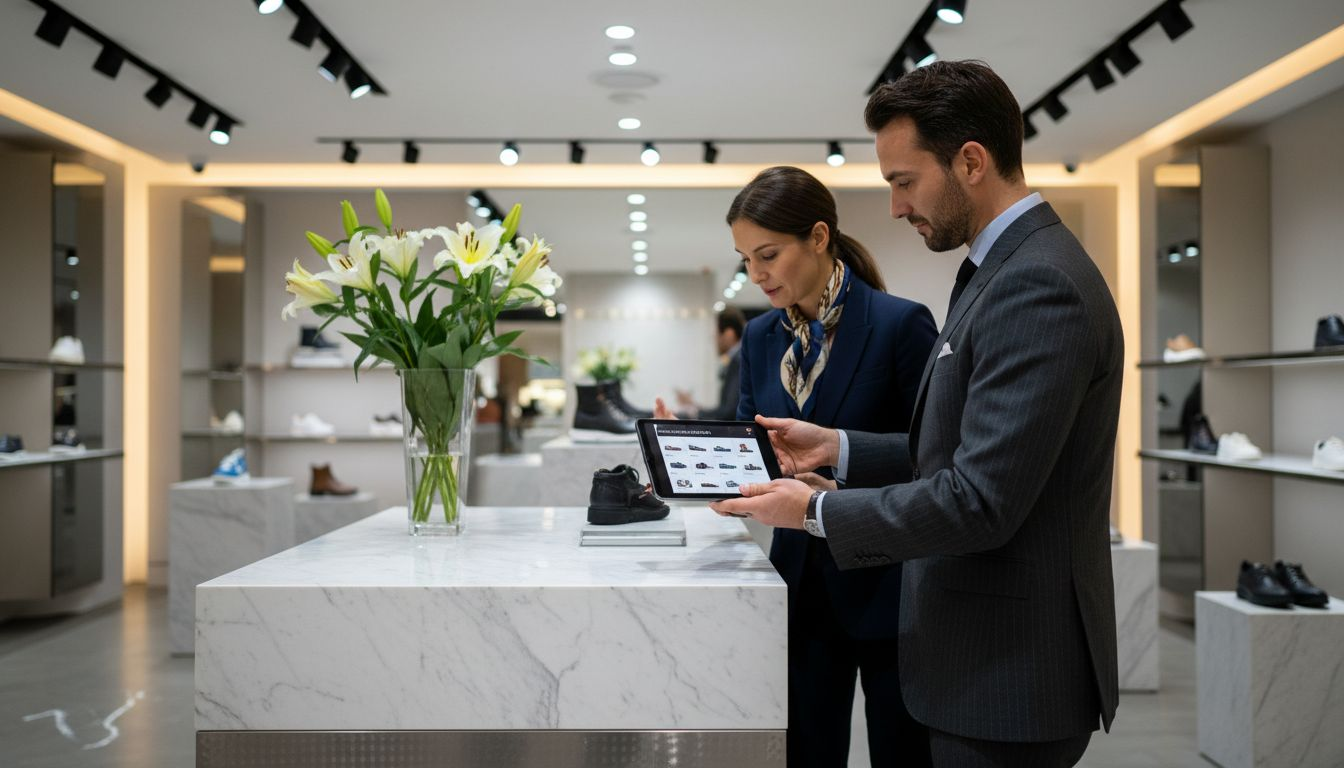
Augmented reality and artificial intelligence lead the technological revolution in luxury fashion. AR and AI technologies boost luxury fashion conversions by up to 35% by allowing customers to virtually try products in their own environments. This capability bridges the gap between online browsing and the tactile experience of in-store shopping.
Virtual concierge services elevate luxury hospitality bookings by delivering bespoke assistance at scale. Virtual concierge in hospitality drives 30% higher booking rates by offering personalized recommendations, instant responses to complex questions, and seamless coordination of special requests. These tools replicate the attentive service luxury travelers expect from five-star properties.
“Technology in luxury should feel like magic, not machinery. The best digital experiences make complex personalization appear effortless and intuitive.”
Key technologies enabling authentic technology in digital luxury include:
- Computer vision for style analysis and personalized product recommendations based on individual aesthetics
- Natural language processing for conversational interfaces that understand context and sentiment
- Predictive analytics identifying customer needs before explicit requests
- Blockchain for provenance verification and exclusive digital collectibles
- 3D visualization creating photorealistic product presentations from any angle
Technology must serve brand storytelling rather than overshadow it. The goal involves creating seamless, immersive interactions that feel natural and intuitive. When customers notice the technology instead of the experience, the luxury illusion breaks. Successful implementations make advanced capabilities invisible, focusing attention on the emotional journey and brand narrative.
Common Misconceptions and Pitfalls in Digital Luxury Experience Design
Many luxury marketers stumble by applying mass-market digital strategies to premium contexts. Understanding common mistakes helps refine approaches before investing significant resources in flawed implementations.
The biggest misconception assumes that high-resolution photography and sleek interfaces alone create luxury experiences. Visual polish matters, but brands focusing only on visuals experience 20% lower customer retention compared to those emphasizing emotional storytelling and personalized interactions. Beautiful imagery attracts attention but fails to build lasting relationships.
Generic digital experiences alienate luxury customers expecting exclusivity tailored to their preferences. Mass-market tactics like aggressive email campaigns, pushy retargeting, and one-size-fits-all messaging clash with luxury consumers’ desire for respectful, personalized communication. These approaches signal that the brand views customers as transactions rather than valued relationships.
Frequent pitfalls in common pitfalls in digital luxury design include:
- Prioritizing reach and volume metrics over engagement quality and customer lifetime value
- Implementing trending technologies without strategic alignment to brand values or customer needs
- Neglecting mobile experience optimization despite increasing luxury purchases via smartphones
- Overlooking the importance of loading speed and technical performance in conveying quality
- Failing to maintain consistent brand voice across different digital channels and touchpoints
Another critical error involves misplaced technology focus that emphasizes innovation over utility. Introducing cutting-edge features that complicate rather than enhance the customer experience dilutes luxury perception. Technology should solve real customer problems or fulfill genuine desires, not showcase the brand’s technical capabilities.
Pro Tip: Audit your digital touchpoints quarterly through the lens of a first-time luxury customer. If any interaction feels generic, complicated, or misaligned with your brand promise, redesign it immediately.
Framework for Evaluating and Designing Digital Luxury Experiences
A structured approach ensures consistent creation of digital luxury experiences that resonate emotionally while upholding brand exclusivity. This five-dimension framework provides clear evaluation criteria and design guidance.
The framework encompasses psychological appeal, technological sophistication, brand consistency, personalized storytelling, and measurement capabilities. A structured framework linked to 25% higher lifetime customer value by aligning all digital initiatives with both emotional and transactional objectives. Each dimension includes specific criteria for assessment and optimization.
| Dimension | Evaluation Criteria | Design Priority |
|---|---|---|
| Psychological Appeal | Emotional resonance, identity alignment, aspiration triggering | Connect to core motivations |
| Technological Sophistication | Seamless functionality, invisible complexity, innovation appropriateness | Enhance without overwhelming |
| Brand Consistency | Voice uniformity, visual coherence, values expression | Reinforce positioning |
| Personalized Storytelling | Relevance depth, narrative continuity, individual recognition | Make each feel unique |
| Measurement | Engagement tracking, sentiment analysis, conversion attribution | Optimize continuously |
Applying this digital luxury framework involves systematic steps:
- Audit existing digital touchpoints against all five dimensions to identify gaps and opportunities
- Prioritize improvements based on customer journey impact and alignment with business objectives
- Design new experiences using the framework as a checklist to ensure comprehensive excellence
- Test implementations with target customers to validate emotional resonance and functional performance
- Measure results across both transactional and emotional metrics to guide ongoing refinement
The framework’s power lies in its ability to translate abstract luxury concepts into concrete design decisions. Rather than relying on subjective judgment about what feels luxurious, marketers gain objective criteria for evaluation. This structure enables teams to maintain quality while scaling digital luxury experiences across multiple channels and markets.
Best Practices and Case Studies from Luxury Fashion and Hospitality
Real-world implementations demonstrate how leading luxury brands translate digital strategy into measurable business results. These examples offer concrete inspiration and validation for marketing executives considering similar initiatives.
Gucci’s augmented reality try-on technology revolutionized digital luxury fashion engagement. Gucci’s AR try-ons boosted engagement by 40%, sales by 18% by allowing customers to visualize products in their own context before purchasing. The technology felt playful and intuitive rather than complex, maintaining brand personality while delivering practical utility.
Luxury hospitality properties leverage virtual concierge services to elevate booking experiences. Luxury hospitality’s virtual concierge improved booking rates by 30% by providing instant, personalized assistance throughout the research and reservation process. These systems remember guest preferences across stays, creating continuity that mirrors the attentive service of dedicated human concierges.
Cross-sector patterns in successful digital luxury case studies reveal:
- Deep personalization based on behavioral data rather than demographic assumptions
- Seamless omnichannel experiences that maintain context as customers move between touchpoints
- Authentic emotional storytelling woven throughout the digital journey
- Technology implementations that solve real customer pain points
- Consistent brand expression regardless of channel or device
These implementations succeed because they prioritize customer value over technological showmanship. Each innovation serves a clear purpose in enhancing the luxury experience rather than simply demonstrating capability. The brands maintain focus on emotional connection and brand storytelling while leveraging technology as an enabler.
Measuring Success: Key Metrics and KPIs for Digital Luxury Experiences
Effective measurement combines emotional engagement indicators with transactional results to provide a complete picture of digital luxury performance. Tracking the right metrics enables continuous optimization and demonstrates ROI to stakeholders.
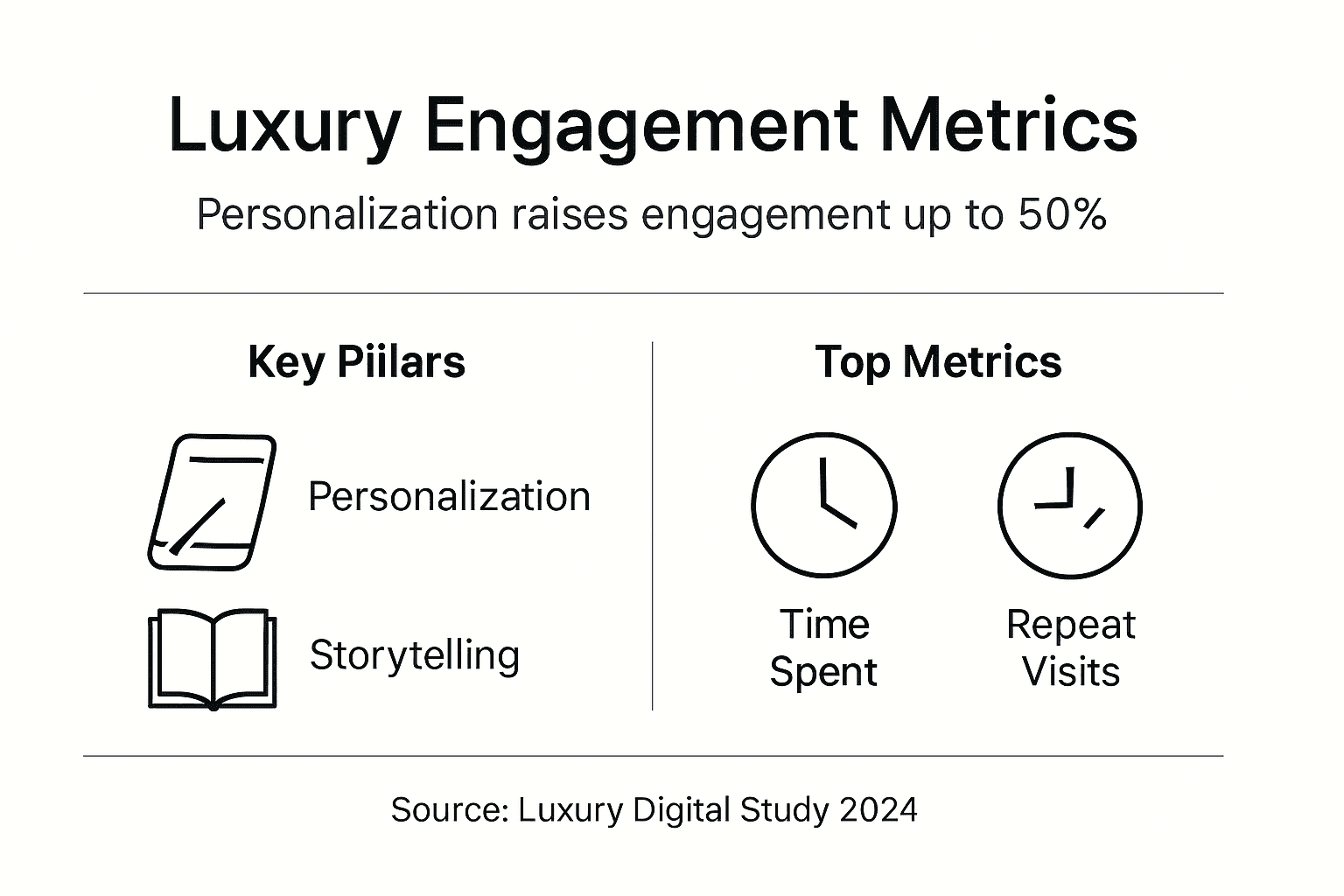
Measuring both emotional connection and business outcomes proves essential for understanding true impact. Combination of transactional and emotional KPIs leads to faster loyalty growth because it captures the full customer relationship rather than isolated transactions. Traditional e-commerce metrics tell only part of the story.
Critical digital luxury KPIs span multiple categories:
- Engagement depth measured through time spent, content consumption, and interaction frequency
- Sentiment analysis tracking brand perception and emotional response across digital touchpoints
- Conversion quality examining average order value and product mix rather than just conversion rate
- Customer lifetime value projecting long-term relationship worth beyond initial purchases
- Retention and repeat purchase patterns indicating sustained engagement and loyalty
- Net promoter scores capturing willingness to recommend and advocate for the brand
Advanced analytics tools improve measurement accuracy by connecting digital interactions to downstream behaviors. Attribution modeling reveals which touchpoints contribute most to conversion and loyalty. Cohort analysis identifies how different customer segments respond to various digital luxury experiences.
The goal involves creating feedback loops that inform ongoing optimization. Regular analysis of these metrics highlights what resonates with luxury customers and what falls flat. This data-driven approach ensures resources focus on high-impact initiatives while eliminating ineffective tactics.
Elevate Your Luxury Brand with Expert Digital Strategies
Transforming these insights into measurable growth requires specialized expertise in luxury consumer psychology and digital innovation. The gap between understanding best practices and implementing them successfully often determines competitive advantage.
Partner with specialists who combine behavioral analytics with proven luxury marketing frameworks. Access fashion brand growth tactics tailored specifically for premium markets, ensuring every digital initiative aligns with your brand positioning. Deep expertise in analyzing high-end consumer behavior enables personalization strategies that feel authentic rather than algorithmic. Comprehensive luxury brands digital strategy support accelerates implementation while avoiding costly missteps that dilute brand perception.
Frequently Asked Questions
What Is Digital Luxury Experience?
Digital luxury experience extends beyond polished visuals to create personalized, emotionally rich interactions that replicate physical luxury environments. It encompasses immersive storytelling, seamless technology, and exclusive content delivery across digital channels. Key touchpoints include augmented reality try-ons, virtual concierge services, and personalized recommendations based on behavioral insights. Successful implementations balance accessibility with perceived exclusivity, making customers feel uniquely valued even in scalable digital contexts.
How Can Personalization Improve Digital Luxury Engagement?
Personalization enhances relevance and exclusivity, driving up to 50% higher engagement rates compared to generic digital experiences. Emotionally tailored interactions demonstrate genuine understanding of individual preferences, creating deeper customer-brand connections. The key involves behavioral analysis rather than demographic targeting, responding to actual interests and needs. Effective personalization makes each customer feel recognized and valued, replicating the attentive service expected in physical luxury environments.
What Technologies Enable Successful Digital Luxury Experiences?
Augmented reality, artificial intelligence, and virtual concierge platforms represent core technologies transforming digital luxury. AR enables virtual product try-ons that boost conversions by up to 35% in fashion contexts. AI powers personalized recommendations and predictive service anticipating customer needs. These tools create immersive, seamless customer journeys that maintain luxury standards while delivering at scale. The best implementations make sophisticated technology feel intuitive and invisible.
What Are Common Mistakes to Avoid in Digital Luxury Design?
Relying solely on high-resolution visuals without emotional storytelling reduces retention by 20% compared to narrative-focused approaches. Delivering generic, mass-market digital experiences alienates luxury customers expecting personalized exclusivity. Ignoring measurement of emotional engagement metrics like sentiment and brand affinity limits optimization to transactional data alone. Misplaced technology focus showcasing innovation over utility dilutes luxury perception and creates unnecessary friction in the customer experience.