


TL;DR:
- A dealership marketing checklist emphasizes integrated efforts in digital presence, paid advertising, lead management, and automation to generate consistent showroom traffic. Proper implementation of local SEO, dynamic ad targeting, and CRM data connection significantly improves potential for high-quality leads and conversions. Prioritizing automation triggers like lease-end sequences and measuring channels with closed-loop tracking maximizes long-term ROI.
An automotive dealership marketing checklist is the structured framework that separates dealerships generating consistent showroom traffic from those burning budget on disconnected campaigns. Car buyers research an average of 4.9 websites before setting foot in a dealership. That means your digital presence, ad targeting, and follow-up process must work together before a buyer ever contacts you. This guide covers every critical item, from Google Business Profile setup and CRM integration to automation triggers and budget allocation, so your team executes with precision rather than guesswork.
What are the essential components of a dealership marketing checklist?
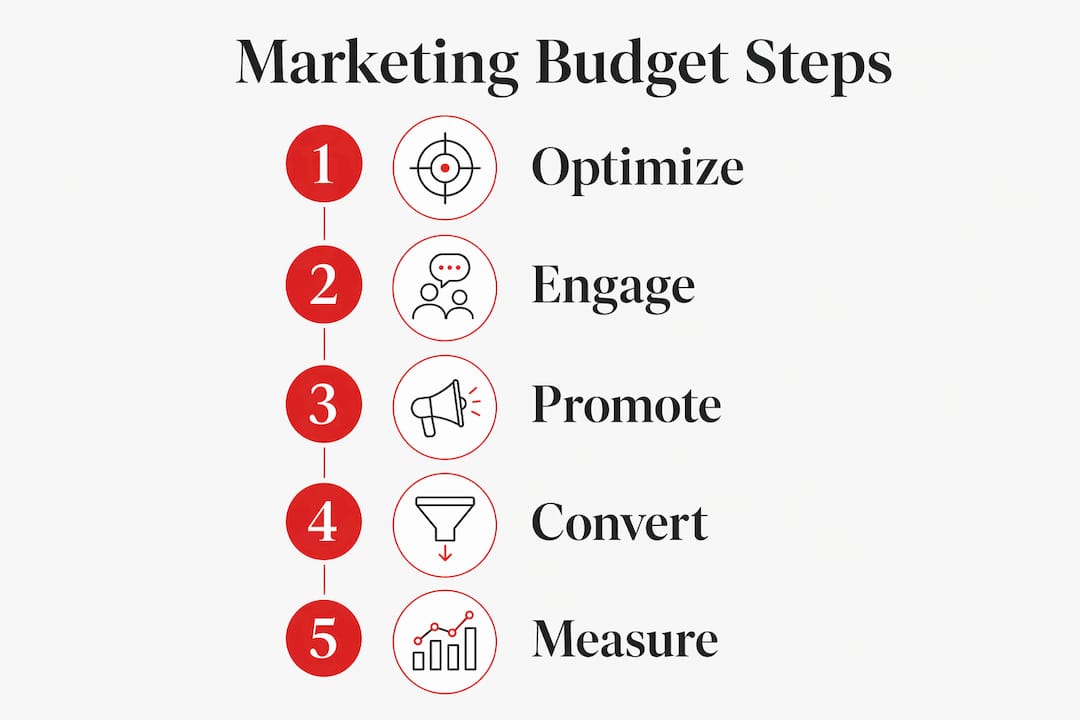
A dealership marketing checklist covers five core pillars: digital presence, paid advertising, inventory promotion, lead management, and customer retention. Miss any one of them and your pipeline develops gaps that no single tactic can fix.

Digital presence and local SEO
Your Google Business Profile is the first thing a local buyer sees. Keep your hours, phone number, inventory links, and photos current. Respond to every review within 24 hours. Google rewards active profiles with higher local pack rankings, which translates directly to phone calls and direction requests.
Local SEO for dealerships is not a quick fix. Local SEO takes 3–6 months to show meaningful traction, but the compounding effect makes it the highest-return long-term investment in your channel mix. Start now, not at the next planning cycle.
Paid advertising and inventory promotion
Generic brand ads underperform against buyers who already know what they want. Inventory-level bidding with dynamic ads pulled from live vehicle feeds captures buyers searching for a specific make, model, and trim. A buyer searching “2025 Toyota Camry XSE near me” converts at a far higher rate than one clicking a generic “new cars” ad.
- Activate dynamic search ads connected to your live inventory feed
- Build separate campaigns for new vehicles, certified pre-owned, and service
- Use vehicle-specific landing pages, not your homepage
- Set up Google Vehicle Ads if your inventory management system supports a feed
- Run retargeting campaigns on Meta and Google Display for visitors who viewed specific VDPs (vehicle detail pages)
Pro Tip: Link your inventory feed directly to your Meta catalog so Facebook and Instagram ads automatically show the exact vehicle a user browsed on your website. This single connection typically cuts cost-per-lead by 30% compared to static creative.
Lead management and CRM usage
Speed is the single biggest variable in lead conversion. A lead that receives a response within five minutes converts at a dramatically higher rate than one that waits an hour. Assign every inbound lead to a specific salesperson inside your CRM, whether you use VinSolutions, DealerSocket, or Reynolds and Reynolds. Set automated alerts so no lead sits uncontacted.
Social media and video content build buyer trust during the narrow 3-month research window most car shoppers operate within. Post vehicle walkaround videos on YouTube, Instagram Reels, and TikTok. Authentic, unscripted walkarounds outperform polished brand spots because buyers want to see the actual car, not a lifestyle ad.
How can dealers use data to improve lead quality and conversion?
Lead quality beats lead volume every time. A dealership generating 500 low-intent leads per month wastes more money than one generating 150 high-intent leads with a clear path to purchase. The fix is closed-loop marketing, the practice of connecting your CRM data back to your ad platforms to measure which campaigns actually produced vehicle sales.
Here is a four-step process to implement it:
- Connect your CRM to Google Ads and Meta. Upload your sold customer list monthly. Both platforms use this data to identify which ad clicks led to actual purchases, not just form fills.
- Set offline conversion tracking. When a lead from a Google Ad results in a sold deal in your CRM, that sale gets attributed back to the specific keyword and campaign. Connecting CRM data to ad platforms improves spend efficiency by eliminating channels that generate clicks but no closed deals.
- Audit your lead sources quarterly. Pull a report showing cost-per-sold-unit by channel. Cut or reduce spend on sources with a cost-per-sale above your target gross profit threshold.
- Prioritize lead quality signals. A lead that includes a trade-in value request, a specific VIN inquiry, or a financing question is worth three times a generic “I’m interested” form submission. Score leads inside your CRM and route high-quality leads to your top closers first.
“Dealership marketing success comes from fewer wasted leads through closed-loop CRM and ad integration, not from chasing higher lead volume.” — AM-Online
Understanding high-end consumer behavior is equally relevant here. Luxury and near-luxury automotive buyers respond to personalization signals, not volume outreach. The psychology behind purchase decisions matters as much as the mechanics of your CRM setup.
Which marketing automation tactics deliver the highest ROI for dealerships?
Automation built around customer lifecycle events outperforms scheduled broadcast campaigns by a wide margin. Lifecycle-event triggered automation drives 2.3x engagement compared to arbitrary campaigns. The difference is relevance. A lease-end email sent 90 days before a customer’s contract expires is relevant. A generic “come see our inventory” email sent on a Tuesday is not.
High-ROI automation triggers to build into your system:
- Lease-end sequences. Start at 90 days out, escalate at 60 and 30 days. Lease-end campaigns convert at 22–35%, making them the single highest-converting automation a dealership can run.
- Service reminders tied to mileage and date. Pull odometer readings from service visits and trigger oil change or tire rotation reminders at predicted intervals.
- Weather-triggered service messages. When a cold snap hits your market, send a battery check or winter tire promotion to customers whose vehicles are 3 or more years old.
- Post-purchase review requests. Send an automated text or email 48 hours after delivery asking for a Google review. Timing matters. Buyers are most satisfied in the first 72 hours.
- Year-end clearance and holiday promotions. Build these campaigns in October so they launch automatically in November and December without manual intervention.
Pro Tip: Video walkaround content is not just for social media. Embed a personalized video link in your automated lease-end emails showing the specific model you want the customer to upgrade into. Video walkarounds increase click-through rates by 20%, and that lift is even stronger in a one-to-one email context.
For dealerships selling premium vehicles, pairing automation with optimized social media tactics creates a consistent brand experience across every touchpoint in the buyer’s journey.
How to prioritize budget allocation across dealership marketing channels?
Budget allocation is where most dealership marketing plans break down. Marketers either over-invest in a single channel or spread spend so thin that nothing performs. The right structure balances short-term lead generation with long-term brand presence.
Targeted Google Search ads at $2,000–$3,000 per month produce meaningful high-intent leads for most mid-size dealerships. That figure covers new and used vehicle campaigns with enough budget to compete on brand and model-specific keywords without exhausting your monthly cap in the first two weeks.
| Channel | Primary goal | Time to results | Recommended budget share |
|---|---|---|---|
| Google Search Ads | Immediate leads | Days | 35–40% |
| Local SEO | Sustained organic presence | 3–6 months | 15–20% |
| Social media ads (Meta, TikTok) | Awareness and conquest | Weeks | 20–25% |
| Video content (YouTube, Reels) | Trust and consideration | Weeks to months | 10–15% |
| Direct mail and events | Local brand presence | Campaign-specific | 5–10% |
Direct mail is not dead for dealerships. A well-targeted conquest mailer sent to households within a 15-mile radius of your store, filtered by vehicle age and household income, still drives showroom traffic for service and trade-in promotions. The key is integration. Your direct mail list should mirror your digital retargeting audience so buyers see consistent messaging across every channel.
For luxury dealership best practices, the budget split shifts toward experience-driven channels. Events, personalized outreach, and high-production video carry more weight than volume-based paid search when your average transaction exceeds $80,000.
Dealership vehicle listing photos also belong in your budget conversation. Professional photography on every unit reduces time-on-lot and increases VDP engagement, which feeds directly into your paid retargeting performance.
Key takeaways
A dealership’s marketing performance is determined by how well its digital presence, paid campaigns, CRM data, and automation work as a connected system rather than as separate tactics.
| Point | Details |
|---|---|
| Lead quality over volume | Connect CRM data to ad platforms to track sold deals, not just form fills. |
| Inventory-level targeting | Use dynamic ads tied to live feeds to capture high-intent make and model searches. |
| Lifecycle automation | Build lease-end, weather, and service triggers that convert at 22–35% vs. generic blasts. |
| Budget balance | Allocate 35–40% to Google Search for immediate leads and 15–20% to local SEO for long-term presence. |
| Closed-loop measurement | Audit cost-per-sold-unit by channel quarterly and cut sources that do not produce closed deals. |
What I’ve learned about dealership marketing that most guides won’t tell you
Most dealership marketing plans fail not because of bad tactics but because of disconnected execution. I have worked with high-end automotive clients where the paid search team, the CRM manager, and the social media coordinator had never sat in the same room together. Each channel was performing in isolation. The Google Ads account showed a healthy cost-per-lead. The CRM showed a poor close rate. Nobody connected the two.
The uncomfortable truth is that most dealerships are measuring the wrong thing. Cost-per-lead is a vanity metric if you are not tracking it through to cost-per-sold-unit. I have seen dealerships cut a lead source that looked expensive on a CPL basis, only to discover it was generating their highest-gross deals. The data was there. Nobody had looked at it correctly.
The second thing I consistently see undervalued is the emotional dimension of the car purchase. Car buying is one of the most psychologically charged transactions a consumer makes. Buyers rationalize with specs and price, but they decide with emotion. Authentic video content, personalized follow-up, and a consistent brand voice across every touchpoint speak to that emotional layer in a way that a generic retargeting banner never will.
My practical advice: pick one automation trigger you do not currently have running, build it this week, and measure it for 60 days before adding the next. Incremental, measured improvement beats a complete overhaul that never gets finished.
— Corrado
Take your dealership’s marketing further with Corradomanenti
The checklist items in this article give you a clear starting point. Executing them at a high level requires a deeper understanding of buyer psychology, channel strategy, and brand consistency across every customer interaction.
Corradomanenti works with automotive and luxury brands to build marketing systems grounded in consumer behavior research and precision campaign management. If you want to move beyond generic tactics and build a marketing strategy checklist that actually connects to revenue, the frameworks and consulting resources at Corradomanenti are built for exactly that. Explore the guides and strategy tools available to start applying psychology-driven marketing to your dealership’s growth plan today.
FAQ
What should be first on a dealership marketing checklist?
Optimize your Google Business Profile and activate inventory-level dynamic ads before any other tactic. These two items capture buyers already in the market and searching for your specific vehicles.
How much should a dealership spend on Google Ads?
A budget of $2,000–$3,000 per month in targeted Google Search ads produces meaningful high-intent leads for most mid-size dealerships. Scale up once you have confirmed cost-per-sold-unit benchmarks from your CRM data.
How does CRM integration improve dealership marketing ROI?
Connecting your CRM to Google Ads and Meta allows you to attribute actual vehicle sales back to specific campaigns. This eliminates spend on channels that generate clicks but no closed deals, which directly improves your return on ad spend.
What automation delivers the best results for car dealerships?
Lease-end automation sequences convert at 22–35%, making them the highest-performing trigger a dealership can run. Weather-triggered service messages and post-purchase review requests also deliver strong engagement relative to their setup cost.
How long does local SEO take to work for a dealership?
Local SEO typically takes 3–6 months to show significant results. The investment pays off over time through sustained organic search visibility that does not disappear when you pause ad spend.