

TL;DR:
- Automotive lifestyle marketing emphasizes connecting vehicles to consumer identity through stories, communities, and cultural moments. Brands using owner storytelling, experiential spaces, digital content, and authentic collaborations build long-term loyalty beyond just product features. Effective strategies prioritize identity first, blending multiple touchpoints to foster emotional bonds that last across product cycles.
Automotive lifestyle marketing is defined as identity and experience-driven brand strategy that connects vehicles to how consumers live, not just what they drive. Modern buyers, especially Gen Z, view cars as personal spaces for decompression and self-expression, pushing brands to shift messaging from horsepower and torque to wellness, community, and cultural belonging. The types of automotive lifestyle marketing available today range from influencer storytelling and experiential retail to branded fashion collaborations and AI-optimized digital content. Each type serves a distinct psychological need, and the brands winning market share are those that treat marketing as a cultural conversation, not a product announcement.
What are the main types of automotive lifestyle marketing strategies?
Automotive lifestyle marketing strategies fall into five core categories, each targeting a different dimension of consumer identity. Understanding these categories helps brand strategists allocate resources where emotional resonance is highest.
- Influencer and owner-led storytelling: Real owners and niche creators share authentic experiences that build aspiration and trust far beyond what corporate campaigns achieve.
- Experiential retail and lifestyle showrooms: Physical brand spaces blend cafés, art, and community programming to create emotional connection without sales pressure.
- Branded lifestyle products and fashion collaborations: Signature merchandise and limited collections extend brand identity into daily life, keeping the brand present between purchases.
- User-generated content (UGC) campaigns: Brands activate their communities to produce content, turning customers into cultural ambassadors.
- Digital content and AI-optimized storytelling: FAQ-structured articles, real-time inventory updates, and social media campaigns built for platforms like Instagram, TikTok, and YouTube capture consumers during research phases.
SUV and electric vehicle brands illustrate this shift clearly. Their marketing now centers on adventure, sustainability, and family connection rather than engine specifications. That pivot reflects a broader consumer demand: buyers want to see their values reflected in the brands they choose.
Pro Tip: Mix at least three of these types in every major campaign. A brand that pairs influencer storytelling with a physical event and a UGC activation creates multiple touchpoints that reinforce the same identity message across different consumer contexts.
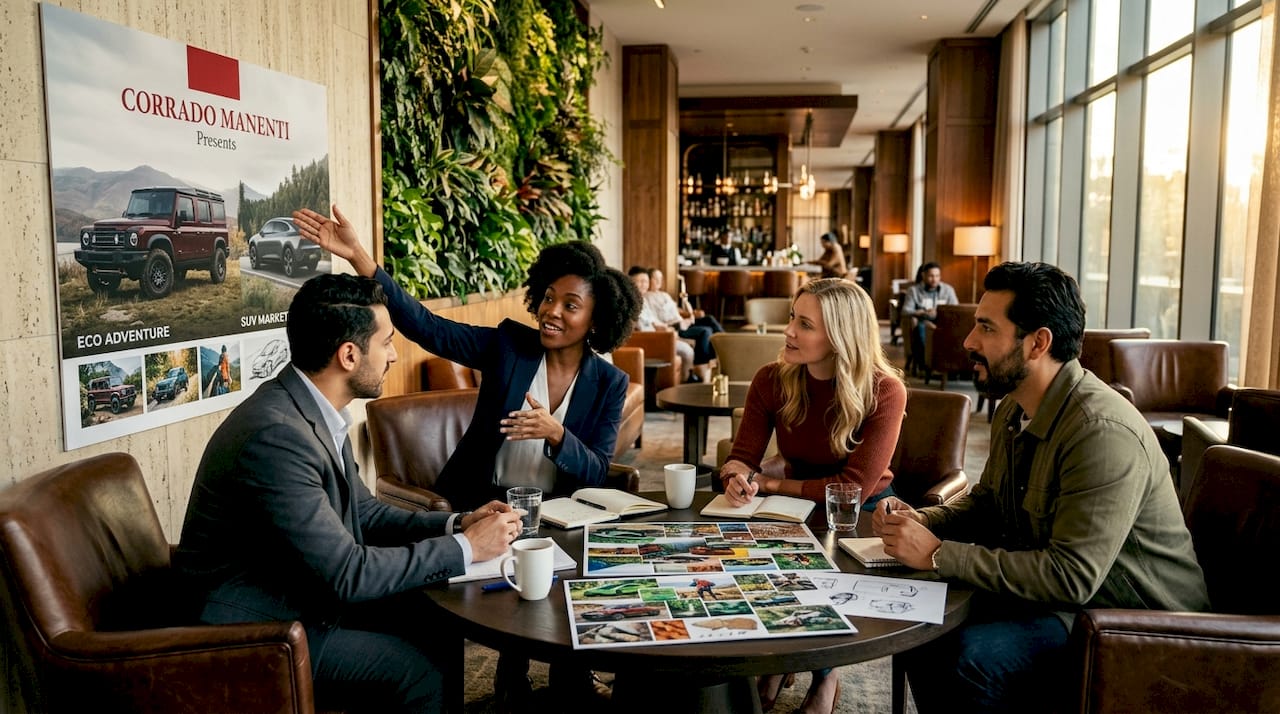
1. Influencer and owner-led storytelling
Owner communities generate content that creates more aspiration than large celebrity campaigns. This is the single most important shift in car enthusiast marketing over the past five years. When a real owner documents a road trip, customizes their vehicle, or shares a track day experience, the content carries social proof that no brand-produced ad can replicate.
“Community-led storytelling by owners and users is more credible and effective than corporate-driven messaging. Brands that treat their owner communities as cultural assets, rather than passive audiences, build the kind of aspiration that sustains loyalty across model cycles.”
The mechanics behind this are straightforward. Peer content triggers identity alignment. When a prospective buyer sees someone like them living a life they want, the vehicle becomes a symbol of that life. Automotive brands evolving into community hubs use owner-led content as the primary driver of aspiration, shifting marketing from product features to cultural belonging.
Practical applications include:
- Dedicated owner forums and social groups managed as brand assets
- Ambassador programs that reward authentic content, not scripted posts
- Brand-hosted events where community members become the story
- Cross-platform repurposing of owner content with proper attribution
The contrast with traditional corporate messaging is stark. Polished brand videos perform well for awareness but rarely convert enthusiasts. Peer-driven storytelling builds the kind of credibility that shortens the purchase decision cycle.
2. Experiential retail and lifestyle-integrated showrooms
The automotive showroom is transitioning from a transactional space to a lifestyle retail environment integrating food, design, and community. This is not a cosmetic change. It is a fundamental rethinking of what a brand space is supposed to do.
Lifestyle retail spaces that blend cafés, design galleries, and co-working areas reduce sales pressure and encourage repeat, informal visits. Each visit builds familiarity and emotional connection without the anxiety of a traditional sales floor. Consumers return because the space offers value independent of a purchase decision.
The strategic benefits are measurable in ways that differ from standard sales metrics:
- Repeat visit frequency signals growing brand affinity before any transaction occurs.
- Time spent in the space correlates with depth of emotional engagement.
- Social media check-ins and organic posts from visitors extend reach at zero media cost.
- Community events held in the space create memories attached to the brand, not just the product.
Lifestyle-integrated retail spaces build trust by avoiding sales pressure and supporting long-term emotional loyalty. That loyalty pays off at the moment of purchase and at every renewal cycle after.
Pro Tip: Measure experiential retail success with metrics like dwell time, return visit rate, and social mentions rather than same-day sales conversions. These numbers reveal the relationship-building value that traditional KPIs miss entirely.
3. User-generated content campaigns
UGC campaigns turn the brand’s most passionate customers into its most effective marketers. The mechanism is simple: give enthusiasts a platform, a prompt, and recognition, and they produce content that reaches audiences the brand could never target directly.
Social proof strategies show that authentic user stories and community content consistently outperform brand-produced creative in credibility and engagement. The reason is psychological. Consumers trust people, not logos. When a UGC campaign surfaces real stories from real owners, it activates the same identity-alignment process that makes owner communities so powerful.
Effective UGC programs share three characteristics. First, they provide a clear creative brief so contributors know what kind of content serves the brand narrative. Second, they offer meaningful recognition, whether through featuring content on official channels, event invitations, or exclusive access. Third, they connect online content to offline experiences like test drives or brand events, closing the loop between digital engagement and physical brand interaction.
4. Branded lifestyle products and fashion collaborations
Branded lifestyle products extend the automotive brand into daily life, maintaining an ongoing dialogue with enthusiasts between purchase cycles. This is lifestyle branding in automotive at its most literal: the brand lives in a consumer’s wardrobe, home, or workspace, not just their garage.
Ferrari’s fashion collaborations demonstrate how these partnerships deepen emotional connection and function as ongoing dialogues rather than standalone revenue sources. The critical factor is authenticity. A collaboration that feels forced or disconnected from the brand’s core ethos gets rejected by enthusiast communities immediately. Core fans are the harshest critics of brand dilution.
Successful collaborations share these traits:
- They reflect the brand’s existing visual and cultural identity, not a departure from it.
- They involve partners, whether musicians, designers, or artists, whose audiences overlap with the brand’s core community.
- They are limited in scale, creating scarcity and desirability rather than mass-market saturation.
- They generate cultural conversation beyond the product itself, extending media reach organically.
Lifestyle brand extensions must maintain ongoing dialogue with enthusiasts to authentically deepen emotional connections. The moment a collaboration feels like a cash grab, it damages the brand equity it was meant to build.
5. Automotive social media campaigns and platform-native content
Social media platforms like Instagram, TikTok, and YouTube reward automotive lifestyle marketing through visual storytelling and aspirational imagery that traditional automotive journalism never delivered. Each platform demands a distinct content approach, and brands that treat them as interchangeable lose the native audience on each.
Vehicles featured in aspirational settings align with consumer desire for identity expression and personal brand coherence. A car parked at a trailhead speaks to an adventure identity. The same car outside a design studio speaks to a creative professional identity. The vehicle is the same. The lifestyle narrative changes everything.
Platform-specific strategies that work:
- Instagram: Long-form visual series, owner spotlights, and behind-the-scenes brand content build sustained community engagement.
- TikTok: Short, authentic clips from real owners and creators outperform polished brand productions in reach and comment engagement.
- YouTube: Long-form documentary content about brand heritage, engineering philosophy, and owner stories builds deep brand affinity over time.
Treating content creators as cultural antennae connecting digital storytelling to physical brand experiences is the defining shift in automotive social media strategy for 2026. Creators are not ad placements. They are community bridges.
6. Digital content strategy and AI-optimized automotive marketing
Digital content strategy is now a core pillar of automotive lifestyle marketing, not a support function. AI-driven searches account for a significant share of automotive consumer research, and brands that fail to optimize for Generative Engine Optimization (GEO) lose visibility before a consumer ever visits a dealership.
The practical requirements for GEO-ready automotive content are specific:
| Content Element | Why It Matters |
|---|---|
| FAQ markup | Directly answers consumer questions that AI engines surface in responses |
| Cited statistics | Signals authority and increases likelihood of AI citation |
| Real-time inventory updates | Keeps content fresh and relevant to current purchase intent |
| Lifestyle-focused copy | Aligns with identity-driven search queries beyond spec comparisons |
Content that is 25.7% fresher is preferred by AI search engines, requiring brands to update digital assets continuously. That is not a minor adjustment. It means treating content as a living product, not a published artifact.
The interplay between digital storytelling and physical experiences matters here. A consumer who reads a well-crafted lifestyle article about a brand’s approach to adventure travel arrives at a test drive with a pre-formed emotional connection. Digital content primes the physical experience. Optimized social media for luxury cars follows the same logic: authentic community content online drives real-world brand engagement.
Pro Tip: Build a content calendar that treats FAQ updates and statistic refreshes as recurring editorial tasks, not one-time launches. Brands that update their core lifestyle content quarterly maintain significantly stronger AI search visibility than those that publish once and move on.
Key takeaways
The most effective automotive lifestyle marketing combines community-driven storytelling, experiential spaces, and AI-optimized digital content to build identity-based brand loyalty that outlasts any single product cycle.
| Point | Details |
|---|---|
| Community over corporate messaging | Owner-led content builds more aspiration and trust than brand-produced campaigns. |
| Experiential retail drives loyalty | Lifestyle showrooms measured by dwell time and return visits outperform traditional sales-floor metrics. |
| Fashion collaborations need authenticity | Branded lifestyle products must reflect core brand ethos or face rejection by enthusiast communities. |
| Digital content requires constant updates | AI search engines favor fresher content, making quarterly updates a competitive necessity. |
| Mix multiple marketing types | Campaigns combining influencer, experiential, and digital approaches create stronger identity alignment than single-channel efforts. |
The type of automotive marketing most brands get wrong
Most automotive brands still treat lifestyle marketing as a layer applied on top of product marketing. That is the wrong order of operations. The brands that consistently win in this space build the lifestyle identity first and let the product serve as proof of that identity.
I have seen this pattern repeatedly across luxury and lifestyle sectors. A brand launches a beautiful experiential retail space but measures it against monthly sales targets. When the numbers disappoint, the space gets redesigned to feel more like a traditional showroom. The relationship-building value evaporates, and the brand wonders why foot traffic dropped.
The same mistake appears in influencer programs. Brands recruit creators with large followings, script their content, and then express frustration when engagement rates are low. Authentic community content requires creative freedom. The moment a creator’s audience senses a script, the social proof disappears.
My strongest advice for brand strategists: define the cultural identity your brand occupies before you choose a marketing type. Are you the brand for people who value quiet, intentional living? Adventure and exploration? Creative expression? The answer determines which types of lifestyle marketing will resonate and which will feel hollow. Customer loyalty in luxury is built through belonging, and belonging requires a clear cultural identity to belong to.
— Corrado
How Corradomanenti approaches automotive lifestyle branding
Automotive lifestyle marketing works best when psychology drives every decision, from the tone of a social post to the layout of a retail space.
Corradomanenti works with brands in the luxury and lifestyle sectors to build marketing strategies grounded in consumer psychology and cultural identity. Whether you need to sharpen your influencer program, redesign your content strategy for AI search, or develop a brand extension that your core community will embrace, the frameworks are available. The luxury brand growth tactics resource covers the strategic foundations that apply directly to automotive lifestyle marketing. For brands ready to go deeper, the buyer behavior analysis guide provides the psychological framework that separates campaigns that convert from campaigns that merely impress.
FAQ
What is automotive lifestyle marketing?
Automotive lifestyle marketing is a brand strategy that connects vehicles to consumer identity, values, and experiences rather than focusing on technical specifications. It uses storytelling, community, and cultural engagement to build emotional loyalty.
Which type of automotive lifestyle marketing delivers the best ROI?
Owner-led and community-driven storytelling consistently delivers the strongest return because it generates authentic social proof at low media cost. Brands that activate their owner communities as content creators reduce paid media dependence while increasing credibility.
How does influencer marketing differ from traditional automotive advertising?
Automotive influencer marketing uses real owners and niche creators to build aspiration through peer-level storytelling, while traditional advertising relies on brand-controlled messaging. Peer content triggers identity alignment in ways that corporate campaigns rarely achieve.
Why do experiential retail spaces matter for car brands?
Lifestyle-integrated showrooms build emotional connection by removing sales pressure and encouraging repeat visits. Each informal visit deepens brand familiarity and loyalty before any purchase decision is made.
How should automotive brands optimize digital content in 2026?
Brands should use FAQ markup, cited statistics, and frequent content updates to compete for AI-driven search traffic. AI search engines favor fresher content, so treating digital assets as living documents rather than static publications is the competitive standard.