

Psychology-driven marketing is the practice of aligning campaigns with behavioral science principles, including cognitive biases, emotional triggers, and subconscious decision patterns, to shape how consumers perceive, trust, and buy. Rather than guessing what messaging will land, this approach works with how the brain naturally processes information. The result is marketing that feels less like a pitch and more like the right answer arriving at the right moment.
The core components worth knowing upfront:
- Cognitive biases — mental shortcuts like anchoring and the decoy effect that shape choices without conscious reasoning
- Emotional triggers — fear of missing out, desire for belonging, or the pull of status
- System 1 thinking — the fast, gut-level brain that drives the majority of purchase decisions
- Social proof — peer validation that reduces perceived risk
- Loss aversion — the tendency to weight potential losses more heavily than equivalent gains
Table of Contents
- How psychology shapes what consumers actually do
- Key psychological principles that drive real results
- How to apply these strategies authentically and ethically
- How Corradomanenti applies psychology to luxury brand marketing
- Where psychology-driven marketing came from
- Examples of psychology-driven marketing that worked
- Common pitfalls and misconceptions to avoid
- Key Takeaways
How psychology shapes what consumers actually do
Consumer decisions are rarely as rational as buyers believe. The brain relies on fast, intuitive processing for most choices, and marketers who understand this have a structural advantage over those who only compete on features and price.
Several psychological forces consistently drive buying behavior:
- Trust signals — authority markers, credentials, and familiar brand cues that lower perceived risk
- Social proof — seeing others make the same choice, which activates the bandwagon effect
- Loss aversion — framing an offer around what a buyer stands to lose rather than gain
- Emotional resonance — connecting a product to identity, aspiration, or belonging before any transaction occurs
- Cognitive ease — the simpler a choice feels, the more likely the brain is to make it
Understanding these forces lets you design campaigns that work with natural human tendencies rather than fighting them. A checkout page that overwhelms with options triggers analysis paralysis. One that presents a clear, anchored choice moves buyers forward.
Key psychological principles that drive real results
The most effective psychology-driven marketing techniques are grounded in decades of behavioral research. Robert Cialdini’s Influence (1984) established the foundational framework, and behavioral economists have extended it considerably since.
The principles with the strongest evidence behind them:
- Social validation — micro-influencer signals and peer benchmarking build B2B trust faster than brand advertising alone; social validation loops reduce acquisition costs by about 38% versus paid media alone.
- Loss aversion — loss aversion can motivate consumers significantly more than equivalent gain framing; “Don’t lose your discount” outperforms “Save $50”
- Reciprocity — offering genuinely useful content or tools before asking for anything creates a sense of obligation that lifts lead generation
- Choice architecture — using the decoy effect and anchoring to make the preferred option feel like the obvious choice; anchoring effects can notably increase average order value
- Micro-commitments — asking for a small yes (email signup, free audit) before the big ask, which dramatically improves conversion rates
Taken together, psychology-driven approaches produce measurable improvements in retention and email engagement when loss aversion frameworks replace generic promotional copy.
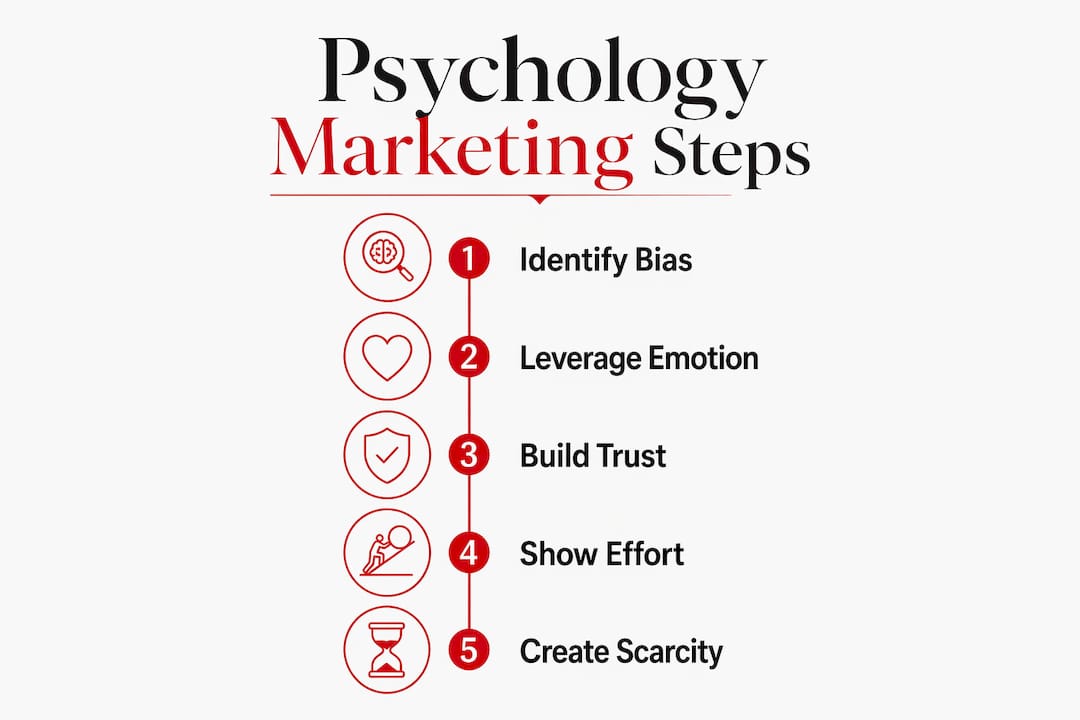
Pro Tip: Showcase the effort behind your product or service visibly. Consumers equate visible labor with quality, so a behind-the-scenes video or a transparent process breakdown builds perceived value without a single extra dollar in ad spend.

How to apply these strategies authentically and ethically
Psychology-driven marketing only works long-term when it aligns with real customer needs. Manipulation tactics like false scarcity or manufactured urgency erode trust fast, and marketing psychology is not manipulation but an alignment with how people genuinely feel and think.
Practical steps for authentic application:
- Map to Maslow’s hierarchy — identify which need your product actually addresses (safety, belonging, esteem) and build messaging around that, not around a fabricated problem
- Measure behavioral response, not vanity metrics — track actions like repeat visits, time on page, and purchase frequency rather than impressions alone
- Stage your content — move buyers through perception, motivation, decision, reinforcement, and loyalty rather than pushing for a transaction too early
- Avoid false scarcity — a countdown timer that resets on refresh destroys credibility; real scarcity (limited inventory, genuine deadlines) works because it is true
- Limit social proof density — one or two well-placed testimonials outperform fifteen pop-ups, which create sensory friction and drive visitors away
The focus on human needs and emotional resonance is what separates psychology-driven marketing from traditional tactics. Traditional marketing measures activity. This approach measures behavioral response, and the results are more predictable.
How Corradomanenti applies psychology to luxury brand marketing
Luxury consumers do not buy products. They buy identity, exclusivity, and the feeling that a brand understands them at a level most brands never attempt. Psychology-driven marketing, applied with precision in this sector, is what makes that feeling repeatable and scalable.
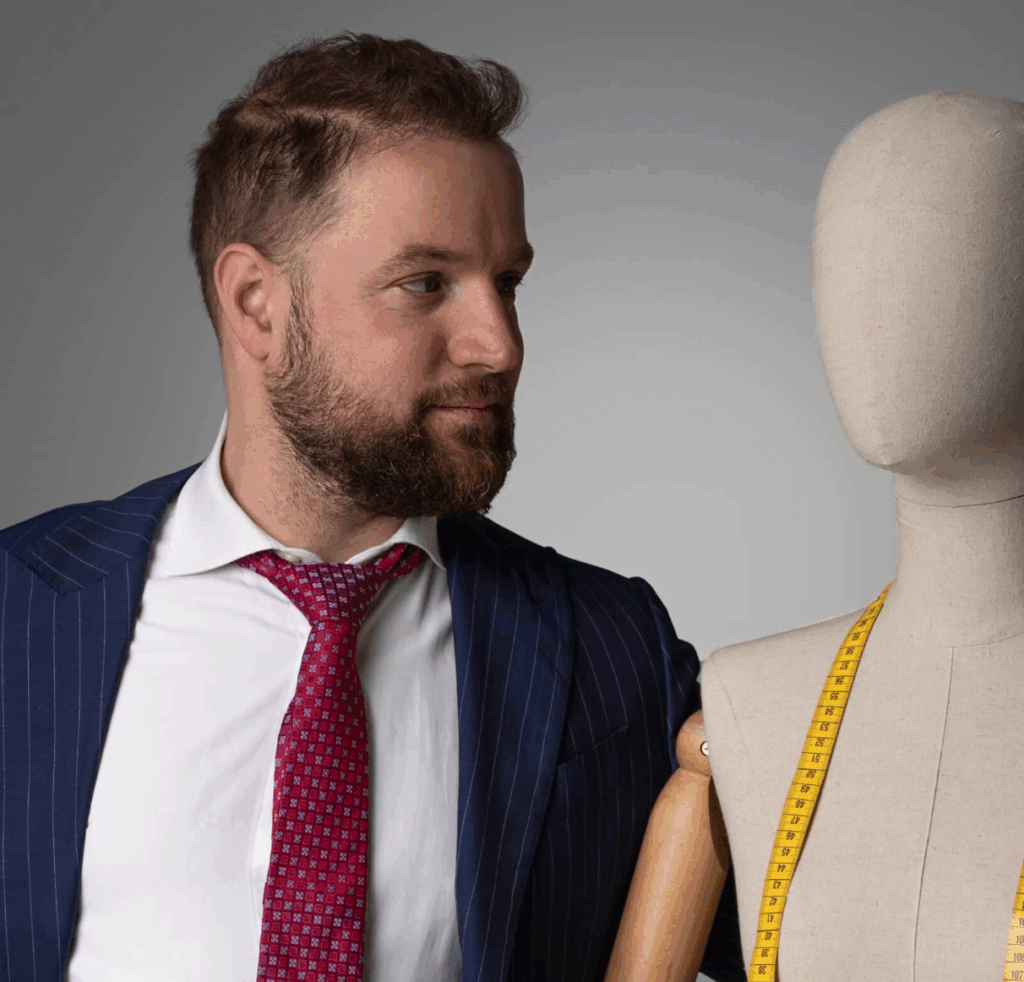
Corrado Manenti brings an academic background in psychology and people management directly into luxury and fashion marketing contexts, where the stakes for getting consumer psychology right are higher than in almost any other sector. Luxury buyers are not motivated primarily by price or function. They respond to status signaling, scarcity, and the perception that a brand sees them as individuals.
The principles that matter most in luxury contexts:
- Exclusivity framing — scarcity and limited access increase desirability; the psychology of “not everyone can have this” is a core driver of premium positioning
- Identity alignment — high-end consumer behavior is driven by self-concept; the brand must reflect who the buyer wants to be, not just what they want to own
- Sensory and experiential cues — luxury consumers respond strongly to tactile, visual, and experiential signals that communicate quality before a word is read
- Authority and craft visibility — showcasing the artisanship, heritage, or expertise behind a product activates the same effort-equals-quality bias that works across all markets, amplified in luxury
- Personalization at scale — psychology in luxury branding requires making each buyer feel uniquely seen, which demands behavioral data and precise segmentation
The challenge specific to luxury is that overuse of any psychological technique reads as cheap. A mass-market brand can run a countdown timer. A luxury brand that does the same thing loses the aura of effortless exclusivity that justifies its price point. Restraint is itself a psychological signal.
Pro Tip: In luxury marketing, what you withhold communicates as much as what you show. Selective disclosure, curated access, and deliberate pacing of information all reinforce the perception of exclusivity that premium buyers are paying for.
Where psychology-driven marketing came from
The formal connection between psychology and marketing dates to the early 20th century, when Walter Dill Scott applied psychological principles to advertising for the first time. Behaviorism, developed by John B. Watson (who later moved into advertising), introduced the idea that consumer responses could be conditioned. By the mid-20th century, motivational research, led by figures like Ernest Dichter, was influencing how brands framed desire and identity in their campaigns.
The field accelerated sharply with Cialdini’s Influence in 1984, which gave marketers a practical vocabulary for reciprocity, commitment, social proof, authority, liking, and scarcity. Behavioral economics, particularly the work of Daniel Kahneman and Amos Tversky on loss aversion and cognitive biases, added a rigorous empirical foundation in the 1970s and 1980s that marketers eventually absorbed. By 2026, AI-powered personalization and large-scale A/B testing have made it possible to apply these principles with a precision that was not feasible even five years ago.
Examples of psychology-driven marketing that worked
The most cited examples are instructive precisely because the psychology is visible once you know what to look for.
Amazon’s “Only 3 left in stock” activates loss aversion and scarcity simultaneously. The message is not “buy this product.” It is “you are about to lose access to this product.” The framing shift alone lifts conversion.

Spotify Wrapped is a masterclass in identity and social proof. It gives users a personalized data story they want to share, which turns customers into distribution. The psychological engine is self-concept: people share Wrapped because it says something about who they are.
Subscription pricing anchoring appears across SaaS products. Presenting a premium tier first makes the mid-tier feel like a bargain, a direct application of the anchoring effect. The decoy tier (overpriced, undervalued) exists solely to make the preferred option look rational.
Luxury brand scarcity events, like Hermès allocation systems or limited-edition drops, use controlled access to reinforce exclusivity. The waiting list is not a logistics problem. It is a psychological asset. Explore how luxury brands use these tactics to build long-term customer relationships.
Common pitfalls and misconceptions to avoid
The biggest misconception is that psychology-driven marketing means manipulation. It does not. Psychology-based marketing focuses on alignment with how people think and feel, not on tricking them into decisions they will regret.
The pitfalls that actually damage brands:
- False scarcity — a “2-hour” timer that resets on page refresh destroys trust the moment a buyer notices it, and they will notice
- Social proof overload — fifteen testimonial pop-ups create friction, not confidence; one specific, credible review placed at the right moment in the funnel does more
- Ignoring post-purchase psychology — reinforcement and loyalty are part of the framework; brands that apply psychology only to acquisition and ignore the post-purchase experience lose the retention gains
- Treating all buyers as identical — cognitive biases are universal, but which ones are most active depends on the buyer’s context, category, and stage in the decision process
- Confusing activity with behavioral response — measuring impressions and clicks without tracking actual behavioral shifts means you cannot tell whether the psychology is working
The discipline works because it respects how the brain actually operates. When it is used to exploit rather than align, the short-term lift comes with a long-term trust deficit that compounds over time.
Key Takeaways
Psychology-driven marketing works because it aligns campaigns with how the brain actually decides, using cognitive biases, emotional triggers, and behavioral science to build trust and drive measurable results.
| Point | Details |
|---|---|
| Core mechanism | Aligns marketing with cognitive biases and System 1 thinking, not rational persuasion. |
| Loss aversion impact | Framing offers around loss rather than gain can motivate consumers roughly twice as much. |
| Acquisition cost reduction | Social validation loops reduce acquisition costs by about 38% versus paid media alone. |
| Ethical foundation | Authentic application maps to real customer needs; false scarcity and manipulation erode trust and repeat business. |
| Luxury application | Restraint, exclusivity framing, and identity alignment amplify psychological principles in premium markets. |
Ready to apply these principles to a luxury or fashion brand? Corradomanenti’s fashion brand growth tactics translate behavioral science into premium positioning strategies built for the high-end market.