


Luxury brands face a paradox. They’ve built empires on exclusivity, heritage, and carefully controlled experiences, yet digital innovation demands openness and accessibility. Many luxury executives worry that embracing technology will dilute brand prestige or compromise the carefully crafted mystique that commands premium prices. This tension has kept digital innovation in luxury at arm’s length for years. But here’s the surprising truth: strategic digital adoption doesn’t erode exclusivity, it amplifies competitive advantage and transforms customer experience. This article reveals how luxury brands can harness digital innovation to drive growth, deepen engagement, and maintain their coveted market position.
Table of Contents
- Key takeaways
- Why luxury brands historically hesitate to adopt digital innovation
- How digital innovation drives growth and enhances customer experience
- Balancing exclusivity with digital openness: strategies luxury brands use
- Practical steps for luxury brands to leverage digital innovation effectively
- How Corrado Manenti can help luxury brands grow with digital innovation
- FAQ
Key Takeaways
| Point | Details |
|---|---|
| Digital boosts luxury growth | Strategic digital adoption amplifies competitive advantage and enhances the luxury customer experience without diluting exclusivity. |
| Omnichannel enhances experience | Seamless omnichannel experiences have become a baseline expectation for luxury clients with 77 percent demanding integrated digital and in store journeys. |
| AI personalization drives engagement | AI driven personalization analyzes purchase history and browsing behavior to deliver highly relevant recommendations at scale while preserving the personalized service luxury customers expect. |
| Balance exclusivity with openness | Balancing exclusivity with openness means investing in digital thoughtfully and protecting flagship experiences while offering convenient online options. |
Why luxury brands historically hesitate to adopt digital innovation
Luxury brands built their reputations on tangible craftsmanship, personal service, and scarcity. These pillars seem fundamentally at odds with digital’s mass accessibility and instant availability. For decades, luxury houses prioritized heritage over innovation, viewing technology as a threat rather than an opportunity. The numbers tell this story clearly: European luxury groups invest average 3.1% of revenue in technology, substantially lower than other industries.
This conservative stance reflects deeper concerns. Luxury executives fear that widespread digital presence might cheapen brand perception or make exclusive products feel too accessible. The exclusivity paradox creates genuine tension: how do you maintain mystique while meeting customers where they increasingly live, online? Many brands worry that digital channels could cannibalize flagship store experiences or compromise the personalized attention that justifies premium pricing.
Key hesitations include:
- Perceived risk of brand dilution through mass digital exposure
- Investment hesitation due to unclear ROI and high implementation costs
- Cultural resistance within organizations steeped in traditional retail practices
- Complexity of meeting sophisticated luxury consumer expectations across digital touchpoints
“European luxury groups invest an average of 3.1% of their revenue in technology, compared to higher rates in other industries, reflecting cautious digital adoption strategies.”
This reluctance has created a gap. While luxury brands deliberated, customer expectations evolved rapidly. The same clients who appreciate handcrafted leather goods also expect seamless digital experiences. They research online before visiting boutiques, expect personalized recommendations based on purchase history, and want consistent brand experiences whether shopping via mobile app or in Paris flagship stores. The digital strategy for luxury brands must now address this fundamental shift in consumer behavior.
How digital innovation drives growth and enhances customer experience
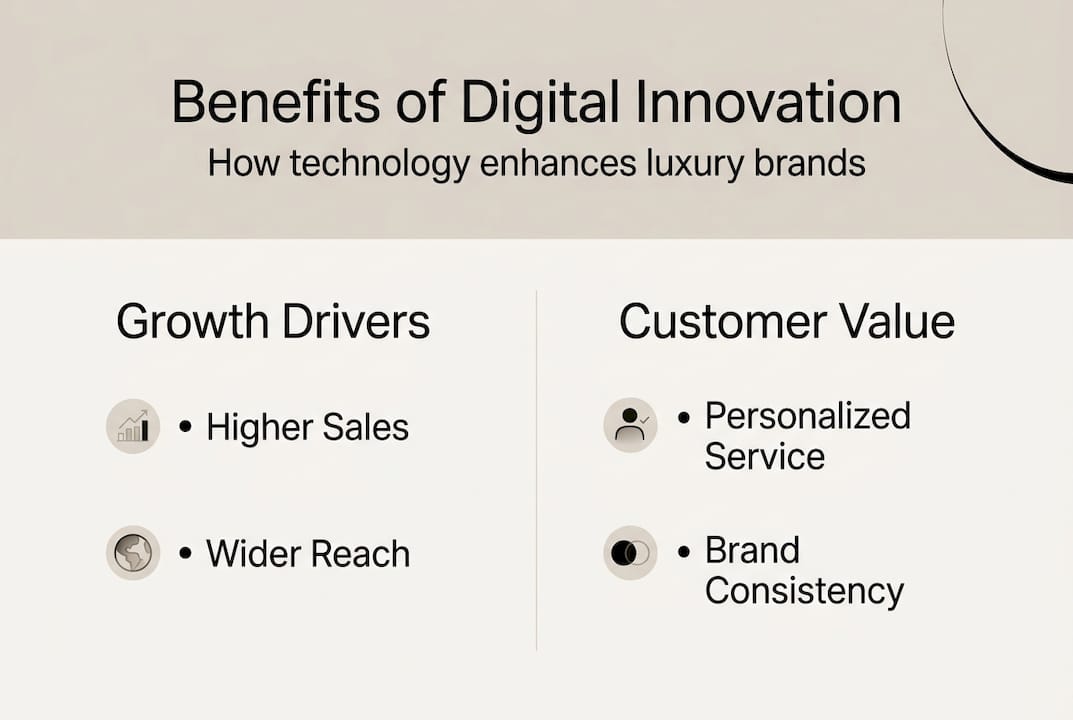
The evidence is compelling. Luxury brands that strategically embrace digital innovation see measurable improvements in sales, engagement, and customer satisfaction. Net-a-Porter’s AI recommendations boosted sales by 35%, proving that technology enhances rather than diminishes luxury retail. More striking: 77% of luxury clients now expect seamless omnichannel experiences, making digital integration a baseline requirement rather than a competitive differentiator.
AI-driven personalization transforms how luxury brands connect with customers. Instead of generic product displays, sophisticated algorithms analyze purchase history, browsing behavior, and preference signals to curate highly relevant recommendations. This doesn’t feel intrusive to luxury consumers; it feels attentive, mirroring the personalized service they expect from boutique staff. The technology enables scale without sacrificing the individual attention that defines luxury service.
Online shopping behavior has shifted dramatically. Since luxury brands began serious digital luxury experience personalization engagement efforts, 38% of luxury clients report shopping more online. This isn’t replacing physical retail; it’s expanding the customer journey. Clients research collections digitally, receive personalized styling advice through apps, then visit stores for final purchases or exclusive experiences. The omnichannel luxury customer experience creates multiple touchpoints that deepen relationships rather than diluting them.
| Metric | Impact | Source |
|---|---|---|
| Sales increase from AI recommendations | +35% | Net-a-Porter implementation |
| Clients expecting seamless omnichannel | 77% | Luxury consumer research |
| Luxury clients shopping more online | 38% | Post-innovation adoption |
| Direct sales through digital channels | 85%+ | Gucci omnichannel strategy |
Key digital innovation benefits:
- AI personalization that mirrors boutique-level individual attention at scale
- Seamless omnichannel experiences connecting digital research with physical retail
- Enhanced engagement through personalized content and exclusive digital experiences
- Measurable sales uplift from targeted recommendations and optimized customer journeys
Pro Tip: Prioritize omnichannel integration that maintains consistent brand voice and experience across every customer touchpoint. Disconnected channels frustrate luxury consumers who expect cohesive brand experiences.
Balancing exclusivity with digital openness: strategies luxury brands use
Not all luxury brands should adopt identical digital strategies. The most successful approaches align digital innovation intensity with brand positioning and customer expectations. Ultra-premium brands maintaining extreme exclusivity require different tactics than luxury brands pursuing broader market growth. Understanding this spectrum is crucial for executives crafting digital disruption in luxury strategies.

Exclusive brands like Hermes benefit from selective digital presence, while more aggressive brands like LVMH leverage digital openness for growth. Hermes maintains mystique through limited online inventory, invitation-only digital experiences, and carefully curated content that reinforces scarcity. Their digital channels enhance brand storytelling without compromising exclusivity. Conversely, LVMH brands like Louis Vuitton embrace comprehensive digital ecosystems, extensive e-commerce, and innovative technologies like virtual try-ons to capture wider luxury audiences.
This isn’t about right or wrong approaches; it’s about strategic alignment. Ultra-luxury brands targeting ultra-high-net-worth individuals can maintain digital restraint because their customers value scarcity above convenience. Aspirational luxury brands competing for affluent millennials and Gen Z consumers must offer robust digital experiences because these demographics expect seamless technology integration. The fashion brand growth tactics luxury market demands this nuanced understanding.
| Approach | Example Brand | Strategy | Digital Intensity |
|---|---|---|---|
| Selective Digital | Hermes | Limited online inventory, invitation-only access, curated content | Low to Medium |
| Aggressive Digital | LVMH (Louis Vuitton) | Comprehensive e-commerce, AR/VR experiences, extensive digital marketing | High |
| Balanced Hybrid | Chanel | Strong digital storytelling, selective e-commerce, exclusive digital content | Medium |
Key tactics for balancing exclusivity with digital openness:
- Curated digital content that reinforces brand heritage and craftsmanship stories
- Invitation-only access to exclusive collections or pre-launch digital experiences
- Personalized digital communications that feel intimate rather than mass-marketed
- Technology that enhances rather than replaces human touchpoints in customer journeys
- Strategic e-commerce limitations maintaining product scarcity and boutique importance
Pro Tip: Identify your brand’s optimal digital openness level by analyzing your customer demographics, competitive positioning, and brand heritage. Ultra-premium brands can maintain digital restraint; growth-focused luxury brands need comprehensive digital presence.
Practical steps for luxury brands to leverage digital innovation effectively
Transforming digital strategy from concept to execution requires systematic planning and careful implementation. Luxury executives need actionable frameworks that respect brand heritage while capturing innovation benefits. The following steps provide a roadmap for brands ready to embrace digital strategy luxury brands principles.
-
Assess current digital readiness: Conduct honest audits of existing digital capabilities, technology infrastructure, and organizational culture. Identify gaps between current state and desired digital experiences. Evaluate team skills, technology platforms, data analytics capabilities, and customer touchpoint integration. This baseline assessment reveals where investment will yield highest returns.
-
Define clear strategic goals: Establish specific, measurable objectives aligned with overall brand strategy. Are you prioritizing customer acquisition, deepening existing client relationships, improving operational efficiency, or enhancing brand storytelling? Different goals require different technology investments and implementation approaches. Avoid generic “digital transformation” mandates; specify concrete outcomes like increasing online conversion rates by 25% or reducing customer service response times by 40%.
-
Select customer-centric technologies: Choose digital tools that genuinely enhance customer experience rather than simply following technology trends. AI-powered personalization engines, omnichannel platforms connecting digital and physical retail, sophisticated CRM systems tracking customer preferences, and data analytics platforms revealing behavioral insights deliver measurable value. LVMH’s digital finance transformation boosts efficiency while Gucci’s omnichannel approach drives 85%+ direct sales, proving strategic technology selection pays dividends.
-
Integrate systems for operational excellence: Digital innovation extends beyond customer-facing applications. Integrate backend systems connecting inventory management, financial operations, customer data, and sales channels. Seamless data flow between systems enables real-time personalization, accurate inventory visibility across channels, and sophisticated analytics revealing customer lifetime value and campaign effectiveness. This operational foundation supports superior customer experiences.
-
Implement pilot projects before scaling: Minimize risk and build internal support by launching controlled pilot programs testing new technologies with limited audiences or product categories. Measure results rigorously, gather customer feedback, refine approaches based on learnings, then scale successful initiatives. This iterative methodology reduces expensive mistakes while demonstrating ROI to skeptical stakeholders. Start with high-impact, lower-risk initiatives like personalized email campaigns or mobile app enhancements before tackling complex omnichannel integration.
Data analytics deserves special emphasis. Luxury brands generate enormous customer data across touchpoints, but many lack sophisticated analytics capabilities to extract actionable insights. Invest in analytics platforms and talent that can identify high-value customer segments, predict purchase propensity, measure campaign effectiveness, and optimize customer acquisition costs. This intelligence refines targeting, personalizes experiences, and proves digital innovation ROI to justify continued investment.
Pro Tip: Launch pilot projects in controlled environments to demonstrate value and build organizational support before committing to large-scale digital transformation initiatives. Quick wins create momentum for broader change.
The fashion brand growth tactics luxury market increasingly depend on sophisticated digital capabilities. Brands that systematically build these competencies gain compounding advantages over competitors still debating whether to invest. The question isn’t whether luxury brands should embrace digital innovation, but how quickly and strategically they can implement it while maintaining brand integrity.
How Corrado Manenti can help luxury brands grow with digital innovation
Navigating digital transformation while preserving luxury brand essence requires specialized expertise. Corrado Manenti offers tailored consulting that helps luxury brands adopt effective digital strategies without compromising exclusivity. His psychology-driven approach understands why luxury consumers behave as they do, creating fashion brand growth tactics luxury market strategies that resonate emotionally while delivering measurable results.
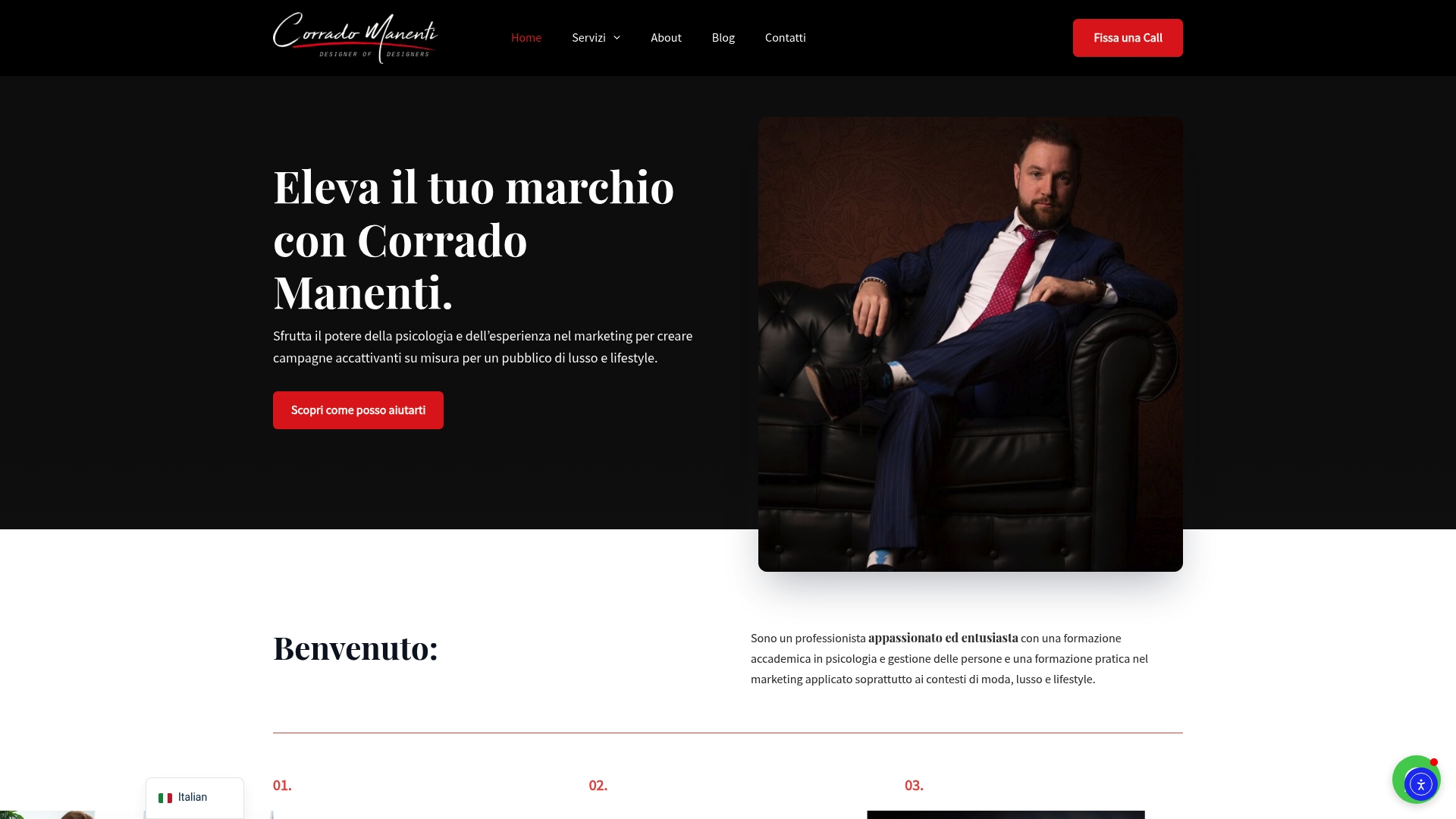
His services include comprehensive digital strategy luxury brands development, aligning technology investments with brand positioning and customer expectations. Through detailed buyer behavior analysis luxury brands, he identifies opportunities for personalization and engagement that feel authentic rather than intrusive. Whether you’re launching initial digital initiatives or optimizing existing platforms, his expertise helps balance innovation with the exclusivity that defines luxury.
FAQ
What are the main advantages of digital innovation in luxury?
Digital innovation significantly boosts sales through AI-powered personalization, with some luxury retailers seeing conversion increases up to 35%. It enhances customer experience by enabling seamless omnichannel shopping that 77% of luxury consumers now expect. Additionally, digital tools improve operational efficiency, strengthen brand differentiation, and provide data-driven insights that optimize marketing investments and customer targeting.
How do luxury brands maintain exclusivity while adopting digital technologies?
Luxury brands preserve exclusivity through selective digital strategies like invitation-only platforms, limited online inventory, and curated content that reinforces scarcity. They create personalized digital experiences that feel intimate rather than mass-marketed, using technology to enhance rather than replace human touchpoints. The key is aligning digital intensity with brand positioning, with ultra-premium brands maintaining digital restraint while growth-focused luxury brands embrace comprehensive digital presence.
What role does AI play in luxury brand digital innovation?
AI transforms luxury retail by delivering personalized product recommendations that mirror boutique-level individual attention at scale. It analyzes customer data to predict preferences, optimize inventory, and create tailored experiences across digital channels. AI-powered personalization drives measurably higher conversion rates while supporting the seamless omnichannel experiences luxury consumers increasingly demand. The technology enables luxury brands to offer individualized service to thousands of customers simultaneously.
What practical steps should luxury brands take to start digital transformation?
Begin by assessing current digital capabilities and defining clear strategic goals aligned with brand positioning. Select customer-centric technologies like AI personalization and omnichannel platforms that genuinely enhance experience. Launch pilot projects to test approaches, gather feedback, and demonstrate ROI before scaling. Integrate backend systems for operational excellence and invest in data analytics to refine targeting and measure impact continuously.