
Most American luxury brands struggle to stand out in an industry where over 80 percent of consumers say emotional connection shapes their loyalty. In a crowded global marketplace, building a recognizable and trusted fashion brand is about much more than just beautiful products. This guide reveals how smart strategies in brand identity, psychological positioning, visual design, and consistent experiences can elevate your brand and inspire genuine consumer devotion.
Table of Contents
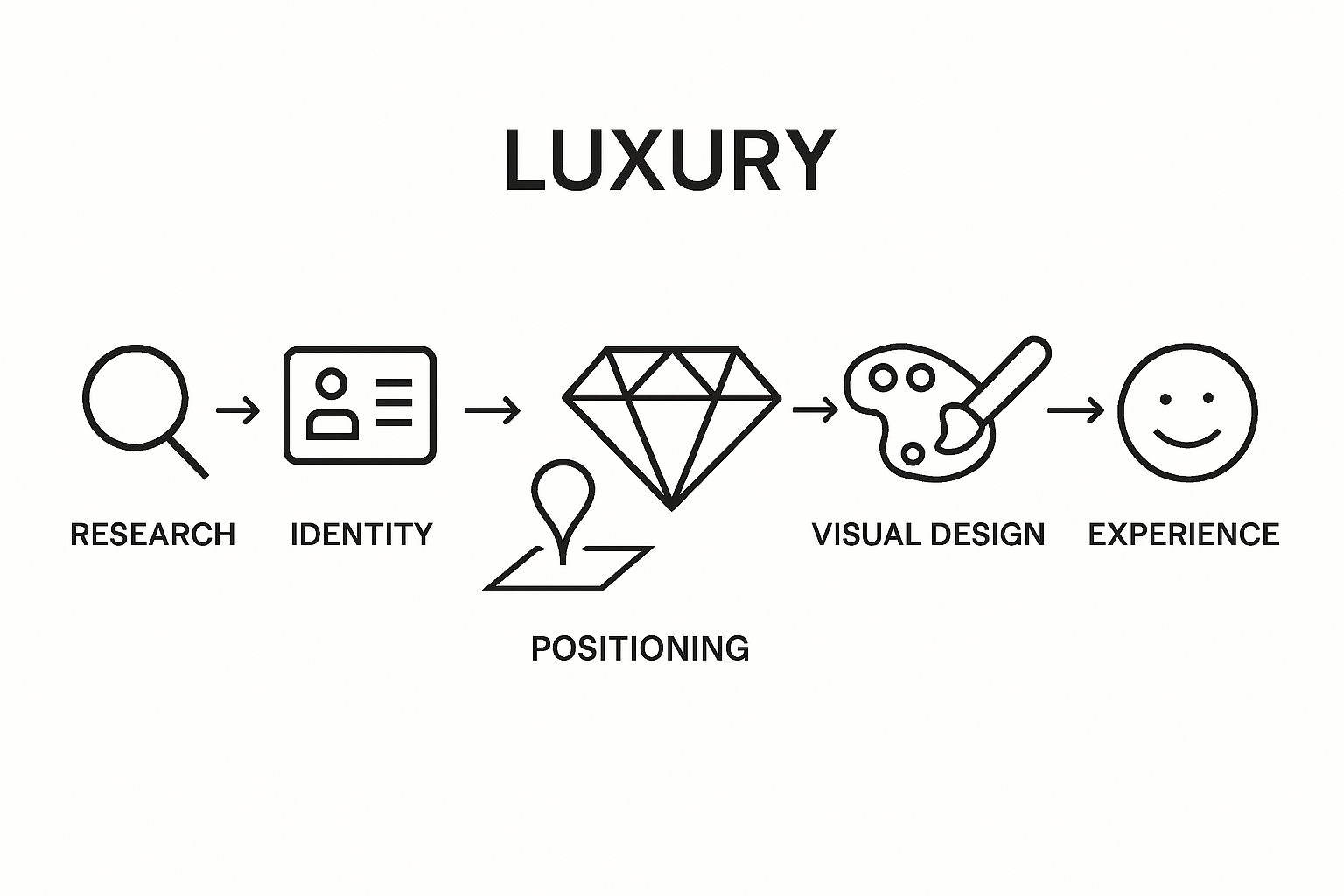
- Step 1: Assess Brand Identity And Market Context
- Step 2: Define Psychological Brand Positioning
- Step 3: Design Luxury-Driven Visual Identity
- Step 4: Develop Signature Brand Experiences
- Step 5: Implement Digital And Experiential Strategies
- Step 6: Verify Brand Consistency Across Touchpoints
Quick Summary
| Key Point | Explanation |
|---|---|
| 1. Conduct Comprehensive Brand Research | Start with thorough research to map your brand’s identity, using ISO standards to evaluate both tangible and intangible assets. |
| 2. Develop a Strong Psychological Positioning | Craft a brand narrative that emotionally connects with consumers by addressing their hidden desires and aspirations. |
| 3. Create a Cohesive Visual Identity | Design a sophisticated visual language that consistently communicates your brand’s premium status across all platforms. |
| 4. Design Signature Brand Experiences | Develop immersive brand interactions that engage consumers emotionally and intellectually, enhancing customer loyalty. |
| 5. Ensure Brand Consistency Across Touchpoints | Regularly verify all customer interactions to maintain a unified brand narrative, ensuring quality and emotional connection. |
Step 1: Assess Brand Identity and Market Context
Effective brand assessment requires a strategic approach that blends analytical thinking with creative insight. In this critical initial phase, you will map out your brand’s unique positioning and understand its relationship with the broader market landscape.
Starting with comprehensive research is essential. Brand evaluation principles outlined in ISO standards provide a structured framework for examining tangible and intangible brand assets. These guidelines help premium fashion brands systematically analyze their core identity elements including quality, innovation, service delivery, and market perception. Luxury brands must look beyond surface level characteristics and dig deep into the psychological and emotional dimensions that define their market presence.
Understanding market context demands more than surface level observation. Research from experts like Frédéric Godart reveals that successful luxury brands develop nuanced strategies by examining creative industry dynamics. This means mapping competitive landscapes, identifying unique value propositions, and understanding how your brand narrative resonates with target consumer segments.
Pro tip: Conduct a comprehensive brand audit that includes competitive analysis, consumer perception studies, and internal capability assessment. The goal is not just to understand where you are but to identify strategic pathways for differentiation and growth.
As you complete this assessment phase, you will have a clear blueprint of your brand’s current market positioning and potential transformation opportunities.
Step 2: Define Psychological Brand Positioning
Psychological brand positioning transforms your fashion brand from a mere product line into a deeply resonant emotional experience. In this crucial phase, you will strategically craft a brand narrative that connects with your target audience at a profound psychological level.
Marketing positioning techniques reveal that successful brands go beyond traditional product differentiation. Your goal is to create a mental perception that transcends physical attributes and speaks directly to consumers emotional landscapes. This means developing a strategic framework that integrates product characteristics, brand story, and targeted market segmentation into a cohesive psychological blueprint.
Emotional branding strategies demonstrate that luxury brands must craft narratives that resonate on sensory and psychological levels. This involves developing storytelling approaches that communicate not just what your brand sells but what it represents. Think beyond aesthetic features consider the deeper aspirational qualities your brand embodies the lifestyle transformations you promise and the emotional journey you offer your customers.
Pro tip: Conduct deep consumer psychology research. Map out your target audiences hidden desires emotional triggers and unspoken aspirations. The most powerful brand positioning emerges from understanding the unconscious motivations that drive consumer behavior.
As you complete this psychological positioning stage, you will have created a nuanced brand identity that speaks directly to your audiences deepest emotional needs and aspirations.
Step 3: Design Luxury-Driven Visual Identity
Designing a luxury-driven visual identity transforms your fashion brand from a simple aesthetic into a sophisticated visual language that communicates premium status and emotional resonance. In this critical stage, you will craft a visual narrative that speaks volumes without uttering a single word.

Visual communication strategies in fashion branding reveal that successful luxury brands communicate uniqueness through carefully curated visual elements. Every color palette, typography choice, and design element becomes a strategic instrument for conveying brand personality. Your visual identity must transcend mere decoration and become a powerful storytelling mechanism that instantly communicates your brands core values and emotional positioning.
Brand visibility research demonstrates that visual elements like logos, packaging, and design consistency play a crucial role in creating memorable brand experiences. This means developing a comprehensive visual system that remains cohesive across all touchpoints from digital platforms to physical product packaging. Your goal is to create a visual ecosystem where every design choice reinforces your brands luxury positioning and emotional promise.
Pro tip: Develop a comprehensive visual style guide that codifies your brands visual DNA. Include precise color specifications, typography rules, imagery guidelines, and emotional design principles. This ensures consistency and prevents dilution of your carefully crafted visual identity.
As you complete this visual design phase, you will have created a powerful visual language that communicates your brands essence with elegance precision and emotional depth.
Step 4: Develop Signature Brand Experiences
Developing signature brand experiences transforms your luxury fashion brand from a transactional entity into an immersive emotional journey that captivates and enchants your target audience. In this transformative phase, you will design multilayered interactions that go far beyond traditional product offerings.
Research on fashion branding and consumer behaviors reveals that exceptional brand experiences are rooted in deep understanding of consumer psychosocial needs. Your signature experience must be meticulously crafted to create emotional resonance that transcends physical product attributes. This means designing touchpoints that engage consumers intellectually emotionally and sensorially creating memorable moments that reinforce your brands unique positioning.
Consumer preference studies demonstrate that brands which create distinctive experiential narratives foster deeper customer loyalty. Your signature experience should integrate seamlessly across all interaction points including digital platforms physical retail spaces personalized services and communication channels. Each interaction must feel intentional curated and reflective of your brands core identity.
Pro tip: Develop an experience blueprint that maps every potential customer interaction. Document the emotional journey desired sensory elements strategic messaging and unique value propositions for each touchpoint. This ensures a holistic and consistent brand experience that feels both intuitive and extraordinary.
As you complete this brand experience design phase you will have created a sophisticated experiential framework that transforms customers into passionate brand advocates.
Step 5: Implement Digital and Experiential Strategies
Implementing digital and experiential strategies transforms your luxury brand into a dynamic interactive ecosystem that engages consumers across multiple sensory and technological touchpoints. In this critical phase, you will design integrated strategies that blur the boundaries between physical and digital brand experiences.
Semantic brand analysis techniques provide sophisticated frameworks for understanding how digital interactions contribute to brand perception. Your digital strategy must move beyond traditional marketing approaches and create immersive narratives that capture consumer attention through intelligent data interpretation and personalized engagement. This means developing adaptive digital platforms that respond dynamically to consumer behavior and preferences.
Neurobranding principles offer profound insights into creating long term cognitive and emotional connections with your audience. Your experiential strategy should leverage neuroscientific understanding to design interactions that trigger deep psychological responses. This requires a holistic approach where digital interfaces physical environments and communication channels work in seamless harmony to create memorable brand moments.
Pro tip: Develop a comprehensive omnichannel experience map that tracks consumer interactions across digital and physical platforms. Integrate advanced analytics to continuously refine and personalize your brand experience based on real time consumer insights.
As you complete this strategic implementation phase, you will have created a sophisticated brand ecosystem that adapts intuitively to consumer expectations and delivers extraordinary brand experiences.
Step 6: Verify Brand Consistency Across Touchpoints
Verifying brand consistency is a critical process that transforms your luxury brand from a collection of disparate elements into a unified cohesive experience. In this meticulous phase, you will scrutinize every interaction point to ensure your brand narrative remains authentic and compelling across all platforms.
International brand evaluation standards provide rigorous frameworks for assessing brand consistency. These guidelines mandate systematic examination of tangible and intangible brand elements ensuring that your quality perception remains uniform whether a customer encounters your brand through digital platforms physical retail spaces or communication channels. This means developing comprehensive audit protocols that assess visual design messaging tone customer service and experiential elements.
Marketing positioning research reveals that successful brands create mental perceptions through strategic consistency. Your verification process must go beyond surface level alignment and dive into the psychological nuances that communicate your brands essence. This requires creating detailed brand guidelines that codify not just visual standards but emotional tone narrative approach and experiential expectations.
Pro tip: Develop a comprehensive brand consistency scorecard that quantifies alignment across all touchpoints. Include metrics for visual design emotional resonance messaging coherence and customer experience quality. Regularly conduct blind audits to ensure objective evaluation.
As you complete this verification phase, you will have transformed your brand from a mere concept into a precisely calibrated experience that delivers unwavering quality and emotional connection.
Elevate Your Premium Fashion Brand with Psychology-Driven Marketing
Mastering the fashion branding workflow is essential to transform your premium brand into an unforgettable emotional experience. This article highlights the need to assess brand identity, create psychological positioning, and craft luxury-driven visual and experiential strategies. When challenges like delivering consistent emotional resonance and tailored consumer engagement slow your growth, expert guidance can make the difference.
Discover how Corrado Manenti’s deep expertise in Marketing Moda combines psychology and luxury consulting to address these pain points. His method ensures your brand strategy captures your audience’s hidden desires and triggers loyalty through precise, detail-focused branding solutions. From immersive digital experiences to cohesive visual identity, every element is designed to elevate your brand’s market presence.
Take the next step to turn your fashion brand into a captivating story that resonates deeply with your customers.
Explore personalized strategies and cutting-edge insights at Corrado Manenti. Visit the Moda Start up section to see how emerging brands can thrive with expert marketing support. Act now to secure your brand’s position as a leader in the luxury fashion landscape.
Frequently Asked Questions
How can I assess my premium fashion brand’s identity and market context?
To assess your brand’s identity and market context, start by conducting comprehensive research on your core values and positioning. Use tools like competitive analysis and consumer perception studies to map out your unique attributes and identify potential areas for growth.
What steps should I take to define my brand’s psychological positioning?
To define your brand’s psychological positioning, craft a narrative that resonates with your target audience’s emotions. Conduct in-depth consumer psychology research to uncover hidden desires and emotional triggers, shaping your brand story around those insights.
How do I design a luxury-driven visual identity for my brand?
To design a luxury-driven visual identity, focus on creating a cohesive set of visual elements that reflect your brand’s personality. Develop a visual style guide detailing color palettes, typography, and imagery guidelines that reinforce your brand’s luxury status and emotional resonance across all channels.
What elements should I include in signature brand experiences?
Include elements that engage consumers intellectually, emotionally, and sensorially to create memorable brand experiences. Map out customer interactions and document the desired emotional journey for each touchpoint to ensure a cohesively curated experience.
How can I implement effective digital and experiential strategies for my luxury brand?
Integrate digital and experiential strategies by designing adaptive platforms that create immersive narratives for consumers. Build an omnichannel experience map to track interactions across digital and physical touchpoints and continuously refine your approach based on consumer behavior insights.
What processes should I follow to ensure brand consistency across all touchpoints?
To ensure brand consistency, develop comprehensive protocols to audit visual and messaging elements across all platforms. Create a brand consistency scorecard that evaluates alignment on visual design and emotional tone to maintain a unified brand experience.
Recommended
- 7 Powerful Examples of Fashion Brand Storytelling to Inspire – Corrado Manenti
- Creating Premium Brand Identity: A Strategic Step-by-Step Guide – Corrado Manenti
- Understanding Luxury Branding Best Practices for Success – Corrado Manenti
- 7 Powerful Examples of Fashion Brand Storytelling to Inspire – Corrado Manenti