TL;DR:
- Modern luxury buyers demand verified ethics, personalized experiences, and authentic storytelling.
- Success depends on precise segmentation, credible branding, and combining AI with human concierge service.
- Building trust through substance and transparency is key to attracting and retaining premium customers.
Attracting premium customers has never been more competitive. Legacy brand equity no longer guarantees loyalty, and even the most iconic fashion houses are losing ground to newer, more agile players who understand the modern luxury buyer on a deeper level. The rules have changed: today’s high-value clients expect verifiable ethics, personalized experiences, and narratives built on substance rather than spectacle. This guide walks you through a proven, research-backed framework covering customer segmentation, prestige messaging, AI-powered personalization, and smart acquisition tactics so you can build a brand that premium buyers actively seek out and stay loyal to.
Table of Contents
- Define your premium customer profile and prerequisites
- Craft a prestige narrative: Messaging and creative assets
- Personalize the experience: High-touch and high-tech approaches
- Activating acquisition: Channels, moments, and retention signals
- A fresh take: Why attracting premium customers is about substance, not flash
- Unlock your brand’s premium potential with expert guidance
- Frequently asked questions
Key Takeaways
| Point | Details |
|---|---|
| Know your audience | Defining and segmenting your premium buyer profile is fundamental to successful acquisition. |
| Substance over slogans | Premium customers want verifiable quality, ethics, and heritage rather than buzzwords or generic claims. |
| Balance technology and touch | Leverage AI for scale but use human connection for your top-tier clients to drive true loyalty. |
| Never discount luxury | Protect brand margin and perception by focusing on exclusivity and exceptional experiences, not price cuts. |
Define your premium customer profile and prerequisites
The first and most costly mistake luxury brands make is treating “premium customers” as a monolithic group. They are not. The modern luxury market spans at least three distinct segments, each with different motivations, digital habits, and expectations. Understanding who you are actually targeting is the foundation everything else is built on.
The three core luxury segments you need to map are:
- Gen Z luxury buyers (ages 18 to 28): Digitally native, sustainability-driven, and deeply skeptical of vague brand claims. They research provenance and expect brands to prove their values.
- Affluent Millennials (ages 29 to 44): Experience-oriented, brand-literate, and willing to pay premiums for personalization and cultural relevance.
- Ultra-High-Net-Worth Individuals (UHNWIs): Motivated by true exclusivity, discretion, and white-glove service. They are rarely impressed by mass-market storytelling.
Gen Z and Millennials now account for over 40% of luxury purchases, with ethical sourcing as the top driver. This fundamentally changes how you should allocate your brand-building budget. If your credibility signals are weak, no amount of reach will convert these buyers.
Before launching any premium acquisition campaign, audit your brand’s prerequisites honestly:
| Prerequisite | Why it matters for premium buyers |
|---|---|
| Verified supply chain documentation | Ethical sourcing is a purchase trigger, not a nice-to-have |
| Robust CRM and first-party data | Personalization at scale requires clean customer data |
| Sustainability certifications | Signals accountability and builds trust with Gen Z and Millennials |
| Premium digital infrastructure | Slow or generic digital experiences repel high-value clients |
| Consistent brand assets across channels | Prestige perception collapses when visual identity is inconsistent |
When analyzing buyer behavior in the luxury sector, one pattern emerges consistently: premium buyers do their homework. They check sourcing claims, read reviews from trusted voices, and notice when a brand’s digital experience feels off. Your credibility infrastructure must be in place before you invest in acquisition.
Pro Tip: Most brands over-invest in social reach and under-invest in credibility signals. A sustainability certificate or a verified supply chain story will convert a premium buyer faster than a million impressions on a paid campaign.
Also consider the Gen Z luxury consumer data now available through academic research. The behavioral patterns are clear: younger premium buyers are not just buying products. They are buying proof of values.
Craft a prestige narrative: Messaging and creative assets
With your customer profiles mapped and prerequisites in place, the next challenge is building messaging that actually resonates with discerning buyers. This is where most luxury brands either over-explain or under-deliver.
The most effective prestige narratives share three qualities: they are grounded in verifiable heritage, they communicate a clear point of view on craftsmanship or innovation, and they make an ethical commitment that can be backed up with evidence. Vague language like “eco-friendly” or “luxury for all” does the opposite of what you intend. It signals inauthenticity to exactly the buyers you want to attract.
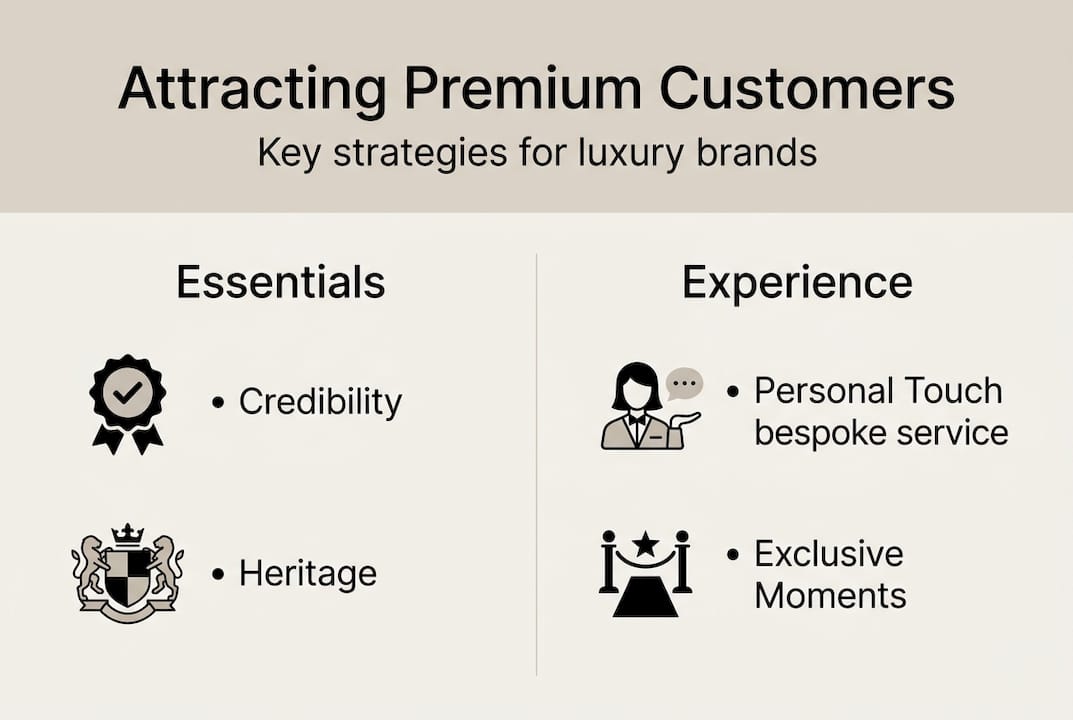
Here is a direct comparison of messaging approaches:
| Prestige-building messaging | Prestige-eroding messaging |
|---|---|
| “Handcrafted in Florence using 100% traceable cashmere” | “Sustainably inspired, crafted with care” |
| “Available by appointment only” | “Luxury accessible to everyone” |
| “Each piece is numbered and registered” | “Limited edition collection” (with no scarcity mechanism) |
| “Our atelier has produced for [specific heritage reference] since 1948” | “Rooted in tradition” |
As mass-marketization can dilute prestige, experiences and storytelling can broaden the base without sacrificing allure. This is a critical insight. You do not have to choose between growth and exclusivity if you architect your brand tiers carefully.
Here is a practical framework for building your prestige narrative:
- Anchor in a verifiable origin story. Where was it made, by whom, and why does that matter? Specificity builds trust.
- Define what you will never do. Exclusivity is partly defined by refusal. What lines will your brand not cross?
- Use creative assets as proof, not decoration. Packaging, video, and editorial content should reinforce claims, not just look beautiful.
- Layer in ethical commitments with receipts. Link to certifications, partner organizations, or impact reports.
- Guard your language. Every word in your brand vocabulary should be intentional. Review exclusivity in branding principles regularly to ensure your language stays precise.
“The brands that win premium customers in 2026 are not the loudest. They are the most believable.”
For practical inspiration, studying examples of premium branding across sectors reveals a consistent pattern: the brands with the strongest prestige narratives make specific, falsifiable claims. They do not hide behind aesthetics. And expert insights on luxury brand narrative confirm that emotional resonance follows credibility, not the other way around.
Personalize the experience: High-touch and high-tech approaches
A compelling narrative creates initial desire. But desire converts to loyalty only when the experience matches the promise. This is where the intersection of technology and human service becomes your competitive advantage.
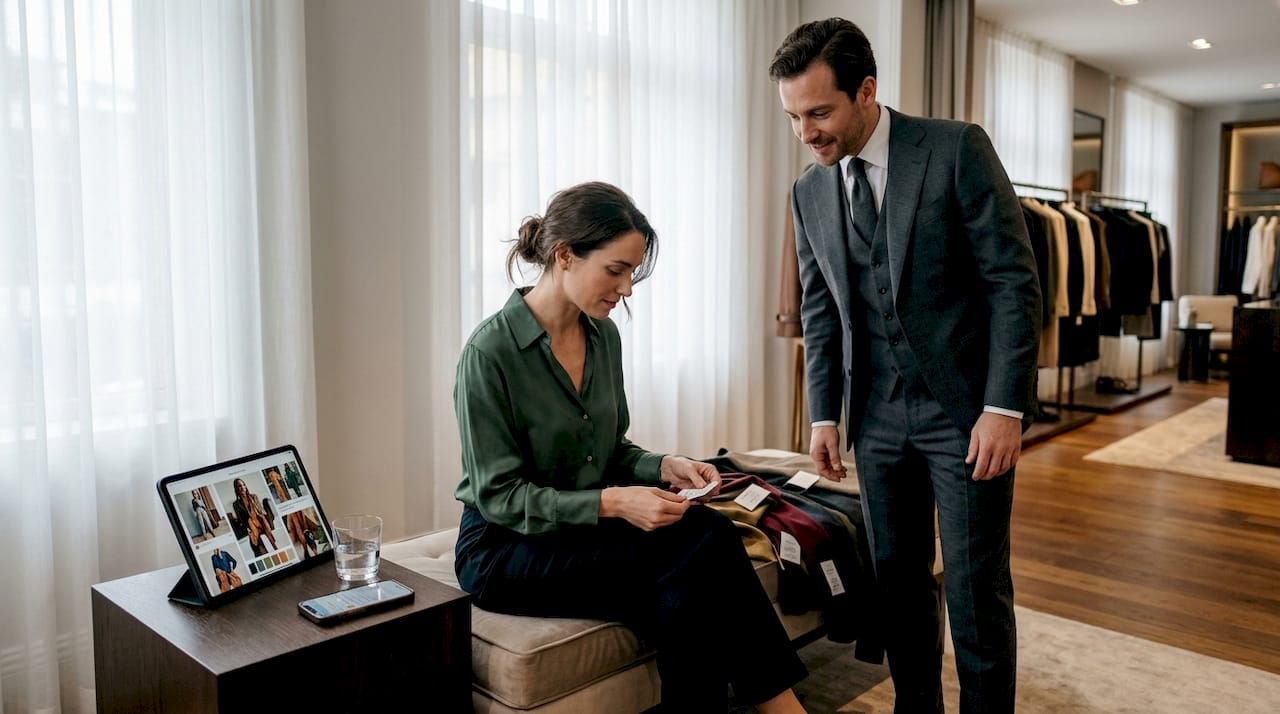
AI-driven personalization has matured significantly. Today’s CRM platforms and recommendation engines can identify purchase intent signals, surface relevant products before a client even searches, and trigger personalized outreach at exactly the right moment. Used well, digital innovation in luxury allows you to scale relevance without sacrificing the feeling of individual attention.
Here is how to structure your personalization architecture:
- Tier 1 (broad premium segment): AI-powered email and content personalization based on browsing behavior, purchase history, and declared preferences.
- Tier 2 (high-value clients): Hybrid touchpoints combining digital invitations to exclusive in-store previews, curated product recommendations from a real advisor, and follow-up calls after significant purchases.
- Tier 3 (UHNWIs, top 2%): Fully human-concierge service. Dedicated account managers, bespoke appointments, and proactive outreach based on life events and preferences stored in your CRM.
AI enables scalable personalization, but UHNWIs still require bespoke, human-driven service. Automation should be invisible infrastructure, not the face of your brand at the highest tier.
The advantages of experiential branding in luxury are well documented: clients who experience a brand in a curated, personal setting spend more and refer more. Invitation-only previews, private studio visits, and one-to-one styling sessions are not just nice gestures. They are high-ROI retention tools.
Pro Tip: Use AI for onboarding and profiling to understand a new client’s preferences quickly. But flag your top 2% for human-concierge attention from the first significant interaction. The cost of that attention is a fraction of the lifetime value it protects.
Activating acquisition: Channels, moments, and retention signals
With your personalization infrastructure in place, the focus shifts to reaching the right people and keeping them. This is where many luxury brands make their most expensive mistakes, often by chasing volume metrics or resorting to discounting when growth slows.
Here is a channel-by-channel activation framework for premium segments:
- Curated influencer partnerships: Work with voices who have genuine authority in your niche, not just follower counts. A respected editor or collector with 40,000 followers often converts better than a celebrity with 4 million.
- Invitation-only virtual events: Private digital experiences (brand archives tours, designer Q&As, early collection previews) signal exclusivity and generate word-of-mouth among exactly the right circles.
- High-touch retail experiences: Physical spaces should feel like private clubs, not stores. Appointment-only access, personalized greetings, and curated environments reinforce premium positioning.
- Owned content channels: Long-form editorial, documentary-style video, and behind-the-scenes access build the narrative depth that premium buyers crave.
- Referral and clienteling programs: Your best clients are your best acquisition channel. Structured referral programs with meaningful, non-monetary rewards (early access, bespoke experiences) outperform paid acquisition for UHNWI segments.
The numbers make the urgency clear. The luxury customer base has shrunk by 50 million since 2022, making smart, precise activation more critical than broad reach campaigns. And discounting erodes luxury margins and perception. Sustainability and clienteling drive long-term retention far more effectively than promotional pricing ever could.
For digital channel strategy, optimized social media for luxury requires a different approach than mass-market brands. Scarcity of content, precision of targeting, and quality of creative all matter more than posting frequency. And integrating sustainability in luxury into your retention strategy is no longer optional. It is a core loyalty driver for the segments that will define the next decade of the market. Ethical sourcing research consistently confirms this shift in purchasing motivation.
A fresh take: Why attracting premium customers is about substance, not flash
Here is the uncomfortable truth most luxury consultants will not tell you: the biggest threat to premium customer acquisition is not your competitors. It is your own performative marketing.
Overproduced campaigns with vague “eco” messaging, generic aspirational imagery, and influencer partnerships that feel transactional do not just fail to attract premium buyers. They actively repel them. Modern UHNWIs and younger premium segments have developed a sharp radar for brand theater. They can tell the difference between a brand that lives its values and one that merely advertises them.
The brands that consistently win and keep top-tier clients share one quality: they build on what customers can verify. Sourcing documentation. Real exclusivity mechanisms. Advisors who actually know their clients’ preferences. Ethical sourcing is now the top prestige driver for Gen Z premium buyers, and verifiable impact matters more than polished claims.
The mindset shift required here is significant. Stop asking “how do we look more premium?” and start asking “what can we prove?” That reframe changes everything from your supply chain investments to your content strategy. And it is the foundation on which lasting brand value is built. Integrating the role of sustainability in luxury into your core brand identity, not just your marketing, is what separates brands that endure from those that fade.
Unlock your brand’s premium potential with expert guidance
Executing these strategies at the level premium customers expect requires more than a good brief. It requires a deep understanding of luxury consumer psychology, precise segmentation, and the ability to translate brand values into experiences that actually convert.
Corrado Manenti’s consulting practice helps luxury and fashion brands move from strategy to execution across every dimension of premium customer acquisition. From building your fashion brand growth tactics to working through a detailed luxury branding checklist, the frameworks are built for brands that compete at the top of the market. If you want to align your approach with data-driven insights and start analyzing buyer behavior with real precision, this is where that work begins. The premium market is more demanding than ever. The brands that invest in substance over spectacle will own it.
Frequently asked questions
What defines a premium customer in luxury fashion?
A premium customer prioritizes exclusivity, verified quality, and brand heritage, and increasingly makes purchasing decisions based on proven ethical practices rather than aspirational imagery alone.
Why is sustainability so important for attracting younger premium customers?
Gen Z and Millennials treat verifiable sustainable sourcing as a non-negotiable purchase criterion, and ethical sourcing is now the top driver of luxury buying decisions in these segments.
Should luxury brands use discounts or special offers to attract premium clients?
Discounting signals desperation and erodes both margins and prestige. High-value clients respond to exclusivity, curated experiences, and personal connection, not price reductions.
How should brands balance AI and human touch in premium customer experiences?
AI handles onboarding, profiling, and scalable personalization effectively, but UHNWIs expect human-driven white-glove service for any interaction that matters to their loyalty.
Recommended
- Optimized Social Media for Luxury Cars: A Step-by-Step Guide – Corrado Manenti
- Blog – Corrado Manenti
- 10 Luxury Customer Retention Tips for Success – Corrado Manenti
- How to Increase Customer Lifetime Value: 5 Proven Tactics – Reddog Consulting Group
- Nobu Hotel Certificate: Premium Corporate Recognition Guide