

Over 60 percent of American and European luxury consumers say emotional connection drives their brand loyalty. For marketing executives shaping established luxury fashion brands in Europe, understanding these psychological triggers is crucial when expectations are rising worldwide. This article offers practical strategies that combine exclusive experiences with deep psychological insights, helping your brand create authentic moments that truly resonate with today’s discerning clientele.
Table of Contents
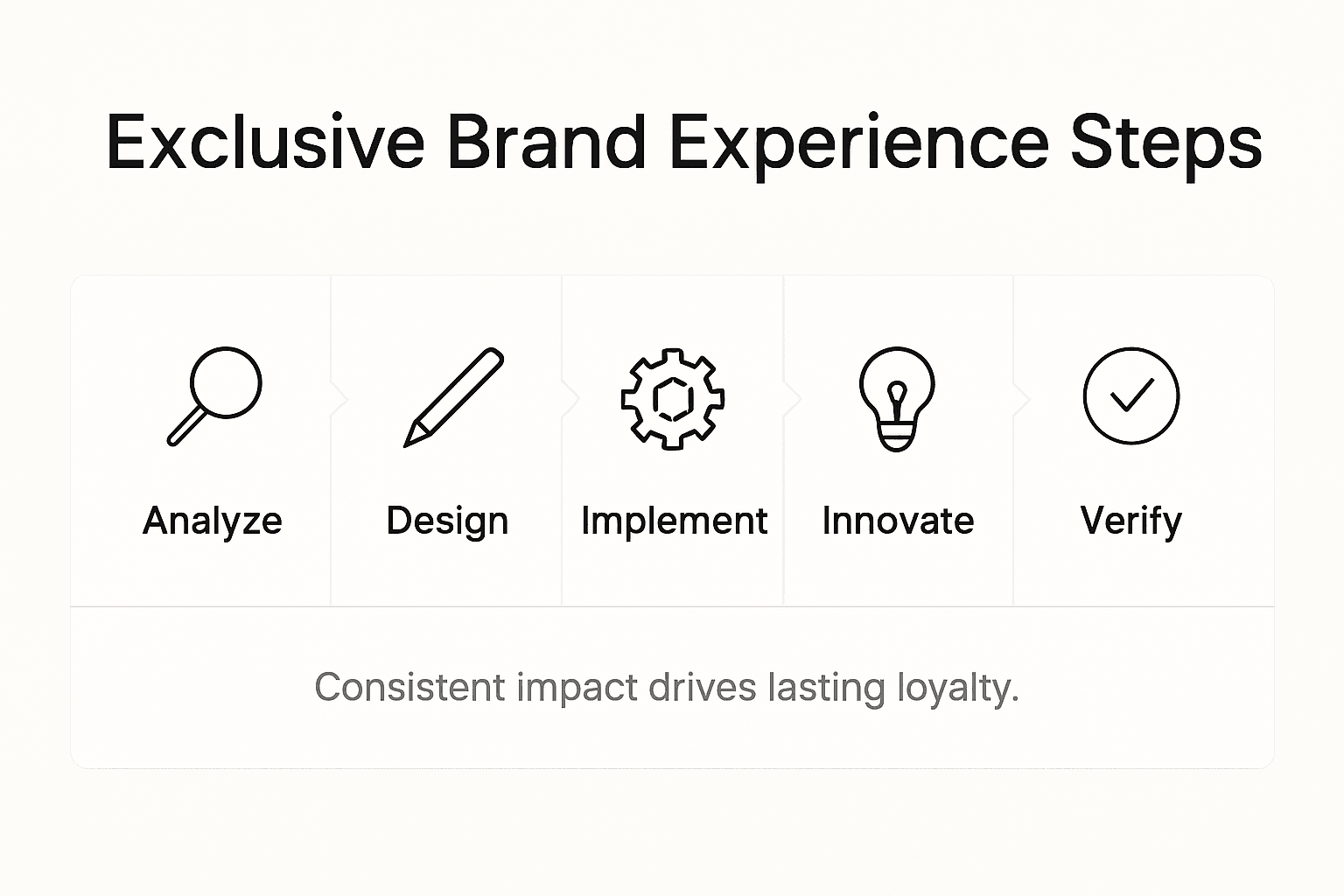
- Step 1: Analyze Customer Psychology And Expectations
- Step 2: Design Tailored Luxury Experience Concepts
- Step 3: Implement High-Touch Brand Touchpoints
- Step 4: Leverage Digital Innovation For Personalization
- Step 5: Verify Consistency And Emotional Impact
Quick Summary
| Key Insight | Explanation |
|---|---|
| 1. Understand Customer Psychology | Analyzing emotional connections helps brands connect with luxury consumers effectively. |
| 2. Design Tailored Luxury Experiences | Crafting multilayered experiences fosters deeper brand connections and customer satisfaction. |
| 3. Implement High-Touch Touchpoints | Strategic, meaningful interactions create emotional resonance and enhance brand loyalty. |
| 4. Leverage Digital Innovation | Utilizing advanced personalization techniques improves consumer engagement and experiences. |
| 5. Verify Emotional Consistency | Regularly assess emotional impact across touchpoints to maintain authentic brand presence. |
Step 1: Analyze Customer Psychology and Expectations
Understanding luxury brand consumers requires a sophisticated approach to analyzing psychological motivations and expectations. The process begins with recognizing that customer perceptions are complex and deeply rooted in individual identity and emotional connections. Consumer psychological dynamics in brand interactions reveal intricate patterns of engagement that go far beyond simple transactional relationships.
To effectively analyze customer psychology, marketing professionals must map psychological constructs that influence purchasing behavior. These include brand categorization, emotional affect, symbolic representation, and personal attachment. Luxury brands specifically need to understand how their offerings connect with consumers psychological needs for status, self expression, and personal identity. Research demonstrates that consumers do not just purchase products they invest in experiences that reinforce their desired self image and social positioning.
Qualitative research methods such as in depth interviews, ethnographic studies, and psychological profiling can provide nuanced insights into customer expectations. By examining consumer narratives and emotional responses, brands can develop a multidimensional understanding of their target audience that transcends traditional demographic segmentation. Consumer brand psychology research emphasizes the critical role of authenticity and meaningful relationships in building consumer trust and loyalty.
Here’s a summary of psychological factors influencing luxury brand consumers:
| Psychological Factor | Impact on Consumer Behavior | Business Relevance |
|---|---|---|
| Status Aspiration | Drives desire for exclusive goods | Enhances brand prestige and appeal |
| Emotional Attachment | Fosters repeat purchases | Builds strong brand loyalty |
| Symbolic Representation | Aligns brand with personal values | Facilitates deeper emotional branding |
| Self-Expression | Motivates unique purchase decisions | Supports personalized marketing |
Pro Tip: Develop a psychological customer journey map that tracks emotional touchpoints and motivational triggers throughout the entire brand interaction experience.
Step 2: Design Tailored Luxury Experience Concepts
Designing exceptional luxury experiences requires a strategic approach that transcends traditional marketing techniques. Comprehensive luxury experience frameworks reveal six critical dimensions brands must consider authenticity, service quality, exclusivity, status symbolism, aesthetic refinement, and emotional escapism.

Successful luxury experience design demands a holistic understanding of consumer psychology and aspirational expectations. Marketing professionals must craft multilayered experiences that connect deeply with individual consumer identities. This means moving beyond product features to create immersive narratives that speak to personal desires and social positioning. Research on luxury brand experience design emphasizes creating emotionally resonant interactions that transform transactional moments into meaningful personal journeys.
To develop truly tailored luxury experiences, brands should implement a comprehensive research strategy that includes qualitative customer insights, psychological profiling, and ongoing engagement mapping. This approach allows for creating personalized touchpoints that feel simultaneously exclusive and intimately connected to individual consumer fantasies and self perception.
Pro Tip: Create a detailed emotional journey map that tracks client interactions across multiple sensory and psychological dimensions to uncover hidden opportunities for personalized luxury experiences.
The table below compares key components required for a successful luxury experience design:
| Component | Description | Role in Experience Creation |
|---|---|---|
| Authenticity | Genuine brand expressions | Builds trust and emotional connection |
| Exclusivity | Limited access or opportunities | Reinforces perceived brand value |
| Aesthetic Refinement | High attention to design details | Drives sensory and emotional appeal |
| Emotional Escapism | Provides immersive experiences | Elevates customer satisfaction |
Step 3: Implement High-Touch Brand Touchpoints
Implementing high-touch brand touchpoints requires a strategic approach that goes beyond traditional customer interactions. Research on brand touchpoint impact demonstrates that the quality of customer interactions matters significantly more than their frequency. Luxury brands must focus on creating meaningful emotional connections that resonate deeply with individual consumer expectations.
Strategic touchpoint management involves carefully categorizing and designing interactions across multiple channels. Customer journey touchpoint research reveals three critical touchpoint categories brands should consider brand-owned experiences, partner-managed interactions, and external influence points. This comprehensive approach allows marketing professionals to craft a holistic experience that feels personalized and seamlessly integrated across all potential consumer interaction moments.
To execute high-touch brand touchpoints effectively, brands must develop a nuanced understanding of their target audience’s psychological triggers and emotional expectations. This involves creating multilayered interaction strategies that combine digital precision with human warmth personalized communication channels, white glove service protocols, and carefully curated sensory experiences that transform ordinary interactions into extraordinary moments of connection.
Pro Tip: Map every potential customer interaction point and design a unique emotional signature that makes each touchpoint feel distinctly personal and memorable.
Step 4: Leverage Digital Innovation for Personalization
Leveraging digital innovation demands a sophisticated approach to transforming customer data into meaningful personalized experiences. Advanced AI personalization techniques demonstrate how machine learning and predictive analytics can revolutionize brand interactions by creating hyper targeted consumer experiences that feel uniquely crafted for individual preferences.
Successful digital personalization requires brands to integrate intelligent technologies that balance technological precision with human emotional intelligence. AI driven marketing strategies reveal that effective personalization goes beyond algorithmic recommendations by understanding deeper psychological motivations. Marketing professionals must develop comprehensive data management strategies that capture nuanced consumer insights while maintaining strict privacy standards and creating authentic connections.
Implementing cutting edge personalization technologies involves developing multilayered digital ecosystems that adapt in real time to individual consumer behaviors. This means creating intelligent platforms that can anticipate customer needs predict potential interests and deliver seamlessly personalized interactions across multiple digital touchpoints. Brands must invest in advanced machine learning models that can interpret complex behavioral patterns and translate them into meaningful personalized experiences.
Pro Tip: Design your digital personalization strategy with a human first approach prioritizing emotional resonance and privacy alongside technological capabilities.
Step 5: Verify Consistency and Emotional Impact
Verifying the emotional consistency of brand experiences requires a systematic approach that goes beyond traditional performance metrics. Emotional branding communication models demonstrate how marketing frequency and emotional intensity directly influence consumer perceptions and brand resonance.
Brands must develop sophisticated evaluation frameworks that capture the nuanced emotional responses generated across different touchpoints. Emotional brand attachment research reveals that consistent emotional experiences are critical in building long term brand loyalty. This means creating comprehensive measurement tools that assess not just quantitative performance but the qualitative emotional engagement generated through brand interactions.
The verification process involves multi dimensional analysis that examines emotional consistency across different communication channels customer segments and brand experiences. Marketing professionals should implement robust feedback mechanisms that capture emotional responses through advanced sentiment analysis psychological profiling and real time emotional tracking technologies. This holistic approach ensures that the brand maintains an authentic and emotionally resonant presence that adapts dynamically to changing consumer expectations.
Pro Tip: Develop a comprehensive emotional impact scorecard that tracks both quantitative metrics and qualitative emotional engagement across all brand interactions.
Elevate Your Luxury Brand with Psychology-Driven Strategies
Creating exclusive brand experiences that leave a lasting impact means understanding the deep psychological triggers that drive consumer behavior. If you are searching for ways to deliver emotional escapism and authentic connections that resonate with your audience, it is crucial to address the challenges of status aspiration, emotional attachment, and personalized touchpoints as highlighted in the article. These are the core areas where many luxury and fashion brands seek expert guidance to transform ordinary interactions into memorable journeys.
Discover how Corrado Manenti’s unique blend of psychology and marketing expertise can help you design tailored, high-touch brand experiences that speak directly to your consumer’s hearts. From Marketing Fashion – Corrado Manenti strategies to elevating your own Personal Branding – Corrado Manenti, you gain an edge with customized solutions crafted for the luxury sector. Take the next step to captivate your audience through emotionally resonant campaigns and innovative digital personalization by visiting https://corradomanenti.it today.
Unlock the full potential of your brand with expert consultancy designed to create meaningful and exclusive luxury experiences that last.
Frequently Asked Questions
How can I analyze customer psychology for luxury branding?
Understanding customer psychology involves mapping psychological factors such as emotional attachment and status aspirations that influence purchasing decisions. Conduct in-depth interviews and qualitative studies to collect insights and create a detailed customer journey map that highlights emotional touchpoints.
What are key components of designing tailored luxury experiences?
Key components include authenticity, exclusivity, and aesthetic refinement, which help create an emotionally resonant experience. Focus on crafting multilayered narratives that align with consumer identities, ensuring each interaction feels unique and personal.
How can I implement high-touch brand touchpoints effectively?
Implementing high-touch touchpoints means creating meaningful, emotional connections rather than just frequent interactions. Categorize interactions into brand-owned, partner-managed, and external touchpoints to develop a cohesive and personalized brand experience across all channels.
What digital innovations can enhance personalization in luxury branding?
Leveraging digital innovations such as machine learning and predictive analytics can help create hyper-targeted experiences for consumers. Invest in intelligent platforms that adapt to individual behaviors and preferences to ensure the personalization feels both meaningful and authentic.
How do I verify emotional consistency in brand experiences?
To verify emotional consistency, develop a comprehensive evaluation framework that assesses emotional responses across various touchpoints. Implement feedback mechanisms like sentiment analysis to measure emotional engagement and adapt strategies based on real-time data.
Recommended
- 7 Examples of Premium Branding to Elevate Your Luxury Business – Corrado Manenti
- How to Design Experiential Campaigns for Luxury Brands – Corrado Manenti
- Blog – Corrado Manenti
- 7 Innovative Luxury Loyalty Program Ideas for Brands – Corrado Manenti
- Digital Branding – Why Values Matter Online – Marzipan
- What is Brand Identity? Understanding Its Significance