Every luxury brand faces the challenge of engaging high-net-worth clients on a truly personal level. Traditional demographic data often falls short, leaving marketing executives searching for deeper insights that drive genuine loyalty. By focusing on customer psychographics and leveraging advanced segmentation strategies, brands can tap into the complex motivations and personalities of their global clientele. This article outlines actionable approaches designed to help luxury brands create distinct, emotionally resonant experiences that set them apart in a highly competitive market.
Table of Contents
- Step 1: Analyze Customer Psychographics For Luxury Segmentation
- Step 2: Design Tailored Brand Experiences For Individual Clients
- Step 3: Implement Advanced Digital Personalization Techniques
- Step 4: Integrate Multi-Channel Communication To Ensure Consistency
- Step 5: Verify Personalization Impact And Optimize Campaigns
Quick Summary
| Key Point | Explanation |
|---|---|
| 1. Use Psychographic Segmentation | Understand customers’ motivations and values to create emotionally resonant marketing messages. |
| 2. Tailor Brand Experiences | Design unique customer interactions that reflect individual preferences and expectations for deeper engagement. |
| 3. Implement Digital Personalization | Utilize AI technologies to create real-time, hyper-personalized digital experiences that meet specific customer needs. |
| 4. Ensure Multi-Channel Consistency | Develop a unified communication strategy to maintain brand integrity across various interaction points. |
| 5. Verify and Optimize Personalization | Regularly measure personalization impact to fine-tune strategies and improve campaign effectiveness over time. |
Step 1: Analyze customer psychographics for luxury segmentation
Understanding customer psychographics goes far beyond traditional demographic data. Luxury brands need a sophisticated approach to truly comprehend their high-value customers’ underlying motivations, attitudes, and decision-making patterns.
To effectively segment luxury consumers, brands must employ advanced psychological profiling techniques. Psychographic segmentation strategies reveal nuanced consumer insights that transcend basic demographic information. This approach involves analyzing complex psychological factors such as:
- Risk tolerance levels
- Personal values and beliefs
- Emotional decision-making triggers
- Cognitive processing styles
- Lifestyle aspirations
- Motivational drivers
Research demonstrates that by leveraging text classification methods and Self-Determination Theory, luxury brands can develop highly precise consumer profiles. Automated consumer segmentation techniques enable marketers to capture intricate personality nuances that traditional research methods might overlook.
The goal is to create targeted marketing strategies that speak directly to specific psychological profiles. By understanding the underlying motivations of different consumer segments, luxury brands can craft personalized experiences that resonate on a deeper emotional level.
Pro tip: Invest in advanced psychological research tools and collaborate with consumer behavior experts to develop truly insightful psychographic segmentation models.
Step 2: Design tailored brand experiences for individual clients
Creating personalized brand experiences requires a sophisticated approach that goes beyond traditional marketing strategies. Luxury brands must develop intricate methods to craft unique interactions that resonate deeply with individual client preferences and expectations.
Brand experience design involves strategically mapping out every potential client touchpoint to ensure a cohesive and memorable journey. This process requires understanding each client’s unique psychological profile and creating immersive experiences that feel exclusively crafted for them.
Key elements of designing tailored brand experiences include:
- Mapping individual client journey touchpoints
- Analyzing personal preferences and lifestyle indicators
- Creating customized interaction protocols
- Developing adaptive communication strategies
- Implementing personalized service frameworks
- Integrating technology for seamless personalization
Successful luxury brands recognize that true personalization extends far beyond superficial customization. It involves developing a deep understanding of each client’s emotional landscape, aspirational desires, and subtle behavioral cues.
The ultimate goal is to create an experience so precisely tailored that clients feel the brand understands them at an almost intuitive level. This requires continuous refinement of interaction strategies, leveraging advanced data analytics and psychological insights to anticipate and exceed client expectations.
Pro tip: Invest in advanced customer relationship management systems that integrate psychological profiling with real-time personalization capabilities to create truly bespoke brand experiences.
Step 3: Implement advanced digital personalization techniques
Transforming digital experiences for luxury brands requires cutting-edge personalization strategies that go beyond traditional marketing approaches. Premium brands must leverage sophisticated technologies to create truly individualized customer interactions.

AI-enabled personalization technologies are revolutionizing how brands understand and engage with their high-value clients. By employing machine learning and advanced analytics, luxury brands can develop hyper-personalized digital experiences that anticipate and exceed customer expectations.
Key components of advanced digital personalization include:
- Real-time content adaptation
- Machine learning recommendation engines
- Predictive user behavior analytics
- Dynamic user experience mapping
- Continuous data processing algorithms
- Individualized interaction frameworks
Successful implementation requires a multifaceted approach that integrates several technological strategies. Brands must develop sophisticated systems that can:
- Collect granular user data seamlessly
- Process information through advanced algorithms
- Generate personalized content instantaneously
- Adapt interactions in real-time
Personalization is no longer about simple recommendations – it’s about creating a unique digital ecosystem that feels explicitly designed for each individual client.
The ultimate objective is to create a digital experience so intuitive and responsive that clients feel the brand understands their deepest preferences and anticipates their unspoken desires.
Pro tip: Invest in machine learning platforms that can integrate multiple data sources and provide real-time personalization capabilities across different digital touchpoints.
Step 4: Integrate multi-channel communication to ensure consistency
Luxury brands must develop a seamless communication strategy that delivers a unified brand experience across every possible interaction point. This requires sophisticated coordination and strategic planning to maintain brand integrity and client engagement.
Multi-channel communication integration represents a critical approach for luxury brands to create consistent and compelling customer interactions. By aligning messaging and communication channels, brands can generate a cohesive experience that reinforces their unique identity and values.
Key strategies for effective multi-channel communication include:
- Centralized brand messaging framework
- Consistent visual identity across platforms
- Synchronized communication protocols
- Real-time channel alignment
- Cross-platform data integration
- Unified customer experience design
Successful implementation requires brands to:
- Map all potential communication touchpoints
- Develop comprehensive communication guidelines
- Train staff on brand consistency principles
- Implement technology for seamless integration
Consistency is not about repeating the same message, but about maintaining a coherent brand narrative across different channels and interactions.
The ultimate objective is to create a fluid, interconnected communication ecosystem where each channel reinforces and amplifies the brand’s core message and emotional resonance.
Pro tip: Develop a centralized content management system that ensures real-time synchronization of brand messaging across all digital and physical communication channels.
Step 5: Verify personalization impact and optimize campaigns
Designing personalized marketing strategies requires more than intuition – it demands rigorous measurement and continuous optimization. Luxury brands must develop sophisticated frameworks to systematically evaluate the effectiveness of their personalization efforts.
Personalization as causal inference provides a scientific approach to understanding individual-level marketing impact. By treating personalization as a structured experimental process, brands can precisely measure the nuanced effects of their tailored strategies.
Key verification and optimization techniques include:
- Comprehensive performance metrics
- A/B testing across different segments
- Statistical significance analysis
- Granular conversion tracking
- Consumer response heterogeneity evaluation
- Continuous learning frameworks
Successful verification requires brands to:
- Establish clear performance benchmarks
- Design statistically robust experimental protocols
- Collect detailed interaction data
- Analyze consumer response variations
Impact verification is not about proving success, but understanding the complex dynamics of personalized marketing strategies.
The goal is to create an adaptive system that continuously learns from consumer interactions, refining personalization strategies with each campaign iteration.
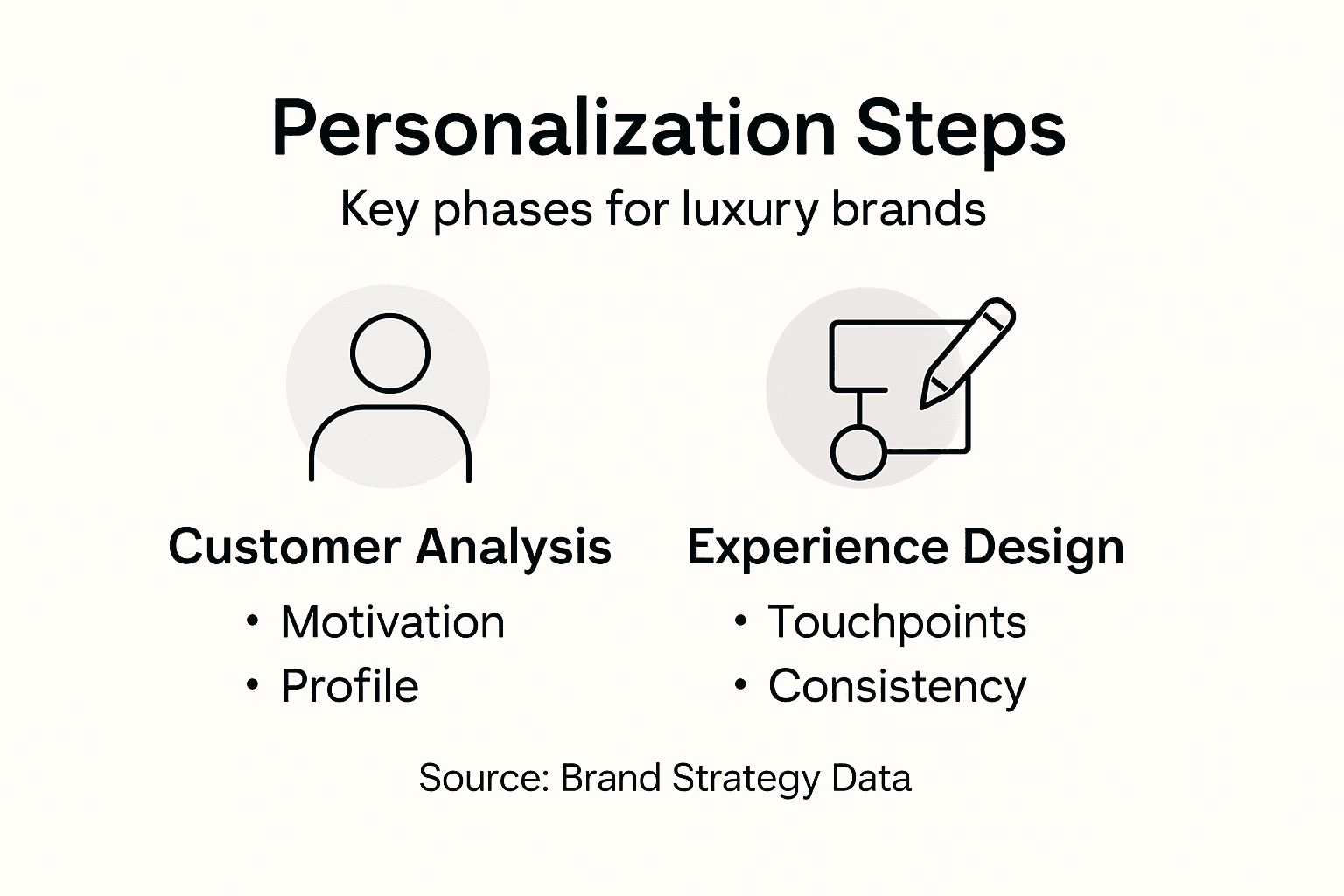
Here’s a comparison of key methods in luxury personalization and their distinct impacts:
| Personalization Method | Main Focus | Unique Impact |
|---|---|---|
| Psychographic Segmentation | Uncover motivations and values | Guides emotionally resonant messaging |
| Brand Experience Design | Create immersive interactions | Fosters strong emotional brand loyalty |
| Digital Personalization | Use AI and data analytics | Enables real-time, hyper-targeted experiences |
| Multi-Channel Integration | Align communication touchpoints | Ensures seamless, unified brand presence |
| Impact Verification | Measure effectiveness | Allows ongoing campaign optimization |
Pro tip: Develop a robust data governance framework that balances advanced personalization techniques with strict ethical guidelines and consumer privacy protections.
The following table summarizes the relationship between advanced tools and the business value they deliver:
| Tool or Platform | Business Value | Example Outcome |
|---|---|---|
| Psychological Profiling Systems | Segment high-value clients | More precise targeted campaigns |
| CRM with Personalization | Real-time tailored experiences | Increased long-term client retention |
| AI-Driven Algorithms | Predict consumer behavior | Enhanced conversion rates |
| Unified Content Management | Consistent brand messaging | Stronger brand recognition |
| Experimental Analytics Suite | Data-driven decision making | Improved campaign ROI |
Unlock the Power of Precision Personalization for Premium Brands
Personalization strategies for premium brands often face challenges like understanding deep consumer motivations and delivering seamless, hyper-targeted experiences that truly connect. This article highlights critical concepts such as psychographic segmentation, tailored brand experiences, advanced digital personalization, and multi-channel communication. If you are seeking to overcome the complex puzzle of creating emotionally resonant and consistent luxury marketing, you need expert guidance rooted in psychology and innovation.
Explore how Corrado Manenti’s unique approach to Marketing Moda and Personal Branding can elevate your luxury brand’s strategy.
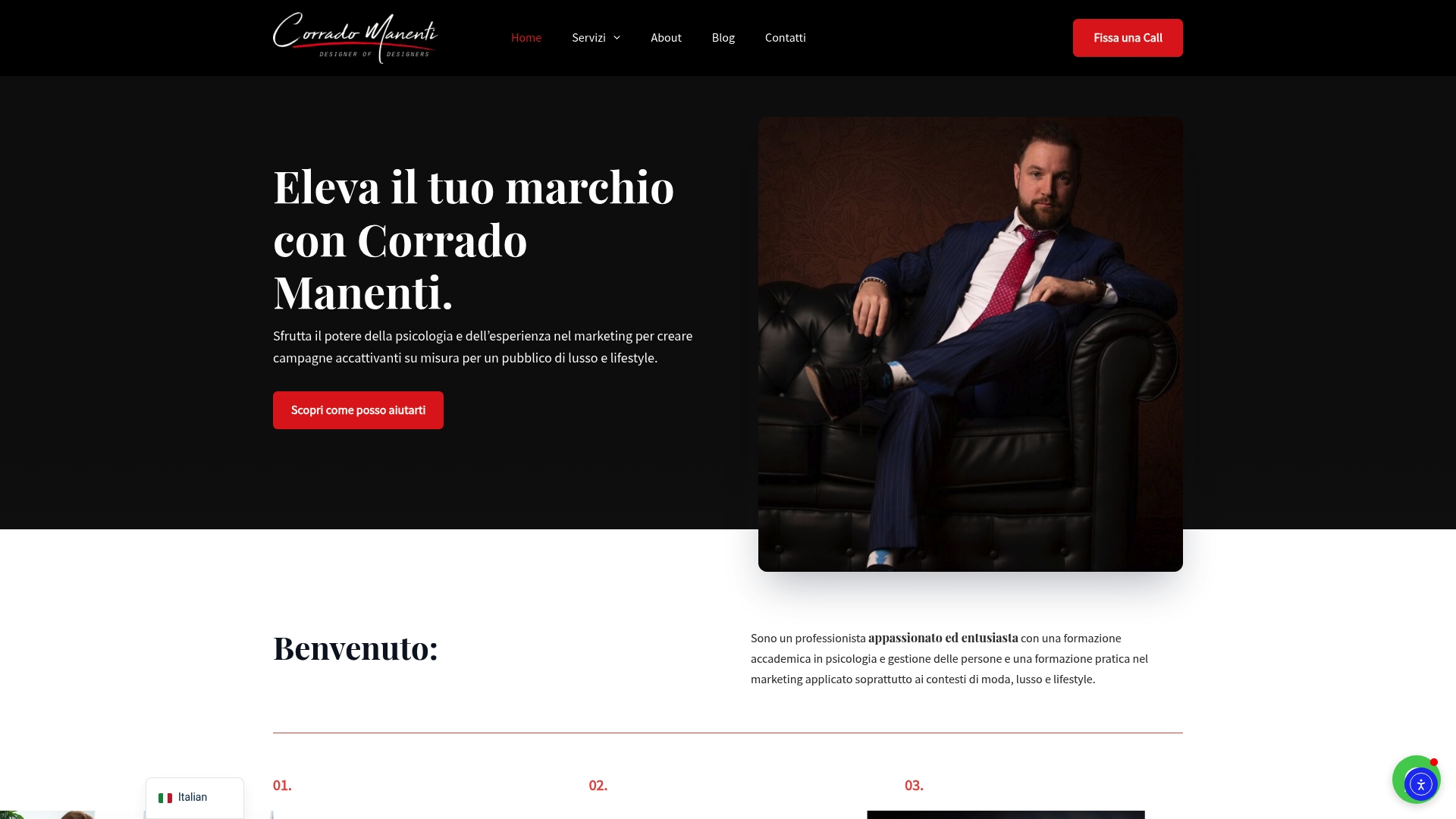
Take the next step now by partnering with Corrado Manenti to develop psychology-driven, detail-focused marketing strategies that transform your brand into an irresistible experience. Visit https://corradomanenti.it today and unlock the tools to create deeply personalized and consistently impactful luxury brand engagements.
Frequently Asked Questions
How can I analyze customer psychographics for luxury segmentation?
To analyze customer psychographics for luxury segmentation, focus on understanding motivations, attitudes, and lifestyle aspirations of high-value clients. Utilize advanced psychological profiling techniques to gather insights and create targeted marketing strategies that resonate with specific consumer segments.
What are the key elements in designing tailored brand experiences?
Key elements in designing tailored brand experiences include mapping client journey touchpoints, analyzing personal preferences, and creating customized interaction protocols. Start by collecting detailed data on individual clients’ preferences and expectations to ensure each experience aligns with their emotional needs.
How can I implement advanced digital personalization techniques in my brand?
To implement advanced digital personalization techniques, leverage AI-enabled tools for real-time content adaptation and user behavior analysis. Begin by integrating machine learning algorithms that can analyze granular user data to provide personalized experiences tailored to individual customers.
What strategies ensure consistency in multi-channel communication for luxury brands?
To ensure consistency in multi-channel communication, develop a centralized brand messaging framework and synchronize communication protocols across platforms. Map all communication touchpoints to maintain a coherent narrative and train staff on brand consistency principles to reinforce your brand identity.
How can I verify the impact of my personalization strategies?
To verify the impact of your personalization strategies, establish clear performance metrics and conduct A/B testing across different consumer segments. Collect detailed interaction data and analyze the results to adjust your approach continually, aiming for improved campaign effectiveness within each iteration.
Recommended
- 7 Examples of Premium Branding to Elevate Your Luxury Business – Corrado Manenti
- 7 Examples of Premium Branding to Elevate Your Luxury Business – Corrado Manenti
- Creating Premium Brand Identity: A Strategic Step-by-Step Guide – Corrado Manenti
- 7 Essential Branding Trends in 2025 for Luxury Leaders – Corrado Manenti
- Best Personalized Hair Care Kits – Expert Comparison 2025 | MyHair
- Premium Hair Extensions: Effortless British Style Upgrade