TL;DR:
- Successful SME luxury brands share founder-driven stories, sustainability, and operational control. They focus on high margins, emotional marketing, and building trust through authenticity and exclusivity. These strategies enable growth without sacrificing brand identity or overspending on customer acquisition.
Which SME luxury brands have actually succeeded?
The clearest examples of SME luxury brand success share three traits: a founder-driven origin story, a product built around genuine craft, and a business model that avoids burning cash to buy attention. Maison de Sabré launched with $40,000 in savings and now sells through Nordstrom, Bloomingdale’s, and Saks. Elvis & Kresse turned decommissioned fire hoses into award-winning accessories and donates 50% of profits to charity. Larroudé went from a $4,000 dining-room startup to a 550-person company in under five years. These are not flukes.
What separates these brands from legacy houses is not heritage. It is the willingness to build a new kind of luxury story, one grounded in sustainability, transparency, and emotional connection, particularly for millennial and Gen Z buyers who expect luxury to be joyful and fairly priced.
- Maison de Sabré: Bags priced $400–$800, roughly a quarter to a third of legacy brand prices, using comparable leather quality. US is now their largest market.
- Elvis & Kresse: Named Walpole Sustainable Luxury Brand of the Year in 2025, operating from a regenerative farm that reduced power consumption by 94.7%.
- Larroudé: Bootstrapped to nine-digit revenue and Footwear News Brand of the Year 2024.
- Jacquemus: Grew revenue roughly 24x in five years while retaining 98% ownership.
Table of Contents
- 8 in-depth stories of successful SME luxury brands
- What actually drives modern luxury SME success
- How psychology-driven marketing accelerates luxury SME growth
- Challenges SME luxury brands face and how to overcome them
- Key Takeaways
- Ready to apply these strategies to your brand?
8 in-depth stories of successful SME luxury brands
1. Maison de Sabré turns scraps into collectibles
Brothers Omar and Zane Sabré trained as dentists before pouring $40,000 into a leather goods brand. Their first product, a leather-wrapped iPhone case, generated $2 million in revenue in its first year. The real breakthrough came later: a charm line called Sabrémoji, made entirely from leather offcuts left over from bag production. Limited-edition drops sell out fast, and a recent Pokémon capsule timed to the franchise’s 30th anniversary sold out almost immediately. The brand’s newest bag, the Soft Trio crossbody, was designed specifically to display those charms.
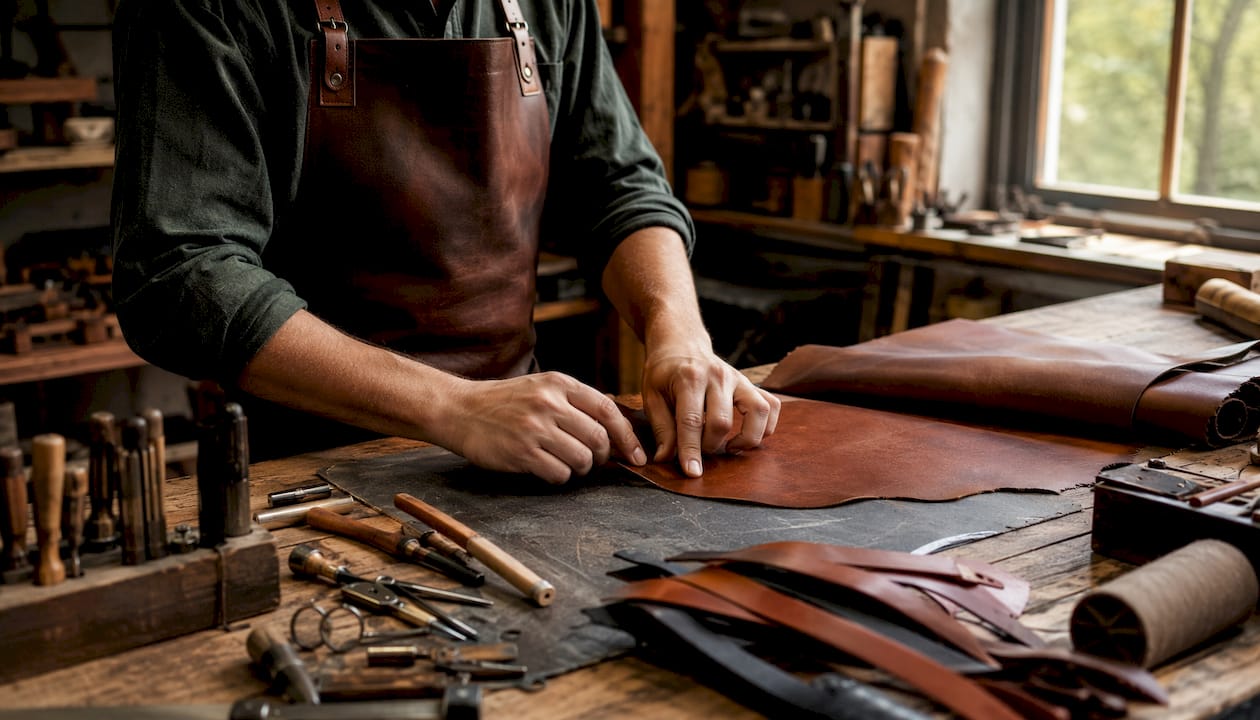
Their retail strategy is equally deliberate. Rather than opening showrooms and pitching buyers, they identify the top-performing luxury retailers globally and forge partnerships that go beyond a simple wholesale transaction. Bloomingdale’s started as an online listing and expanded to multiple physical locations. Every placement sits next to Hermès, Celine, or Gucci.
2. Larroudé builds its own factory
Marina and Ricardo Larroudé launched in 2020 with $4,000 and a Shopify site. When supply chain delays threatened their momentum, Ricardo ran the numbers and realized the cost of one large outsourced order was roughly equal to buying used manufacturing machines outright. They built their own factory in Brazil. As Ricardo put it, “I just buy a bunch of leather and I sell shoes.”
That vertical integration gave them the ability to replenish bestsellers within weeks and experiment with new designs on short notice. Their production model works like a pizzeria: keep the ingredients ready, make what customers actually order. Preorders give them demand data before a single unit is produced, which eliminates the costly overstocking that kills most fashion businesses. The result: nine-digit revenue and 550 employees in under five years.
3. Elvis & Kresse redefines what a luxury material can be
Founded in 2005 after a chance meeting with the London Fire Brigade, Elvis & Kresse discovered that decommissioned fire hoses were headed to landfill despite having years of life left. They built an entire luxury accessories line from those hoses, handcrafted to the highest standards, and committed to donating 50% of profits to the Fire Fighters Charity. Twenty years later, the brand operates from a regenerative farm with a straw bale workshop running on renewables. The 2025 Walpole Sustainable Luxury Brand of the Year award recognized not just the products but the entire business model.
4. Jacquemus: 98% ownership, half a billion euros
Simon Porte Jacquemus launched his label at 19 with no fashion degree, no investors, and no industry connections. He named it after his late mother. Revenue grew from €11.5 million in 2018 to an estimated €280 million in 2023, a roughly 24x increase, entirely self-funded. When a minority stakeholder relationship with Puig stopped working, he bought the stake back. When L’Oréal acquired 10% in February 2025, it came with a specific beauty partnership and zero governance control. His 25% operating margin in 2021 is exceptional for an independent fashion brand at that scale.
5. Fisher’s Finery scales to eight figures with seven employees
Fisher’s Finery built a luxury catalog of 3,100 products with a team of seven, based in Plantsville, Connecticut. The key was Fulfillment by Amazon (FBA), which provided the Prime badge and more than doubled conversion rates. The brand achieved 988% growth in Amazon sales since launch, with roughly 70% of overall revenue flowing through Amazon. When 500 counterfeit listings appeared on their cashmere collection, Amazon’s Brand Registry program shut them down. The brand also donates 20% of revenue from its organic silk pillowcase collection to the Hope for Depression Research Foundation.
6. French Essence builds a fragrance empire without outside funding
French Essence reached ₹150 Cr+ in luxury fragrance sales without a single round of external investment. Their approach: own the formulation layer entirely in-house, then distribute across every consumer touchpoint simultaneously. Native web channels, major e-commerce marketplaces, quick-commerce networks, and offline general trade all run in parallel. Founder Nidhi Gupta describes the philosophy directly: “By retaining total ownership over our formulations, supply chain architecture, and omnichannel funnels, we bypass the need for external capital injections.” Their crown jewel products drive a 40%+ customer repeat purchase rate.
7. SAUVEREIGN earns the Academy Awards red carpet
SAUVEREIGN, founded in Hong Kong in 2020 by artist Bertrand Mak, creates transformable art objects designed to be worn. The house works with master craftsmen across multiple disciplines, including a collaboration with grandmaster watchmaker Kari Voutilainen on the HS14 fine jewelry collection. Cillian Murphy wore a bespoke SAUVEREIGN brooch at the 96th Academy Awards. Kieran Culkin wore the Untitled 21 Brooch at the 98th. That level of placement is not bought through advertising. It comes from a product so singular that stylists seek it out.
8. Zanta Adeyde and AKINNA: craft-first, purpose-built
Zanta Adeyde, founded in Kenya in 2015, transforms discarded horn, leather, and bone from a Nairobi abattoir into premium handbags and gemstone jewelry. The brand works with women and youth artisans from Kibera and has shown at Milan, London, Paris, and the US. AKINNA, co-founded by Annika Saraf and Sanchit Goyal, produces each bag in India over 28 hours of handcraft using LWG-certified full-grain leather. Both brands prove that premium branding built on ethical production and deep cultural roots can compete on the global luxury stage.
What actually drives modern luxury SME success
The definition of luxury is shifting. Younger buyers still want beauty, durability, and craftsmanship, but they also want to know where the material came from and why the founder built the brand. Transparency is no longer a differentiator; it is a baseline expectation.
The financial logic behind SME luxury success is equally clear. High-margin unit economics and controlled distribution outperform high-burn customer acquisition every time in this category. Brands that own their supply chain, limit equity dilution, and build community around a genuine story tend to reach profitability faster and hold it longer.
Key pillars across every successful case:
- Sustainability as product design: Elvis & Kresse and Maison de Sabré treat waste materials as a creative constraint, not a compromise.
- Founder narrative as brand equity: The Sabré brothers’ dentistry background, Jacquemus naming his brand after his mother, and Larroudé’s pandemic launch story all give buyers a reason to care beyond the product.
- Operational control: Vertical integration, as Larroudé demonstrated, cuts lead times, protects quality, and eliminates the inventory risk that destroys margins.
- Selective retail placement: Maison de Sabré’s insistence on sitting next to Hermès and Gucci is a positioning decision, not just a distribution one.
How psychology-driven marketing accelerates luxury SME growth
Corradomanenti, a luxury marketing consultant with a background in psychology and fashion, works specifically at the intersection of consumer behavior and brand identity. The core insight is that luxury buyers do not purchase products. They purchase feelings, specifically the feeling of belonging to a world they find meaningful.
That principle shows up in every case study above. Maison de Sabré’s charm line creates a collector’s ritual. Fisher’s Finery’s charitable giving ties a purchase to personal values. SAUVEREIGN’s Academy Awards placements signal belonging to a world of serious artistic achievement. None of these are accidental. They are the result of understanding buyer psychology in luxury before designing the product or the campaign.
Practical approaches Corradomanenti applies with luxury SME clients:
- Exclusivity through scarcity design: Limited-edition drops tied to genuine material constraints, not artificial countdown timers.
- Founder-led content: The founder’s voice, story, and values communicated directly, because storytelling in luxury builds trust faster than any campaign.
- Immersive retail moments: Pop-ups and activations placed deliberately next to legacy brands to borrow positioning by proximity.
- Cinematic brand content: Visual storytelling that communicates craft and emotion before a buyer reads a single word of copy.
Pro Tip: Before you spend on paid media, map the three emotional states your buyer wants to feel when carrying or wearing your product. Every piece of content, every retail placement, and every partnership decision should reinforce those three states.
Challenges SME luxury brands face and how to overcome them
Funding is the first pressure point. Most luxury SMEs face a choice between taking outside capital and losing brand control, or bootstrapping and growing more slowly. The Jacquemus model, buying back stakes that no longer serve the brand and limiting investors to minority positions with no governance rights, shows that the second path is viable if margins are strong from the start.
Inventory management is the second. Fashion is perishable, as Ricardo Larroudé puts it, and overstocking at luxury price points destroys cash flow fast. Direct-to-demand production, where you manufacture only what customers have already ordered, solves this but requires owning or closely controlling your manufacturing.
Quality control at scale is the third challenge, and it is where many SMEs stumble when they outsource production to cut costs. Both AKINNA and Larroudé resolved this by keeping production in-house or in tightly managed facilities, accepting slower growth in exchange for consistent product quality.
Finally, distribution pressure from conglomerates is real. LVMH and Kering control shelf space, editorial relationships, and department store real estate. The SME response is to go direct first, build a loyal customer base, and then negotiate retail partnerships from a position of demonstrated demand rather than hope. Maison de Sabré’s Bloomingdale’s relationship started online and earned its way into physical stores.
Key Takeaways
SME luxury brands that succeed combine founder-driven storytelling, operational control, and high-margin economics to build profitable businesses without sacrificing brand identity.
| Point | Details |
|---|---|
| Sustainability drives product design | Brands like Elvis & Kresse and Maison de Sabré use waste materials as a creative and commercial advantage. |
| Operational control protects margins | Vertical integration, as Larroudé proved, eliminates inventory risk and cuts lead times dramatically. |
| Limit equity dilution early | Jacquemus retained 98% ownership through €280 million in revenue by buying back stakes that no longer served the brand. |
| Psychology before promotion | Mapping buyer emotional states before spending on media produces stronger loyalty and higher repeat rates. |
| Selective retail placement signals positioning | Sitting next to Hermès or Gucci is a brand decision, not just a logistics one. |
Ready to apply these strategies to your brand?
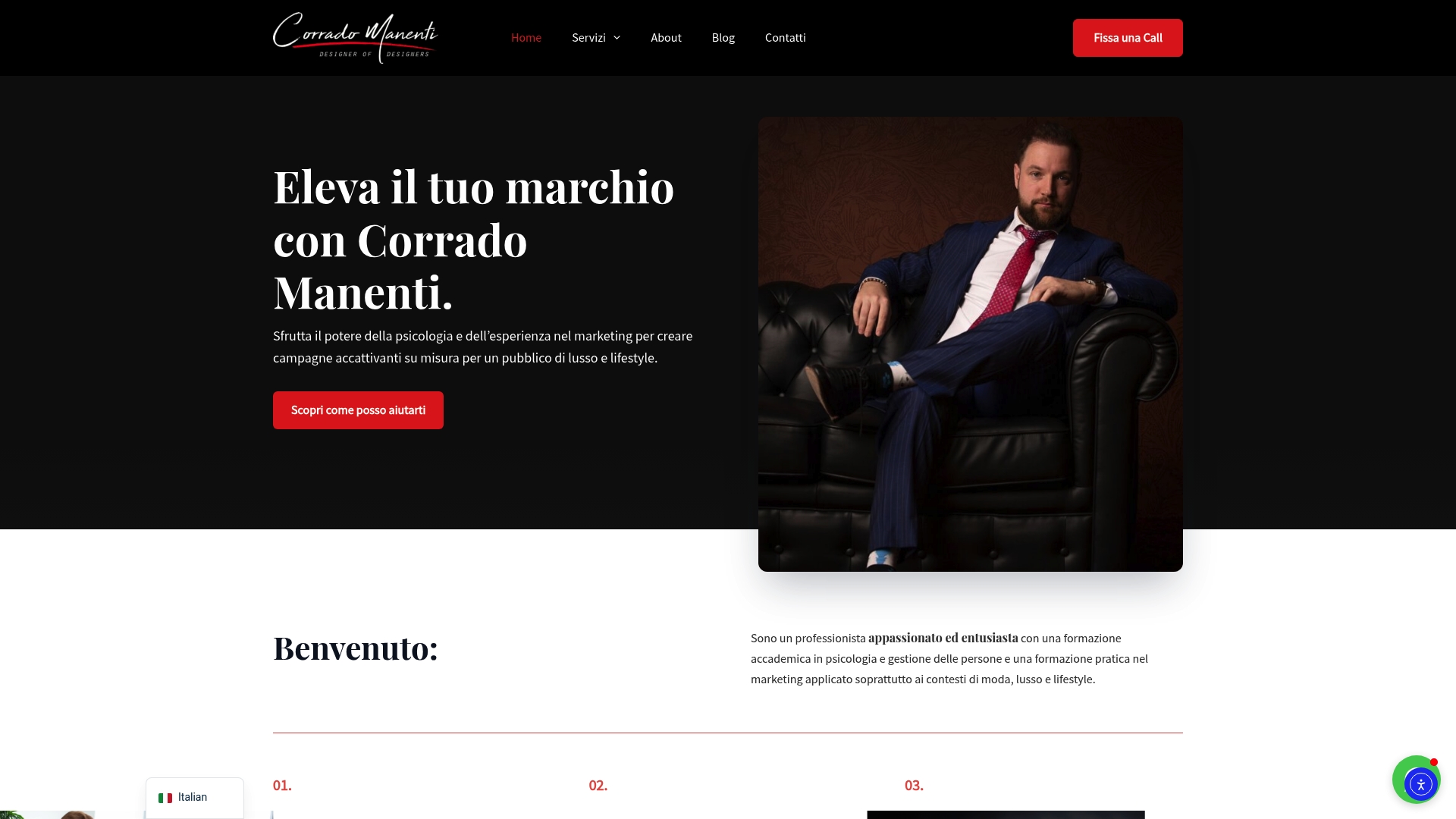
The brands above did not succeed by copying legacy houses. They succeeded by understanding their buyer more deeply than anyone else in their category. Corradomanenti works with luxury SMEs to build exactly that kind of clarity, combining psychology, brand strategy, and deep luxury market knowledge into a growth approach that protects your identity while expanding your reach. Explore luxury brand growth tactics built specifically for founders who refuse to compromise on what their brand stands for.