

TL;DR:
- Effective fashion storytelling links brand origins, values, and heritage with consumer emotion to drive purchase behavior. Successful examples emphasize specificity, world-building, community co-creation, and embedding narratives across all customer touchpoints. Brands that treat storytelling as an omnipresent infrastructure outperform those relying solely on campaigns.
Fashion brand storytelling is defined as the strategic use of narrative to connect a brand’s identity, values, and heritage with consumer emotion and purchase behavior. The industry term is brand narrative, and the most effective practitioners treat it as infrastructure, not decoration. According to McKinsey, 67% of consumers cite a brand’s origin story as a critical deciding factor in their first purchase. That number tells you narrative is not a soft skill. It is a conversion tool. The fashion storytelling examples in this article show exactly how brands like Patagonia, Coach, Dior, and Burberry turn story into sales.
1. what makes fashion storytelling examples work
The most effective fashion brand storytelling shares one structural trait: specificity. Generic claims like “crafted with passion” are ignored by consumers and AI systems alike. Precise, sensory heritage details create memorable narratives that travel consistently across campaigns. Think “woven on 19th-century Jacquard looms in Lyon” rather than “artisan craftsmanship.”
Five tactics separate high-performing brand narratives from forgettable ones:
- Anchor the story in a sensory origin detail. A specific place, person, or material constraint gives the narrative a physical reality consumers can picture.
- Build a world, not just a product. Brands that build worlds rather than promote items create immersive narratives that deepen engagement over time.
- Cast the customer or creator as protagonist. The brand is the guide. The customer is the hero. This shift changes the emotional register of every campaign.
- Treat your About page like an editorial feature. Real quotes and imagery on About pages increase consumer trust and narrative leverage far beyond a standard company bio.
- Co-create with communities. Campaigns built with real people carry authenticity that no production budget can replicate.
Pro Tip: Before writing any campaign brief, identify one sensory detail from your brand’s origin that no competitor can claim. That detail becomes your narrative anchor across every format.
2. patagonia: QR codes as narrative packaging
Patagonia’s spring 2026 apparel line embedded QR codes directly into product packaging, each linking to a short film about the specific garment’s supply chain story. Customers who scanned those codes showed a 17% lift in post-purchase email engagement. That lift proves the story extended the relationship beyond the transaction.
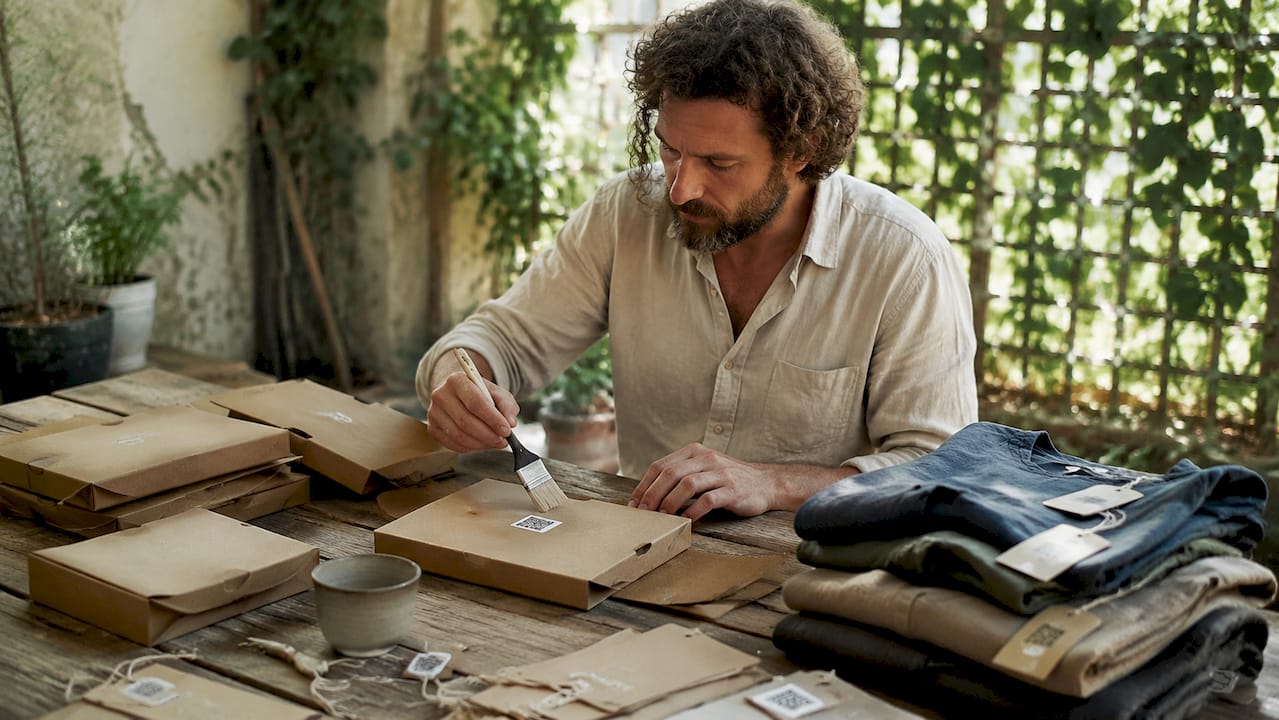
The packaging itself was minimal. The narrative did the heavy lifting. Patagonia positioned each garment as a chapter in a larger environmental story, making the customer a participant rather than a buyer. This is one of the clearest creative fashion campaign examples of how physical product and digital narrative can reinforce each other without a large media spend.
3. coach: co-creating with gen z communities
Coach’s “Explore Your Story” campaign was co-created with Gen Z communities globally, integrating brand ambassadors whose personal milestones aligned with the campaign’s themes of identity and self-expression. The result was a campaign that felt less like advertising and more like documentation.
Creator collaborations tied to genuine milestones produce authentic, community-driven campaigns that paid media cannot replicate. Coach did not script the ambassadors. It gave them a framework and let their real stories fill it. For brand strategists, this is the model: provide the narrative structure, then get out of the way.
4. burberry: founder-focused film and heritage humanization
Burberry’s heritage storytelling centers on Thomas Burberry as a character, not a logo. Short films and editorial content return repeatedly to his invention of gabardine fabric and its use by polar explorers and World War I soldiers. The brand does not claim heritage. It dramatizes it.
This approach works because it gives consumers a human protagonist to follow. The trench coat becomes a prop in an ongoing story rather than a product in a catalog. For luxury brands managing long histories, Burberry’s method shows how to make visual storytelling in fashion feel current without abandoning what makes the brand credible.
5. zara and galliano: immersive world-building in fast fashion
Zara’s collaboration with John Galliano demonstrated that fast fashion can carry genuine narrative weight. Galliano built a complete fictional universe around the collection, with characters, a visual language, and a point of view that extended across lookbooks, video, and retail displays. Storytelling that sells a world or identity deepens consumer engagement beyond what product photography alone achieves.
The lesson here is not that every brand needs a celebrity collaborator. The lesson is that a singular point of view, applied consistently across formats, transforms a product drop into a cultural event. Zara used Galliano’s narrative universe to justify premium positioning within a fast-fashion price architecture.
6. dior: heritage storytelling and the lady dior premium
Dior’s Lady Dior line commands premium pricing because consumers understand its savoir-faire lineage. The brand communicates this through short documentary films, artisan profiles, and campaign imagery that shows the bag being made by hand in Paris ateliers. Dior’s heritage storytelling directly supports its ability to hold price points that competitors cannot match.
This is the commercial argument for investing in brand narrative. When consumers understand what goes into a product and why it exists, price resistance drops. Dior does not discount. It deepens the story instead.
7. warby parker: transparent product storytelling
Warby Parker built its brand on a single transparent narrative: eyewear is overpriced because one company controls most of the market, and Warby Parker exists to fix that. Every product video, every About page section, and every customer email reinforces this origin story. The brand’s examples of fashion branding show that transparency itself can be a narrative strategy.
The brand also uses its “Home Try-On” program as a storytelling device. Customers become part of the story by participating in the process. The try-on is not just a sales mechanic. It is a chapter in the brand’s narrative about making good design accessible.
8. patagonia’s UGC shift: creators as documentarians
Patagonia restructured its influencer program so that UGC creators are briefed as documentarians, capturing authentic product usage in real environments rather than producing promotional hooks. The shift changed the visual language of the brand’s social content entirely. Footage from actual climbers on actual mountains replaced studio-lit product shots.
This approach works because it treats user-generated content as evidence rather than advertising. The documentary frame signals authenticity to audiences trained to distrust polished brand content. For creative professionals managing influencer programs, this is the most transferable tactic in the entire Patagonia playbook.
9. comparing storytelling formats: which medium fits which story?
Different narrative formats serve different storytelling goals. The table below maps format to function for fashion brand strategists.
| Format | Best For | Standout Example |
|---|---|---|
| Short documentary film | Heritage and founder stories | Burberry’s Thomas Burberry films |
| QR code packaging | Post-purchase engagement and supply chain transparency | Patagonia’s spring 2026 line |
| Co-created UGC | Community authenticity and Gen Z reach | Coach’s “Explore Your Story” |
| Editorial About page | Brand trust and first-purchase conversion | Warby Parker’s origin narrative |
| Immersive lookbook or retail activation | World-building and premium positioning | Zara x Galliano collection |
| Artisan documentary series | Luxury pricing justification | Dior’s Lady Dior atelier films |
The format you choose should match the emotional register of the story. Heritage stories need time and visual depth, which is why film works. Supply chain transparency needs proof, which is why QR codes linking to real footage outperform written claims. The power of storytelling in fashion comes from matching the medium to the message.
10. building narrative infrastructure across every touchpoint
The biggest gap in most fashion brand storytelling strategies is not the campaign. It is everything between campaigns. Narrative infrastructure means embedding the brand story into supply chain communication, packaging design, customer service scripts, retail staff training, and post-purchase emails. Without it, a great campaign lands and then disappears.
Retail staff are the most underused storytelling asset in fashion. A sales associate who can articulate the origin of a fabric, the name of the artisan who made a piece, or the specific constraint that shaped a design turns a transaction into a brand experience. Training staff on narrative talking points is not a soft HR initiative. It is a revenue decision.
Post-purchase emails are the second most neglected format. Patagonia’s QR code data proves that customers who receive narrative content after buying engage more deeply with the brand. A post-purchase sequence that continues the product’s story, introduces the people behind it, or connects the purchase to a larger mission extends the customer relationship at near-zero cost.
Pro Tip: Audit every customer touchpoint and ask one question: does this moment reinforce the brand story or ignore it? The gaps you find are your highest-leverage storytelling opportunities.
Key takeaways
Effective fashion brand storytelling requires specific origin details, immersive world-building, and narrative infrastructure embedded across every customer touchpoint to convert engagement into lasting loyalty.
| Point | Details |
|---|---|
| Specificity drives recall | Replace generic claims with sensory origin details that no competitor can replicate. |
| World-building beats product promotion | Brands like Zara x Galliano show that a singular point of view creates cultural events, not just product drops. |
| Co-creation signals authenticity | Coach’s Gen Z campaign proves that community-built narratives outperform scripted advertising. |
| Narrative infrastructure is non-negotiable | Embed the brand story into packaging, staff training, and post-purchase emails, not just campaign content. |
| Format must match the story’s emotional register | Heritage stories need film; supply chain transparency needs proof-based formats like QR codes. |
Why most fashion brands get storytelling wrong
I have worked with fashion and luxury brands long enough to see the same mistake repeat itself. A brand invests in a beautiful campaign film, the story lands, the engagement spikes, and then nothing. The retail staff cannot explain the product’s origin. The packaging says nothing. The post-purchase email is a discount code. The story dies the moment the media spend stops.
The brands that get this right, Patagonia, Dior, Burberry, treat narrative as an operating system, not a campaign asset. The story runs in the background of every decision. When I work with clients, the first thing I audit is not their content calendar. It is their touchpoint map. Where does the story show up? Where does it go silent? The silence is always where the revenue leaks.
There is also a specificity problem that I find almost universal. Brands say “heritage” when they mean “we have been around a long time.” That is not a story. A story is “our founder spent three years in Lyon learning to read a loom before she cut a single pattern.” One of those sentences is forgettable. The other one travels. The difference between a brand that gets cited and one that gets scrolled past is almost always that level of detail.
The shift toward co-creation with communities is real and it is accelerating. But I want to be direct about one thing: co-creation only works when the brand has a clear enough point of view to give creators something to respond to. Coach gave Gen Z a framework. Brands without a framework just get noise. Build the story first. Then invite people into it.
— Corrado
Ready to build a narrative that converts?
Fashion storytelling is not a creative luxury. It is a commercial strategy, and the brands winning in 2026 are the ones treating it that way. Corradomanenti works with fashion and luxury brands to build narrative strategies grounded in consumer psychology and applied across every touchpoint, from campaign briefs to retail training to post-purchase sequences.
If you are ready to turn your brand’s story into a growth asset, explore Corradomanenti’s luxury fashion growth tactics to see how psychology-driven narrative strategy translates into measurable results. For brands looking to go deeper on the consumer behavior side, the buyer behavior analysis resource shows exactly why certain stories convert and others do not.
FAQ
What is fashion brand storytelling?
Fashion brand storytelling is the practice of using narrative, including origin stories, founder profiles, and product histories, to create emotional connections between a brand and its consumers. The industry term is brand narrative, and it functions as both a marketing strategy and a conversion tool.
Why do origin stories influence purchase decisions?
67% of consumers cite a brand’s origin story as a critical factor in their first purchase, according to McKinsey. Specific, sensory origin details create trust and differentiation that generic product claims cannot achieve.
What is the most effective format for visual storytelling in fashion?
Short documentary films work best for heritage and founder narratives, while QR code packaging excels at post-purchase engagement and supply chain transparency. The format should match the emotional register of the story being told.
How do fashion brands co-create stories with communities?
Coach’s “Explore Your Story” campaign shows the model: provide a clear narrative framework, then recruit creators whose genuine personal milestones align with the brand’s themes. The brand supplies structure; the community supplies authenticity.
What is narrative infrastructure in fashion branding?
Narrative infrastructure is the practice of embedding brand stories across every customer touchpoint, including packaging, retail staff training, and post-purchase emails, rather than limiting storytelling to campaign content alone.