

The most effective luxury platform exclusivity tactics list for 2026 covers twelve distinct strategies: selective distribution, direct-to-consumer control, geo-blocking, premium pricing, waiting lists, invitation-only access, limited editions, craftsmanship storytelling, omnichannel integration, counterfeit protection, digital membership programs, and psychology-driven brand cadence. Together, these form the architecture of digital exclusivity for luxury brands that want to grow without diluting what makes them desirable.
Here is the core framework at a glance:
- Selective distribution restricts which digital retailers carry your product, protecting brand presentation
- Direct-to-consumer (DTC) models give brands full control over the customer journey online
- Geo-blocking and territorial restrictions preserve regional pricing and availability hierarchies
- Premium pricing signals rarity and filters the audience before a single click
- Waiting lists and invitation-only access create psychological scarcity on demand
- Limited editions and NFTs manufacture urgency and digital collectibility
- Craftsmanship and heritage storytelling deepen emotional connection and justify price
- Omnichannel integration unifies physical and digital touchpoints without leaking exclusivity
- Counterfeit protection defends brand equity at scale
- Digital membership programs and VIP communities replicate the velvet rope online
- Influencer partnerships amplify prestige without chasing reach
- Personalization and bespoke services turn data into intimacy
- Data privacy as a value proposition makes discretion itself a luxury signal
Each tactic below is built for brand managers operating in the U.S. market, where legal frameworks, consumer expectations, and platform dynamics all shape how exclusivity actually gets executed.
Table of Contents
- 1. Selective distribution and DTC models give you control of the digital shelf
- 2. Geo-blocking and territorial restrictions preserve regional prestige
- 3. Premium pricing, waiting lists, and invitation-only access manufacture desire
- 4. Limited editions, craftsmanship storytelling, and heritage preservation deepen exclusivity
- 5. Omnichannel integration requires discipline to avoid diluting exclusivity
- 6. Psychology-driven digital branding keeps the aura intact
- 7. Counterfeit brand protection defends the value of everything else
- 8. Digital membership programs and VIP communities replicate the velvet rope
- 9. Influencer partnerships work when reach is the wrong goal
- 10. Personalized customer experiences and bespoke services turn data into intimacy
- 11. Data privacy as a value proposition signals discretion at the brand level
- Key Takeaways
- Work with Corradomanenti on Your Exclusivity Strategy
1. Selective distribution and DTC models give you control of the digital shelf
Selective distribution systems legally allow luxury brands to restrict online sales to authorized retailers that meet specific qualitative criteria, including how products are photographed, described, and presented. Under U.S. commercial law, these agreements are enforceable when criteria are applied consistently and are genuinely tied to brand standards rather than price-fixing. That distinction matters in practice: a brand can refuse to authorize a retailer whose product pages use low-resolution imagery, but it cannot use distribution agreements as a backdoor mechanism to control resale prices.
Louis Vuitton and Hermès illustrate two ends of the spectrum. Louis Vuitton operates almost entirely through its own channels, refusing wholesale entirely, which gives it absolute control over digital presentation. Hermès takes a more selective approach to e-commerce, reserving certain product categories for in-store purchase only, which makes its digital presence feel like an anteroom rather than a storefront.
Key considerations for your brand:
- Draft distribution agreements that specify digital presentation standards, not just physical retail criteria
- Include clauses covering third-party marketplace listings, unauthorized resellers, and gray-market channels
- Audit authorized retailer pages quarterly to enforce compliance
The DTC model compounds these advantages. When you own the digital customer experience end-to-end, you control pacing, imagery, copy, and the emotional register of every interaction. That control is the foundation every other exclusivity tactic builds on.
2. Geo-blocking and territorial restrictions preserve regional prestige
Geo-blocking lets luxury brands serve different product availability, pricing, and content by geography. A handbag available in Paris but not yet in the U.S. creates genuine scarcity. A price differential between markets, maintained through territorial restrictions, reinforces the perception that certain products carry different cultural weight in different contexts.
In the U.S., geo-blocking is legally permissible for content and product availability, but brands must navigate the California Consumer Privacy Act (CCPA) and federal consumer protection rules carefully. Blocking access without adequate disclosure can trigger compliance issues, particularly when users are redirected without explanation. The practical fix is a transparent redirect page that explains regional availability rather than a silent block.
Territorial restrictions in digital commerce also integrate naturally with omnichannel strategies. A brand can make a product available for in-store purchase in New York while restricting its online availability globally, creating a reason to visit the flagship. That friction is not a bug. It is a feature.
Best practices:
- Use IP-based geo-detection paired with transparent redirect messaging
- Align territorial restrictions with your authorized distributor agreements
- Review geo-blocking configurations against CCPA and state-level privacy laws annually
3. Premium pricing, waiting lists, and invitation-only access manufacture desire
Price is the bluntest exclusivity signal a brand has. A $12,000 handbag does not just cost more than its materials justify. It communicates that most people are not the intended buyer. Online, that signal is easy to dilute if the product page looks like any other e-commerce listing. The presentation has to match the price: slow-loading hero imagery, minimal copy, no discount banners, no “customers also viewed” carousels.
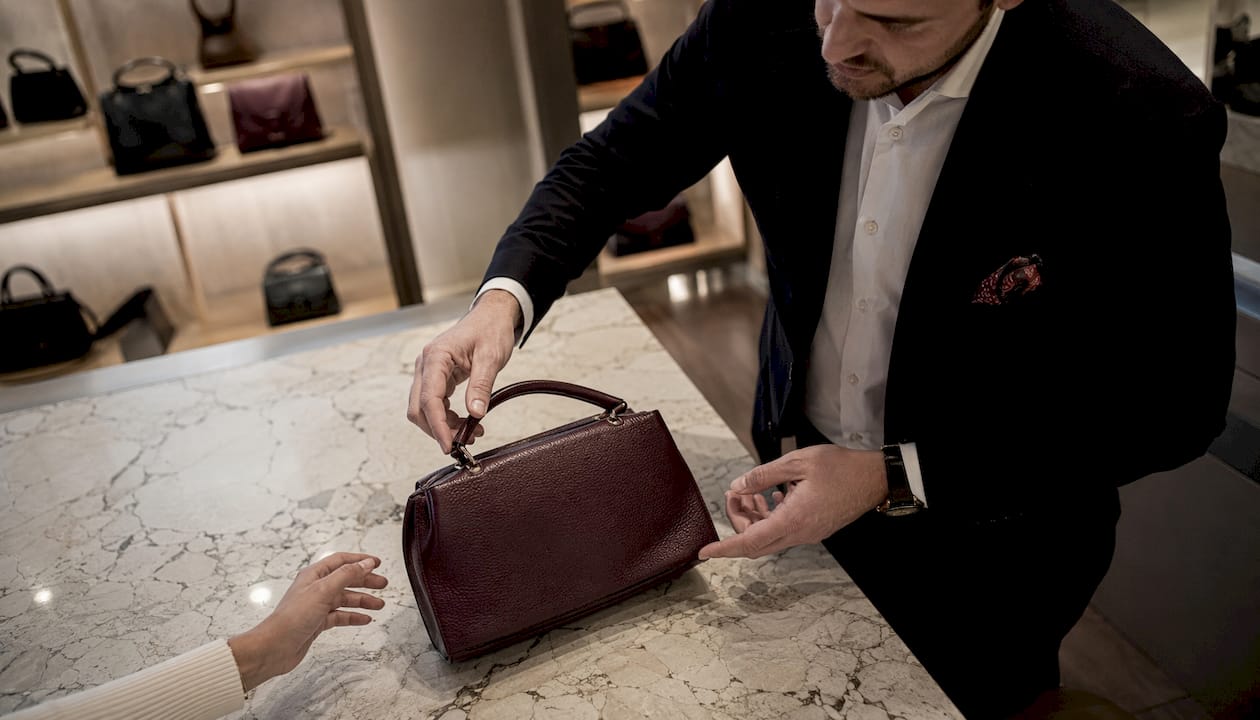
Waiting lists add a temporal dimension to scarcity. When a customer registers interest and waits weeks or months for access, the anticipation itself becomes part of the product experience. Hermès has used this mechanism for decades with the Birkin bag, and the digital equivalent, a gated registration form with no guaranteed timeline, replicates that psychology precisely. Invitation-only digital communities take it further: access requires a referral or a prior purchase, which turns existing customers into gatekeepers.
Private livestreams and encrypted group channels on platforms like WhatsApp or Signal have become practical tools for this. A brand can preview a new collection to 200 verified clients before any public announcement, and those clients feel the weight of that access.
Tactics to implement:
- Gate new collection previews behind a verified client login
- Use waiting list registration as a data capture moment, not just a delay mechanism
- Offer invitation-only digital events as a reward tier within your CRM
4. Limited editions, craftsmanship storytelling, and heritage preservation deepen exclusivity
Limited edition releases work because they convert scarcity from a passive quality into an active event. When a brand announces 200 units of a specific colorway, the number itself becomes marketing copy. The digital execution matters as much as the product: a dedicated microsite, a countdown, a behind-the-scenes film of the artisan process. Each element reinforces that this is not a product, it is an occasion.
Craftsmanship storytelling is where many brands underinvest digitally. A 90-second film showing a leather artisan hand-stitching a bag in a Florentine workshop does more for perceived value than any product description. YouTube is particularly effective here: long-form heritage content justifies premium pricing in a way that a 15-second ad cannot.
NFTs and digital collectibles have matured as a complementary tool. Brands like Dior and Rolex have used limited digital assets tied to physical products to create a secondary layer of scarcity. A digital certificate of authenticity on a blockchain does two things simultaneously: it verifies provenance and it signals that the brand is operating at the frontier of what ownership means.
Heritage preservation in digital contexts means controlling the narrative. Brand archives, founder stories, and archival imagery belong on your owned channels, not scattered across third-party editorial sites where the framing is out of your hands.
5. Omnichannel integration requires discipline to avoid diluting exclusivity
The promise of omnichannel is a customer who moves between your app, your website, and your flagship store without ever feeling a seam. The risk, for luxury brands specifically, is that seamlessness tips into ubiquity. If a customer can access everything everywhere at any time, the friction that creates desire disappears.
Unified commerce technology agreements and data-sharing protocols between digital and physical channels are the operational backbone here. A client who purchases in-store should have that purchase reflected in their digital profile, unlocking access to relevant content or early product notifications. That data flow requires clear consent frameworks under CCPA, particularly for California-based clients.
Tiered access is the mechanism that keeps omnichannel from becoming a free-for-all. Not every customer gets the same digital experience. A first-time online buyer sees the standard site. A client with three years of purchase history gets a different login experience: a personal stylist chat, early access to new arrivals, a private event calendar. The technology to execute this exists in platforms like Salesforce Commerce Cloud and Shopify Plus, both of which support tiered customer segmentation at scale.
Balancing growth with exclusivity in an omnichannel context also means being deliberate about which channels you activate. Adding a TikTok Shop integration might drive volume, but it almost certainly damages brand positioning. The question is not whether a channel reaches your audience. It is whether the channel context matches the brand register.
6. Psychology-driven digital branding keeps the aura intact
Exclusivity is a strategic discipline that must be integrated into brand plans before content creation begins. Excessive exposure damages perceived rarity, and that damage compounds over time. A brand that posts daily across five platforms trains its audience to expect constant access, which is the opposite of scarcity.
Deliberate silence and controlled cadence are the most underused tools in luxury digital marketing. Posting less, but with more precision, signals that each piece of content was considered. The metric that matters is not reach or impressions. It is depth of engagement: saves, shares to private channels, time spent on page.
A “house code” approach to digital brand presentation, where typography, pacing, color, and symbolism are applied consistently across every touchpoint, creates immediate perception of authority. This goes beyond a style guide. It means that a user who lands on your Instagram, your website, and your email newsletter should feel the same emotional register in each environment.
Sequential messaging structures the consumer journey deliberately: awareness content emphasizes heritage, consideration content showcases craft detail, and conversion content emphasizes exclusivity and access. This sequence protects brand equity because it never leads with price or availability. It leads with meaning.
Pro Tip: Map your content calendar against the consumer journey stage, not the product launch calendar. A heritage film released six weeks before a product drop builds desire more effectively than a product announcement alone.
Corradomanenti’s psychology-driven approach to luxury brand exclusivity applies exactly this framework: understanding why consumers respond to scarcity signals, then engineering those signals deliberately into every digital touchpoint.
7. Counterfeit brand protection defends the value of everything else
Every exclusivity tactic on this list loses value if counterfeit products circulate freely online. A fake Hermès Birkin listed on a third-party marketplace does not just cost a sale. It erodes the perception of scarcity that makes the real product worth $15,000.
The scale of the problem is significant. The EUIPO and OECD have documented counterfeit and pirated trade extensively, and while their data covers global trade flows, U.S. luxury brands face the same dynamics domestically through platforms like Amazon, eBay, and social commerce channels.
Practical protection layers for digital channels:
- Register trademarks with the U.S. Patent and Trademark Office and enroll in platform brand protection programs (Amazon Brand Registry, Meta’s Rights Manager)
- Deploy image recognition tools to identify unauthorized use of product photography
- Use blockchain-based authentication certificates tied to physical products, creating a digital record that counterfeiters cannot replicate
- Monitor gray-market resale platforms and issue takedown notices systematically
Legal action is a last resort, but the threat of it matters. Brands that visibly enforce their IP rights signal to the market that their exclusivity is protected, which reinforces the perception of scarcity.
8. Digital membership programs and VIP communities replicate the velvet rope
Digital membership programs build intimacy and reinforce scarcity by making access itself the product. A client who belongs to a brand’s inner circle does not just buy products. They belong to something. That belonging is a retention mechanism that no discount program can replicate.
The architecture of an effective luxury digital community typically includes:
- Tiered membership based on purchase history or invitation, with visible differences in access at each tier
- Private content available only to members: early collection previews, artisan interviews, archive access
- Exclusive events delivered digitally, such as private livestreams with creative directors or virtual atelier tours
- Peer community features that allow members to interact, which turns the brand into a social context rather than just a vendor
Brands like Chanel and Hermès have moved toward VIP-focused e-commerce platforms and virtual showrooms that function as membership environments rather than open storefronts. The key design principle is that the community should feel harder to leave than it was to join.
9. Influencer partnerships work when reach is the wrong goal
Luxury brands that treat influencer marketing as a reach play consistently damage their positioning. The goal is not maximum exposure. It is credibility transfer from a trusted voice to a brand that wants to be seen in a specific context.
The most effective influencer partnerships for exclusivity share three characteristics: the influencer’s audience already skews toward the brand’s target demographic, the content format allows for depth rather than brevity, and the relationship is ongoing rather than transactional. A single sponsored post from a mega-influencer signals commerce. A multi-year relationship with a respected tastemaker signals culture.
Long-form YouTube content, private event coverage, and behind-the-scenes access pieces perform better for luxury positioning than short-form social content. The format itself communicates that the brand has something worth spending time on.
One practical filter: before signing any influencer agreement, audit the influencer’s last 90 days of content for brand adjacency. If they have promoted fast-fashion brands, discount retailers, or mass-market products in that window, the association risk outweighs the reach benefit.
10. Personalized customer experiences and bespoke services turn data into intimacy
AI-driven personalization tools, including AI Experience Rooms that allow customers to engage with products in immersive digital environments, have shifted what “personalized” means for luxury brands. It no longer means a first-name email greeting. It means a digital experience that reflects a customer’s purchase history, aesthetic preferences, and behavioral patterns in real time.
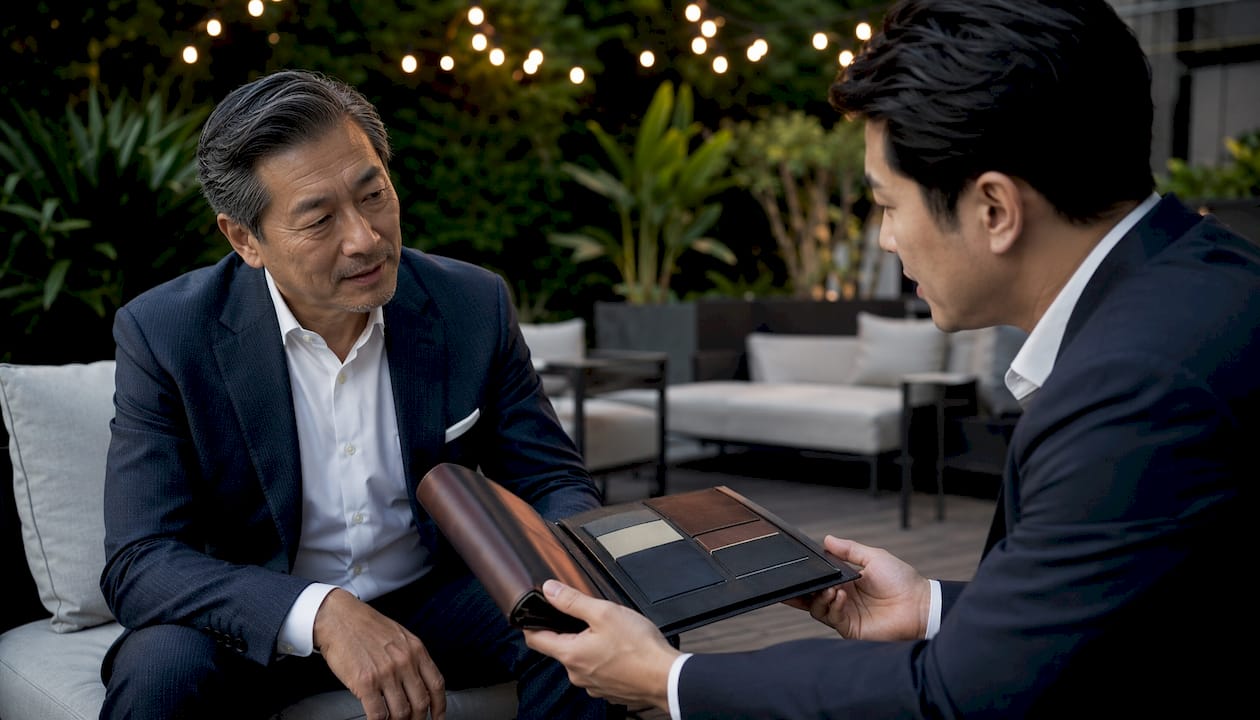
Rolls-Royce and Ferrari allow customers to configure bespoke products through online tools that integrate craftsmanship detail with advanced technology. Burberry has used AI-based personalization to enable tailored customer support interactions at scale. These are not gimmicks. They are the digital equivalent of a personal stylist who remembers everything.
For brand managers building this capability, the starting point is CRM data architecture. If your customer data is siloed across e-commerce, in-store POS, and email platforms, personalization at this level is not possible. Unifying that data, with proper consent frameworks, is the prerequisite.
Bespoke services, whether monogramming, made-to-order options, or personal shopping appointments delivered via video, extend the in-store luxury ritual into digital channels. The experience of being treated as an individual, not a segment, is itself an exclusivity signal.
11. Data privacy as a value proposition signals discretion at the brand level
High-net-worth consumers are acutely aware of how their data is used. For luxury brands, data privacy is not just a compliance requirement. It is a brand statement. A brand that handles client data with the same discretion it applies to its products communicates that it understands its audience.
Practical signals of privacy-as-luxury:
- Minimal data collection: ask only for what you genuinely need, and say so explicitly
- No third-party data sharing for advertising purposes, communicated clearly in your privacy policy
- Opt-in rather than opt-out consent for all marketing communications
- Secure, encrypted channels for VIP client communications
Under CCPA, California residents have specific rights around data access, deletion, and opt-out of sale. For luxury brands with significant California client bases, compliance is not optional, but the brands that go beyond compliance and treat privacy as a feature rather than a checkbox earn a measurable trust premium.
The digital marketing challenges luxury brands face in 2026 increasingly include managing the tension between personalization (which requires data) and privacy (which requires restraint). The resolution is consent-based personalization: clients who choose to share data in exchange for a better experience are far more valuable than those whose data is extracted without clear agreement.
Key Takeaways
The most durable luxury platform exclusivity strategy in 2026 combines legal distribution control, psychology-driven brand cadence, and technology-enabled personalization to create desire that scales without diluting prestige.
| Point | Details |
|---|---|
| Selective distribution is foundational | Enforceable digital distribution agreements prevent third-party marketplace dilution and protect brand presentation. |
| Cadence beats volume | Deliberate silence and controlled posting frequency signal rarity more effectively than high-frequency content. |
| Sequential messaging protects equity | Leading with heritage at awareness, craft at consideration, and exclusivity at conversion keeps brand value intact. |
| Privacy is a luxury signal | Minimal data collection and opt-in consent communicate discretion, which resonates with high-net-worth audiences. |
| Tiered access sustains desire | Differentiating the digital experience by client tier turns loyalty into a visible, felt reward rather than a points balance. |
Work with Corradomanenti on Your Exclusivity Strategy
Maintaining exclusivity on digital platforms is not a single tactic. It is a system, and every element of that system needs to reinforce the same brand signal. Corradomanenti works with luxury and fashion brands to design that system from the ground up, combining psychology-driven marketing with deep expertise in high-end digital strategy.
If you are a brand manager looking to build or refine your luxury market growth strategy, Corradomanenti offers the kind of precise, psychologically-informed consulting that the luxury sector demands. The work covers everything from distribution strategy and platform selection to VIP community architecture and performance marketing that protects brand equity.