

Most american luxury consumers now expect a brand’s story to reflect not just aesthetics but deep emotional resonance. For European brand managers striving to captivate high-net-worth clients, aligning haute couture branding elements with sophisticated symbolic value is more crucial than ever. This article decodes advanced strategies that distinguish a label’s artistic vision while navigating the delicate balance between exclusivity, heritage, and modern consumer engagement.
Table of Contents
- Defining Haute Couture Branding Elements
- Visual Identity And Signature Design Codes
- Psychological Appeal And Emotional Storytelling
- Exclusivity, Scarcity, And Personalization
- Innovation, Sustainability, And Digital Engagement
- Risks And Common Branding Pitfalls To Avoid
Key Takeaways
| Point | Details |
|---|---|
| Haute Couture Branding Elements | Artistry, heritage, exclusivity, craftsmanship, and symbolic value are essential for establishing a luxury brand’s identity. |
| Visual Identity Importance | A cohesive visual language utilizing typography, color, and iconic symbols ensures instant brand recognition. |
| Emotional Storytelling | High emotional engagement through complex narratives enhances consumer connection and loyalty. |
| Exclusivity and Personalization | Leveraging scarcity and tailored experiences boosts brand value and consumer desirability. |
Defining Haute Couture Branding Elements
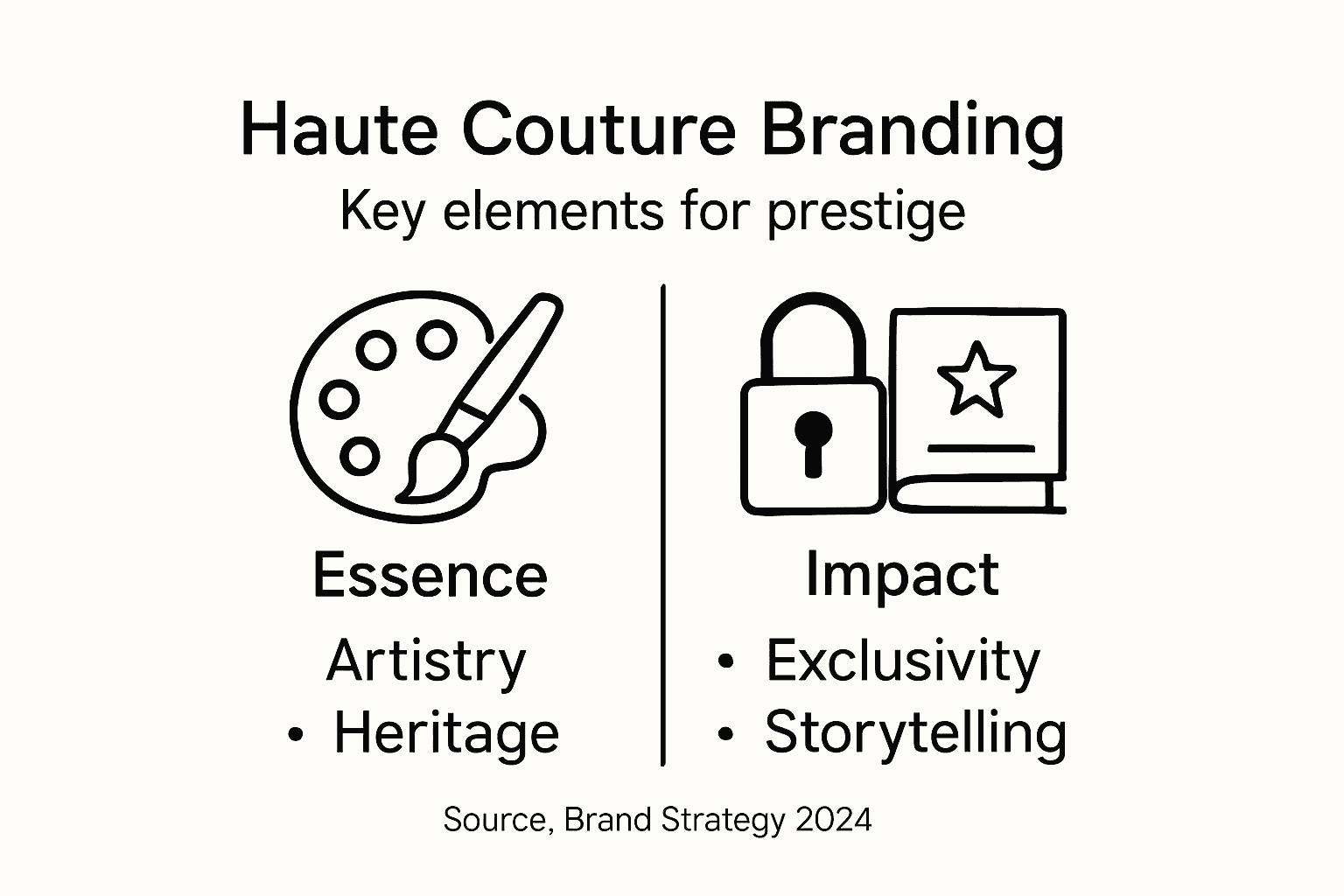
Haute couture branding represents a sophisticated art form that transcends traditional fashion marketing. At its core, these branding elements communicate exclusivity, craftsmanship, and unparalleled artistic expression. Understanding luxury branding reveals how haute couture differentiates itself through meticulous attention to symbolic and cultural capital.
The foundational branding elements of haute couture are complex and multifaceted. Entrepreneurial insights from fashion pioneers demonstrate that true luxury brands are built on more than aesthetic appeal. They represent narratives of artistic integrity, heritage, and creative leadership. Key branding components include:
- Artistic Vision: Communicating a unique design philosophy
- Heritage: Connecting current collections to historical craftsmanship
- Exclusivity: Creating perceptions of rarity and inaccessibility
- Craftsmanship: Highlighting extraordinary technical skills
- Symbolic Value: Representing cultural and social prestige
The psychological dimensions of haute couture branding transform clothing into cultural artifacts. Brands must strategically construct identities that resonate with sophisticated audiences who value artistic expression over mere consumption. This requires creating immersive experiences that extend far beyond traditional product marketing.
Here’s how key haute couture branding elements impact brand positioning:
| Branding Element | Distinctive Advantage | Example in Practice |
|---|---|---|
| Artistic Vision | Sets creative direction | Signature runway collections |
| Heritage | Enhances timeless appeal | Linking to founding designer |
| Exclusivity | Increases perceived value | By-invitation-only events |
| Craftsmanship | Justifies premium pricing | Hand-sewn garments |
| Symbolic Value | Elevates social prestige | Celebrity endorsements |
Pro tip: Develop a brand narrative that interweaves personal artistic vision with cultural heritage to create an emotionally compelling luxury experience.
Visual Identity and Signature Design Codes
Haute couture visual identity represents an intricate language of design that transcends mere aesthetic representation. Signature visual codes communicate a brand’s deepest narrative through meticulously crafted design elements that speak to sophistication and exclusivity.
These design codes function as a visual lexicon, combining multiple strategic components that create instant brand recognition. Critical visual identity elements include:
- Distinctive Typography: Custom fonts that reflect brand personality
- Color Palette: Unique chromatic signatures representing brand DNA
- Iconic Symbols: Recurring motifs that become brand shorthand
- Monogram Design: Intricate logos communicating heritage and prestige
- Fabric Signatures: Specific textures and material choices unique to the brand
Chanel’s design heritage exemplifies how visual codes can transform fashion into a cultural statement. The brand’s tweed fabrics, camellia motifs, and specific silhouette treatments demonstrate how visual elements become more than decoration – they become a form of artistic communication.
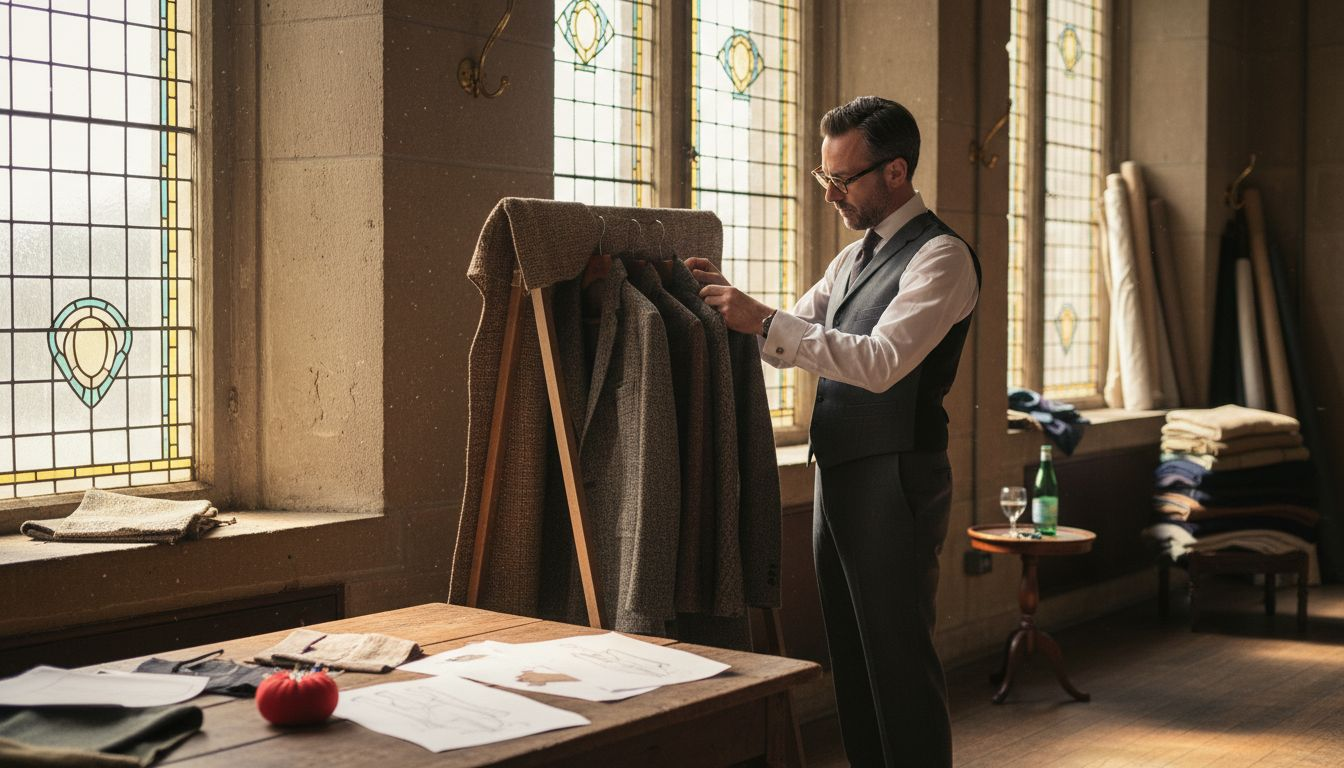
Successful haute couture visual identities require an almost architectural approach to design. Brands must create visual systems so precise and recognizable that a single color, texture, or geometric pattern can instantly evoke the entire brand universe.
Pro tip: Develop a comprehensive visual style guide that codifies every design element, ensuring absolute consistency across all brand touchpoints.
Psychological Appeal and Emotional Storytelling
Haute couture brands understand that emotional storytelling transcends traditional marketing, creating profound psychological connections with their audience. Persuasive communication strategies reveal how luxury brands transform product narratives into deeply resonant emotional experiences that go far beyond aesthetic appreciation.
The psychological architecture of emotional storytelling in haute couture involves several sophisticated dimensions:
- Narrative Complexity: Crafting multi-layered brand stories
- Emotional Resonance: Triggering specific psychological responses
- Cultural Symbolism: Embedding deeper meaning into design
- Personal Mythology: Creating individual connection points
- Heritage Transmission: Communicating generational significance
Experiential storytelling techniques demonstrate how augmented reality and immersive narratives can generate emotional curiosity and create powerful consumer engagement. These approaches transform fashion from a product category into a profound emotional journey that speaks to individual aspirations and cultural identity.
Successful psychological storytelling requires an almost anthropological understanding of human emotion. Haute couture brands must craft narratives that are simultaneously universal and intensely personal, creating emotional landscapes where consumers can project their deepest fantasies and self-perceptions.
Pro tip: Develop narrative frameworks that allow consumers to see themselves as protagonists within your brand’s emotional universe.
Exclusivity, Scarcity, and Personalization
Haute couture brands leverage exclusivity as a fundamental strategic mechanism that transforms consumer perception and brand value. Perceived value strategies demonstrate how carefully constructed scarcity creates an aura of desirability that transcends traditional marketing approaches.
The core dimensions of exclusivity in luxury branding include:
- Limited Availability: Restricting product quantities
- Customized Experiences: Tailoring interactions to individual clients
- Unique Access: Creating privileged consumer pathways
- Personalized Communication: Developing one-to-one engagement strategies
- Rare Production Techniques: Highlighting extraordinary craftsmanship
Artificial intelligence technologies are revolutionizing how brands maintain exclusivity, enabling hyper-personalized consumer experiences through sophisticated inventory management and targeted communication strategies. These technological innovations allow brands to create artificial scarcity while simultaneously delivering unprecedented levels of individual customization.
Successful exclusivity requires a delicate balance between maintaining brand mystique and creating meaningful consumer connections. Haute couture brands must craft experiences that feel simultaneously unattainable and intimately personal, transforming products from mere objects into symbols of individual aspiration and cultural significance.
Pro tip: Design engagement strategies that make each customer feel uniquely understood while preserving the brand’s aspirational quality.
Innovation, Sustainability, and Digital Engagement
Haute couture is undergoing a profound transformation at the intersection of technological innovation and sustainable practices. Digital transformation strategies are redefining how luxury brands approach production, creativity, and consumer engagement.
The emerging landscape of innovative haute couture encompasses several critical dimensions:
- Technological Collaboration: Integrating advanced digital tools
- Sustainable Production: Implementing circular economy principles
- Creative Digital Pedagogy: Preserving traditional craftsmanship
- Ethical Manufacturing: Reducing environmental impact
- Immersive Consumer Experiences: Creating interactive brand interactions
Artificial intelligence and craftsmanship are converging in unprecedented ways, enabling designers to explore new creative territories while maintaining the essence of haute couture’s meticulous artistry. These technological innovations allow brands to push boundaries of design, production, and storytelling.
Successful digital engagement requires a nuanced approach that respects heritage while embracing future possibilities. Haute couture brands must balance technological innovation with the irreplaceable human touch that defines their unique value proposition.
Below illustrates how innovation and sustainability intersect within haute couture strategies:
| Innovation Driver | Sustainability Benefit | Example Application |
|---|---|---|
| AI-driven design | Reduces material waste | Optimized fabric layouts |
| Circular economy models | Extends product lifespan | Garment recycling programs |
| Digital client experiences | Minimizes physical footprint | Virtual showrooms |
| Ethical manufacturing | Builds brand trust | Transparent sourcing |
Pro tip: Develop digital strategies that enhance rather than replace the artisanal essence of haute couture craftsmanship.
Risks and Common Branding Pitfalls to Avoid
Haute couture brands operate in an extraordinarily complex landscape where reputation is fragile and consumer perceptions can shift dramatically. Social media reputation risks demonstrate the critical need for strategic communication and proactive brand management.
The most prevalent branding risks for haute couture include:
- Brand Dilution: Overexposure and loss of exclusivity
- Misaligned Social Messaging: Tone-deaf communication
- Sustainability Credibility: Failing environmental responsibility tests
- Digital Communication Inconsistencies: Fragmented brand narratives
- Cultural Tone Deafness: Insensitive marketing approaches
Challenges in cultural relevance highlight the delicate balance between maintaining traditional luxury values and adapting to contemporary consumer expectations. Brands must navigate complex terrain where heritage and innovation continuously intersect, requiring sophisticated strategic approaches.
Successful haute couture branding demands constant vigilance. Brands must develop robust risk management strategies that anticipate potential perception challenges while maintaining their core identity and emotional connection with discerning consumers.
Pro tip: Develop a comprehensive communication protocol that allows rapid, authentic response to potential brand perception challenges.
Elevate Your Haute Couture Brand with Expert Marketing Strategies
Building a haute couture brand that conveys exclusivity, craftsmanship, and emotional storytelling requires more than just beautiful designs. If you are striving to create a unique artistic vision while maintaining heritage and personalized client experiences, you need a marketing partner who understands the psychological drivers behind luxury consumer behavior. Corrado Manenti offers specialized consulting that blends deep psychological insights with innovative digital strategies tailored for the fashion and luxury sector.
Discover how to harness the power of Positionnement numérique and create captivating brand narratives that connect with discerning audiences on a profound level. Whether you are a Fashion Start Up looking to establish a prestigious identity or an established label aiming to refine exclusivity and craftsmanship messaging, Corrado’s approach ensures every element of your branding is meticulously aligned and emotionally compelling.
Ready to transform your haute couture brand into a symbol of timeless prestige and innovation? Visit Corrado Manenti to access tailored marketing solutions that speak directly to your audience’s desires. Contact us now to secure your position at the forefront of luxury branding excellence.
Frequently Asked Questions
What are the key branding elements of haute couture?
The key elements of haute couture branding include artistic vision, heritage, exclusivity, craftsmanship, and symbolic value, all of which contribute to a luxurious and exclusive brand identity.
How does exclusivity enhance the value of haute couture brands?
Exclusivity enhances the perceived value of haute couture brands by creating a sense of rarity and inaccessibility, making products more desirable among sophisticated consumers.
Why is emotional storytelling important in haute couture branding?
Emotional storytelling is crucial as it fosters deep psychological connections with consumers, transforming clothing into cultural artifacts that resonate on personal and aspirational levels.
What role does sustainability play in modern haute couture?
Sustainability is increasingly important in haute couture, as brands are now integrating ethical manufacturing and circular economy principles to reduce environmental impact while maintaining their artistic integrity.
Recommended
- 7 Examples of Premium Branding to Elevate Your Luxury Business – Corrado Manenti
- 7 Examples of Premium Branding to Elevate Your Luxury Business – Corrado Manenti
- Understanding Luxury Branding Best Practices for Success – Corrado Manenti
- Understanding Brand Differentiation in Luxury Markets – Corrado Manenti