


Every luxury fashion brand faces the challenge of moving beyond product features to create deep, lasting connections with consumers. In an industry where competition is fierce, the ability to engage emotionally sets brands apart and turns simple transactions into powerful relationships. By mastering emotional branding in fashion, marketing directors can harness psychology-driven strategies to build brand loyalty, inspire advocacy, and amplify perceived value among sophisticated global audiences.
Table of Contents
- Defining Emotional Branding In Fashion
- Psychological Drivers Behind Emotional Branding
- Strategies For Building Emotional Connections
- Measuring Success In Emotional Branding Campaigns
- Common Pitfalls And How To Avoid Them
Key Takeaways
| Point | Details |
|---|---|
| Emotional Branding Importance | Emotional branding creates deep psychological connections between luxury fashion brands and consumers, transcending mere transactions. |
| Consumer-Centric Strategies | Brands should focus on authentic storytelling, sensory experiences, and cause-driven marketing to engage consumers emotionally. |
| Measuring Success | Evaluate emotional branding effectiveness using a combination of quantitative and qualitative metrics, including engagement rates and sentiment analysis. |
| Avoiding Pitfalls | Consistent messaging and authenticity are crucial; brands must align their emotional narratives with actual consumer experiences to maintain trust. |
Defining Emotional Branding in Fashion
Emotional branding represents a sophisticated strategic approach that transcends traditional product marketing by creating profound psychological connections between luxury fashion brands and their consumers. Exploring emotional engagement strategies reveals a nuanced framework where brands move beyond mere transactional relationships to establish deep, resonant emotional experiences.
At its core, emotional branding in fashion is about understanding and authentically addressing consumer aspirations, identity needs, and intrinsic desires. Rather than simply selling clothing or accessories, luxury brands craft narratives that align with consumers’ self-perception and values. This approach transforms products from mere objects into meaningful symbols of personal expression and emotional connection.
Key components of effective emotional branding in fashion include:
- Storytelling that reveals brand heritage and human-centered values
- Sensory experiences that create memorable brand interactions
- Cause-driven marketing demonstrating social responsibility
- Personal empowerment messaging that validates consumer identity
Successful emotional branding requires a holistic understanding of consumer psychology, cultural context, and individual aspirations. Brands must develop strategies that feel authentic, consistent, and genuinely reflective of their core identity while simultaneously resonating with their target audience’s emotional landscape.
Below is a summary of how emotional branding impacts consumer relationships in luxury fashion:
| Aspect | Emotional Branding Effect | Business Benefit |
|---|---|---|
| Consumer Loyalty | Strengthens brand attachment | Increases repeat purchases |
| Brand Differentiation | Cultivates unique identity | Reduces price sensitivity |
| Word-of-Mouth | Inspires brand advocacy | Boosts organic promotion |
| Perceived Value | Elevates emotional worth | Supports premium pricing |
Pro tip: Conduct deep qualitative research to understand the emotional triggers and core values of your specific luxury fashion consumer segment.
Psychological Drivers Behind Emotional Branding
Emotional branding operates on sophisticated psychological mechanisms that transform consumer interactions from transactional exchanges to deeply personal experiences. Psychological mechanisms of brand attachment reveal how emotional triggers can profoundly influence consumer decision-making beyond rational considerations.

The core psychological drivers behind emotional branding encompass multiple complex dimensions of human experience. These include fundamental emotional states like trust, happiness, nostalgia, and empathy, which create powerful neurological and biochemical responses that link consumers intimately with brand identities. When luxury brands successfully activate these emotional pathways, they transcend traditional marketing boundaries and establish profound, almost symbiotic relationships with their audiences.
Key psychological mechanisms driving emotional brand connections include:
- Trust formation through consistent brand behavior
- Nostalgia activation that connects present experiences with positive memories
- Empathy generation demonstrating genuine understanding of consumer needs
- Identity validation through brand messaging and representation
- Aspirational storytelling that resonates with personal growth narratives
Understanding these psychological drivers requires a nuanced approach that goes beyond surface-level demographic analysis. Brands must develop deep insights into the complex emotional landscapes of their target consumers, recognizing that emotional connections are deeply personal, culturally influenced, and continuously evolving.
Pro tip: Invest in sophisticated qualitative research methodologies that capture subtle emotional nuances and unconscious consumer motivations.
Strategies for Building Emotional Connections
Luxury brands must deploy sophisticated strategies to forge genuine emotional connections that transcend traditional marketing approaches. Emotional branding strategies for engagement reveal a complex framework of interconnected techniques designed to create profound consumer relationships.
Successful emotional connection strategies require a multifaceted approach that integrates sensory experiences, authentic storytelling, and deeply resonant brand narratives. By understanding the intricate psychological mechanisms that drive consumer engagement, luxury brands can create immersive experiences that speak directly to individual aspirations, values, and identity.
Key strategies for building emotional connections include:
- Sensory branding that creates memorable multidimensional experiences
- Authentic storytelling revealing brand heritage and human values
- Cause-driven marketing demonstrating social responsibility
- Personalized consumer experiences that validate individual identity
- Visual narrative development that connects with consumer emotions
Implementing these strategies demands a nuanced understanding of consumer psychology and a commitment to genuine, transparent brand communication. Luxury brands must move beyond superficial marketing tactics and develop deep, meaningful connections that reflect the complex emotional landscape of their target audience.
Pro tip: Develop a comprehensive emotional mapping strategy that tracks and responds to subtle shifts in consumer emotional expectations and cultural contexts.
Measuring Success in Emotional Branding Campaigns
Measuring the success of emotional branding requires a comprehensive approach that goes beyond traditional marketing metrics. Social media engagement metrics reveal complex insights into how consumers emotionally interact with luxury brand content, providing nuanced indicators of campaign effectiveness.
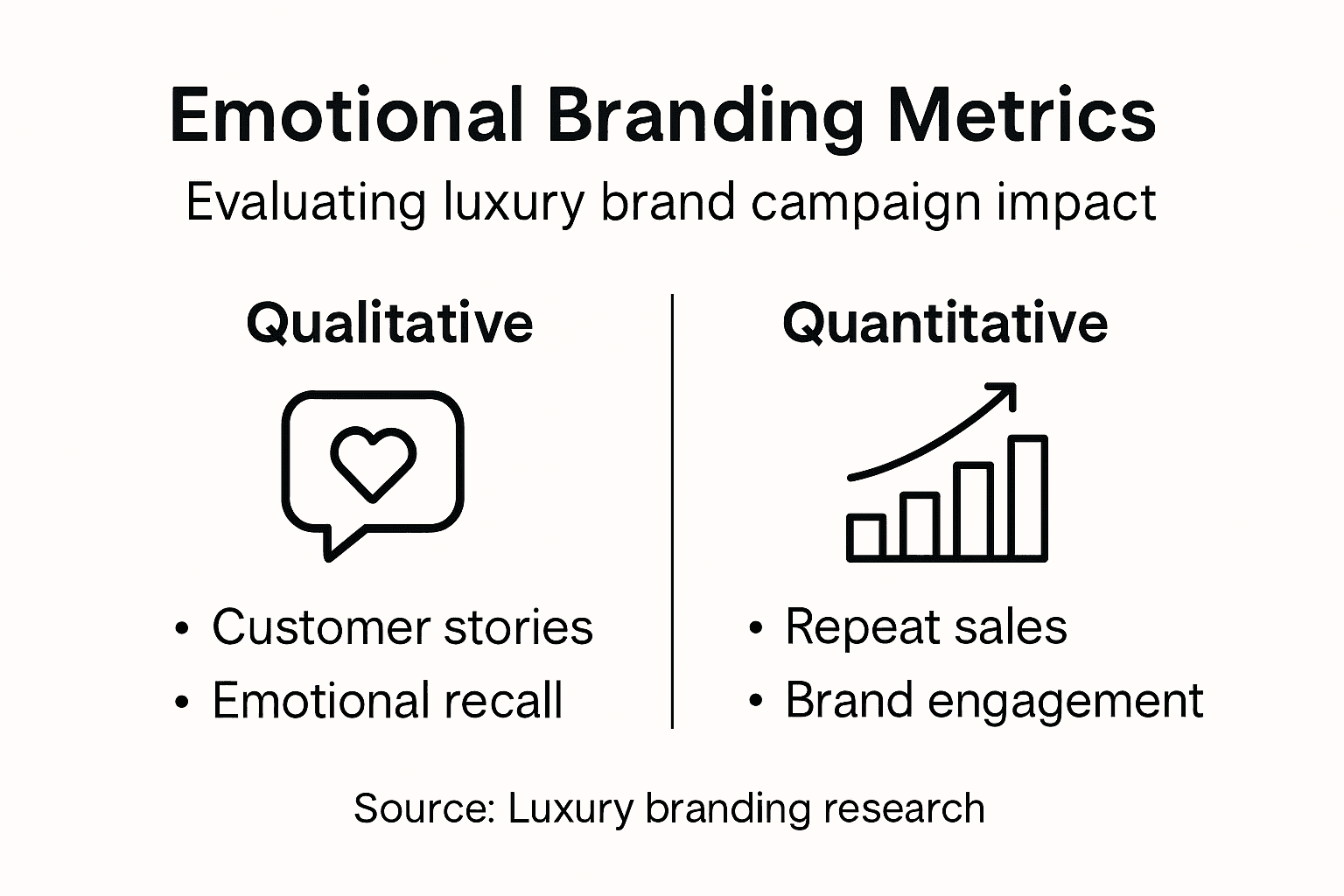
Effective emotional branding measurement demands a multidimensional framework that captures both quantitative and qualitative aspects of consumer engagement. This approach integrates sophisticated analytical techniques that track emotional responses, brand perception shifts, and deep psychological connections that extend far beyond simple transactional indicators.
Key metrics for evaluating emotional branding success include:
- Emotional engagement rates on social media platforms
- Brand loyalty indices tracking long-term consumer relationships
- Sentiment analysis of consumer interactions and conversations
- Experiential marketing outcome measurements
- Community interaction and participation levels
- Emotional attachment scale assessments
Successful measurement requires brands to develop sophisticated, holistic evaluation strategies that capture the intricate ways consumers emotionally connect with brand narratives. This approach demands continuous monitoring, adaptive analysis, and a deep understanding of the evolving psychological landscape of consumer interactions.
Here is a quick reference highlighting strategies and their typical measurement methods:
| Strategy | Measurement Method | Example Indicator |
|---|---|---|
| Sensory Branding | Social media engagement analysis | Share of positive reactions |
| Cause-Driven Marketing | Sentiment analysis | Ratio of supportive comments |
| Authentic Storytelling | Brand loyalty index | Repeat customer percentage |
| Personalized Experiences | Emotional attachment surveys | Average emotional attachment score |
Pro tip: Develop a dynamic emotional tracking system that combines quantitative metrics with qualitative insights to create a comprehensive understanding of brand emotional performance.
Common Pitfalls and How to Avoid Them
Emotional branding in luxury markets demands extraordinary precision and authenticity. Critical emotional branding challenges reveal nuanced pitfalls that can rapidly erode consumer trust and brand perception.
Navigating the complex landscape of emotional marketing requires brands to understand and proactively address potential missteps. The most significant risks emerge when brands create disconnects between their emotional promises and actual consumer experiences, leading to perceptions of insincerity and manipulation that can permanently damage brand relationships.
Common emotional branding pitfalls include:
- Inconsistent messaging across different marketing channels
- Inauthentic emotional appeals that feel forced or manipulative
- Overpromising brand experiences that cannot be consistently delivered
- Neglecting genuine consumer emotions in favor of manufactured narratives
- Failing to evolve emotional storytelling with changing consumer expectations
Successful brands recognize that emotional connections require continuous refinement, genuine commitment, and a deep understanding of their consumers’ evolving psychological landscapes. This demands a dynamic approach that balances emotional storytelling with transparent, consistent brand values.
Pro tip: Conduct regular emotional brand audits that critically examine the alignment between your brand’s emotional narrative and actual consumer experiences.
Unlock Lasting Luxury Customer Loyalty Through Emotional Branding
The challenge of transforming luxury customer loyalty lies in building authentic emotional connections that resonate deeply with your audience. This article highlights key psychological drivers such as trust formation and identity validation that luxury brands must master to create meaningful relationships. If you aim to elevate your brand through psychology-driven marketing and meticulously curated branding experiences, you need a partner who understands how to craft narratives that truly connect.
Discover tailored strategies with Personal Branding – Corrado Manenti and explore how to harmonize your brand’s story with consumer emotions. Corrado Manenti’s expertise in both fashion and luxury consulting ensures every marketing element reinforces your premium image while leveraging the latest digital innovations. Act now to transform your customer loyalty by visiting Corrado Manenti and learn how to integrate emotional branding for measurable impact. For insights on navigating the evolving luxury market landscape, also check out Fashion VS Influencer – Corrado Manenti. Start building emotional loyalty today with expert support that delivers tangible results.
Frequently Asked Questions
What is emotional branding in luxury fashion?
Emotional branding in luxury fashion is a strategy that creates deep psychological connections between luxury brands and consumers by addressing their aspirations, identity needs, and intrinsic desires, transforming products into meaningful symbols of personal expression.
How can luxury brands build emotional connections with consumers?
Luxury brands can build emotional connections through strategies like sensory branding, authentic storytelling, cause-driven marketing, personalized experiences, and developing visual narratives that resonate with consumer emotions and identities.
What are the key psychological drivers of emotional branding?
The key psychological drivers of emotional branding include trust formation, nostalgia activation, empathy generation, identity validation, and aspirational storytelling, all of which help to establish profound relationships between consumers and brands.
How can the success of emotional branding campaigns be measured?
The success of emotional branding campaigns can be measured through metrics such as emotional engagement rates on social media, brand loyalty indices, sentiment analysis of consumer interactions, community participation levels, and emotional attachment scale assessments.
Recommended
- 7 Inspiring Examples of Emotional Branding for Luxury Brands – Corrado Manenti
- Defining Customer Loyalty in Luxury: A Psychological Lens – Corrado Manenti
- Understanding Psychology in Luxury Branding – Corrado Manenti
- Understanding Luxury Branding Best Practices for Success – Corrado Manenti
- What Makes VIP Experiences Special For Visitors | Flight Of Aloha