

Over 90 percent of luxury product launches fail due to poor audience segmentation, which exposes a common pitfall for American brands aiming for elite markets. Identifying and understanding luxury buyer segments is crucial because traditional approaches often miss the complex motivations behind high value purchases. This guide reveals how to use psychographic insights and advanced analytics so American brands can build lasting connections with luxury consumers and drive sustainable growth.
Table of Contents
- Step 1: Define Luxury Audience Segments With Precision
- Step 2: Collect And Enrich Relevant Data Sources
- Step 3: Develop Tailored Content For Each Segment
- Step 4: Test Segment Performance And Engagement
- Step 5: Refine Segments And Optimize Continuously
Quick Summary
| Key Message | Explanation |
|---|---|
| 1. Define Audience Segments Precisely | Luxury audience segmentation requires understanding psychographics and consumer perceptions beyond basic demographics for effective targeting. |
| 2. Collect and Enrich Diverse Data | Use a multifaceted approach to gather both quantitative and qualitative data that captures consumer motivations and emotional connections. |
| 3. Personalize Content for Each Segment | Tailor messaging to resonate with unique motivations and lifestyles of different luxury audience segments for effective engagement. |
| 4. Test and Evaluate Segment Performance | Establish robust testing frameworks to monitor engagement metrics and refine strategies based on audience responsiveness. |
| 5. Continuously Optimize Segments | Implement dynamic adjustment processes to adapt segmentation in response to shifting consumer preferences and market trends. |
Step 1: Define luxury audience segments with precision
Understanding luxury audience segmentation goes beyond basic demographic data. Marketing professionals recognize that successful segmentation requires a nuanced approach focusing on psychographic profiling and consumer value perception. Research demonstrates that over 90% of luxury product launches fail due to incorrect segmentation, underscoring the critical importance of precise audience definition.
To create effective luxury audience segments, start by mapping complex psychological attributes rather than relying solely on traditional demographic markers. This means analyzing consumer motivations, lifestyle preferences, aspirational values, and emotional connections to luxury experiences. Key dimensions include personal identity, social status signaling, aesthetic appreciation, and individual purchasing behaviors. By developing multi-dimensional segment profiles that capture psychological nuance, brands can craft highly targeted messaging that resonates deeply with specific consumer subgroups.
Segmentation requires rigorous data collection and analysis techniques. Leverage advanced research methodologies including qualitative interviews, quantitative surveys, behavioral analytics, and predictive modeling to uncover granular insights about your luxury audience. Track not just what consumers purchase, but why they make those choices, their underlying value perceptions, and their emotional triggers.

Pro Tip: Create dynamic audience segments that can evolve with changing consumer preferences by implementing continuous feedback loops and regularly refreshing your segmentation research.
Step 2: Collect and enrich relevant data sources
Data collection represents the foundational strategy for developing precise luxury audience segments. Advanced data mining techniques now enable marketers to extract sophisticated insights from complex consumer behaviors, transforming raw information into actionable intelligence for luxury brand positioning.
To effectively collect and enrich data sources, implement a multifaceted approach that combines quantitative and qualitative research methods. Start by integrating data from diverse channels including digital interactions, purchase histories, social media engagement, customer surveys, and direct feedback mechanisms. Leverage advanced analytics platforms that can process unstructured data and extract meaningful patterns. Focus on collecting not just transactional information, but deep psychographic insights that reveal motivational drivers, lifestyle preferences, and emotional connections to luxury experiences.
Ensure data quality and comprehensiveness by implementing robust validation protocols. Cross reference multiple data sources, utilize machine learning algorithms to identify anomalies, and continuously update your data collection strategies. Develop a holistic view of your luxury audience by combining behavioral data with attitudinal research, creating a nuanced understanding that goes beyond surface level demographic information.
Pro Tip: Implement a systematic data governance framework that ensures compliance with privacy regulations while maintaining the depth and richness of your audience insights.
Here’s a comparison of data sources commonly used in luxury segmentation:
| Data Source | Example Insights Gathered | Business Impact |
|---|---|---|
| Digital Interactions | Browsing and click patterns | Understand real-time preferences |
| Purchase Histories | Past luxury purchases and spend | Identify high-value buyer segments |
| Social Media Engagement | Content likes and shares | Gauge aspirational brand alignment |
| Customer Surveys | Motivations and attitudes | Reveal deep psychographic drivers |
| Direct Feedback Mechanisms | Post-purchase comments | Uncover emotional brand connections |
Step 3: Develop tailored content for each segment
Systematic research in luxury marketing reveals that content personalization is critical for engaging sophisticated luxury consumers. Each audience segment demands a unique narrative approach that resonates with their specific psychological and aspirational profiles.
To craft truly compelling segment specific content, dive deep into the emotional triggers and lifestyle expectations of each group. Develop messaging frameworks that speak directly to their individual motivations. For the status driven segment, emphasize exclusivity and social recognition. For experience oriented consumers, highlight transformational qualities and personal growth opportunities. For heritage motivated buyers, underscore craftsmanship, legacy, and timeless design elements. Your content should feel like a personalized conversation that anticipates and addresses each segment’s unspoken desires and expectations.
Utilize advanced content mapping techniques that align messaging across multiple touchpoints. This means creating cohesive narratives that feel consistent yet uniquely tailored across email, social media, website experiences, and personalized communications. Leverage dynamic content technologies that allow real time personalization based on individual segment characteristics, ensuring that every interaction feels intimately crafted for that specific audience subset.
Pro Tip: Implement a continuous feedback loop that allows you to dynamically refine your content strategies based on actual segment engagement metrics and evolving consumer preferences.
Below is a summary of common luxury audience segments and their core content drivers:
| Audience Segment | Key Motivation | Content Focus |
|---|---|---|
| Status Seekers | Social prestige and exclusivity | Highlight VIP access and recognition |
| Experience Enthusiasts | Unique, transformative moments | Feature immersive journeys and events |
| Heritage Believers | Tradition and timeless value | Emphasize legacy and craftsmanship |
| Innovation Adopters | Cutting-edge trends | Showcase new tech and exclusivities |
Step 4: Test segment performance and engagement
Advanced personalized email community detection methods provide sophisticated techniques for rigorously evaluating audience segment performance and engagement. Measuring the effectiveness of your luxury email segmentation strategy requires a comprehensive analytical approach that goes beyond surface level metrics.
Develop a robust testing framework that incorporates multiple performance indicators. Track key metrics such as open rates, click through rates, conversion percentages, and time spent interacting with content. Implement A/B testing protocols that allow you to compare different messaging approaches within each segment. Pay close attention to nuanced engagement signals like scroll depth, content interaction time, and subsequent purchase behaviors. Create statistically significant test groups that enable you to draw meaningful conclusions about segment responsiveness and emotional resonance.
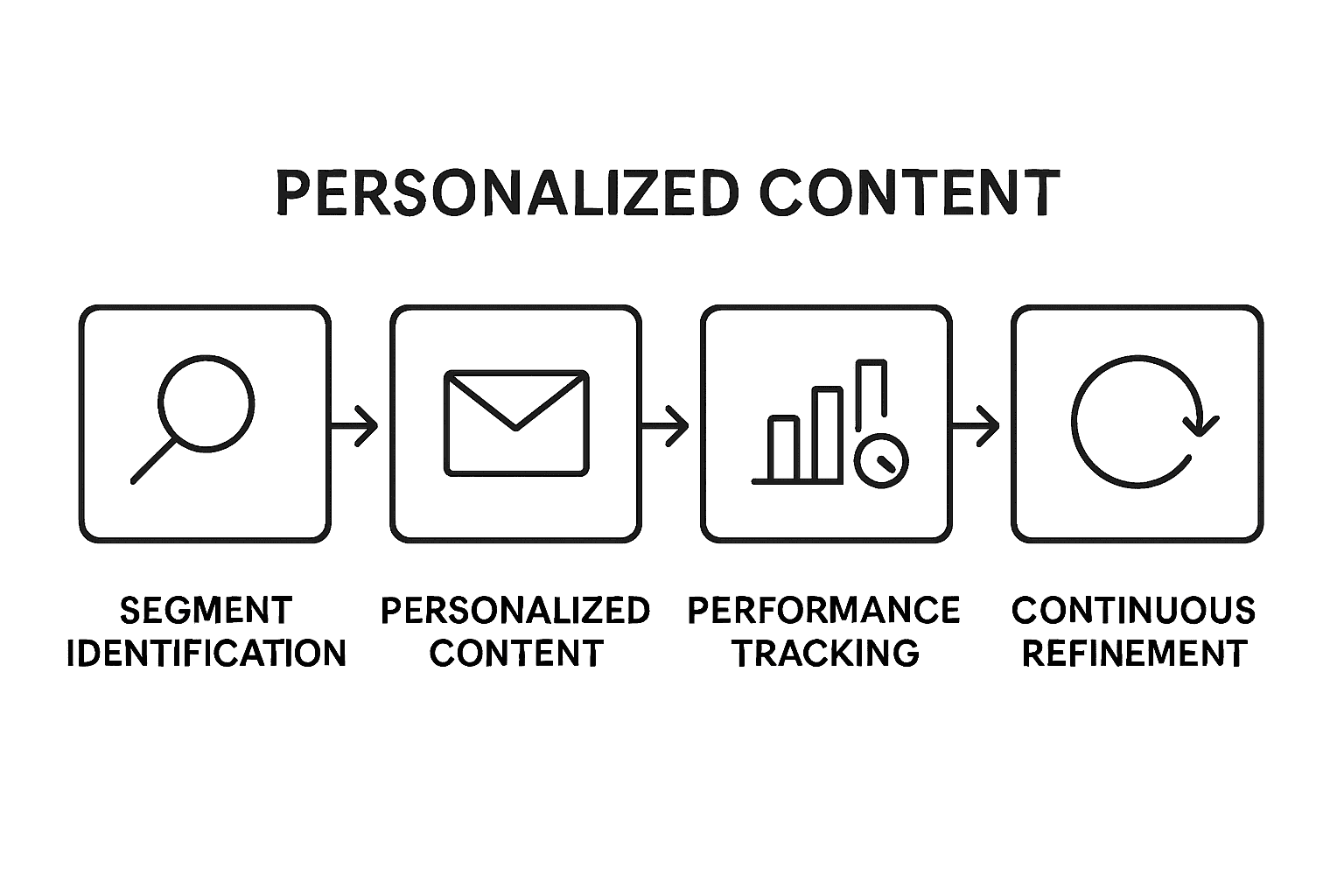
Utilize advanced analytics platforms that provide granular insights into segment behavior. Develop dynamic scoring models that continuously evaluate and refine your segmentation strategy. Look beyond traditional conversion metrics to understand deeper psychological engagement signals. Analyze how different segments interact with your content, identifying subtle variations in response patterns that can inform future personalization strategies. Consider implementing machine learning algorithms that can predict segment performance and suggest optimization opportunities in real time.
Pro Tip: Establish a quarterly segment performance review process that allows you to proactively adapt your targeting and messaging strategies based on comprehensive engagement data.
Step 5: Refine segments and optimize continuously
Customer engagement research reveals critical insights into brand interaction dynamics, demonstrating that luxury audience segmentation is an evolving process requiring constant refinement and strategic adaptation. Your segmentation strategy must remain fluid and responsive to changing consumer behaviors and emerging market trends.
Implement a dynamic optimization framework that allows for real time segment recalibration. This involves continuously monitoring segment performance metrics, identifying emerging behavioral patterns, and proactively adjusting your segmentation criteria. Analyze shifts in consumer motivations, lifestyle preferences, and engagement signals across different luxury market subgroups. Pay special attention to threshold moments where segment characteristics begin to transform, such as generational transitions, emerging technology adoption, or significant economic changes that might alter purchasing behaviors.
Leverage advanced machine learning algorithms and predictive modeling techniques to create an adaptive segmentation ecosystem. Develop sophisticated scoring models that can automatically detect and flag segment drift, allowing you to make data driven refinements before performance becomes compromised. Create flexible segmentation architectures that can quickly incorporate new data sources, integrate emerging consumer insights, and dynamically redistribute audience members across segments based on their evolving characteristics and interactions.
Pro Tip: Establish an interdisciplinary review team that combines data scientists, market researchers, and consumer psychology experts to holistically evaluate and optimize your segmentation strategy every quarter.
Elevate Your Luxury Email Segmentation Strategy Today
Crafting precise luxury audience segments is essential to unlock premium engagement as highlighted in the article. Many luxury brands struggle to create deeply personalized marketing because they miss the complex psychological drivers behind consumer behavior. If your goal is to transform raw data into emotionally resonant, targeted content that speaks directly to sophisticated luxury buyers then expert guidance is critical. Challenges around dynamic segmentation, content personalization, and continuous optimization require a unique blend of psychology and luxury market expertise.
Discover how Corrado Manenti’s psychology-driven marketing approach can guide you to master these exact challenges. With a focus on understanding why consumers behave as they do and crafting strategies infused with emotional insights Corrado helps luxury and fashion brands create compelling narratives that achieve real results. Whether you want to refine your segmentation framework or embrace cutting-edge digital strategies, his tailored consulting services deliver detail-oriented solutions for lasting brand elevation.
Explore innovative ideas and proven techniques in Marketing Fashion – Corrado Manenti and gain insights on influencer impact at Fashion VS Influencer – Corrado Manenti.
Ready to revolutionize your luxury email segmentation with psychology-rooted strategies that ensure premium engagement Implement your next move now by visiting Corrado Manenti and start optimizing your connection with high-value consumers today.
Frequently Asked Questions
What is luxury email segmentation?
Luxury email segmentation is the process of dividing your luxury audience into specific groups based on their psychographic profiles and purchasing behaviors. To implement this, identify key motivations and lifestyle preferences of your consumers to create tailored messaging strategies.
How can I define my luxury audience segments more precisely?
You can define luxury audience segments more precisely by analyzing psychological attributes, motivations, and emotional connections to luxury. Begin by conducting qualitative interviews and quantitative surveys to gather detailed insights about your audience’s values and preferences.
What types of data should I collect for luxury audience segmentation?
Collect a variety of data types including purchase histories, social media engagement, customer surveys, and digital interactions. Focus on gathering both transactional and psychographic insights to develop a comprehensive view of your luxury consumers.
How do I create personalized content for each luxury segment?
To create personalized content for each luxury segment, develop messaging frameworks that directly address the unique motivations of each group. For instance, if targeting status seekers, emphasize exclusivity and recognition in your messaging.
What metrics should I track for segment performance?
Track key metrics such as open rates, click-through rates, and conversion percentages to evaluate segment performance. Implement A/B testing to compare different messaging approaches and refine based on engagement signals like content interaction time.
How can I continuously refine my luxury audience segments?
Continuously refine your luxury audience segments by monitoring performance metrics and emerging behavioral patterns. Establish a quarterly review process to adapt your segmentation criteria based on shifting consumer motivations and preferences.