

Luxury fashion brands face a critical decision in 2026: which digital innovations will drive growth without compromising brand exclusivity? With 45% of luxury brands using AI for personalized marketing and emerging technologies reshaping customer expectations, marketing leaders must strategically evaluate trends that balance innovation with heritage. This article examines five transformative digital trends, AI-driven personalization, phygital experiences, blockchain authentication, omnichannel integration, and sustainability initiatives, providing a framework to assess their impact on customer engagement, operational feasibility, and brand positioning for strategic implementation.
Table of Contents
- Evaluating Criteria For Top Digital Trends In Luxury Fashion
- AI-Driven Personalization And Shopping Agents
- Phygital Experiences: Ar, Vr, Digital Twins, And Metaverse
- Blockchain And Nfts For Authenticity And Traceability
- Omnichannel And Sustainability: Enhancing Loyalty And Reducing Waste
- Explore Fashion Brand Growth Tactics For Luxury Market Success
- Frequently Asked Questions About Digital Trends In Luxury Fashion 2025
Key takeaways
| Point | Details |
|---|---|
| AI personalization | 45% of luxury brands leverage AI for targeted marketing while 60% enhance customer experiences through intelligent automation |
| Phygital AR/VR | Augmented reality try-ons boost conversion rates by 20% and reduce product returns by an impressive 64% |
| Blockchain authentication | Aura Consortium has registered over 70 million luxury products ensuring verified authenticity and traceability |
| Omnichannel strategy | Integrated digital channels drive 10% higher average order values and 11% improved repeat purchase rates |
| Sustainability impact | Smart manufacturing technologies help brands reduce the $70-140 billion in excess inventory waste |
Evaluating criteria for top digital trends in luxury fashion
Before diving into specific technologies, establish a rigorous evaluation framework. Luxury fashion marketers need criteria that measure both quantitative business impact and qualitative brand alignment. The right digital trend should demonstrably improve customer experience metrics while maintaining the exclusivity that defines luxury positioning.
Effective evaluation starts with four core dimensions. First, assess customer experience enhancement through engagement metrics, personalization depth, and friction reduction in the purchase journey. Second, measure tangible business outcomes including sales uplift, conversion improvements, and customer lifetime value increases. Third, examine operational feasibility by evaluating data infrastructure requirements, team capability gaps, and integration complexity with existing systems. Fourth, consider brand alignment by analyzing how the technology preserves exclusivity while expanding digital accessibility.
Key evaluation criteria include:
- Scalability potential across product lines and geographic markets
- Consumer adoption readiness based on target demographic behavior
- Sustainability alignment with environmental responsibility commitments
- Competitive differentiation versus industry standard implementations
- Return on investment timeline and resource allocation requirements
Pro Tip: Create a weighted scoring matrix assigning values to each criterion based on your brand’s strategic priorities, then evaluate each digital trend systematically to avoid decisions driven by hype rather than strategic fit.
The luxury paradox presents a unique challenge. Balancing digital accessibility with brand exclusivity requires tiered experiences and careful legal frameworks. Mass digital access can erode the scarcity perception that commands premium pricing. Successful luxury brands deploy technology to enhance rather than democratize, using digital tools to create elevated experiences for qualified customers. This strategic approach to omnichannel luxury customer experience maintains brand cachet while meeting modern consumer expectations for seamless digital interaction.
AI-driven personalization and shopping agents
Artificial intelligence has evolved from experimental technology to strategic imperative for luxury fashion brands. 45% of luxury brands use AI for personalized marketing and 60% deploy it for enhanced customer experiences, reflecting widespread recognition of AI’s competitive advantage. The technology enables hyper-personalized content delivery, intelligent product recommendations, and virtual shopping assistants that understand individual customer preferences with unprecedented accuracy.
Consumer behavior validates this investment. By 2025, 53% of US consumers rely on AI-powered search and chatbots for shopping decisions, fundamentally changing how luxury brands must engage prospects. Virtual shopping agents analyze browsing patterns, purchase history, and style preferences to curate personalized selections that feel intuitive rather than algorithmic. This technology bridges the gap between digital convenience and the personalized service traditionally delivered by in-store consultants.
Implementation challenges remain significant. Data unification across touchpoints creates technical complexity, requiring robust customer data platforms that maintain privacy compliance while enabling real-time personalization. Human-AI collaboration presents cultural hurdles as brands balance algorithmic efficiency with the artisanal craftsmanship that defines luxury identity. Some heritage brands resist AI adoption, viewing it as incompatible with handcrafted authenticity and exclusive positioning.
Successful AI integration requires strategic choices:
- Prioritize first-party data collection through owned digital properties
- Invest in API infrastructure enabling seamless system integration
- Develop hybrid models combining AI efficiency with human expertise
- Establish governance frameworks ensuring AI aligns with brand values
- Upskill marketing and customer service teams for AI collaboration
Pro Tip: Start with narrow AI applications in customer service or email personalization where ROI is measurable and risk is contained, then expand to broader implementations as team capabilities mature.
Executive consensus underscores urgency. 71% of executives say AI adoption cannot be delayed to maintain competitive advantage, pushing brands toward AI-first operating models. This shift demands transformation beyond technology adoption, requiring organizational restructuring around data-driven decision making. Brands mastering personalized marketing luxury brands strategies through AI gain significant advantages in customer acquisition efficiency and lifetime value optimization. Understanding broader fashion marketing trends 2025 provides context for positioning AI within comprehensive digital strategies.
Phygital experiences: AR, VR, digital twins, and metaverse
Phygital convergence represents the fusion of physical and digital realms, creating immersive experiences that transcend traditional e-commerce limitations. This trend addresses a fundamental luxury challenge: replicating the sensory richness of in-store experiences through digital channels. Augmented reality try-ons, virtual reality showrooms, digital twins, and metaverse presence collectively redefine customer interaction paradigms.
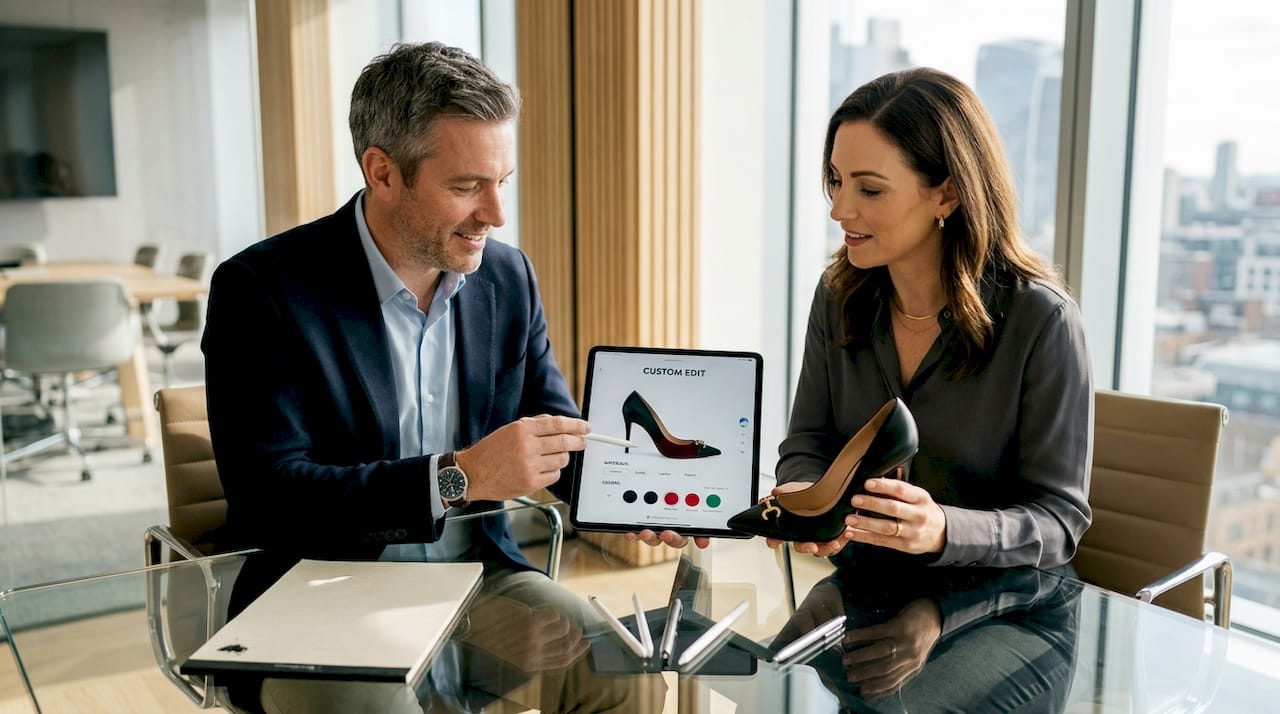
The business case is compelling. AR try-ons boost conversion by 20% and reduce returns by 64%, directly impacting profitability through higher sales and lower reverse logistics costs. By 2025, 35% of luxury brands deploy AR technology, recognizing that virtual try-on capabilities build purchase confidence by letting customers visualize products in context before committing. This technology particularly benefits accessories, eyewear, and jewelry categories where fit visualization drives decisions.
Digital twins extend beyond try-on functionality to enable bespoke customization at scale. These virtual replicas allow customers to experiment with design variations, materials, and personalization options in real-time, then seamlessly transition to production. Limited-edition digital collectibles paired with physical products create new revenue streams while deepening brand engagement among digitally native consumers.
The metaverse opens experimental marketing channels. Fashion metaverse market valued at $7.1 billion reflects substantial investment in virtual worlds where brands establish presence through digital flagship stores, virtual fashion shows, and immersive brand experiences. While consumer adoption remains nascent, forward-thinking brands treat metaverse initiatives as long-term positioning rather than immediate revenue drivers.
| Technology | Primary Benefit | Adoption Rate | Key Challenge |
|---|---|---|---|
| AR Try-Ons | 64% return reduction | 35% of luxury brands | Technical integration complexity |
| VR Showrooms | Immersive brand storytelling | Early adoption phase | Hardware accessibility barriers |
| Digital Twins | Custom fitting precision | Growing rapidly | Production workflow integration |
| Metaverse | New engagement channels | Experimental stage | Uncertain consumer adoption |
Strategic phygital implementation requires careful consideration:
- Ensure technology enhances rather than replaces human touchpoints
- Maintain visual quality standards matching physical brand presentation
- Create exclusive digital experiences preserving luxury positioning
- Integrate phygital tools seamlessly within existing customer journeys
- Measure engagement depth beyond vanity metrics like downloads
Pro Tip: Pilot phygital experiences with limited product categories or customer segments, gathering behavioral data to refine implementation before full-scale rollout across your entire catalog.
Phygital success demands balancing innovation with exclusivity. Mass-market AR filters risk commoditizing luxury brands, while overly complex VR experiences create friction. The sweet spot lies in intuitive technologies that feel magical rather than gimmicky, elevating the digital experience to match physical luxury standards. Brands exploring fashion innovation luxury brands examples find inspiration for differentiated phygital implementations that reinforce rather than dilute brand equity.
Blockchain and NFTs for authenticity and traceability
Counterfeiting costs luxury brands billions annually while eroding consumer trust. Blockchain technology offers an immutable solution, creating permanent digital records that verify product authenticity throughout the ownership lifecycle. This distributed ledger approach transforms how brands prove provenance and combat fraud in secondary markets.
Industry collaboration accelerates adoption. Aura Consortium registered over 70 million luxury products for authenticity verification, establishing a shared infrastructure among competing brands. This consortium model, backed by LVMH, Prada, and OTB, creates network effects where broader adoption increases system value for all participants. Each registered product receives a digital certificate accessible via NFC chips or QR codes, enabling instant authentication.
Non-fungible tokens extend blockchain utility beyond authentication. Gucci pioneered NFT use to create linked digital ownership and experiences, pairing physical products with unique digital assets that unlock exclusive content, events, or virtual goods. This phygital ownership model appeals to collectors seeking verifiable scarcity in both physical and digital realms.
NFT applications in luxury fashion include:
- Digital certificates of authenticity embedded in physical products
- Limited-edition virtual wearables for metaverse and gaming platforms
- Membership tokens granting access to exclusive brand experiences
- Resale royalties enabling brands to capture secondary market value
- Provenance tracking documenting ownership history and maintenance
Implementation complexity varies by use case. Simple authentication requires minimal customer interaction, scanning a chip to verify legitimacy. Complex NFT ecosystems demand customer education about digital wallets, blockchain basics, and token management. Brands must assess whether their target demographic possesses the technical literacy and interest to engage with these systems.
| Feature | Blockchain Authentication | NFT Ownership |
|---|---|---|
| Primary Purpose | Verify product authenticity | Create digital asset value |
| Customer Interaction | Passive (scan to verify) | Active (wallet management) |
| Technical Barrier | Low | Moderate to high |
| Brand Benefit | Counterfeit reduction | New revenue streams |
| Consumer Benefit | Purchase confidence | Collectible value |
Strategic considerations balance innovation with practicality. Some luxury consumers view NFTs skeptically, perceiving them as speculative rather than substantive. Brands must articulate clear value propositions beyond technological novelty, focusing on tangible benefits like guaranteed authenticity, enhanced resale value, or exclusive access. The challenge lies in integrating blockchain seamlessly so technology remains invisible while benefits stay prominent.
Pro Tip: Partner with established blockchain platforms rather than building proprietary systems, leveraging existing infrastructure and network effects while focusing internal resources on customer experience design.
Blockchain adoption reflects broader emerging digital trends 2025 luxury brands must navigate. The technology offers genuine solutions to authentication challenges while opening experimental territories in digital ownership. Success requires matching technological capability with strategic clarity about which problems blockchain actually solves for your brand and customers.
Omnichannel and sustainability: enhancing loyalty and reducing waste
Integrated digital strategies transcend individual technologies to create cohesive customer experiences across touchpoints. Omnichannel excellence combined with sustainability commitments represents a dual imperative for modern luxury brands, addressing both consumer expectations and environmental responsibility.
Omnichannel impact on business metrics is substantial. Omnichannel drives 10% higher AOV, 11% improved repeat purchase rates, and 13% better conversion in North American luxury markets. These gains stem from removing friction between channels, allowing customers to research online and purchase in-store, buy online and return in-store, or seamlessly transition between mobile and desktop experiences. Unified customer data enables consistent personalization regardless of touchpoint.
Sustainability initiatives gain urgency as environmental consciousness influences purchase decisions. Fashion warehouses hold $70-140 billion in excess stock, representing massive waste from overproduction and poor demand forecasting. Digital technologies address this challenge through smart manufacturing, where 95% of manufacturers adopt technologies reducing waste. Data-driven inventory optimization, on-demand production, and AI-powered demand forecasting minimize excess stock while maintaining product availability.
Consumer sentiment reinforces sustainability importance. Seventy-three percent of consumers prioritize brands demonstrating authentic environmental responsibility, making sustainability a competitive differentiator rather than optional corporate social responsibility. Luxury brands face particular scrutiny given their premium positioning and resource-intensive production methods.
| Initiative | Environmental Impact | Business Benefit |
|---|---|---|
| Smart manufacturing | Reduces overproduction waste | Lower inventory carrying costs |
| Digital resale platforms | Extends product lifecycle | New revenue from secondary market |
| Supply chain transparency | Tracks carbon footprint | Enhanced brand reputation |
| On-demand production | Eliminates excess inventory | Improved margin efficiency |
Strategic integration creates synergies:
- Use omnichannel data to improve demand forecasting accuracy
- Implement digital product passports tracking environmental impact
- Create certified resale programs capturing secondary market value
- Communicate sustainability efforts through transparent storytelling
- Align digital innovation investments with environmental goals
Pro Tip: Quantify sustainability initiatives in business terms, calculating waste reduction, cost savings, and customer acquisition benefits to build internal support beyond ethical arguments alone.
The intersection of omnichannel and sustainability reflects sophisticated digital maturity. Brands excel when they view these initiatives not as separate programs but as integrated strategies reinforcing brand positioning. Seamless omnichannel luxury customer experience combined with authentic environmental commitment creates differentiation that resonates with conscious consumers without compromising luxury positioning. Exploring fashion innovation luxury brands reveals how leading players integrate sustainability into their digital transformation narratives.
Explore fashion brand growth tactics for luxury market success
Navigating these digital trends requires strategic expertise and implementation frameworks tailored to luxury market dynamics. Decision-makers seeking competitive advantage need proven methodologies that translate technological possibility into business results while preserving brand integrity.
Deep expertise in fashion brand growth tactics luxury market provides the strategic foundation for effective digital transformation. Understanding how to analyze buyer behavior luxury brands ensures technology investments align with actual customer needs rather than industry hype. Innovative branding strategies 2026 luxury fashion help position digital initiatives as brand enhancements rather than compromises. Psychology-driven marketing approaches reveal why customers respond to specific digital experiences, enabling more effective resource allocation and higher return on innovation investments.
Frequently asked questions about digital trends in luxury fashion 2025
How can luxury brands integrate AI without compromising craftsmanship perception?
Position AI as enhancing rather than replacing human expertise, using technology for operational efficiency while highlighting artisan involvement in creative and production processes. Communicate that AI handles data analysis and personalization logistics, freeing craftspeople to focus on their specialized skills.
What role do NFTs play beyond speculative collectibles?
NFTs serve practical functions including authentication certificates, ownership provenance tracking, and access tokens for exclusive experiences. Focus on utility rather than investment potential, positioning NFTs as digital enhancements to physical luxury goods that provide ongoing value.
How do brands balance digital accessibility with exclusivity?
Implement tiered digital experiences where basic access is broad but premium features require qualification through purchase history, invitation, or membership. Create digital scarcity through limited-edition virtual goods, timed access, or exclusive content that mirrors physical luxury positioning.
Does sustainability investment actually improve ROI?
Yes, through multiple channels including reduced waste lowering costs, improved brand reputation attracting conscious consumers, and operational efficiencies from smart manufacturing. Quantify benefits in financial terms to justify investment beyond ethical considerations alone.
What are the biggest barriers to adopting these digital trends?
Data infrastructure limitations, team capability gaps, and organizational resistance to change represent primary obstacles. Address these through phased implementation, strategic upskilling programs, and pilot projects demonstrating tangible results. Explore fashion brand growth tactics luxury market for frameworks overcoming adoption barriers systematically.
How quickly should luxury brands adopt emerging technologies?
Balance first-mover advantage with brand risk by piloting technologies with limited scope before full deployment. Move quickly on proven trends like AI personalization and omnichannel integration while taking measured approaches to experimental areas like metaverse presence.