


TL;DR:
- Heritage is a curated set of symbols and stories that build credibility and emotional connection.
- Activating heritage through storytelling and experience boosts perceived quality and premium pricing.
- Balancing heritage with innovation ensures relevance and prevents stagnation in luxury brands.
Seven out of ten luxury consumers say they will pay more for brands with a storied past. That single statistic should give every brand manager pause. While competitors chase the next digital trend or product innovation, the brands consistently commanding the highest premiums are often those that have learned to weaponize their history. Brand heritage, the curated set of values, symbols, and stories that give a brand continuity and credibility, is not a soft asset. In luxury fashion, automotive, and hospitality, it is one of the most defensible competitive advantages available. This guide breaks down exactly how heritage works, why it drives real financial value, and how your organization can activate it without falling into the traps that derail even storied houses.
Table of Contents
- Understanding brand heritage: Beyond static history
- How brand heritage drives premium positioning and value
- Framework: activating and curating heritage for impact
- balancing heritage with innovation: risks and best practices
- Our take: The uncomfortable truth about brand heritage and innovation
- leverage your brand heritage for measurable growth
- frequently asked questions
Key Takeaways
| Point | Details |
|---|---|
| Signals quality and trust | Brand heritage immediately tells buyers your brand stands for quality, credibility, and reliability. |
| Boosts premium pricing | Heritage brands consistently command higher prices and greater loyalty, especially in luxury sectors. |
| Needs active curation | Simply having history isn’t enough—activating your heritage through experiences and storytelling drives value. |
| Balance is crucial | Brands that succeed blend continuity with innovation, preventing static legacy from stalling growth. |
Understanding brand heritage: Beyond static history
Brand heritage is not the number of years on your “about us” page. That is a common and costly mistake. True brand heritage is a strategically curated set of symbols, narratives, and values that connect a brand’s past to its present and future in a way that resonates emotionally with consumers.
Think of it this way. A company can be 150 years old and have zero effective heritage if those 150 years are never organized into a coherent story. Meanwhile, a 30-year-old brand can carry tremendous heritage weight if it has carefully preserved its founding philosophy, amplified its defining moments, and consistently embedded those signals into every consumer touchpoint.
Heritage means different things in different sectors:
- Fashion: Heritage is tied to emotional legacy, the founder’s vision, iconic silhouettes, and the cultural moments a house helped define.
- automotive: Heritage activates nostalgia and emotional attachment, reminding buyers of a model’s racing pedigree or engineering breakthroughs.
- hospitality: Heritage signals prestige, service excellence, and a track record of hosting the world’s most discerning guests.
In each case, heritage functions as what economists call a signal. When a consumer cannot directly verify quality before purchase, they rely on external cues to make a judgment. Research confirms that brand heritage signals quality and credibility without the need for heavy advertising investment, acting as shorthand for trust under conditions of information asymmetry.
“Heritage is not what you preserve in a museum. It is what you carry forward as a living credential that makes every new product more believable and every premium price more defensible.”
The most common mistake brand managers make is treating heritage as a fixed archive. Static history is inert. It does not influence purchasing decisions. Dynamic heritage, curated and activated through storytelling, design, and experience, is what drives premium positioning.
How brand heritage drives premium positioning and value
With a working definition in place, let us look at the hard numbers behind why heritage creates measurable financial value.
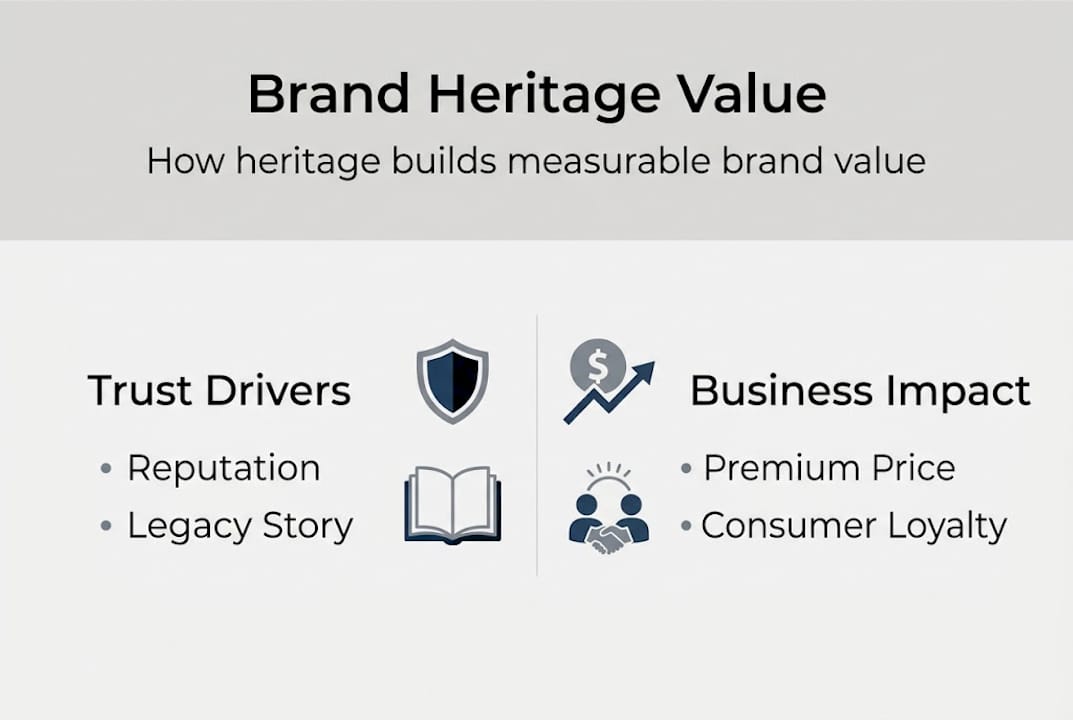
Research on the automotive heritage impact shows that brand heritage not only boosts perceived quality but fully mediates the effect on a consumer’s willingness to pay a premium. In practical terms, this means heritage is not just one factor among many. It is the bridge between a consumer liking a brand and actually paying more for it.
The numbers are similarly compelling in hospitality. A study on luxury hotel brand equity found that brand equity, strongly tied to heritage cues, mediates the relationship between service quality and a guest’s intention to return, explaining a striking 52% of the variance in revisit intention. That means more than half of a guest’s decision to come back is explained by brand equity built on heritage signals, not just the quality of the room or the meal.
Here is a quick comparison of how heritage translates across luxury sectors:
| sector | Heritage driver | Business outcome | Example |
|---|---|---|---|
| Fashion | founder legacy, iconic codes | Higher resale value, primary market premium | Louis vuitton, chanel |
| automotive | racing pedigree, engineering firsts | Price premium, stronger brand attachment | jaguar, porsche |
| hospitality | service history, famous guests | Higher ADR, repeat guest rate | cunard line, ritz paris |
For fashion brands in particular, heritage lifts value at both ends of the market. Primary sales benefit from the trust signal, and luxury case studies on heritage consistently show that resale prices track higher for houses with documented, well-communicated legacies.
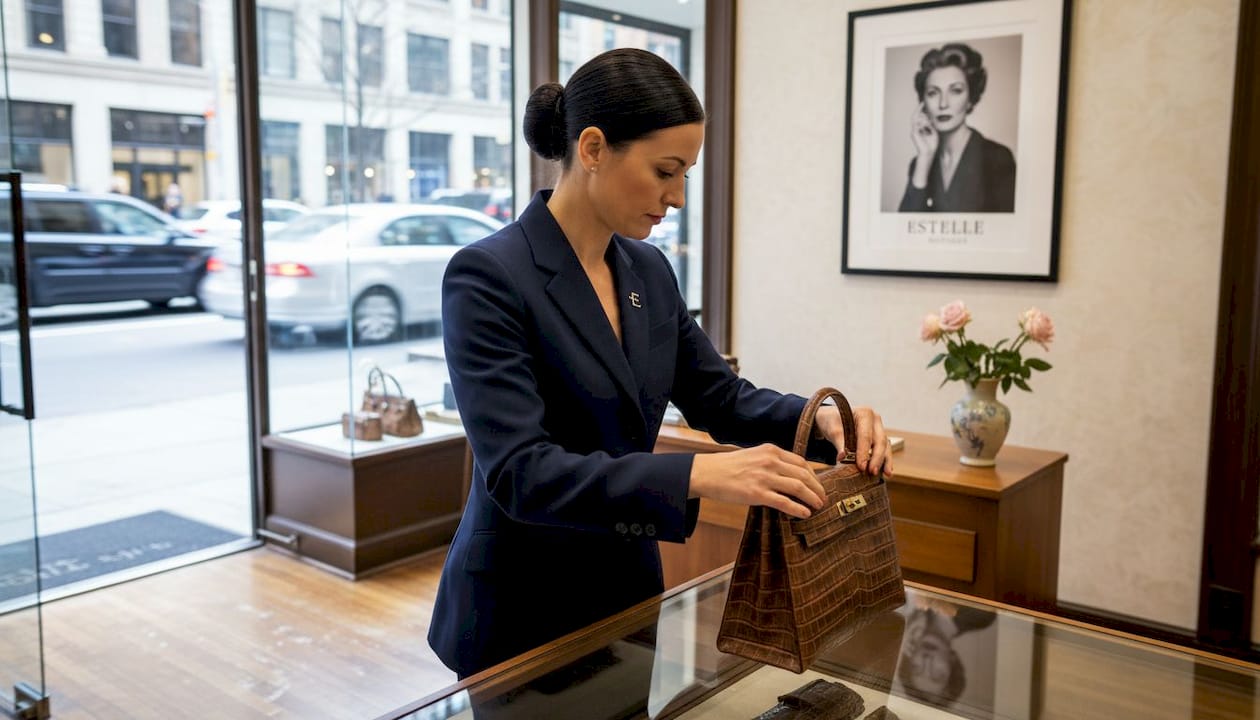
Pro tip: If a competitor launches a newer, shinier product, your heritage is your defense. A brand with a deeply activated history will retain consumer preference even when outmatched on feature-by-feature comparisons, because heritage addresses identity and status needs that product specs simply cannot satisfy. Learn more about boosting luxury brand prestige through heritage-first strategies.
Framework: activating and curating heritage for impact
Knowing that heritage matters is not enough. You need a structured approach to inventory, prioritize, and communicate it. Here is a four-step framework designed for brand executives in fashion, automotive, and hospitality.
- inventory your core heritage assets. Start by cataloging your founding values, key symbols (logos, materials, signatures), legacy achievements, and pivotal cultural moments. Many brands discover they have far more usable heritage material than they realized.
- curate and prioritize for relevance. Not every piece of your history will resonate with your current target audience. Select the elements that align with the values your market genuinely cares about, whether that is craftsmanship, exclusivity, adventure, or service mastery.
- activate through experience, not just declaration. This is where most brands fall short. Heritage must live in events, product design cues, packaging, staff training, and storytelling, not just in a printed timeline in the lobby or a paragraph in the brand book. Research confirms that curating heritage elements into experiential storytelling, rather than static history, is what drives perception and purchasing behavior.
- evolve while anchoring the core. The stories you tell should update. The emotional core should not. Every iteration should feel like a natural continuation of the original mission, not a departure from it.
Here is how leading brands handle heritage activation versus how failing ones approach it:
| approach | Heritage-led brands | Heritage-neglecting brands |
|---|---|---|
| storytelling | living narratives, updated regularly | One-time anniversary campaigns |
| product design | iconic codes refreshed each season | Heritage ignored in design language |
| consumer experience | founder story embedded in service | History limited to website footer |
| digital presence | archive-driven content strategy | No reference to brand origins |
You can find examples of premium heritage positioning across sectors that illustrate each of these activation strategies in practice.
Pro tip: Use insider storytelling to create emotional connection. jaguar’s old “copy nothing” ethos, for example, was not just a tagline. It was a permission structure for bold design decisions that consumers could trace back to the brand’s founding character. A step-by-step marketing guide can help you build a similar narrative architecture for your brand.
balancing heritage with innovation: risks and best practices
Heritage is an asset with real risks attached to it. The most dangerous version of brand heritage is the kind used as a shield rather than a springboard.
A brand that relies exclusively on its legacy to justify its pricing, without delivering on contemporary relevance, will eventually find that heritage cannot carry the weight alone. Over-reliance on heritage risks exactly the kind of brand stagnation that allows agile, younger competitors to seize market share from established names.
The brands that get this right innovate within their codes. Louis vuitton did not abandon its iconic trunk. It redesigned it for laptops and backpacks, keeping the signature canvas pattern while speaking to a new generation’s needs. renault’s retro-styled EVs are another sharp example. The design language of the original R5 was brought forward into an electric vehicle, making the car feel simultaneously familiar and forward-looking.
Common mistakes to avoid when activating heritage:
- Using heritage as an excuse not to improve product or service quality
- communicating history in a way that feels nostalgic but not aspirational
- over-indexing on founder mythology while ignoring the current brand team’s story
- failing to train frontline staff or sales teams on the brand’s heritage narrative
- treating heritage as a campaign rather than an operating philosophy
Heritage is even more powerful when entering a new market or reaching a lower-familiarity audience. Research shows that heritage is stronger for brands with low consumer familiarity, functioning as a trust accelerator in markets where the brand does not yet have a transactional track record.
“Heritage must be a dynamic asset. Static legacy is a liability.”
See premium branding examples that illustrate how brands have threaded this needle effectively.
Our take: The uncomfortable truth about brand heritage and innovation
Here is something most heritage consultants will not tell you: the brands that do heritage best are not the ones with the richest history. They are the ones with the most disciplined editors.
Real heritage management means making hard calls about what to amplify and what to let go. A founding story that no longer aligns with where your audience is heading is not a heritage asset. It is dead weight. The most competitive legacy brands in fashion, automotive, and hospitality are not winning because they have more history. They are winning because their leadership teams are ruthless about which parts of that history get carried forward and which parts get quietly retired.
The hardest competitors to beat in luxury are not the newest entrants with fresh branding budgets. They are legacy brands that have figured out how to stay emotionally resonant across generations. That requires treating heritage not as something you protect, but as something you continuously reinterpret.
Pro tip: Stop asking “how do we preserve our heritage?” Start asking “how do we make our heritage useful to the consumer who is buying from us today?” That shift in framing changes everything from your product design language to your content strategy to the stories your sales teams tell on the floor.
leverage your brand heritage for measurable growth
If the frameworks and research in this article have surfaced questions about where your own brand stands, that is exactly the right reaction.
Identifying, curating, and activating heritage assets is specialized work that sits at the intersection of consumer psychology, brand strategy, and luxury market expertise. Getting it right requires more than a brand audit. It requires a structured methodology built for the specific dynamics of fashion, automotive, and hospitality. We work directly with brand managers and executives to build heritage-led strategies that generate measurable results. From luxury brand growth tactics to full activation playbooks, the resources and strategic support you need are available through a step-by-step marketing guide tailored for premium brands.
frequently asked questions
What is the difference between brand heritage and brand history?
Brand heritage is the curated set of values, symbols, and stories that a brand strategically uses to build credibility and perceived quality, while brand history is simply a neutral record of past events and milestones.
How does brand heritage affect consumer loyalty?
Heritage builds emotional attachment and trust, which drives repeat purchasing. nostalgic luxury car brands consistently show stronger brand attachment and separation distress compared to brands positioned primarily around futuristic innovation.
Can new brands develop heritage?
Absolutely. emerging brands can deliberately spotlight founding values, early design decisions, and brand origin stories to begin building heritage perception, even without decades of history behind them.
Why is balancing heritage and innovation essential for luxury brands?
Because static heritage risks irrelevance over time. Without purposeful evolution, even the most storied brand will lose ground to competitors who blend continuity with the freshness that new consumer generations require.