

TL;DR:
- Effective fashion marketing connects brands to culture, converts attention into sales, and builds consumer loyalty. Campaigns succeed through authenticity, influencer precision, integrated digital commerce, and measurable impact metrics. Building strategic foundations rooted in consumer understanding drives better results than superficial tactics.
Fashion marketing is defined as the practice of connecting clothing and accessory brands to consumers through campaigns that combine cultural relevance, creative storytelling, and measurable commercial outcomes. The best fashion marketing examples do not just generate buzz. They convert attention into sales, brand equity, and lasting consumer loyalty. Campaigns from Gap, American Eagle, and Reformation prove that the most effective fashion advertising strategies integrate culture, celebrity, and digital commerce into a single, connected system. This article breaks down the top campaigns, the tactics behind them, and what you can apply directly to your own brand.
1. What makes fashion marketing examples succeed?
The strongest fashion campaigns share one defining trait: they act as cultural participation, not sponsorship. Brands that insert themselves into genuine cultural moments build deeper consumer loyalty than brands that simply pay for placement. The difference shows up in every metric, from brand love scores to repeat purchase rates.
Four components separate high-impact campaigns from forgettable ones:
- Cultural authenticity. The campaign connects to a real moment, movement, or emotion that the audience already cares about.
- Influencer and celebrity integration. Partnerships are chosen for audience alignment, not just follower count.
- Digital commerce infrastructure. AR try-ons, shoppable social content, and frictionless checkout convert buzz into immediate revenue.
- Measurement discipline. Teams track Media Impact Value (MIV), sales lift, website sessions, and stock movement, not just impressions.
MIV is the industry’s standard metric for quantifying the value of media placements across owned, earned, and paid channels. It translates reach and engagement into a dollar figure, making it easier to compare campaigns and justify spend.
Pro Tip: Map your campaign’s full commerce pipeline before launch. A viral moment with no shoppable path is a missed revenue opportunity, not a success.
2. Gap’s “Better in Denim” campaign
Gap’s “Better in Denim” campaign is one of the clearest fashion branding examples of cultural participation executed at scale. The campaign paired K-pop group KATSEYE with a re-recorded version of Kelis’s “Milkshake,” transforming a nostalgic cultural asset into a shared generational moment. The result was over 8 billion impressions and a 7% increase in comparable sales.
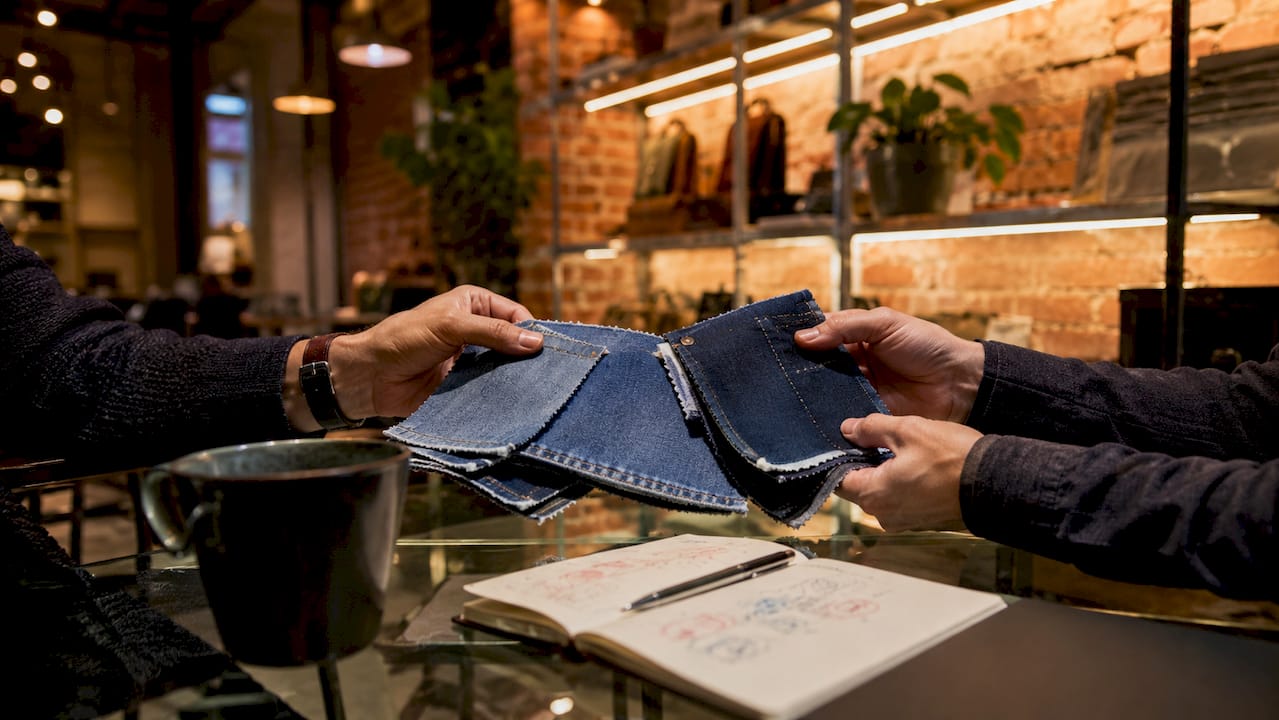
The campaign also generated 600 million views on Gap’s owned channels and raised brand equity by one percentage point year over year. Those numbers reflect something deeper than media spend. They show what happens when a brand stops advertising at its audience and starts creating with them.
The strategic choice to re-record “Milkshake” rather than simply license it was deliberate. It signaled that Gap was a contributor to culture, not a passenger. That distinction is what builds brand love rather than just brand awareness.
3. American Eagle’s Sydney Sweeney campaign
American Eagle’s collaboration with Sydney Sweeney is one of the most cited successful fashion campaigns for its speed of commercial impact. Within 24 hours of launch, company shares rose 10%. The hero product sold out in under 48 hours. A single platform recorded 3.4 million likes on the campaign’s social post, and website sessions doubled.
What made this campaign work was not Sydney Sweeney alone. American Eagle built a complete commerce engine around the moment. AR try-on lenses, shoppable social edits, and BeReal placements all ran simultaneously. The AR lens and BeReal placements kept consumers engaged after the initial spike and sustained traffic through the sell-out period.
The lesson for brand managers is direct: celebrity attention is the top of the funnel. Without shoppable infrastructure underneath it, the attention evaporates. American Eagle’s campaign succeeded because the commerce layer was as carefully planned as the creative.
4. Reformation x Nara Smith: influencer-led MIV
The Reformation x Nara Smith collaboration demonstrates how a single well-placed influencer post can generate $267,000 MIV in one week from one TikTok video. The full campaign produced $1.4 million in MIV within seven days. Nara Smith’s content accounted for 52% of that total.
That concentration of value in a single creator is not an accident. Reformation chose Nara Smith because her aesthetic and audience matched the brand’s identity precisely. The content felt native to her feed, not like a paid placement. That authenticity is what drove the disproportionate return.
The broader implication for influencer marketing in fashion is clear. One deeply aligned creator outperforms a roster of loosely relevant ones. MIV concentration in a single post signals genuine audience resonance, not just paid reach.
Pro Tip: Before signing an influencer, audit the comment section of their last five posts. Genuine engagement reads differently from inflated metrics. Real comments reveal real audience trust.
5. Ralph Lauren and Selena Gomez: the unplanned moment
Ralph Lauren’s highest-performing recent campaign was not planned in a traditional sense. Selena Gomez wore Ralph Lauren wedding attire, and the brand generated $10.3 million in MIV within 48 hours. That figure represented 15% of the brand’s monthly MIV total from a single celebrity moment.
This example illustrates a category of fashion promotion techniques that brand managers often underestimate: earned celebrity moments. The brand did not create the moment. It was positioned well enough that the moment created value for the brand automatically. That positioning requires years of consistent brand identity work.
The takeaway is not to wait for luck. It is to build a brand identity so clear and desirable that celebrities choose it organically. When they do, the commercial return can exceed any paid campaign.
6. Louis Vuitton and Zendaya: Y2K nostalgia as brand strategy
Louis Vuitton’s Y2K-inspired campaign with Zendaya used nostalgia as a deliberate positioning tool. The campaign tapped early 2000s visual codes, including low-rise silhouettes, chrome accessories, and saturated color palettes, to connect with millennial and Gen Z consumers simultaneously. Zendaya’s cultural authority across both demographics made her the ideal vehicle for that message.
Nostalgia works in fashion marketing because it reduces purchase risk. Consumers feel familiar with the aesthetic before they buy. Louis Vuitton used that psychological shortcut to introduce new product lines within a recognizable visual language. The result was coverage across fashion, entertainment, and culture media, multiplying the campaign’s earned reach well beyond its paid placements.
7. Balenciaga’s community-driven brand building
Balenciaga’s approach to examples of fashion branding differs from most luxury houses. The brand has consistently used real people, unconventional casting, and raw visual aesthetics to build a community identity rather than an aspirational one. Campaigns feature faces and stories that feel unfiltered, which creates a sense of belonging among consumers who reject traditional luxury signaling.
This strategy works because it targets a specific psychological need: the desire to belong to a group that rejects the mainstream. Balenciaga does not sell aspiration in the traditional sense. It sells membership in a cultural tribe. That distinction drives loyalty that outlasts any single product cycle.
8. Chloé’s emotional resonance strategy
Chloé’s recent campaigns have centered on warmth, natural light, and unscripted human connection. The brand’s visual language prioritizes emotional resonance over product display. Models appear in motion, in conversation, and in natural settings rather than posed against studio backdrops.
This approach reflects a broader shift in digital marketing in fashion toward content that performs on social media by feeling personal rather than polished. Chloé’s content earns saves and shares because it triggers an emotional response before it triggers a purchase impulse. That sequence, emotion first and then commerce, is increasingly the pattern behind high-performing fashion content.
9. Digital innovation and immersive experiences
Digital tools now determine whether a fashion campaign sustains momentum or fades after the launch spike. The most effective tactics currently in use include:
- AR try-ons that let consumers visualize products on themselves before purchasing, reducing return rates and increasing conversion.
- Shoppable social edits that compress the path from discovery to checkout into a single tap.
- BeReal and authentic platform placements that reach audiences in low-competition, high-trust environments.
- 3D billboards and pop-up activations that generate earned media by creating shareable physical moments.
The advantages of digital innovation in luxury fashion extend beyond conversion rates. They create touchpoints that reinforce brand identity at every stage of the consumer journey. American Eagle’s campaign doubled website sessions precisely because multiple digital touchpoints worked together rather than in isolation.
For brand managers designing experiential campaigns, the principle is the same. Each activation, whether physical or digital, should connect to the next one. Disconnected experiences create awareness. Connected experiences create customers.
10. Comparing campaigns by impact metrics
The table below compares the top campaigns across four dimensions that matter most to brand managers.
| Campaign | Media impressions | Sales impact | MIV | Strategic focus |
|---|---|---|---|---|
| Gap “Better in Denim” | 8 billion+ | +7% comparable sales | Not publicly listed | Cultural participation |
| American Eagle x Sydney Sweeney | 3.4M likes (single platform) | Sold out in 48 hours | Not publicly listed | Integrated commerce |
| Reformation x Nara Smith | Not publicly listed | Not publicly listed | $1.4M in 7 days | Influencer-led content |
| Ralph Lauren x Selena Gomez | Not publicly listed | Not publicly listed | $10.3M in 48 hours | Earned celebrity moment |
| Louis Vuitton x Zendaya | Not publicly listed | Not publicly listed | Not publicly listed | Nostalgia and positioning |
The comparison across campaigns reveals that no single metric tells the full story. Gap leads on impressions and sales lift. Reformation leads on MIV efficiency per creator. Ralph Lauren demonstrates the highest MIV velocity. Each result reflects a different strategic priority, and each priority suits a different brand goal.
Brand managers repositioning a legacy label should study Gap. Those launching a new product line with limited budget should study Reformation. Those managing a heritage luxury house should study Ralph Lauren’s earned moment playbook.
Key takeaways
The most effective fashion marketing campaigns combine cultural authenticity, influencer precision, and integrated digital commerce to convert attention into measurable sales and brand equity.
| Point | Details |
|---|---|
| Cultural participation beats sponsorship | Brands that contribute to culture, like Gap with “Milkshake,” build deeper loyalty than those that simply pay for placement. |
| Commerce infrastructure is non-negotiable | Viral moments without shoppable paths waste attention; American Eagle’s sell-out proves the pipeline matters as much as the creative. |
| Influencer alignment drives MIV efficiency | Reformation’s Nara Smith generated 52% of campaign MIV from one post by matching creator identity to brand identity precisely. |
| Earned celebrity moments deliver outsized returns | Ralph Lauren’s $10.3M MIV in 48 hours came from brand positioning, not a paid campaign. |
| Digital tools sustain momentum | AR try-ons, shoppable edits, and multi-platform placements keep consumers engaged after the launch spike fades. |
What I’ve learned from studying these campaigns closely
The pattern I see most often when brands fail to replicate these results is this: they copy the format and ignore the foundation. A brand will see Gap’s “Better in Denim” campaign and immediately brief an agency to find a nostalgic song and a Gen Z artist. They get the surface right and the substance wrong.
Cultural participation is not a tactic. It is a posture. Gap earned the right to use “Milkshake” as a cultural asset because the brand had a genuine relationship with that era of American style. The campaign felt true because it was true. When brands without that foundation attempt the same move, audiences recognize the performance immediately.
The same principle applies to influencer selection. The Reformation x Nara Smith result was not repeatable with a different creator. It worked because Nara Smith’s audience trusted her aesthetic judgment completely. That trust took years to build. Brands that chase follower counts instead of audience trust will always underperform on MIV.
What I tell every client is this: measure buyer behavior before you build the campaign, not after. Understand what your audience already believes about your brand, what cultural spaces they inhabit, and what creators they genuinely follow. Then build the campaign around that reality. The creative execution is the easy part. The strategic foundation is where most brands cut corners.
The other mistake I see consistently is treating MIV as the end goal. MIV is a useful signal. It is not a business result. The campaigns that matter are the ones that move stock prices, sell out products, and increase repeat purchase rates. Track those numbers from day one, and you will make better decisions at every stage.
— Corrado
How Corradomanenti supports fashion brands in building campaigns that convert
The campaigns analyzed here share one thing beyond creative excellence: they were built on a clear understanding of consumer psychology and a disciplined approach to measurement. Corradomanenti works with fashion and luxury brands to build exactly that foundation, from luxury market growth tactics to influencer strategy and digital commerce integration.
If you are a brand manager looking to move from inspiration to execution, the fashion marketing strategy checklist is a practical starting point. It covers campaign architecture, influencer selection criteria, MIV benchmarking, and digital activation sequencing in a format built for professionals who need to act, not just read.
FAQ
What are the best fashion marketing examples from recent campaigns?
Gap’s “Better in Denim,” American Eagle’s Sydney Sweeney collaboration, and Reformation x Nara Smith are among the strongest recent examples. Each demonstrates a different approach: cultural participation, integrated commerce, and influencer-led MIV generation respectively.
How do you measure the success of a fashion marketing campaign?
The most complete measurement framework tracks MIV, comparable sales lift, website sessions, and stock movement together. MIV alone does not confirm business impact; sales and traffic data confirm whether attention converted to revenue.
Why did the American Eagle x Sydney Sweeney campaign perform so well?
The campaign succeeded because it paired celebrity reach with a complete digital commerce infrastructure, including AR try-ons, shoppable edits, and BeReal placements. The integrated commerce engine converted the attention spike into a product sell-out within 48 hours.
What is Media Impact Value (MIV) in fashion marketing?
MIV is a measurement tool that assigns a dollar value to media placements across owned, earned, and paid channels. It allows brand managers to compare campaign performance across different channels and creators on a single scale.
How important is influencer selection in fashion campaigns?
Influencer selection is the single most important variable in MIV efficiency. Reformation’s Nara Smith generated 52% of campaign MIV from one post because her audience trusted her aesthetic judgment. Audience alignment matters far more than follower count.