
TL;DR:
- Psychological triggers like scarcity and emotional storytelling significantly boost luxury consumer engagement and sales.
- Authenticity and careful sequencing of triggers are crucial to maintaining trust and brand integrity in luxury marketing.
- Overusing or insincerely applying triggers can lead to skepticism and damage to long-term brand perception.
Psychological triggers that boost luxury brand engagement
Most luxury marketing teams spend enormous budgets crafting flawless visuals and aspirational copy, yet still miss the deeper psychological levers that actually move high-net-worth consumers to act. The gap isn’t creative talent. It’s science. Empirical research confirms that loss-framed messages outperform gain-focused ones by 5 to 15%, emotional ads boost recall by 25%, and limited editions account for 28% of luxury sales. These aren’t abstract findings. They are actionable signals that should shape every campaign brief, product launch, and brand experience you design. This article breaks down the most powerful psychological triggers and shows you exactly how to apply them in the fashion and luxury space.
Table of Contents
- The science behind psychological triggers in luxury marketing
- Scarcity and exclusivity: Building desire in fashion and luxury
- Emotional and identity triggers: The halo effect, status, and personalization
- Strategically applying psychological triggers: What works best for luxury marketers
- The overlooked art of balancing science and authenticity in luxury marketing
- Supercharge your luxury marketing with expert-backed strategies
- Frequently asked questions
Key Takeaways
| Point | Details |
|---|---|
| Scarcity drives value | Limited editions and genuine exclusivity fuel demand and status for luxury brands. |
| Emotions matter most | Emotional storytelling improves ad recall and deepens consumer connections in fashion. |
| Layer and test triggers | The most effective strategies combine multiple triggers and use A/B testing to tailor for different consumer segments. |
| Authenticity is essential | Consumers quickly detect insincerity, so triggers must align with the brand’s authentic identity to succeed. |
The science behind psychological triggers in luxury marketing
With an understanding of why these triggers matter, let’s explore the science that makes them so effective in premium markets.
Luxury consumers are not rational buyers. That statement might feel obvious, but most marketing strategies still treat them as if they are, loading campaigns with product features, craftsmanship details, and heritage timelines. Consumer neuroscience tells a very different story. The brain processes emotional content before rational content, and emotional memory formation is stronger when personal identity is involved. This is why psychological triggers in luxury branding go far beyond simple persuasion tactics. They speak to how people see themselves, who they want to become, and how they want to be perceived by others.
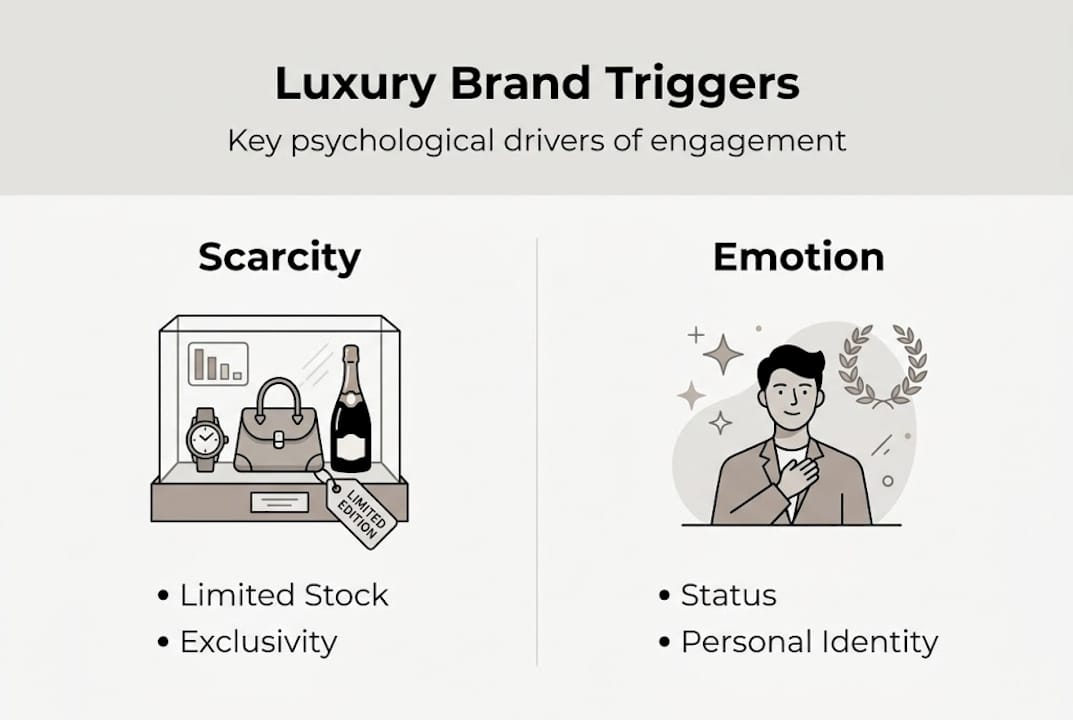
Five core triggers define this space:
- Scarcity: The perception that supply is limited, driving urgency and desire
- Exclusivity: Belonging to a selected group with privileged access
- Social proof: Validating decisions through the behavior and opinions of others
- Loss aversion: The psychological pain of missing out, which outweighs the pleasure of gaining
- Emotion: Storytelling and sensory experiences that create lasting brand memory
The data behind these triggers is compelling. Consider what happens when you apply emotional triggers for luxury sales through well-structured campaigns.
| Trigger | Measured Impact | Application Example |
|---|---|---|
| Emotional storytelling | +25% ad recall | Brand heritage films |
| Limited editions | 28% of luxury sales | Seasonal capsule drops |
| Loss framing | 5 to 15% lift in conversions | “Only 3 left” messaging |
| Anchoring | +12% average order value | Premium tier presentation |
| Social proof | 73% trust reviews equally to personal recommendations | Editorial placements |
“Emotional primacy isn’t a soft concept, it’s a measurable commercial advantage. Brands that engineer emotional resonance into every touchpoint consistently outperform peers on both recall and revenue metrics.” This is what research confirms about the outsized role of emotion in luxury buying decisions.
When 73% of consumers trust peer reviews as much as personal recommendations, and limited editions account for 28% of luxury sales volume, you are not dealing with soft psychology anymore. You are dealing with hard commercial architecture.
Scarcity and exclusivity: Building desire in fashion and luxury
Now that we’ve seen the scientific foundation, let’s look at how top brands use scarcity and exclusivity to convert desire into real engagement.
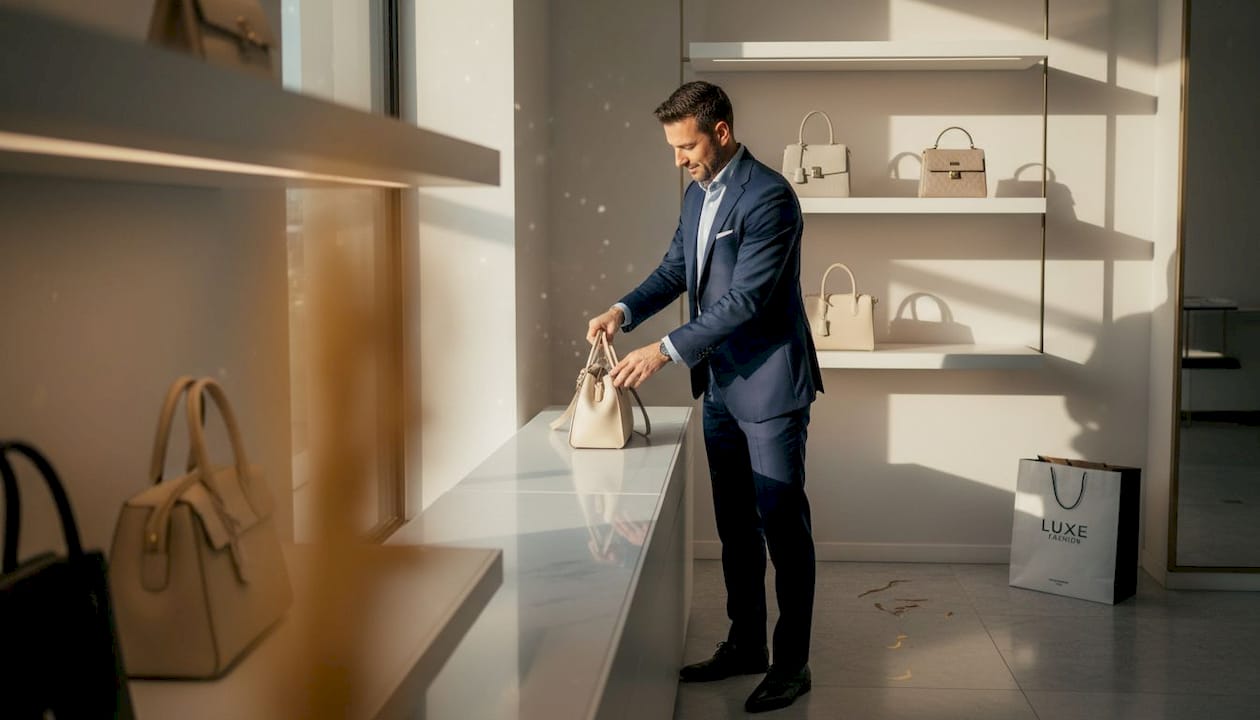
Few psychological mechanisms are as powerful in luxury as genuine scarcity. The Hermes Birkin is the textbook example: waitlists that span years don’t damage demand, they amplify it. The waiting itself becomes a social signal, proof that you have entered an inner circle that most people never access. That status function is critical. Scarcity doesn’t just create urgency. It creates identity currency.
But there’s a sharp line between authentic scarcity and manufactured urgency, and luxury consumers can smell the difference.
| Type | Definition | Consumer Perception | Risk Level |
|---|---|---|---|
| Genuine scarcity | Truly limited production or access | High trust, elevated desire | Low |
| Manufactured urgency | Fake countdown timers, inflated “limited” claims | Skepticism, brand damage | High |
| Curated exclusivity | Invite-only access, tiered membership | Aspirational pull | Low to medium |
| Artificial exclusivity | Paid-for VIP with no real barrier | Feels transactional, hollow | Medium |
Research confirms this distinction matters commercially. A meta-analysis on scarcity shows that purchase intent rises measurably when scarcity is genuine and contextually relevant, but drops when consumers perceive manipulation. The drop isn’t just in that campaign. It contaminates trust in the broader brand.
Gucci’s nano-influencer strategy shows how exclusivity thinking extends beyond product drops. Their campaigns with nano-influencers, those with smaller but highly engaged followings, generated 7.2% engagement versus 1.8% for mega-influencers. The lesson: exclusivity in access, even in distribution of marketing messages, outperforms mass reach.
Key tactics brands are using right now to use scarcity in luxury effectively:
- Waitlists with genuine barriers to entry, not just email captures
- Single-run capsule collections tied to real events or collaborations
- Tiered access programs where early access is earned, not purchased
- Geographic exclusivity launches before global rollout
- Limited archive reissues with documented production counts
Pro Tip: Never repeat the same scarcity trigger more than twice in a campaign cycle. The third time you tell a customer something is rare, they stop believing you. Rotate formats and create genuinely new constraints to keep the sense of scarcity credible. Also, segment your audience before applying scarcity tactics. A customer who has purchased five times needs a different exclusivity signal than a first-time buyer discovering your brand through emotional branding in fashion.
Emotional and identity triggers: The halo effect, status, and personalization
While scarcity and exclusivity spark engagement, emotion and identity are equally crucial. Here’s how they come into play across the full luxury purchase journey.
The halo effect in luxury is simple but powerful: when a consumer develops a strong positive association with one element of your brand, that positivity spreads to everything else you do. A breathtaking flagship store experience makes the fragrance smell better. A beautifully crafted campaign film makes the leather feel more supple. This isn’t metaphor. It’s how perception works neurologically, and it’s why psychology in luxury experience is a discipline, not a soft skill.
Veblen goods add another layer. Unlike standard products, luxury items often see demand increase as price rises, because the price itself functions as the signal. When a customer carries a bag that costs more than most people’s monthly salary, they’re not buying utility. They’re buying status communication. Your job as a marketer is to make sure every touchpoint reinforces that communication, from the tissue paper in the box to the way the sales associate introduces the piece.
“Luxury sales rely more on identity and emotion than utility. The product is almost secondary to what owning it says about the person.”
Key approaches to layering emotional and identity triggers:
- Emotional storytelling: Films, founder narratives, and artisan documentaries that connect product to meaning
- Identity layering: Positioning the brand as a reflection of the customer’s values, not just their wealth
- Personalization: Monogramming, bespoke appointments, and segmented messaging that make the customer feel individually seen
- Ritual design: Packaging, unboxing, and in-store ceremonies that create emotional memory around the purchase
- Community architecture: Exclusive events and private access that deepen belonging and repeat engagement
Empirical data backs this approach. Emotional recall lifts of 25% compound over time. A customer who remembers how your brand made them feel returns more often than one who simply admired the craftsmanship.
Personalization requires caution, however. Generic “Dear [First Name]” personalization actively damages brand perception in luxury. Customers notice template-driven outreach immediately, and it contradicts the bespoke positioning you’ve spent years building. Research on scarcity impact premium brands reinforces the need to personalize with precision, not volume. When you apply identity-based targeting, segment by psychographic profile, not just purchase history.
Pro Tip: Before launching any personalization campaign, test two versions of messaging with a small segment. One anchored in product attributes, one anchored in identity aspiration. In luxury, the identity-led version consistently outperforms on both open rate and conversion. Then use that data to brief creative teams, not just media buyers.
Strategically applying psychological triggers: What works best for luxury marketers
Understanding theory is powerful, but translating insights into results means knowing which triggers to deploy and when.
The biggest mistake luxury marketers make is treating triggers like a buffet. They layer scarcity on top of social proof on top of loss framing, hoping the combination multiplies impact. It doesn’t. It creates noise that reads as desperation, precisely the opposite of luxury brand positioning. Strategic trigger deployment is about sequencing and fit.
Here’s a practical numbered framework for applying triggers with precision:
- Identify the trigger best suited to your audience segment. GenZ and Millennial luxury consumers are especially responsive to FoMO (Fear of Missing Out) and NFU (Need for Uniqueness) as drivers. Older heritage buyers respond more strongly to social proof and identity continuity. Match the trigger to the psychological profile, not to what worked last quarter.
- Test every trigger using structured A/B experiments. Don’t assume. A neuromarketing meta-analysis confirms that overuse breeds skepticism, and mismatched social proof delivers zero wins. Build test cells around single variable changes: same creative, different trigger framing.
- Personalize triggers by segment and purchase stage. A prospect seeing your brand for the first time needs emotional and aspirational triggers. A loyal customer who hasn’t purchased in six months needs exclusivity or early access signals to re-engage.
- Control exposure frequency to prevent trigger fatigue. Rotate the trigger type across campaigns. If scarcity anchors your Q1 launch, let emotional storytelling lead Q2, then use social proof for Q3 editorial placements.
Two statistics every luxury marketer should post on their wall: anchoring raises AOV by 12% when premium tiers are presented first, and loss-framed messages outperform gain-framed ones by up to 15%. Neither of those results requires a bigger budget. They require a smarter brief.
Best-practice checklist for trigger deployment in experiential luxury marketing:
- Define one primary trigger per campaign, with a secondary trigger only if contextually justified
- Confirm the trigger aligns with your brand archetype and price positioning
- Set a measurement framework before launch, not after
- Cap repetition of any single trigger at two consecutive campaign cycles
- Review trigger effectiveness by generational cohort, since GenZ FoMO data differs sharply from Boomer social proof data
- Debrief creative and strategy teams together after each campaign to close the loop between trigger intent and execution quality
When you build these practices into your elevating luxury customer experience framework, the compounding effect over four to six quarters becomes significant.
The overlooked art of balancing science and authenticity in luxury marketing
Having explored practical tactics, let’s reflect on what truly separates transformative luxury marketing from the forgettable.
Here’s the uncomfortable truth most consultants avoid saying: psychological triggers only work when they’re grounded in something real. You can engineer scarcity perfectly, frame loss with textbook precision, and still fail. Why? Because luxury consumers have extraordinarily finely tuned authenticity radars. They’ve been marketed to at the highest level their entire adult lives. The moment a trigger feels engineered for manipulation rather than brand expression, they disconnect. Not just from the campaign. From the brand.
The brands that win long-term aren’t the ones with the most sophisticated trigger matrices. They’re the ones where every trigger reflects genuine brand truth. Hermes doesn’t manufacture waitlist urgency. The waitlist exists because demand truly exceeds supply. Chanel doesn’t use emotional films to seem soulful. The films work because the brand has 100 years of genuine story to draw from. That depth is what authenticity in luxury engagement actually means in practice.
The failure pattern I see repeatedly is what I call the “playbook trap.” Brands copy successful trigger frameworks from competitors without asking whether those frameworks fit their own identity. A brand with three years of history cannot deploy heritage-based identity triggers credibly. An accessible luxury label cannot manufacture Birkin-style waitlist mystique without looking desperate. Science guides, but the brand’s authentic soul must always be the anchor.
Pro Tip: Map every trigger you plan to use against your brand’s actual history and promise. If you can’t cite a real example that proves the trigger is authentic to your brand, don’t use it. Generic playbooks produce forgettable campaigns. Memorable marketing comes from the specific, not the universal.
Supercharge your luxury marketing with expert-backed strategies
With best practices and an expert perspective in hand, here’s how you can accelerate your own luxury brand’s growth with targeted support.
Applying psychological triggers effectively in fashion and luxury isn’t about reading research papers. It’s about knowing which lever to pull, at which moment, for which audience segment, and doing it with enough craft that it never feels mechanical. That requires both analytical rigor and deep creative instinct.
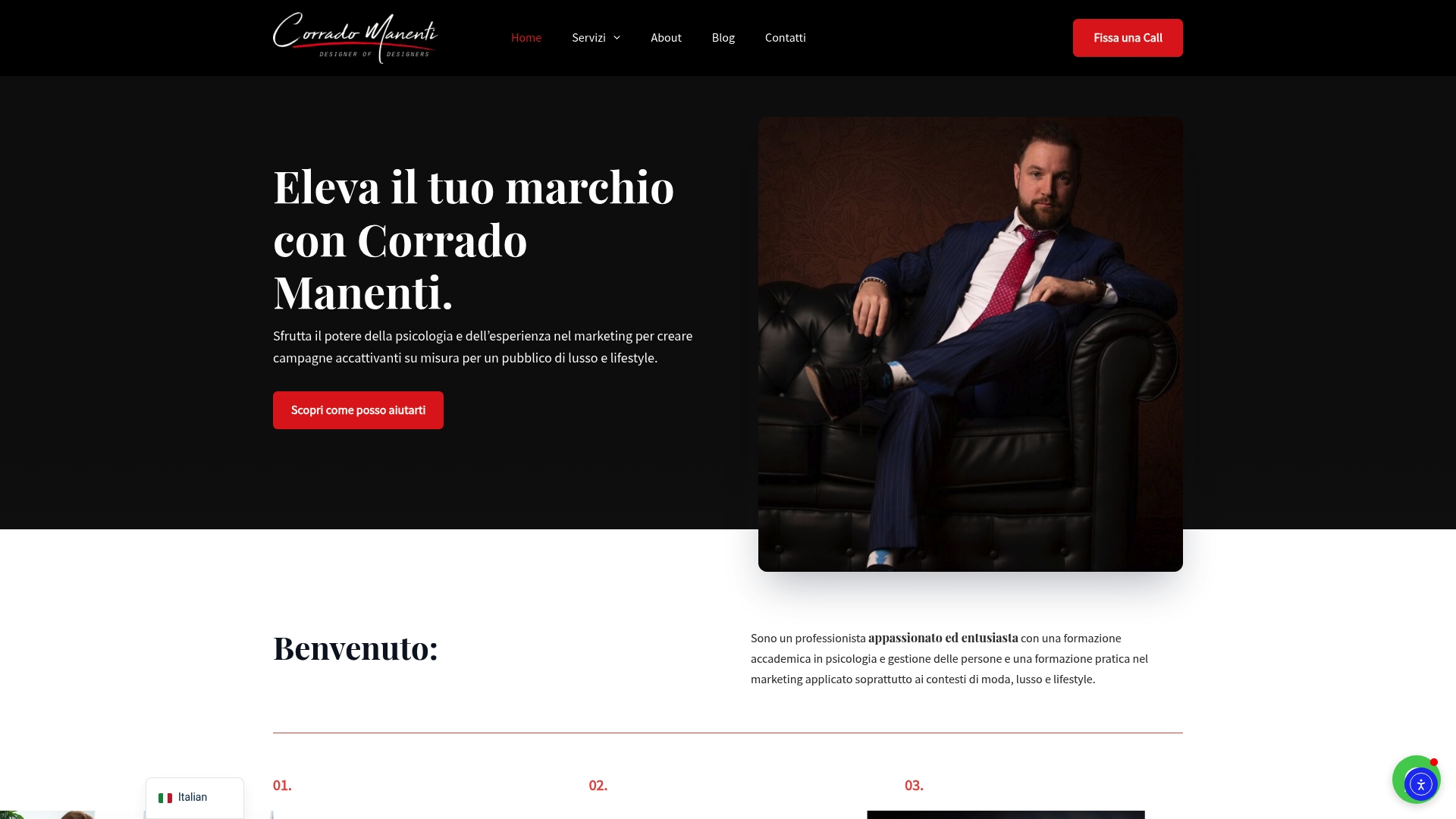
Corrado Manenti works with fashion and luxury brands to build psychology-driven brand engagement strategies that actually convert. From identifying the right trigger architecture for your specific audience to designing campaigns that drive luxury sales with emotional triggers, the work is always grounded in evidence and tailored to your brand’s real identity. If you’re ready to move beyond generic playbooks and build campaigns that resonate at the deepest level, explore the luxury brand growth tactics available through direct consultation.
Frequently asked questions
Which psychological trigger is most effective for driving luxury purchases?
Scarcity and exclusivity, such as waitlists and limited editions, consistently generate the highest purchase intent and engagement in luxury marketing. Limited editions account for 28% of luxury sales volume, making them the single most commercially validated trigger in this sector.
How do fashion brands avoid overusing psychological triggers?
They test triggers through structured A/B experiments, carefully personalize messaging by audience segment, and ensure every trigger reflects authentic brand identity. Overuse breeds skepticism, and mismatched triggers can produce zero measurable wins or actively damage brand perception.
What role does emotion play in luxury brand campaigns?
Emotional storytelling in ads increases recall by 25% and builds lasting brand memory that rational messaging simply cannot achieve. Emotional connection is what converts a first purchase into a long-term brand relationship.
Why is authenticity critical when using psychological triggers in marketing?
Authenticity prevents triggers from feeling manipulative, which is especially damaging in luxury where consumer trust is the foundation of premium positioning. Prioritizing authentic scarcity over manufactured urgency is essential for maintaining long-term brand equity and consumer respect.