
Over eighty percent of American luxury consumers say a brand’s reputation has greater influence on their purchasing decisions than price. In the world of high-end goods, reputation defines not just perceived value but also trust, loyalty, and cultural relevance. Understanding what drives American perceptions of luxury helps brands create deeper connections and maintain their place at the top of an intensely competitive market.
Table of Contents
- Defining Reputation In Luxury Markets
- Psychological Drivers Behind Luxury Perception
- Brand Trust And Customer Loyalty Dynamics
- Impact Of Reputation On Crisis And Recovery
- Managing Reputation In The Digital Era
Key Takeaways
| Point | Details |
|---|---|
| Reputation is Core | In luxury markets, reputation is not just perception; it is the essence of a brand’s identity, built upon quality, storytelling, and customer experience. |
| Psychology Drives Consumption | Luxury purchases are influenced by psychological factors such as status signaling and personal identity, making emotional connections essential for brands. |
| Trust Fuels Loyalty | Brand trust is fundamental in luxury markets, where consumers seek genuine connections and consistent quality that reflect their aspirations and social positioning. |
| Digital Landscape Matters | Effective reputation management in the digital era demands authenticity and proactive engagement through immersive storytelling across platforms. |
Defining Reputation in Luxury Markets
In the sophisticated realm of luxury markets, reputation represents far more than a simple perception – it is the intrinsic DNA of a brand’s identity and perceived value. Luxury brand management programs recognize reputation as a complex ecosystem of heritage, quality, exclusivity, and consumer experience that transcends traditional marketing metrics.
Reputation in luxury markets operates on multiple sophisticated dimensions. It is not merely about product quality but about crafting an immersive narrative that resonates with discerning consumers who seek more than material possession. The Luxury Institute’s research reveals that affluent consumers evaluate brands through a nuanced lens of authenticity, craftsmanship, provenance, and emotional connection.
At its core, luxury brand reputation is built upon three foundational pillars: uncompromising quality, consistent storytelling, and exceptional customer experience. This means every interaction – from initial brand discovery to post-purchase engagement – must communicate exclusivity and precision. Brands that successfully navigate this delicate balance transform reputation from a marketing construct into a deeply felt emotional promise, creating loyal consumer relationships that extend far beyond transactional exchanges.
Understanding reputation requires recognizing it as a dynamic, living entity. It is not static but constantly evolving through consumer perceptions, social interactions, and brand performance. Luxury brands must therefore remain vigilant, continuously nurturing their reputation through meticulous attention to detail, innovative storytelling, and an unwavering commitment to excellence.
Psychological Drivers Behind Luxury Perception
Luxury consumption extends far beyond simple material acquisition, representing a complex psychological landscape of human motivation and self-expression. Psychological research on consumer behavior reveals that luxury purchases are deeply rooted in multifaceted emotional and cognitive processes that transcend traditional economic reasoning.
Consumers engage with luxury brands through intricate psychological mechanisms, including status signaling, personal identity construction, and emotional gratification. The psychological entitlement underlying luxury consumption demonstrates how individuals use premium products as tools for self-presentation and social positioning. These motivations are particularly evident in how consumers navigate social dynamics, where luxury items serve as symbolic markers of achievement, taste, and social standing.
Emerging research on conspicuous consumption illuminates fascinating phenomena like the “bandwagon” and “snob” effects, where consumer choices are influenced by complex social interactions. Some individuals seek luxury to align with perceived group norms, while others pursue exclusivity to differentiate themselves. This nuanced psychological landscape reveals that luxury consumption is not merely about owning expensive items, but about crafting a narrative of personal identity and social perception.
Ultimately, the psychological drivers behind luxury perception are deeply personal and contextual. They reflect an individual’s aspirations, self-concept, and desire for recognition. Luxury brands that understand these intricate psychological motivations can create more meaningful connections, transforming their products from mere objects of consumption into powerful instruments of personal expression and social communication.
Brand Trust and Customer Loyalty Dynamics
Brand trust represents the foundational cornerstone of customer loyalty in luxury markets, transcending traditional transactional relationships. Emerging research on social dynamics reveals that consumer perceptions of trust are intricately linked to complex psychological mechanisms of status, self-perception, and social positioning.
Luxury brands must recognize that trust is not a static construct but a dynamic ecosystem of expectations, experiences, and emotional resonance. Authenticity research demonstrates that consumers seek brands that communicate genuine commitment to quality, heritage, and consistent value propositions. This means moving beyond superficial marketing narratives to create deep, meaningful connections that address consumers’ underlying psychological needs for validation and social recognition.

The interplay between brand trust and customer loyalty is particularly nuanced in luxury markets. Consumers do not simply purchase products; they invest in narratives of personal identity and social aspiration. Status anxiety and social positioning emerge as critical drivers, where each purchasing decision becomes a carefully calculated expression of self-worth and social standing. Successful luxury brands understand that loyalty is earned through a holistic approach that balances emotional intelligence, consistent quality, and an understanding of the deeper psychological motivations driving consumer behavior.
Ultimately, brand trust in luxury markets is a delicate ecosystem of perception, performance, and emotional alignment. Brands that can consistently demonstrate authenticity, understand their consumers’ complex psychological landscapes, and create experiences that transcend mere transactional exchanges will cultivate the most profound and enduring customer loyalty.
Impact of Reputation on Crisis and Recovery
Reputation management becomes critically essential during crisis scenarios, serving as a brand’s most valuable intangible asset in navigating turbulent market conditions. Luxury brand management programs emphasize that crisis response is not merely about damage control, but about maintaining the delicate perception of excellence and integrity that defines luxury brands.
When confronted with potential reputation threats, luxury brands must deploy strategic responses that transcend traditional communication protocols. Insights from industry research reveal that successful crisis recovery hinges on transparency, swift action, and a demonstrable commitment to core brand values. This means acknowledging challenges directly, communicating with authenticity, and implementing concrete remediation strategies that reinforce the brand’s fundamental promise of quality and reliability.
The psychological impact of crisis on consumer perception cannot be understated. Luxury consumers do not simply evaluate isolated incidents, but interpret crises as reflections of a brand’s deeper character and ethical foundations. Brands that can transform potential reputation damage into opportunities for demonstrating resilience, accountability, and genuine commitment to customer experience will ultimately emerge stronger. This requires a nuanced approach that balances emotional intelligence with strategic communication, ensuring that every response reinforces the brand’s core narrative of excellence.
Ultimately, reputation recovery in luxury markets is a sophisticated dance of perception, performance, and psychological reassurance. Successful brands understand that trust is not a static construct but a dynamic relationship that must be continuously nurtured, especially during moments of potential vulnerability. By maintaining unwavering commitment to quality, transparency, and authentic communication, luxury brands can transform potential reputation challenges into powerful opportunities for deepening consumer trust and loyalty.
Managing Reputation in the Digital Era
The digital landscape has fundamentally transformed reputation management for luxury brands, creating a complex ecosystem of instantaneous communication and global visibility. Research on brand authenticity reveals that maintaining a consistent and genuine digital presence is now more critical than ever for preserving brand integrity and consumer trust.
Digital platforms have dramatically amplified the dynamics of brand perception, where every interaction becomes a potential reputation-defining moment. Luxury brands must navigate this intricate digital terrain with strategic precision, recognizing that psychological factors of self-expression play a significant role in how consumers interpret and share brand experiences. This means developing sophisticated digital strategies that go beyond traditional marketing, creating immersive narratives that resonate with consumers’ deeper psychological needs for authenticity and connection.
Successful digital reputation management requires a multifaceted approach that combines real-time responsiveness, consistent brand messaging, and a deep understanding of digital consumer behavior. Brands must proactively monitor digital conversations, engage authentically with their audience, and rapidly address potential reputation challenges. This involves not just managing negative feedback, but creating positive digital experiences that reinforce the brand’s core values and emotional promise.
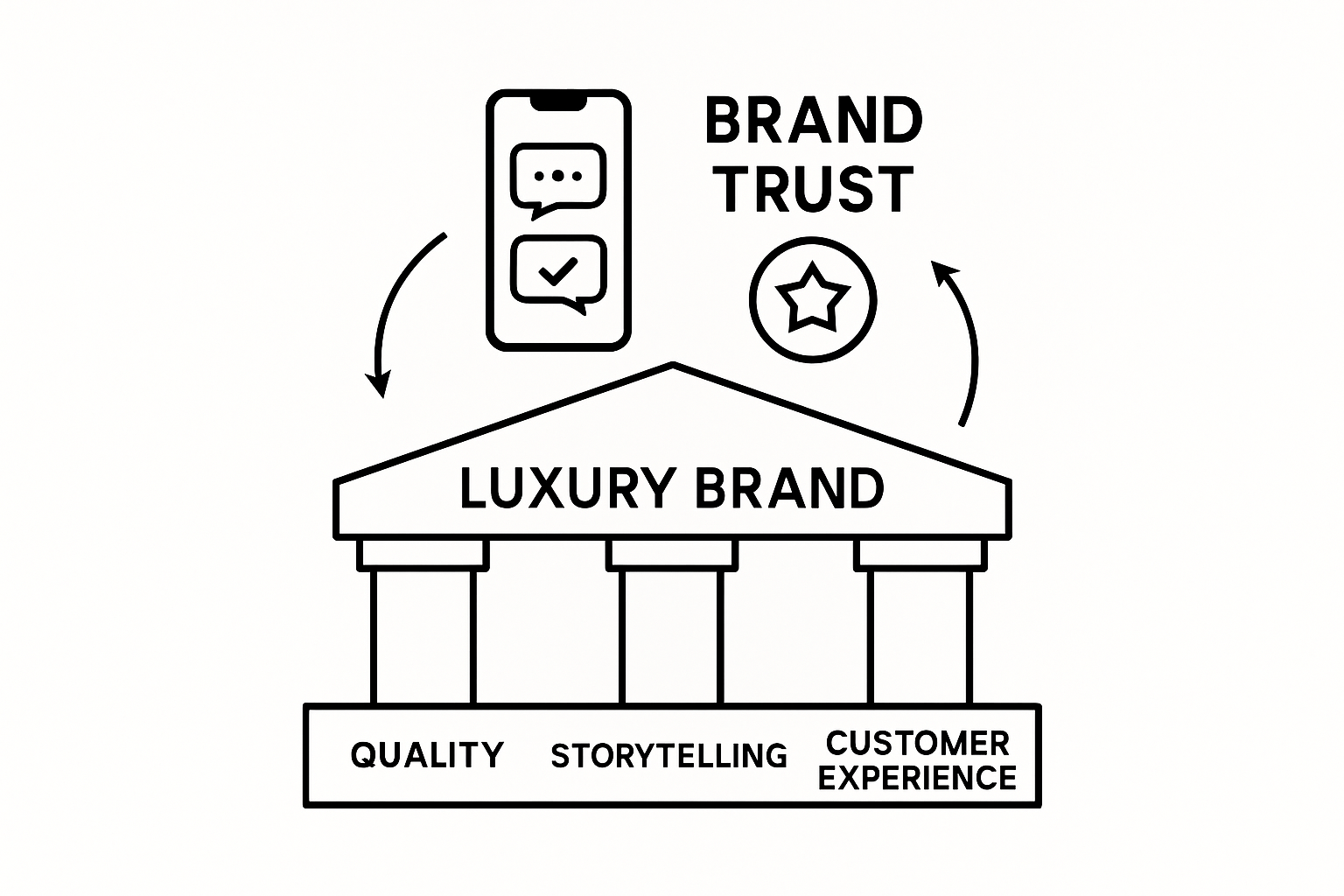
Ultimately, managing reputation in the digital era is about creating a seamless, authentic narrative that transcends individual platforms. Luxury brands must view their digital presence as an extension of their core identity, carefully curating every interaction to reflect their unique value proposition. By embracing transparency, demonstrating genuine commitment to consumer experiences, and leveraging digital platforms as storytelling tools, brands can transform potential digital challenges into opportunities for deeper consumer connection and trust.
Elevate Your Luxury Brand Reputation with Psychology-Driven Marketing
Building and maintaining an impeccable reputation in luxury branding demands more than quality products. It requires mastering the psychological drivers that connect emotionally with discerning consumers and cultivating brand trust that turns customers into lifelong advocates. If your goal is to craft immersive stories and deliver consistent, authentic experiences that resonate deeply, Corrado Manenti’s expertise in Marketing Fashion offers tailored solutions grounded in consumer psychology and luxury market insights.
Discover how a strategic, detail-oriented approach that integrates psychology and innovation can protect and enhance your brand’s reputation in today’s digital and social landscape. Act now to leverage cutting-edge digital strategies and personal branding techniques by exploring Personal Branding and partnering with Corrado Manenti at https://corradomanenti.it. Your luxury brand’s future depends on building trust that goes beyond transactions—start making that promise shape your success today.
Frequently Asked Questions
What is the role of reputation in luxury branding?
Reputation is a fundamental aspect of luxury branding, acting as the intrinsic DNA of a brand’s identity and perceived value. It encompasses elements like heritage, quality, exclusivity, and consumer experience, which are essential for connecting with discerning consumers.
How does reputation influence customer loyalty in luxury markets?
Reputation significantly influences customer loyalty by establishing brand trust. Consumers are more likely to remain loyal to luxury brands that demonstrate authenticity, consistent quality, and an understanding of their psychological motivations, leading to deeper emotional connections.
Why is managing reputation essential during a crisis?
Managing reputation during a crisis is crucial because it helps maintain the brand’s perception of excellence and integrity. Effective crisis management involves transparent communication, swift actions, and a commitment to core brand values, which can transform potential damage into opportunities for strengthening consumer trust.
How has the digital landscape impacted luxury brand reputation?
The digital landscape has transformed reputation management by creating an ecosystem of instantaneous communication and global visibility. Luxury brands must develop strategic digital strategies to ensure consistency and authenticity, proactively engage with consumers, and manage their online presence to reinforce their brand integrity.
Recommended
- Complete Guide to Brand Trust in Luxury Markets – Corrado Manenti
- Blog – Corrado Manenti
- Understanding the Role of Trust in Luxury Marketing – Corrado Manenti
- 7 Examples of Premium Branding to Elevate Your Luxury Business – Corrado Manenti
- What is the Most Expensive Perfume? Understanding Luxury Fragrance