TL;DR:
- Digital brand experience now has a greater impact on customer loyalty than traditional luxury perception. Creating a coherent, immersive, and emotionally resonant brand experience across all touchpoints strengthens attachment and authenticity. Prioritizing storytelling, system consistency, and personalized experiences is essential for sustained loyalty in the luxury market.
Digital brand experience now outpaces luxury perception itself in driving customer loyalty. That’s not an opinion. Research confirms that digital brand experience carries a loyalty coefficient of β=0.407, while traditional luxury perception trails at β=0.382. For executives who’ve invested heavily in heritage, craftsmanship, and prestige, this finding reframes the conversation entirely. The question is no longer whether your product is luxurious enough. It’s whether your brand experience is coherent, emotionally resonant, and built to sustain loyalty without burning out your audience through excess spectacle. This guide breaks down exactly how to get there.
Table of Contents
- What is brand experience in luxury fashion?
- Why experience drives loyalty and brand distinction
- Psychology-driven strategies to enhance brand experience
- Challenges and innovations in crafting luxury brand experiences
- Our perspective: What most luxury brands overlook about brand experience
- Enhance your luxury brand experience with actionable expertise
- Frequently asked questions
Key Takeaways
| Point | Details |
|---|---|
| Experience fuels loyalty | Modern luxury brands must prioritize authentic brand experiences to drive customer attachment and repeat business. |
| Avoid aesthetic exhaustion | Spectacle alone risks diluting your brand; balance substance and narrative for sustainable distinction. |
| Coherent storytelling wins | Brands with unified narratives outperform competitors suffering from fragmented content and identity loss. |
| Psychology drives strategy | Embrace psychological levers like narrative, status, and personalization to craft powerful luxury brand experiences. |
What is brand experience in luxury fashion?
Brand experience is not a campaign. It’s not a store redesign or a celebrity collaboration. In the luxury context, it’s the full emotional, sensory, and behavioral imprint your brand leaves on a client across every interaction, from a physical boutique visit to a digital touchpoint on a mobile device.
The core components worth building around include:
- Emotional engagement: How customers feel during and after interacting with your brand
- Sensory design: What they see, hear, touch, and even smell in your branded environments
- Behavioral reinforcement: Whether interactions prompt meaningful actions like return visits, referrals, or higher spend
- Authenticity signals: Whether clients believe your brand’s story is real and consistent
- Personalization depth: How specifically your brand speaks to the individual, not just the demographic
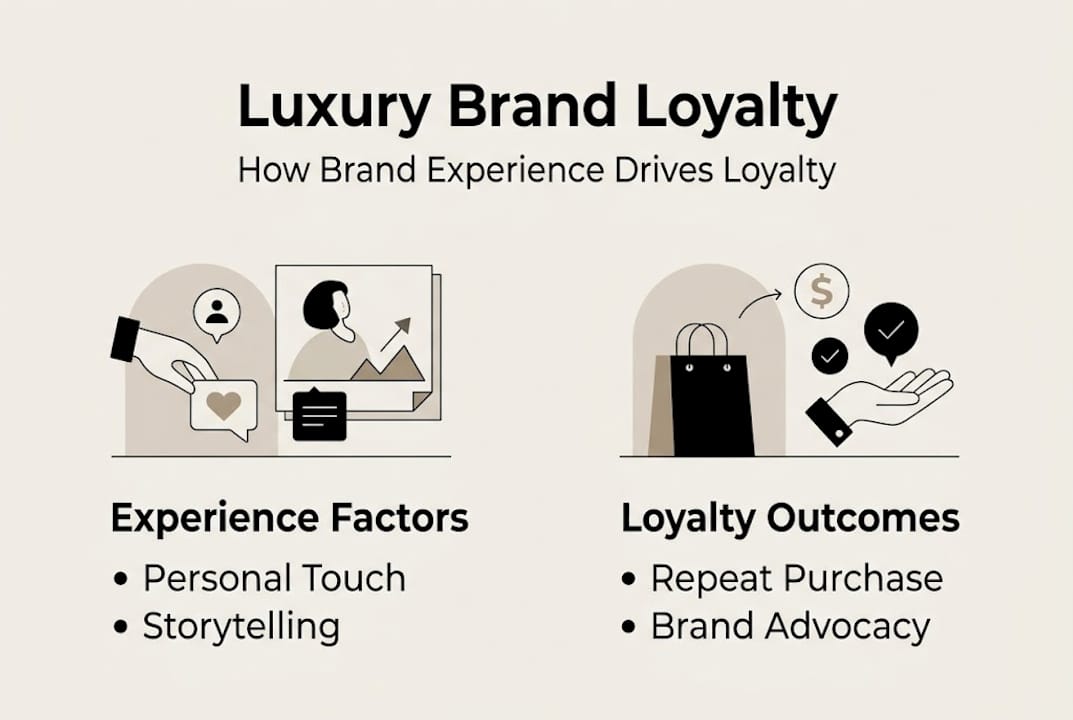
What separates brand experience from basic product satisfaction is attachment. A client can admire a product without bonding with the brand. Attachment forms when every touchpoint reinforces a consistent narrative, when the digital luxury brand experience mirrors the physical one without contradiction.
“Digital brand experience fosters authenticity, attachment, and loyalty more than luxury perception alone.”
Consider how luxury watch craftsmanship communicates value not just through materials, but through the storytelling layered around the making process. The experience of understanding how something is crafted creates an emotional investment that price tags alone can’t generate.
Storytelling is not decoration. It’s the architecture of brand experience. Every visual, every piece of copy, every staff interaction either builds or erodes the larger narrative. For luxury executives, the most important shift is moving from thinking in moments to thinking in systems. A single extraordinary event matters far less than the accumulated weight of many consistent, meaningful interactions.
Pro Tip: Audit every customer touchpoint quarterly. Ask whether each one reinforces or contradicts your core brand narrative. The gaps you find there are where loyalty quietly erodes.
Why experience drives loyalty and brand distinction
Loyalty in luxury fashion has never been purely transactional. Clients at this level have options. They choose where to return based on how a brand makes them feel, not just what it sells. The data backs this up with specificity that should shift your budget allocation decisions.
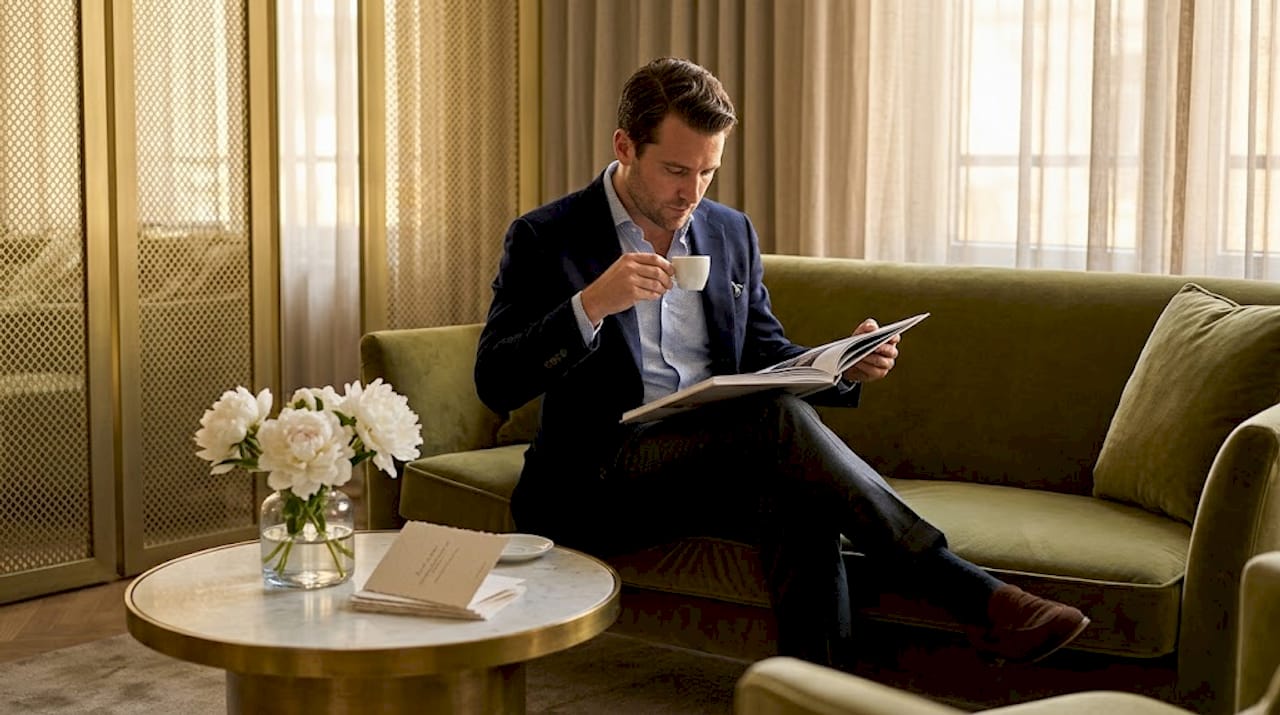
The β=0.407 loyalty effect of brand experience versus β=0.382 for luxury perception tells you that experience is the stronger lever. It’s not a massive gap, but in a market where marginal advantage defines category leadership, it’s significant.
| Driver | Beta Coefficient | Impact on Loyalty |
|---|---|---|
| Digital brand experience | β=0.407 | Higher |
| Luxury perception | β=0.382 | Strong but secondary |
| Brand authenticity | Mediated | Amplifies both |
The brands that consistently rank highest on customer experience indexes share three psychological drivers:
- Attachment: Clients feel personally connected to the brand’s values and narrative, not just its products
- Authenticity: The brand communicates consistently across all channels, and that consistency feels earned rather than manufactured
- Coherence: Every campaign, collection, and communication aligns with a recognizable brand identity
Look at how experience economy dynamics play out in real brand performance. Hermès and Miu Miu consistently score high on customer experience indexes precisely because they maintain coherent narratives. Louis Vuitton, despite its global reach, has faced criticism for narrative fragmentation when high content volume dilutes the singular story the brand was once known for.
For executives, the takeaway is this: premium branding examples show that distinction comes not from being louder, but from being clearer. The brands clients trust most are the ones whose identity they can describe without hesitation.
Statistic callout: Brand experience drives loyalty at β=0.407, outperforming luxury perception at β=0.382, meaning every dollar invested in experience architecture returns more than the same dollar spent reinforcing prestige signals alone.
Effective storytelling in luxury is one of the most underutilized levers here. It creates the emotional scaffolding that turns one-time buyers into advocates who associate their own identity with your brand.
Psychology-driven strategies to enhance brand experience
Knowing that experience matters is not enough. You need a clear framework for which psychological levers to pull and how to apply them without tipping into the territory of manufactured manipulation that sophisticated luxury clients can spot immediately.
The most effective psychological levers in luxury brand experience are:
- Narrative coherence: Every interaction should feel like a chapter in the same story, not a disconnected ad campaign
- Scarcity and exclusivity: Genuine limitation, not artificial inflation, creates real desire
- Status reinforcement: Not ego-stroking, but confirming that the client belongs to a community of discernment
- Deep personalization: Recognizing the individual’s history with your brand, not just their demographic profile
The critical distinction is between spectacle and substance. Experiential marketing that generates social media impressions without reinforcing brand narrative is expensive noise. The narrative coherence crisis in fashion is real: excess spectacle without substance causes brand fatigue, and swapping playbooks between fast fashion and luxury risks identity loss that can take years to recover from.
| Approach | Short-term impact | Long-term loyalty effect |
|---|---|---|
| Grand spectacle events | High visibility | Low if narrative is absent |
| Curated personal moments | Moderate visibility | High when aligned with story |
| Consistent storytelling | Compound over time | Highest loyalty return |
Your effective storytelling guide should function like a brand constitution: it sets the principles every piece of content and every customer interaction must follow. Paired with a rigorous digital strategy for luxury brands, this creates the conditions for experience to compound rather than fragment.
Pro Tip: Map your customer journey from first discovery to post-purchase. Mark every point where the emotional tone of the interaction shifts. Those shifts are where coherence breaks down and loyalty weakens.
Challenges and innovations in crafting luxury brand experiences
The external pressures on luxury brand experience have never been more complex. Three forces are reshaping the landscape in ways that traditional brand management strategies are not equipped to handle.
The primary threats are:
- Fast fashion mimicry: Mass market brands are adopting luxury aesthetics and storytelling frameworks, blurring the distinction clients once relied on
- Narrative fragmentation: The demand for constant content across multiple platforms forces brands into volume that dilutes meaning
- Digital fatigue: Clients are increasingly resistant to experiences that feel digital-first without human warmth
“Overemphasis on spectacle leads to aesthetic exhaustion and brand dilution, while fast fashion adopting luxury narratives forces luxury brands to accelerate in ways that compromise identity.”
The narrative coherence crisis is measurable. Louis Vuitton’s lower Customer Experience Index scores compared to Hermès and Miu Miu trace directly to content volume that fragments meaning across too many simultaneous narratives. Hermès’ restraint is not an accident. It’s a strategic commitment to systems over moments.
Innovation here doesn’t mean new technology for its own sake. It means building digital and physical experiences that genuinely reinforce each other. Some brands are investing in defining digital luxury experience frameworks that treat the online environment as an extension of the boutique, not a separate channel with separate rules.
Practical tips for maintaining coherence:
- Assign a narrative owner, someone responsible for ensuring every content piece connects to the central brand story
- Create a “coherence filter” that new campaigns must pass before launch
- Curate fewer, deeper experiences rather than more frequent but shallower ones
- Reference affordable luxury watches as a category that has successfully maintained aspirational identity through curation rather than volume
The brands that will lead the next decade are those that treat experience as an operating system, not a marketing tactic.
Our perspective: What most luxury brands overlook about brand experience
Here’s the uncomfortable truth: most luxury brands are investing in the wrong metric. They measure impressions, event attendance, and social reach, then wonder why loyalty numbers plateau.
The real problem is that narrative coherence is rarely treated as a strategic priority. It’s seen as a creative concern, something for the art director to worry about. But narrative coherence is a business system. When it breaks, loyalty breaks with it, quietly, before the numbers show it.
The contrarian insight worth sitting with: small, curated, deeply personal experiences outperform grand gestures almost every time in terms of long-term loyalty. The executive who authorizes a carefully designed private client event with 20 people will generate more measurable loyalty return than the one who stages a 2,000-person spectacle. Premium branding case studies confirm this pattern repeatedly.
Invest in systems. Build storytelling infrastructure. Let the spectacle be a byproduct of coherence, not the goal.
Enhance your luxury brand experience with actionable expertise
Putting these strategies into practice requires more than a framework. It requires the kind of tailored, psychology-driven approach that accounts for your specific brand architecture and client base.
Corrado Manenti specializes in helping luxury and fashion brands build experience strategies that compound over time. From growth tactics for luxury brands grounded in behavioral psychology to real-world premium branding examples you can adapt immediately, the resources available are built for executives who want results, not theory. Explore psychology-driven branding frameworks designed specifically for the luxury market and take the next step toward building brand experiences that genuinely sustain loyalty.
Frequently asked questions
How does digital brand experience impact luxury brand loyalty?
Digital brand experience carries a stronger loyalty effect (β=0.407) than traditional luxury perception (β=0.382), meaning how clients experience your brand digitally matters more than prestige signals alone.
What are the biggest mistakes luxury brands make in brand experience?
The most damaging mistake is prioritizing spectacle over coherent storytelling, which leads to brand fatigue and weakens the emotional attachment that sustains long-term loyalty.
How can luxury brands maintain narrative coherence?
Assigning a dedicated narrative owner and applying a coherence filter to all content ensures that every touchpoint contributes to a single, recognizable brand story rather than fragmenting it.
What is ‘aesthetic exhaustion’ in luxury branding?
Aesthetic exhaustion occurs when brands overload clients with visually intense or event-heavy content, eroding emotional engagement and diluting the brand identity that once made them distinctive.
How do fast fashion brands challenge luxury brand experience?
Fast fashion brands increasingly adopt luxury narratives and accelerated experience cycles, forcing luxury brands to differentiate through authentic depth and coherence rather than surface aesthetics alone.