
TL;DR:
- Influencer partnerships build trust, shape perception, and drive purchase behavior for luxury brands. Long-term collaborations with authentic creators yield higher ROI and stronger brand relevance than one-off campaigns.
Influencer partnerships are defined as structured collaborations between brands and content creators designed to transfer trust, shape perception, and drive purchase behavior at scale. In luxury marketing, the role of influencer partnerships goes far beyond sponsored posts. 86% of consumers make influencer-inspired purchases annually, and 69% trust creator recommendations more than traditional brand messaging. That gap between creator trust and brand trust is the single most important number in luxury marketing right now. For brand managers who need measurable results, understanding how to build, manage, and measure these collaborations is no longer optional.
What is the role of influencer partnerships in luxury brand growth?
The role of influencer partnerships has shifted from a media buy to a brand-building tool. Luxury brands once treated creators as paid billboards. The market has corrected that thinking sharply.
73% of brands now rank creator-audience authenticity as their top selection priority, placing it far above follower count. That figure reflects a real change in how marketing teams allocate attention and budget. A creator with 80,000 deeply engaged followers in the fashion and lifestyle space delivers more brand value than a celebrity with 2 million passive ones.
Long-term partnerships produce 3–5x better ROI and engagement than one-off sponsored posts. The compounding effect of repeated, consistent creator endorsement builds the kind of brand familiarity that luxury buyers require before committing to a purchase. One post plants a seed. A six-month partnership builds conviction.
Brands increasingly want creators as long-term cultural partners who help shape conversations and build brand relevance over time. Strong partnerships are built on trust, identity, and shared values, not transactional arrangements.
76% of C-suite executives are expanding influencer budgets toward structured, long-term programs instead of fragmented campaigns. That executive-level commitment signals that influencer marketing has moved from an experimental line item to a core channel. Luxury brand managers who still run one-off activations are operating on a model the industry has already moved past.
The importance of influencer collaborations in 2026 comes down to one word: consistency. Consumers who see a creator authentically use and discuss a brand over months develop the same trust they would from a personal recommendation. That trust converts.

How do you choose the right influencers for a luxury brand?
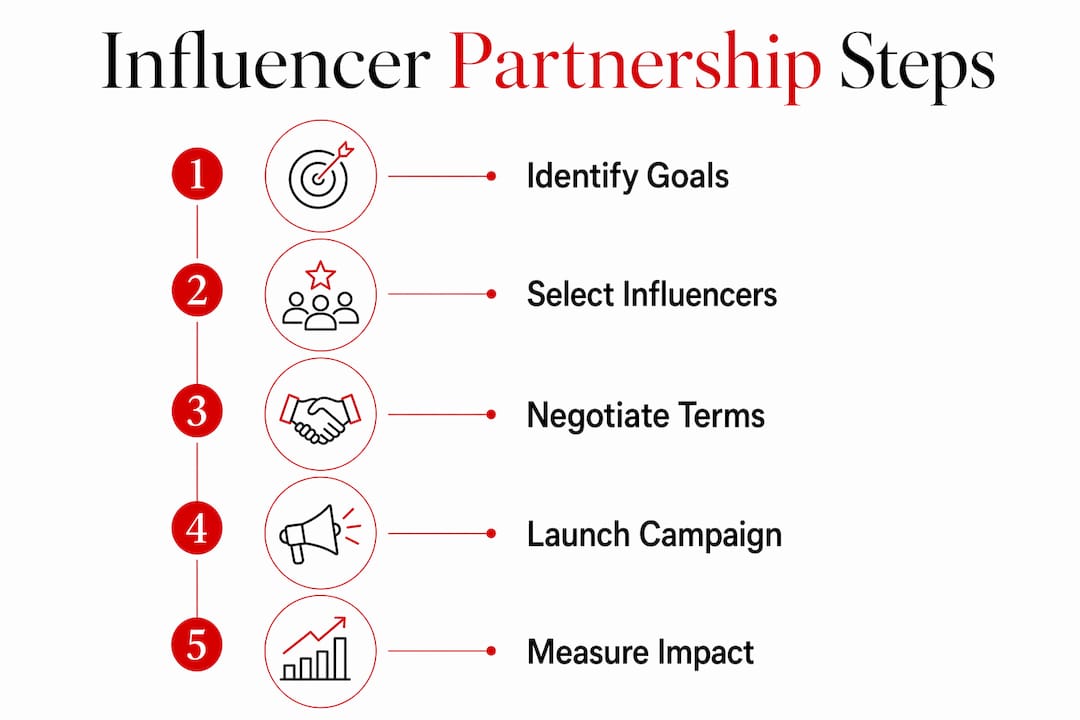
Choosing the right creators is the highest-leverage decision in any influencer program. Get it wrong and no amount of budget or creative direction fixes the outcome.
1. Prioritize audience quality over follower count.
The size of a creator’s following tells you almost nothing about whether their audience matches your buyer profile. Analyze the demographic breakdown, geographic concentration, and income indicators of their followers before any other metric.
2. Evaluate engagement rate against the 3%–8% benchmark.
Healthy engagement rates fall between 3% and 8%. A creator sitting below 2% on a large account signals passive, disengaged followers. That is a warning sign, not a negotiating chip.
3. Use median views and hit rate to assess consistency.
Raw view counts mislead. Median views over recent posts combined with hit rate predict creator consistency far better than peak performance. Hit rate measures the percentage of posts that exceed 1.5x the creator’s median views. A high hit rate means the creator reliably produces content that breaks through, not just occasionally.
4. Vet for brand safety and cultural fit.
Luxury brands carry reputations built over decades. A creator’s past content, public statements, and community associations all carry risk. Run a full content audit going back at least 12 months before signing any agreement.
5. Align creator selection to funnel stage.
Broad-reach creators serve awareness KPIs; high-trust niche creators serve conversion KPIs. Mixing these up is one of the most common and costly mistakes luxury marketers make. A macro-influencer with 500,000 followers is the wrong choice for a campaign designed to drive direct sales among existing brand-aware consumers.
6. Assess values alignment, not just aesthetic alignment.
A creator whose visual style matches your brand but whose values conflict with it will eventually create a problem. Luxury buyers are attentive to authenticity. They notice when a creator’s endorsement feels transactional.
Pro Tip: Build a shortlist of 10–15 creators before narrowing to your final selection. Run each through the median views and hit rate analysis, then cross-reference with a manual content audit. The creator who survives both filters is the one worth contracting.
How should luxury brands structure and manage influencer partnerships?
Structure determines outcomes. A well-managed influencer program runs like an operational workflow, not a series of ad hoc conversations. Treating influencer collaborations as systematic processes that integrate procurement, contracting, and performance tracking produces better results and stronger creator relationships.
Compensation models that work
The industry has moved away from flat-fee-only arrangements. Tiered compensation models now combine flat fees, performance bonuses, and in some cases equity or long-term retainers. This structure aligns creator incentives with brand outcomes. A creator who earns a bonus when a campaign exceeds its engagement target has a direct reason to invest in the content’s quality.
Contracts and creative briefs
Every partnership needs a contract that specifies deliverables, usage rights, disclosure requirements, and revision terms. Vague agreements create disputes. Contracts also protect the creator, which matters for building the trust that long-term partnerships require.
Creative briefs are where most luxury brands make their biggest mistake. Shifting from rigid scripts to goals and value propositions produces more authentic content and better conversion rates. Give creators the brand’s core message and the boundaries they must stay within. Then let them execute in their own voice. That is what their audience responds to, and that is what creator-driven authenticity actually means in practice.
Operational workflow essentials
- Open purchase orders at the same time as contract issuance. Payment bottlenecks damage creator trust and shorten partnership longevity faster than almost any other operational failure.
- Set clear content approval timelines. Delays in feedback loops frustrate creators and compress posting windows.
- Negotiate usage rights upfront. Usage rights typically run 45 days to 3 months and allow the brand to repurpose creator content in paid media, extending the asset’s value well beyond the original post.
- Build a content calendar that integrates creator deliverables with the brand’s broader campaign schedule.
Pro Tip: Assign one internal owner to each creator relationship. Creators who deal with rotating contacts disengage faster. A consistent point of contact signals that the brand takes the partnership seriously.
| Management area | Transactional approach | Long-term partnership approach |
|---|---|---|
| Compensation | Flat fee per post | Tiered: flat fee, performance bonus, retainer |
| Creative direction | Rigid script | Goals and guardrails, creator voice |
| Contract scope | Single deliverable | Multi-month deliverables, usage rights |
| Payment process | Invoice on delivery | Purchase order at contract signing |
| Relationship owner | Rotating team contacts | Dedicated single point of contact |
How do you measure the effects of influencer partnerships on brand visibility?
Measurement is where luxury influencer programs most often fall short. Vanity metrics, specifically raw likes and follower gains, tell you almost nothing about whether a partnership is working. The effects of influencer partnerships show up in specific, trackable behaviors.
The metrics that matter most align with funnel stage. For awareness campaigns, track reach, share of voice, and content saves. Saves indicate that a viewer found the content valuable enough to return to, which is a stronger signal than a like. For conversion campaigns, track link clicks, affiliate code redemptions, and direct sales attribution.
71% of consumers make a purchase within days of seeing relevant creator content on Meta platforms. That speed of conversion means your attribution window needs to be short and your tracking needs to be active from the moment content goes live, not reviewed weeks later.
Content usage rights create a second measurement opportunity. When a brand repurposes creator content in paid media, it can run A/B tests comparing creator-produced assets against brand-produced assets. Creator content consistently outperforms brand-produced content in paid social because it reads as native rather than promotional. That performance gap is a direct, quantifiable benefit of the partnership.
The luxury influencer marketing guide from Corradomanenti covers budgeting benchmarks and measurement frameworks specifically built for high-end brand programs. Aligning your KPIs to funnel stage before a campaign launches, not after, is the practice that separates programs that learn from programs that guess.
Key Takeaways
Long-term, authenticity-driven influencer partnerships consistently outperform transactional campaigns in both engagement and ROI for luxury brands.
| Point | Details |
|---|---|
| Authenticity over reach | 73% of brands prioritize creator-audience authenticity above follower count when selecting partners. |
| Long-term ROI advantage | Ongoing partnerships deliver 3–5x better ROI than one-off sponsored posts. |
| Consistency metrics matter | Use median views and hit rate, not peak views, to identify reliably high-performing creators. |
| Operational rigor builds trust | Opening purchase orders at contract signing prevents payment delays that damage creator relationships. |
| Measurement must match funnel stage | Track saves and share of voice for awareness; affiliate conversions and link clicks for conversion campaigns. |
What I’ve learned from running luxury influencer programs
The biggest mistake I see luxury brand managers make is treating influencer partnerships as a content procurement exercise. They brief a creator, approve the post, pay the invoice, and move on. Then they wonder why the results plateau after the first campaign.
The brands that get this right think of their creator roster the way they think of their retail partnerships. They invest in the relationship between campaigns, not just during them. They share brand news early. They invite creators to events before asking for deliverables. That investment pays back in content quality and audience trust that no brief can manufacture.
The second thing I’ve noticed is that luxury brands often over-control the creative. I understand the instinct. Brand consistency matters enormously in this sector. But a creator who sounds like a brand press release loses the one thing their audience came for: their voice. The step-by-step approach to luxury influencer marketing I recommend always starts with guardrails, not scripts. Define what the brand cannot say or show. Then give the creator room to work.
Finally, the brands winning in 2026 are the ones who have figured out that consumer trust in creators is not a trend to ride. It is a structural shift in how purchase decisions get made. The sooner a luxury brand builds its influencer program around that reality, the harder it becomes for competitors to catch up.
— Corrado
How Corradomanenti supports luxury brands in influencer strategy
Corradomanenti works with fashion and luxury brands that need influencer programs built on psychology, data, and operational discipline, not guesswork or gut feel.
The fashion brand growth tactics resource covers the full spectrum of influencer partnership strategy for luxury market success, from creator selection frameworks to compensation structures and measurement systems. For brand managers who want to move from fragmented activations to a program that compounds over time, Corradomanenti offers the kind of sector-specific expertise that generalist consultants cannot replicate. Reach out directly to discuss how a structured influencer program fits your brand’s current positioning and growth targets.
FAQ
What is the role of influencer partnerships in luxury marketing?
Influencer partnerships serve as trust-transfer mechanisms that connect luxury brands with pre-qualified, engaged audiences through creator credibility. They drive both brand visibility and direct purchase behavior more effectively than traditional advertising.
How do you choose influencers for a luxury brand?
Prioritize audience quality, engagement rates in the 3%–8% range, and hit rate metrics over raw follower counts. Cultural fit and values alignment are non-negotiable for luxury brands where reputation is the core asset.
What engagement rate signals a strong influencer partnership?
A healthy engagement rate falls between 3% and 8%. Rates below 2% on large accounts typically indicate a passive audience that will not respond to brand messaging.
How long should usage rights be negotiated for creator content?
Usage rights are typically negotiated for 45 days to 3 months. Securing these rights upfront allows brands to repurpose creator content in paid media, extending the campaign’s value beyond the original post.
Why do long-term influencer partnerships outperform one-off campaigns?
Repeated, consistent creator endorsement builds the brand familiarity that luxury buyers require before purchasing. Long-term partnerships deliver 3–5x better ROI and engagement than single sponsored posts.