

TL;DR:
- Personal branding strategically shapes your unique professional identity, building trust, authority, and long-term career value. It allows your reputation to travel across roles and industries, differentiating you through authentic storytelling, visible values, and contextual skills. Consistent branding accelerates business growth, enhances credibility, and sustains influence during career transitions.
Personal branding is the intentional, strategic process of defining and promoting your unique professional identity to create trust, authority, and long-term career value. Knowing why invest in personal branding matters is no longer optional for professionals and entrepreneurs who want to stay competitive. Your brand travels with you across roles, industries, and economic shifts in ways that a resume simply cannot. The professionals who build deliberate, consistent personal brands attract better opportunities, close deals faster, and command more respect in their fields.
How does personal branding differentiate professionals in competitive markets?
Personal branding allows your brand to travel with you instead of being tied to a single job title. That portability is the core differentiator in a market where credentials alone no longer separate candidates. Two professionals with identical degrees and years of experience are not equal in the eyes of a recruiter or client. The one with a clear, recognizable narrative wins the room before the conversation starts.
Differentiation comes from three brand assets that credentials cannot replicate:
- Skills in context: Not just what you know, but how you apply it to specific problems in specific industries.
- Values made visible: The principles that guide your decisions, communicated consistently across platforms like LinkedIn, personal websites, and public speaking.
- Personality as signal: The tone, style, and perspective that make your content and communication recognizable without a name attached.
Authenticity is the mechanism that makes all three work. Generic positioning, polished but hollow, reads as noise. A professional who shares a genuine point of view on a contested industry question builds more recognition in one post than a year of credential-listing.
Pro Tip: Write one sentence that completes this prompt: “I help [specific audience] solve [specific problem] by [your unique method].” That sentence is your brand in its simplest form. Test it on three colleagues who know your work well.

What role does personal branding play in building trust and authority?
Trust is the core currency of every professional relationship, and personal branding is the fastest way to build it at scale. Building a personal brand helps professionals attract employers, position as trusted experts, and make their accomplishments easier to communicate during professional encounters. That last point is underrated. When your brand is clear, you spend less time explaining yourself and more time doing the work that matters.
“A strong personal brand builds trust in your ecosystem because people do business with those they know and trust.” — body+soul
Authority compounds over time through consistent content and engagement. Here is how the sequence works in practice:
- Publish a point of view. A LinkedIn article, a podcast appearance, or a conference talk establishes your perspective on a topic your audience cares about.
- Engage with peers publicly. Commenting thoughtfully on industry conversations signals that you are active, informed, and worth following.
- Repeat with consistency. Authority is not built in a single viral moment. It accumulates through dozens of smaller, consistent signals over months.
- Let the network amplify. As your reputation grows, others cite you, refer you, and invite you. The brand does the selling.
Brand familiarity matters more than high-quality thought leadership for 53% of respondents when vetting vendors. That statistic reframes the entire debate about content quality versus brand recognition. Both matter, but recognition opens the door that quality then walks through.
How personal branding influences business growth and sales outcomes
For entrepreneurs, a personal brand functions as sales infrastructure for founders, expediting inbound discovery and rapid comprehension of expertise by partners and investors. The practical translation: when a potential client already understands your perspective before your first call, you skip the credibility-building phase entirely and move straight to problem-solving.
The commercial data on personal branding and social selling is direct:
| Metric | Finding | Implication |
|---|---|---|
| Social selling effectiveness | 78% of social sellers outsell peers who don’t use social media | Visibility on platforms like LinkedIn directly correlates with revenue |
| Sales channel impact | 45% say social media is very effective at driving sales | Social presence is a primary, not supplementary, sales channel |
| Vendor selection | 53% prioritize brand familiarity over thought leadership quality | Recognition reduces buyer risk perception before any pitch begins |
| Agency growth strategy | Personal branding drives business growth as a core strategic asset | Agencies now treat founder brands as a primary growth lever |
The pattern across all four metrics is the same. Visibility precedes trust, and trust precedes revenue. Entrepreneurs who treat their personal brand as a marketing channel separate from their company brand create two compounding assets instead of one. When Patagonia’s founder Yvon Chouinard speaks publicly about environmental responsibility, it reinforces the company’s brand without a single advertising dollar spent. The same logic applies at every scale.
How can professionals maintain their brand through career transitions?
The importance of personal branding becomes most visible precisely when a job title disappears. Personal branding keeps professionals credible and relevant even when titles change by building trust and authority that outlives any single role. This is what “authority that travels” means in practice. Your expertise, your network, and your reputation belong to you, not to your employer.
Maintaining brand continuity through transitions requires a few deliberate moves:
- Translate achievements into positioning statements. Frame your work around who you helped, what problem you solved, what results you produced, and what worldview guided your decisions. That framing survives a title change because it describes impact, not org chart position.
- Audit your digital presence before announcing a transition. Your LinkedIn summary, personal website bio, and social media profiles should reflect your expertise, not your current employer’s name.
- Resist the urge to rebrand completely. Professionals who reinvent themselves entirely with each new role confuse their networks. Evolve the narrative; don’t erase it.
- Stay visible during the gap. Publishing, speaking, or engaging publicly during a career transition signals confidence and keeps your network warm.
The most common pitfall is over-optimizing for a new role’s keywords at the expense of the authentic narrative that built your reputation. Translating achievements into positioning statements that focus on who you help, problems solved, results, and worldview keeps authority consistent across changes.
Pro Tip: Before any career transition, write a two-paragraph bio that makes no reference to your current or previous job title. If you cannot describe your value without a title, your brand needs more work before the transition.
What practical steps build a strong personal brand?
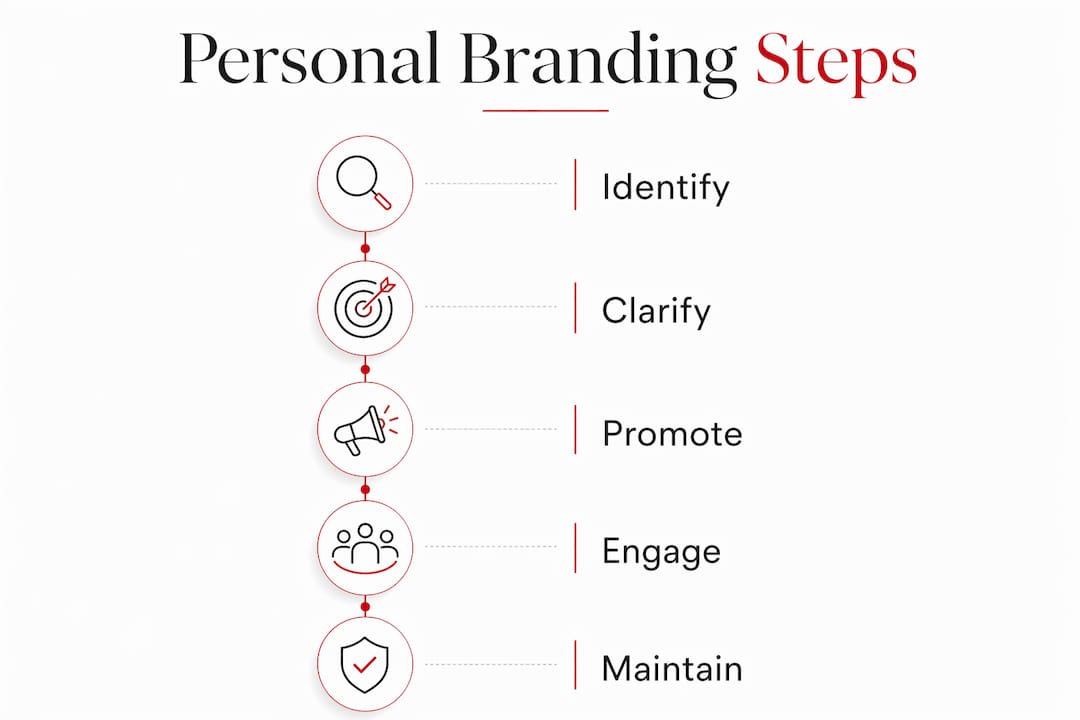
How to build a personal brand comes down to a repeatable process, not a one-time project. Consistent narrative clarity prepares prospective employers or clients before direct interactions, reducing the time you spend on persuasion. That preparation is the real return on investment in personal branding.
Follow this sequence to build or sharpen your brand:
- Define your audience and message. Identify the specific professional community you want to reach and the single problem you solve for them. Vague audiences produce vague brands.
- Choose two platforms and commit. LinkedIn works for most professionals. A personal website or newsletter works for those who want to own their audience. Spreading across five platforms with inconsistent output is worse than mastering one.
- Establish a content rhythm. One substantive post per week on LinkedIn, one article per month on your website, or one podcast appearance per quarter. Frequency matters less than consistency.
- Align tone, imagery, and vocabulary. Your headshot, your writing style, and the language you use should feel like the same person across every touchpoint. Inconsistency signals unreliability.
- Use storytelling over credential-listing. A post about a specific mistake you made and what it taught you generates more trust than a list of certifications. Personal branding in fashion and luxury markets demonstrates this principle at its most refined: narrative creates desire, credentials merely justify it.
- Schedule networking as non-negotiable. Block two hours per week for genuine outreach, introductions, and follow-ups. Relationships are the distribution channel for your brand.
Personal branding is not vanity but a strategic asset that drives differentiation, autonomy, and visibility. That reframe matters because professionals who dismiss branding as self-promotion are the ones most likely to be overlooked when opportunities arise.
Key takeaways
Investing in personal branding builds credibility, trust, and authority that outlast any job title and directly drive career advancement and business revenue.
| Point | Details |
|---|---|
| Brand portability | Your reputation travels with you across roles; build it around impact, not job titles. |
| Trust as revenue driver | 78% of social sellers outsell peers without social presence, proving visibility converts to sales. |
| Authority through consistency | Publishing a clear point of view repeatedly builds recognition faster than any single viral moment. |
| Transition resilience | A positioning statement built on who you help and what results you produce survives any career change. |
| Narrative over credentials | Storytelling and a genuine point of view generate more trust than credential lists on any platform. |
Why I think most professionals are branding themselves wrong
Most professionals treat personal branding as a performance. They optimize headlines for algorithms, post content designed to go viral, and craft bios that sound like every other bio in their industry. The result is a brand that looks polished and says nothing.
I have worked with executives in fashion and luxury who had impeccable credentials and zero recognizable identity outside their company’s name. When the company changed, so did their perceived authority. That is a fragile position, and it is entirely avoidable.
A stronger personal brand gives you autonomy and puts you in the driver’s seat of your career rather than making you a passive participant. That is the version of branding worth investing in. Not the one that chases likes, but the one that builds a reputation so clear and consistent that opportunities find you.
The professionals I have seen grow fastest are the ones who commit to a genuine point of view and repeat it, refine it, and defend it publicly. They are not the loudest voices. They are the most consistent ones. Over-optimizing for algorithms or sounding generic weakens trust, which is the key mechanism linking branding to outcomes. Build a brand that reflects your actual values and your actual expertise. Everything else is noise.
— Corrado
Build your brand with expert guidance from Corradomanenti
If you are ready to move beyond generic advice and build a personal or business brand that actually drives growth, Corradomanenti offers the depth of expertise that most branding consultants cannot match.
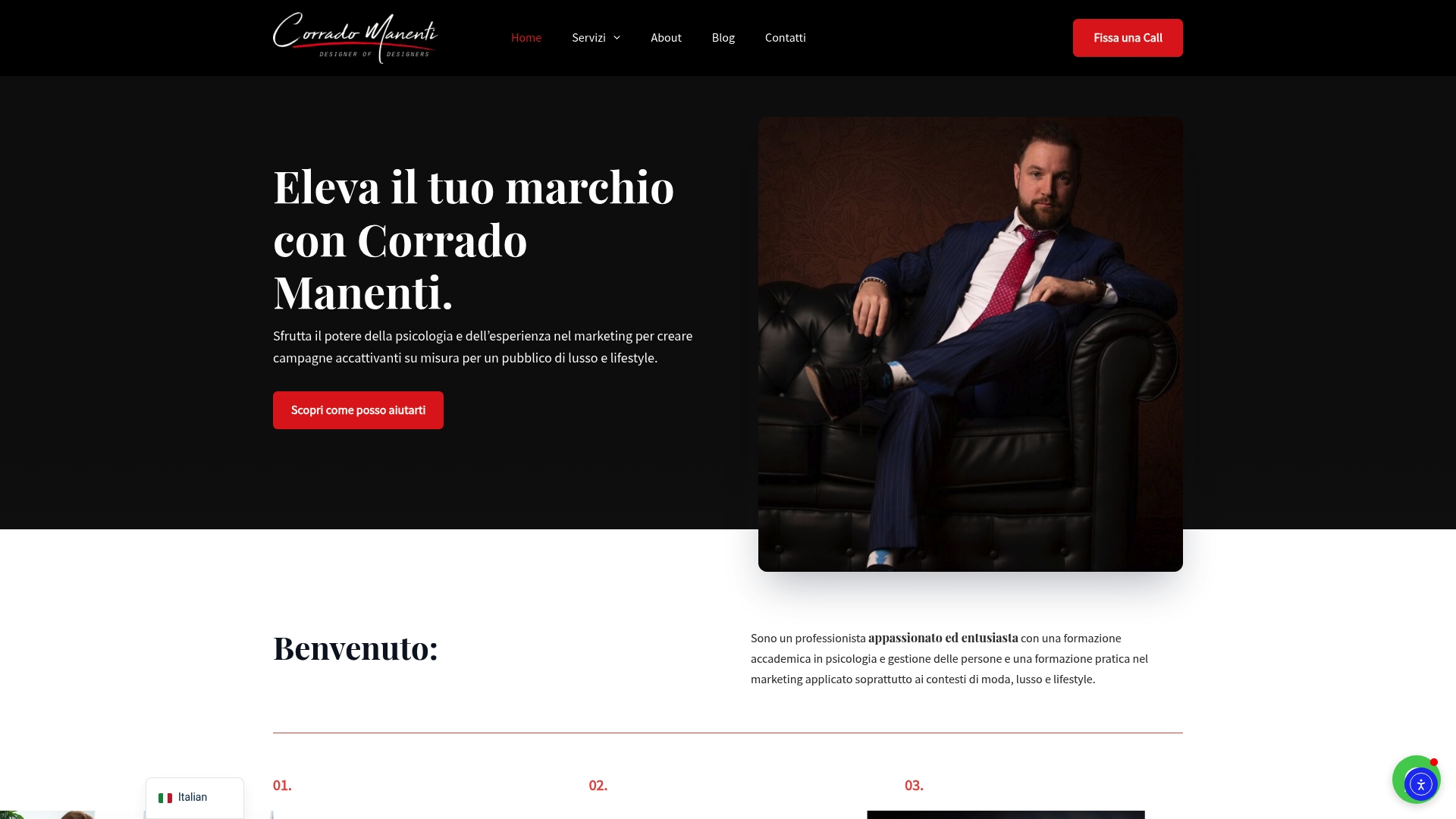
Corrado Manenti combines academic psychology with hands-on luxury and fashion marketing experience to create brand strategies grounded in how people actually make decisions. Whether you are a founder building visibility from scratch or an executive repositioning for a new market, the luxury brand growth tactics on the Corradomanenti website give you a framework built for high-stakes, high-expectation environments. Explore the full range of strategies and find the approach that fits your goals.
FAQ
What is personal branding and why does it matter?
Personal branding is the deliberate process of managing and promoting your professional identity to build credibility and trust. It matters because it creates recognition and authority that outlast any single job title or employer.
How does personal branding help with career growth?
A clear personal brand makes your accomplishments easier to communicate, improves networking impressions, and positions you as a trusted expert in your field. Professionals with strong brands attract better opportunities and spend less time convincing others of their value.
Can personal branding directly improve business sales?
Yes. Social sellers with strong personal brands outsell peers without social presence at a rate of 78%, making personal visibility a direct driver of revenue.
How long does it take to build a personal brand?
Consistent effort over six to twelve months produces measurable recognition in most professional communities. Authority compounds over time, so starting earlier and staying consistent matters more than any single tactic.
What is the biggest mistake professionals make with personal branding?
Over-optimizing for social media algorithms or defaulting to generic messaging destroys the trust that makes branding effective. A brand built on genuine values and a specific point of view always outperforms one built for engagement metrics.