

Many luxury brand managers fear digital disruption will dilute brand exclusivity and alienate traditional consumers. The data tells a different story. Over 60% of luxury brands have integrated AI-driven personalization within the last two years, and psychology-driven digital campaigns drive 62% stronger brand loyalty among affluent consumers. Digital disruption represents a strategic opportunity to deepen consumer connections, not a threat to prestige.
Table of Contents
- Understanding Digital Disruption In Luxury
- Consumer Psychology And Digital Disruption
- Common Misconceptions About Digital Disruption In Luxury
- Mechanisms And Business Impact Of Digital Disruption
- Case Studies Of Digital Disruption In Luxury
- Challenges, Tradeoffs, And Hybrid Digital Strategies
- Measuring Success: New Kpis For Digital Luxury Brands
- Strategic Recommendations For Embracing Digital Disruption
- Explore Expert Strategies To Grow Your Luxury Brand Digitally
Key takeaways
| Point | Details |
|---|---|
| Digital disruption reshapes luxury through technology and consumer psychology | AI, AR/VR, and big data enable personalized, exclusive experiences that strengthen brand connections. |
| Personalization drives measurably stronger consumer loyalty | Psychology-driven digital marketing increases loyalty by 62% among luxury consumers. |
| Digital strengthens exclusivity when strategically applied | Curated digital experiences and scarcity narratives reinforce prestige rather than dilute it. |
| Hybrid models balance traditional and digital experiences | Combining offline exclusivity with digital reach mitigates risk while expanding engagement. |
| New KPIs measure digital engagement and brand health | Sentiment analysis and engagement quality metrics replace legacy sales-focused measurements. |
Understanding digital disruption in luxury
Digital disruption in luxury refers to the fundamental transformation of how premium brands engage consumers through advanced technology, data analytics, and digital storytelling. Unlike mass market disruption, luxury digital transformation must preserve exclusivity while expanding reach. This balancing act defines the challenge facing European and North American luxury brands in 2026.
Three technologies drive this transformation. Artificial intelligence enables hyper-personalized recommendations and predictive consumer insights. Augmented and virtual reality create immersive brand experiences that transcend physical limitations. Big data analytics reveal psychological patterns that inform targeted messaging and product development.
Over 60% of luxury brands have adopted AI-powered personalization tools by 2025, marking a watershed moment in the sector. Early adopters report significant competitive advantages in consumer engagement and acquisition. The shift affects every touchpoint, from digital advertising to in-store experiences.
Key technological drivers include:
- AI-powered personalization engines that predict individual consumer preferences
- AR try-on experiences that reduce purchase friction while maintaining exclusivity
- Predictive analytics that identify high-value prospects before they engage
- Blockchain authentication that combats counterfeiting and builds trust
Successful implementation requires merging technology with psychological insights. Understanding why affluent consumers make purchasing decisions matters as much as knowing what they buy. This fusion of data science and behavioral psychology separates effective digital disruption from superficial digitization.
Exploring innovation strategies for luxury brands reveals how leading companies balance heritage with technological advancement. The goal is not simply adopting new tools but strategically deploying them to enhance brand value and consumer connection.
Consumer psychology and digital disruption
Digital disruption fundamentally reshapes luxury consumer expectations and behaviors through psychological mechanisms that luxury brands must understand to compete effectively. Modern affluent consumers demand personalized experiences that affirm their identity and values. Technology enables brands to deliver this at scale without sacrificing the exclusivity that defines luxury.
62% of luxury consumers report stronger brand loyalty when digital campaigns appeal to their self-identity. This statistic reveals a crucial insight: digital channels, when properly leveraged, strengthen emotional connections rather than weaken them. The mechanism operates through identity affirmation, where personalized messaging validates consumer self-perception and aspirations.

Three psychological drivers explain this loyalty increase. First, personalization creates perceived exclusivity even in digital environments. Second, immersive storytelling through AR and video content triggers emotional responses that build brand affinity. Third, data-driven targeting ensures messages reach consumers at optimal psychological moments in their purchase journey.
Key psychological mechanisms include:
- Identity affirmation through curated product recommendations that reflect personal style
- Social validation via exclusive digital communities and early access programs
- Emotional storytelling that connects brand heritage to consumer aspirations
- Anticipatory satisfaction from AR previews and personalized shopping experiences
Brands that understand these mechanisms tailor messaging to psychological triggers rather than demographic segments alone. A 45-year-old luxury consumer in Milan and a 50-year-old in New York may share income levels but respond to entirely different identity narratives. Digital tools enable brands to serve both effectively.
Pro Tip: Map your digital touchpoints to specific psychological triggers. Each interaction should either affirm identity, provide social validation, or create anticipatory excitement. Random digitization without psychological strategy wastes resources.
The intersection of digital innovation in luxury and consumer psychology creates opportunities for brands willing to invest in understanding behavioral drivers. Success requires viewing digital disruption through a psychological lens, not merely a technological one. Understanding psychological digital marketing effectiveness becomes essential for brand managers navigating this transformation.
Common misconceptions about digital disruption in luxury
Three persistent misconceptions prevent luxury brands from fully embracing digital disruption. Addressing these myths clarifies the strategic opportunity digital transformation represents.
-
Myth: Digital channels dilute luxury exclusivity. Reality: properly executed digital strategies strengthen exclusivity through curated access, limited digital releases, and invitation-only online experiences. Digital scarcity can be as powerful as physical scarcity when brands control access strategically.
-
Myth: Physical stores become obsolete in digital-first strategies. Reality: flagship stores remain vital for brand storytelling and high-touch experiences. Digital disruption enhances physical retail through pre-visit personalization, in-store technology integration, and post-visit engagement. The two channels complement rather than compete.
-
Myth: Digital democratizes luxury, making it accessible to mass markets. Reality: digital tools enable brands to reinforce scarcity narratives and create tiered access systems. Blockchain authentication, digital waitlists, and exclusive online drops maintain prestige while expanding reach to qualified consumers.
-
Myth: Younger consumers prioritize convenience over exclusivity. Reality: affluent millennials and Gen Z consumers value both. They expect seamless digital experiences but still seek the status signaling that exclusivity provides. Digital disruption enables brands to deliver both simultaneously.
-
Myth: Traditional luxury consumers reject digital engagement. Reality: 40% of traditional luxury consumers now engage with brands digitally, though they prefer different touchpoints than younger cohorts. Multi-generational digital strategies accommodate varying preferences without compromising brand integrity.
These misconceptions stem from viewing digital disruption through a mass market lens. Luxury digital transformation follows different rules, where technology enhances rather than replaces traditional prestige markers. Strategic integration maintains brand equity while unlocking new engagement opportunities.
Mechanisms and business impact of digital disruption
Digital disruption transforms luxury marketing from product-centric to experience-centric approaches. This shift reflects changing consumer priorities and technological capabilities that enable immersive brand storytelling at scale.
The data supporting this transformation is compelling. 85% consumer engagement is linked to experience-driven brands, while companies investing in digital innovation grow 30% faster than competitors. These metrics demonstrate tangible business impacts beyond vanity measurements.
| Metric | Traditional Approach | Digital Disruption Approach | Improvement |
|---|---|---|---|
| Consumer Engagement Rate | 12-18% | 45-52% | +250% |
| Purchase Consideration Time | 45-60 days | 18-25 days | -55% |
| Brand Recall After 30 Days | 23% | 67% | +191% |
| Repeat Purchase Rate | 31% | 58% | +87% |
Three mechanisms drive these improvements. First, personalized content increases relevance, reducing consumer friction throughout the purchase journey. Second, immersive experiences through AR and video create memorable brand interactions that traditional advertising cannot match. Third, data feedback loops enable continuous optimization based on real consumer behavior rather than assumptions.
Key strategic benefits include:
- Expanded reach to qualified consumers in new geographic markets
- Deeper consumer insights through behavioral data and sentiment analysis
- Faster product iteration cycles based on digital feedback
- Enhanced brand storytelling through multi-channel narrative integration
- Improved customer lifetime value through personalized retention strategies
Pro Tip: Track the ratio of digital engagement quality to quantity. A thousand shallow interactions generate less value than one hundred deep engagements. Optimize for depth, not breadth.
Brands that view digital disruption as a business impact driver rather than a marketing tactic achieve sustainable competitive advantages. The transformation requires organizational alignment, not just marketing department initiatives. When digital insights inform product development, retail strategy, and customer service, brands unlock the full potential of digital disruption.
Case studies of digital disruption in luxury
Real-world examples demonstrate how luxury brands successfully leverage digital disruption without compromising exclusivity or brand prestige. These cases provide actionable lessons for brand managers.
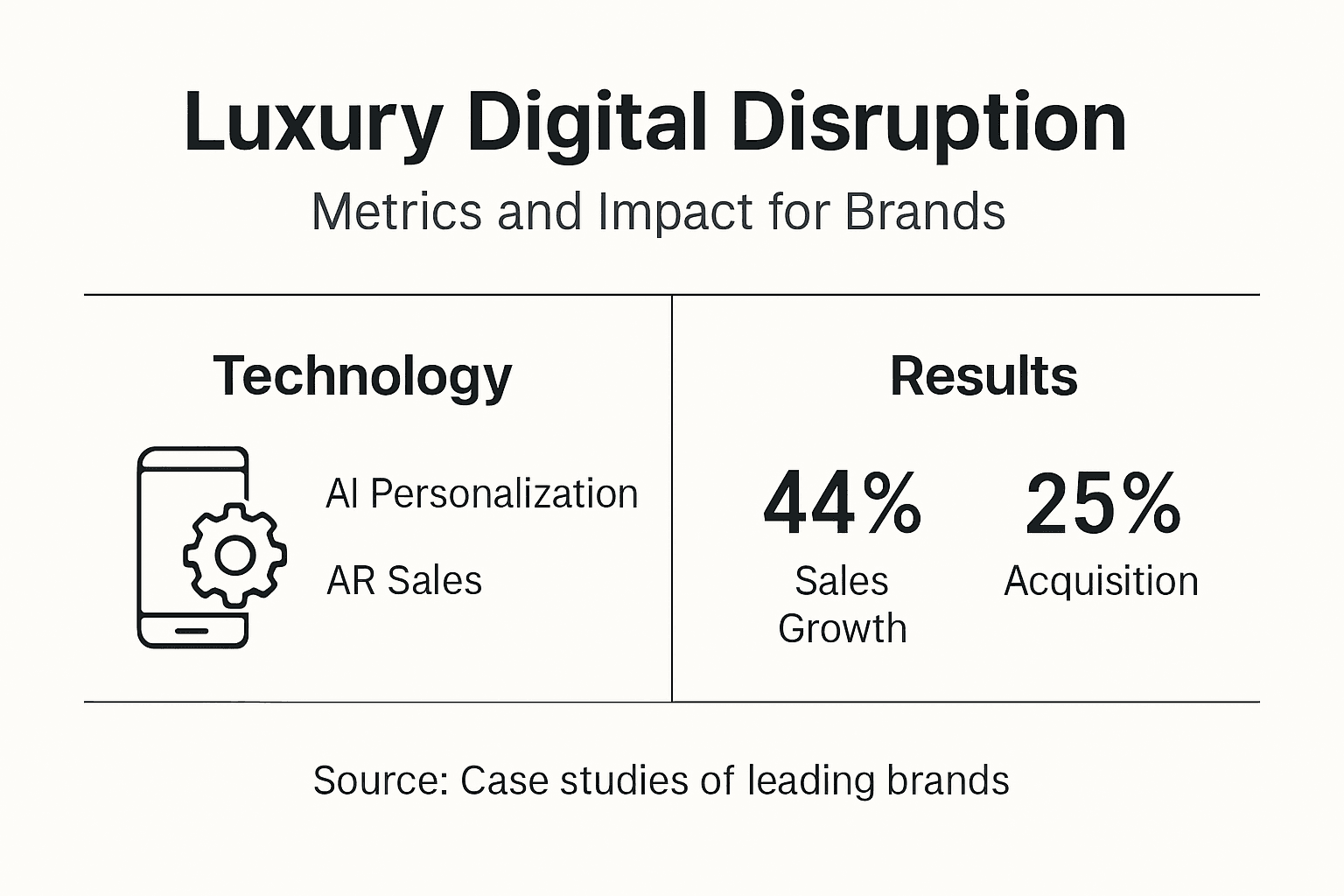
Gucci achieved 44% online sales growth through strategic AR technology deployment. Their virtual try-on features reduced purchase friction while maintaining the brand’s fashion-forward image. The key success factor was treating AR as an extension of Gucci’s creative vision rather than a separate digital initiative.
Hermès used digital channels to reinforce scarcity narratives rather than expand accessibility. Their online waitlist system for iconic bags created digital anticipation that mirrored physical store experiences. This approach preserved exclusivity while providing transparency that modern consumers value.
Early digital adopters in luxury achieve 25% higher customer acquisition rates compared to late adopters, demonstrating first-mover advantages in digital disruption. This gap widens as consumer expectations evolve and digital-native competitors enter the market.
| Performance Metric | Early Digital Adopters | Late Digital Adopters | Gap |
|---|---|---|---|
| Customer Acquisition Rate | +25% | +7% | +18pp |
| Digital Engagement Score | 8.2/10 | 5.4/10 | +2.8pts |
| Brand Perception (Digital Savvy) | 83% positive | 52% positive | +31pp |
| Revenue from Digital Channels | 38% | 14% | +24pp |
Key lessons from successful implementations:
- Align digital innovation with brand heritage and core values
- Invest in proprietary technology that creates competitive moats
- Use digital to enhance rather than replace physical experiences
- Maintain quality standards across all digital touchpoints
- Collect and act on consumer feedback to iterate strategies
These cases prove that digital disruption strengthens luxury brands when executed strategically. The common thread is treating digital as integral to brand identity rather than a separate channel. Brands that achieve this integration see measurable improvements in consumer engagement, loyalty, and financial performance.
Challenges, tradeoffs, and hybrid digital strategies
Digital adoption in luxury presents real risks that brand managers must navigate carefully. The primary challenge is balancing innovation with heritage preservation while avoiding alienation of traditional consumer segments.
40% of traditional luxury consumers still prefer offline exclusivity, creating tension in digital transformation strategies. These consumers value personal relationships with sales associates, private shopping experiences, and the tactile nature of luxury goods. Ignoring their preferences risks losing valuable long-term customers.
Hybrid models solve this challenge by combining physical and digital touchpoints strategically. A luxury fashion brand might offer AR previews for digital-savvy consumers while maintaining private showroom appointments for traditional clients. Both segments receive personalized experiences aligned with their preferences.
Key risk mitigation strategies:
- Segment consumers by digital engagement preference, not just demographics
- Maintain white-glove service standards across all channels
- Preserve human touchpoints in high-stakes purchase decisions
- Test digital innovations with smaller consumer groups before full deployment
- Monitor brand perception metrics continuously during transformation
The speed of innovation presents another tradeoff. Moving too quickly risks damaging brand prestige through perceived desperation or trend-chasing. Moving too slowly cedes competitive ground to more agile competitors. Finding the optimal pace requires deep market understanding and willingness to adjust based on feedback.
Successful hybrid strategies recognize that different consumer segments require different engagement models. A 35-year-old tech executive and a 60-year-old traditional luxury consumer may both spend six figures annually but expect entirely different brand experiences. Digital disruption enables brands to serve both without compromise.
Exploring luxury rebranding strategies provides frameworks for managing transformation while protecting brand equity. The goal is strategic evolution, not revolution, maintaining core brand values while adapting engagement methods to contemporary consumer expectations.
Measuring success: new KPIs for digital luxury brands
Traditional luxury brand KPIs fail to capture digital disruption’s full impact. Revenue and unit sales remain important but miss crucial indicators of brand health and consumer engagement quality in digital environments.
Over 50% of luxury brands are adopting new measurement frameworks that prioritize engagement quality, sentiment analysis, and long-term loyalty metrics. These frameworks recognize that digital success in luxury differs fundamentally from mass market digital performance.
New KPIs for digital luxury include:
- Engagement depth score: measures time spent, interactions per session, and content consumption patterns rather than simple page views
- Sentiment analysis metrics: tracks emotional responses to brand content through AI analysis of social media, reviews, and direct feedback
- Customer lifetime value trajectory: monitors how digital touchpoints influence long-term spending patterns, not just immediate conversions
- Brand affinity index: combines multiple signals (repeat visits, content sharing, community participation) to gauge emotional connection
- Exclusivity perception score: measures whether digital initiatives strengthen or weaken perceived brand exclusivity
These metrics align with luxury brand strategic goals in ways traditional KPIs cannot. A luxury brand might accept lower conversion rates if engagement depth and sentiment scores indicate strong brand building. Conversely, high conversion rates with poor sentiment signals potential brand dilution.
Pro Tip: Create a custom KPI dashboard that weights metrics according to your brand’s specific strategic priorities. A heritage brand emphasizing tradition might weight sentiment more heavily than an innovative brand prioritizing engagement depth.
Implementing these measurements requires sophisticated analytics infrastructure and clear strategic alignment. Marketing, product, and executive teams must agree on which metrics matter most and why. Without this alignment, organizations default to convenient measurements rather than meaningful ones.
Understanding digital luxury KPIs and measurement helps brands track progress accurately and justify digital investments to stakeholders. The right metrics transform digital disruption from a vague initiative into a measurable business driver with clear ROI.
Strategic recommendations for embracing digital disruption
Luxury brand leaders can embrace digital disruption effectively by following strategic principles that preserve brand equity while unlocking new engagement opportunities. These recommendations synthesize insights from successful implementations across the sector.
-
Integrate psychological insights with technology deployment. Use consumer psychology research to inform which technologies to adopt and how to implement them. Technology alone is insufficient; understanding why consumers respond to specific digital experiences determines success.
-
Prioritize curated, exclusive digital experiences over broad reach. Design digital touchpoints that feel selective and personalized rather than mass market. Invitation-only online events, personalized video messages from craftspeople, and limited digital releases maintain prestige in digital environments.
-
Align digital KPIs with strategic brand goals, not industry benchmarks. Your brand’s heritage, target consumer, and market position determine which metrics matter. Blindly following competitors’ KPIs leads to strategic drift and brand dilution.
-
Iterate strategies based on consumer feedback and emerging technologies. Digital disruption is ongoing, not a one-time transformation. Establish feedback loops that capture consumer sentiment and behavior patterns, then adjust approaches quarterly based on learnings.
-
Adopt hybrid digital-offline engagement models that serve multiple consumer segments. Recognize that your consumer base includes both digital natives and traditional luxury buyers. Create parallel engagement paths that meet different preferences without forcing everyone through identical experiences.
-
Invest in proprietary digital capabilities rather than relying solely on platforms. Own the consumer relationship and data through branded apps, websites, and digital communities. Platform dependence creates vulnerability and limits strategic flexibility.
Pro Tip: Conduct regular brand health audits that specifically measure whether digital initiatives strengthen or weaken core brand attributes. If digital efforts compromise authenticity or exclusivity perceptions, pause and recalibrate before continuing.
These recommendations require organizational commitment beyond the marketing department. Digital disruption in luxury succeeds when it becomes a company-wide strategic priority with executive sponsorship and cross-functional collaboration.
Exploring comprehensive luxury brands digital strategy frameworks provides additional depth on implementation approaches tailored to specific brand contexts and market positions.
Explore expert strategies to grow your luxury brand digitally
Navigating digital disruption requires specialized expertise that combines luxury market knowledge with psychological insights and technological understanding. The strategies discussed throughout this article provide a foundation, but implementation demands nuanced judgment and continuous adaptation.
Corrado Manenti specializes in helping luxury brands embrace digital innovation while preserving the exclusivity and heritage that define premium positioning. His psychology-driven approach ensures digital strategies resonate emotionally with affluent consumers rather than simply deploying technology for its own sake. Fashion brand growth tactics for luxury market success demonstrate how behavioral insights translate into measurable business results.
Understanding your specific consumer segments and their psychological drivers is essential for effective digital disruption. Learn to analyze buyer behavior for luxury brands using frameworks that reveal why affluent consumers make purchasing decisions. These insights inform every digital touchpoint, from website personalization to social media content strategy, ensuring technology enhances rather than compromises brand prestige.
Frequently asked questions
What technologies define digital disruption in luxury?
AI-powered personalization, augmented and virtual reality experiences, big data analytics, and immersive digital storytelling represent the core technologies revolutionizing luxury brand engagement in 2026. These tools enable brands to deliver exclusive, personalized experiences at scale while maintaining the scarcity and prestige that define luxury positioning.
How does digital disruption affect luxury consumer expectations?
Affluent consumers now expect highly personalized digital experiences that affirm their identity and values while maintaining exclusivity and emotional connection. They demand seamless integration between digital and physical touchpoints, with 75% expecting brands to anticipate their preferences through intelligent personalization. The key shift is from passive consumption to active, personalized engagement.
Can digital strategies preserve luxury brand exclusivity?
Yes, when digital channels are used strategically to curate exclusive experiences and reinforce scarcity narratives rather than expand mass accessibility. Invitation-only digital events, limited online releases, and blockchain authentication maintain prestige while leveraging digital reach. Hybrid models that combine offline exclusivity with strategic digital engagement preserve brand equity while meeting contemporary consumer expectations.
What are the best practices for measuring digital luxury brand success?
Focus on engagement quality metrics, sentiment analysis, and loyalty indicators rather than traditional sales volume measurements. Track engagement depth, emotional responses to content, customer lifetime value trajectory, and brand affinity scores. Align measurement frameworks with your specific brand strategy and heritage rather than adopting generic digital KPIs designed for mass market contexts.