

Luxury brands in Western Europe face a real challenge. Adopting digital innovation goes far beyond simple online convenience. It is about the strategic integration of advanced digital technologies that maintain exclusivity and prestige while enhancing engagement globally. This distinction matters because conventional retail approaches dilute what makes your brand iconic. Here, you will learn how tailored digital strategies can reinforce your luxury positioning, deepen emotional connections, and expand global reach—all without sacrificing the mystique your customers expect.
Table of Contents
- Defining Digital Innovation In Luxury Sector
- Key Types Of Digital Innovation For Luxury
- How Digital Enhances Luxury Customer Journeys
- AI, Data, And Personalization Strategies
- Common Pitfalls And Implementation Risks
- Measuring Success And Competitive Advantage
Key Takeaways
| Point | Details |
|---|---|
| Digital Innovation Is Unique To Luxury | It focuses on enhancing customer experience while maintaining exclusivity, distinct from mass-market strategies. |
| Integrate Technology Thoughtfully | Select digital innovations that align with luxury branding and create value, focusing on personalization and authenticity. |
| Measuring Success Differently | Luxury brands must track metrics beyond revenue, emphasizing engagement, customer loyalty, and brand equity. |
| Maintain Control Over Brand Experience | Ensure that digital strategies preserve the luxury experience and avoid brand dilution through careless expansion. |
Defining Digital Innovation in Luxury Sector
Digital innovation in the luxury sector isn’t about copying what mass-market brands do online. It’s something entirely different. When we talk about digital innovation in luxury, we’re discussing the strategic integration of advanced digital technologies that maintain exclusivity and prestige while simultaneously expanding global engagement. This distinction matters enormously because luxury operates under fundamentally different rules than conventional retail. Your customers don’t just want convenience; they want an experience that reinforces their status and refined taste.
[Digital transformation in luxury] (https://www.sciencedirect.com/science/article/pii/S2405844024160604) encompasses how companies are integrating technology across three critical domains: production, marketing, and customer engagement. Think of it as threading digital capabilities through every touchpoint without diluting the brand’s premium positioning. A luxury watchmaker isn’t simply moving to e-commerce like an electronics retailer would. Instead, they’re crafting personalized digital journeys that feel exclusive, perhaps limiting access to certain collections or creating bespoke configurators that make customers feel like insiders. The challenge is real. You need to enhance global reach while protecting the scarcity and mystique that define luxury.
What makes this landscape complex is that digital innovation in luxury operates under specific industry constraints. Companies are leveraging digital technology to build sustainable competitive advantages, but these advantages come from maintaining the brand’s core identity while adapting to changing consumer expectations. Your European luxury customers increasingly expect digital convenience, but they expect it delivered with exceptional craftsmanship and attention to detail. They want seamless omnichannel experiences where a WhatsApp conversation with a brand consultant flows naturally into an in-person atelier visit. They want to see behind-the-scenes content that reinforces artisanal heritage. The brands winning this game understand that digital innovation in luxury isn’t about technology for its own sake. It’s about using psychology-driven strategies to deepen emotional connections while maintaining the exclusivity that justifies premium pricing.
Pro tip: Audit your current digital touchpoints specifically for “luxury gaps”—places where your digital experience feels too transactional or generic compared to your offline luxury positioning, then prioritize fixing those disconnect points first.
Here’s a summary of how digital innovation applies uniquely to luxury brands versus mass-market brands:
| Aspect | Luxury Sector Approach | Mass-Market Approach |
|---|---|---|
| Customer Experience | Exclusive, status-driven | Convenience-focused |
| Technology Usage | Tailored for prestige | Standardized for scale |
| Brand Positioning | Protects scarcity, mystique | Widens audience reach |
| Personalization Level | Deeply customized | General segmentation |
Key Types of Digital Innovation for Luxury
Your luxury brand doesn’t need every technology available. What matters is selecting digital innovations that align with your positioning and create measurable value for your customers. The most impactful innovations for luxury fall into distinct categories, each addressing different parts of the customer journey and operational efficiency.
Immersive Technologies
Augmented reality (AR) and virtual reality (VR) represent the biggest opportunity most luxury brands haven’t fully exploited. These aren’t gimmicks. AR lets your customers visualize how a piece of jewelry sits on their wrist before purchase, or how a furniture collection transforms their space. VR creates exclusive showroom experiences accessible from anywhere in the world, perfect for European luxury customers who can attend a bespoke fitting session digitally before committing to a physical visit. Advanced technologies like AR and VR directly enhance consumer experience while reducing purchase hesitation for high-value items.
Blockchain and Digital Authenticity
Blockchain technology addresses a real problem in luxury: provenance and authentication. NFTs and smart contracts enable you to create digital certificates of authenticity that travel with the physical product throughout its lifecycle. Your customer purchases an exclusive handbag, receives both the physical item and an NFT proving its authenticity and ownership history. This builds trust, prevents counterfeiting, and creates secondary market opportunities. Digital technologies including blockchain and NFT are transforming how luxury brands authenticate products and maintain customer relationships across the ownership journey.
Artificial Intelligence and Personalization
AI powers the psychology-driven personalization that luxury demands. Machine learning analyzes customer behavior patterns to predict what collections align with individual tastes, enabling your team to deliver hyper-personalized recommendations before customers even realize they want something. AI chatbots conduct sophisticated conversations in multiple languages, understanding nuance and context in ways basic automation cannot. This matters because your customers expect conversations that feel premium, not robotic.

Digital Marketing and Distribution
Online distribution channels and sophisticated digital marketing have become table stakes. The difference for luxury lies in execution. Your strategy should emphasize quality over volume, leveraging social commerce on platforms where your affluent audience actually spends time, creating exclusive digital collections available only through specific channels, and using data to drive hyper-targeted campaigns that feel curated rather than pushy.
Pro tip: Map each technology type against your specific customer pain points and operational bottlenecks first, then select the two to three innovations that deliver the highest ROI for your brand rather than attempting to implement everything at once.
Below is a comparison of major digital technologies and their core benefits for luxury brands:
| Technology | Purpose in Luxury | Key Business Impact |
|---|---|---|
| AR/VR | Immersive product visualization | Enhances pre-purchase confidence |
| Blockchain | Authenticity & provenance | Prevents counterfeiting, builds trust |
| AI | Hyper-personalization | Anticipates preferences, improves service |
| Social Commerce | Curated marketing channels | Reaches affluent audiences effectively |
How Digital Enhances Luxury Customer Journeys
The traditional luxury customer journey followed a predictable path: discovery through exclusive channels, consultation with a specialist, purchase decision, and post-sale service. Digital transforms every single step without sacrificing the exclusivity that defines your brand. The key difference is that digital doesn’t replace the luxury experience. Instead, it amplifies it by removing friction while deepening emotional connection.
Consider how your customers actually interact with your brand today. They might discover you through a carefully curated Instagram post, research your collections using AR visualization on their phone, schedule a private consultation via WhatsApp with a brand specialist, visit your atelier for a bespoke fitting, and then track their custom order through a personalized dashboard. Digital strategies including e-commerce and social media now reshape how luxury brands engage customers across multiple touchpoints, replacing the old linear model with something far more sophisticated and personalized. Each interaction feels tailored because your data infrastructure understands their preferences, purchase history, and communication style.
The Seamless Integration Advantage
What separates winning luxury brands from everyone else is how they blend digital and physical experiences. Your ultra-high-net-worth customers don’t want to feel like they’re navigating separate channels. When they email a question, they expect the person they meet in-store to already know that conversation happened. When they experience your VR showroom, they expect that interaction to inform the personal service they receive during their visit. Creating impactful digital journeys for high-net-worth individuals requires integrating advanced technology with deeply personalized emotional experiences across every channel.
Data-driven personalization plays the starring role here. Your systems track not just what customers bought, but which products they viewed, which collections they lingered on, which communications they engaged with, and which experiences they valued most. This intelligence allows your team to anticipate needs before customers articulate them. Your private clients receive invitations to new collections that align with their aesthetic preferences. Your marketing communications arrive through their preferred channels at optimal times. Your after-sales service feels proactive rather than reactive. The technology remains invisible; only the exceptional, personalized experience registers.
Pro tip: Audit your current digital touchpoints to identify where your data isn’t being shared across channels, then prioritize integrating those systems first so customer information flows seamlessly between online and offline teams.
AI, Data, and Personalization Strategies
AI and data analytics aren’t about replacing human judgment in luxury. They’re about amplifying it. Your marketing directors understand that luxury customers expect you to know them, anticipate their desires, and deliver experiences that feel personally curated. The challenge has always been scale. How do you provide that white-glove attention to hundreds or thousands of high-value clients? Data and AI make it possible.
Start with what you actually know about your customers. Every interaction generates signals: purchase history, browsing behavior, email opens, product pages visited, customer service interactions, event attendance, social media engagement. Most luxury brands capture this data but fail to synthesize it into actionable intelligence. Your AI systems need to connect these dots automatically, creating a complete picture of each customer’s preferences, lifecycle stage, and likely future needs. AI and predictive analytics enable hyper-personalization across digital and physical touchpoints, transforming customer satisfaction and loyalty in luxury markets. This isn’t surveillance; it’s attentiveness at scale.
Turning Data into Experience
Here’s where psychology enters the picture. You’re not just collecting data to send more emails. You’re using it to understand motivation. Why did your customer spend thirty minutes researching your spring collection but haven’t purchased? Maybe they’re waiting for a specific size to become available. Maybe they’re considering a similar item from a competitor. Maybe they need permission from a partner before committing. Your AI system flags this pattern and routes it to your team, who can respond with the right intervention at the right time. That intervention might be a personal call from a specialist offering early access to restock. It might be a private trunk show invitation. It might be a custom modification option they didn’t know existed.
Personalization goes beyond recommendations. Your luxury customers receive communications timed to their habits. They get invitations through their preferred channels. They see content that matches their aesthetic and budget range. Your loyalty programs recognize their value tier and reward them accordingly. Your after-sales service reaches out proactively about maintenance or styling advice relevant to what they own. The technology remains completely invisible. They simply experience a brand that genuinely understands them.
The Ethics Reality
Responsible data use builds trust, and trust drives loyalty. European customers increasingly care about data privacy and algorithmic transparency. Be explicit about what data you collect and why. Give customers clear control over their information. Audit your systems for bias that might exclude certain customer segments or create discriminatory experiences. This isn’t a compliance burden; it’s a competitive advantage. Brands known for respecting customer privacy win more loyalty from affluent customers who value discretion and control.
Pro tip: Start your personalization strategy by auditing which customer data is siloed across systems and unreachable to your marketing team, then create a unified customer data platform that connects this information before investing in AI tools.
Common Pitfalls and Implementation Risks
Digital transformation in luxury isn’t inherently risky. Poor execution is. The difference between brands that successfully integrate digital innovation and those that stumble comes down to understanding where things typically go wrong. Your team likely has the budget and the ambition. What trips up most luxury brands is underestimating how fundamentally different digital transformation is from traditional marketing initiatives.
The biggest risk? Brand dilution through thoughtless digital expansion. You launch an e-commerce platform because competitors have one, then suddenly you’re selling through marketplaces that cheapen your positioning. You create a social media presence but treat it like a broadcast channel rather than a curated experience. You implement AI personalization without considering whether mass-scale automation contradicts the exclusivity that justifies your premium pricing. Leadership challenges and risks in digital transformation include balancing technology integration with brand exclusivity and managing stakeholder expectations throughout implementation. The problem is that leadership often views digital as a tactical addition rather than a strategic reimagining of how your brand operates.
The Control Problem
Traditional luxury brands maintained total control over customer experience. You controlled which boutiques carried your products. You controlled who could access which collections. You controlled how your brand was presented to the world. Digital throws this out the window. Once your customer reviews appear on third party sites, once your products show up in aggregator marketplaces, once your content gets shared across social platforms, you’ve lost total control. Risks include brand dilution, loss of customer experience control, and tension between exclusivity and digital accessibility. This terrifies luxury executives, and rightfully so. The solution isn’t avoiding digital. It’s architecting your digital strategy around maintaining control over core brand touchpoints while accepting reasonable loss of control over peripheral ones.
Another common mistake is treating digital adoption as separate from your core business strategy. You hire a digital team that operates independently from your heritage craftspeople and in-store specialists. Your online pricing strategy contradicts your retail positioning. Your digital customer service standards differ from your atelier experience. Your employees don’t understand why digital matters. Resistance builds. Implementation stalls. Successfully implementing digital innovation requires strong leadership to mitigate risks and align organizational culture with digital direction. This means everyone from your CEO to your in-store consultants understands that digital isn’t replacing luxury. It’s enhancing it.
Speed is its own pitfall. Luxury has always moved deliberately. You spend months perfecting a collection. You curate exclusivity carefully. Then some director pushes rapid digital deployment to hit quarterly targets. You launch features half-built. You activate channels before your team is ready. You acquire customer data but don’t have processes to use it responsibly. These shortcuts create technical debt, employee frustration, and customer disappointment. Your timeline should respect both business realities and brand integrity.
Pro tip: Before launching any digital initiative, explicitly document how it preserves or enhances your core brand values, then get alignment from both your digital team and your heritage operations before proceeding.
Measuring Success and Competitive Advantage
You can’t manage what you don’t measure. This is where most luxury brands fail. They invest heavily in digital innovation, then struggle to articulate whether it’s actually working. The challenge is that success in luxury operates differently than in mass markets. Revenue metrics alone miss the real story. A luxury brand might generate lower transaction volume but dramatically higher customer lifetime value and brand equity. Your measurement framework needs to reflect that reality.
Start by defining success clearly. Is your goal to increase average order value? Expand your customer base into new geographic markets? Deepen relationships with existing VIP clients? Improve operational efficiency? Build brand prestige in digital channels? Each objective requires different metrics. Strategic shifts in luxury management focus on measuring enhanced customer engagement, brand equity, and the ability to blend heritage with digital innovation. This means tracking metrics that traditional retailers ignore. Customer satisfaction scores from your luxury touchpoints. Brand sentiment in affluent demographic conversations. How many times a VIP client engages across channels before purchasing. Whether digital interactions increase or decrease time spent with your brand.
Beyond Revenue Numbers
Traditional e-commerce metrics like conversion rate and average order value tell you almost nothing about luxury success. A customer who spends three weeks researching, engages with your AR product visualizer, attends a virtual consultation, and finally purchases has generated far more brand loyalty than someone who impulse-buys. Track engagement depth. Measure how many customers return to your site multiple times before converting. Monitor how often customers use premium features like AR visualization or personal shopping services. Analyze which customers are becoming advocates who refer others.
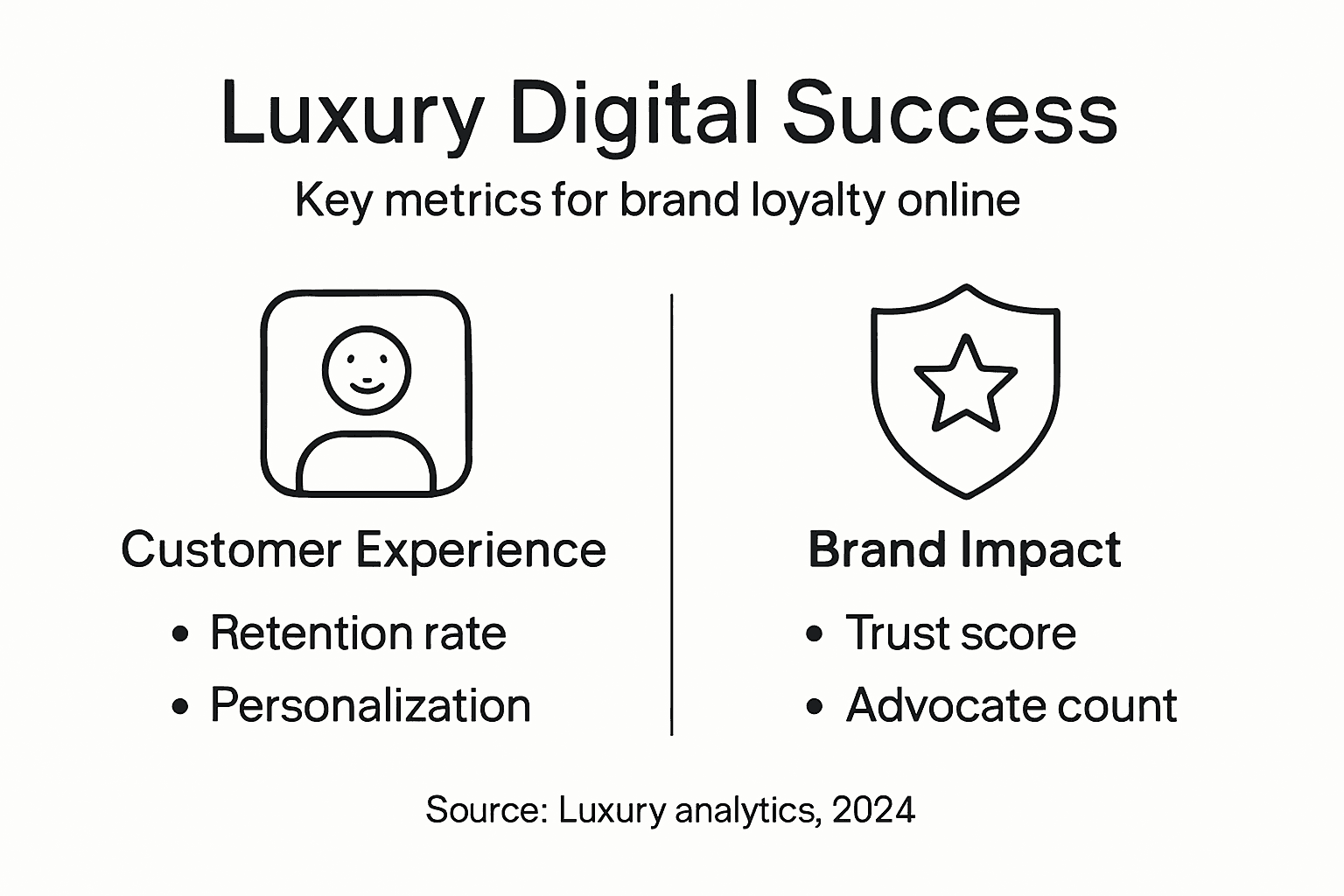
Competitive advantage emerges from metrics that competitors can’t easily replicate. Digital strategy effectiveness and brand differentiation serve as key success indicators for luxury fashion brands developing market advantage. What percentage of your customers feel your digital experience aligns with your brand heritage? How does your customer retention rate compare to competitors? Are your digital channels attracting customers in new segments, or just converting existing ones? Is your brand becoming more or less prestigious as you expand digitally? These qualitative and quantitative metrics reveal whether you’re winning.
Don’t get trapped measuring activity instead of outcomes. Your team launches an influencer campaign, generates thousands of impressions, and celebrates. But did those impressions convert to customers? Did they attract the right customers? Did they strengthen or weaken your brand positioning? Your framework should include clear connections between digital initiatives and business results. Track attribution across channels. Understand whether your digital investments drive incremental revenue or just shift purchases that would have happened anyway.
Pro tip: Establish a baseline measurement across ten to fifteen key metrics before launching major digital initiatives, then review progress quarterly against those baselines to separate genuine competitive advantage from noise.
Elevate Your Luxury Brand with Psychology-Driven Digital Innovation
The article highlights a crucial challenge luxury brands face: balancing the exclusivity and emotional connection of luxury with the fast-evolving demands of digital innovation. You want to deepen brand loyalty without diluting prestige or losing control over your customer experience. Harnessing technologies like AI personalization and immersive digital experiences requires a strategy that integrates psychology and attention to detail. This is where targeted, psychologically informed marketing becomes your greatest asset.
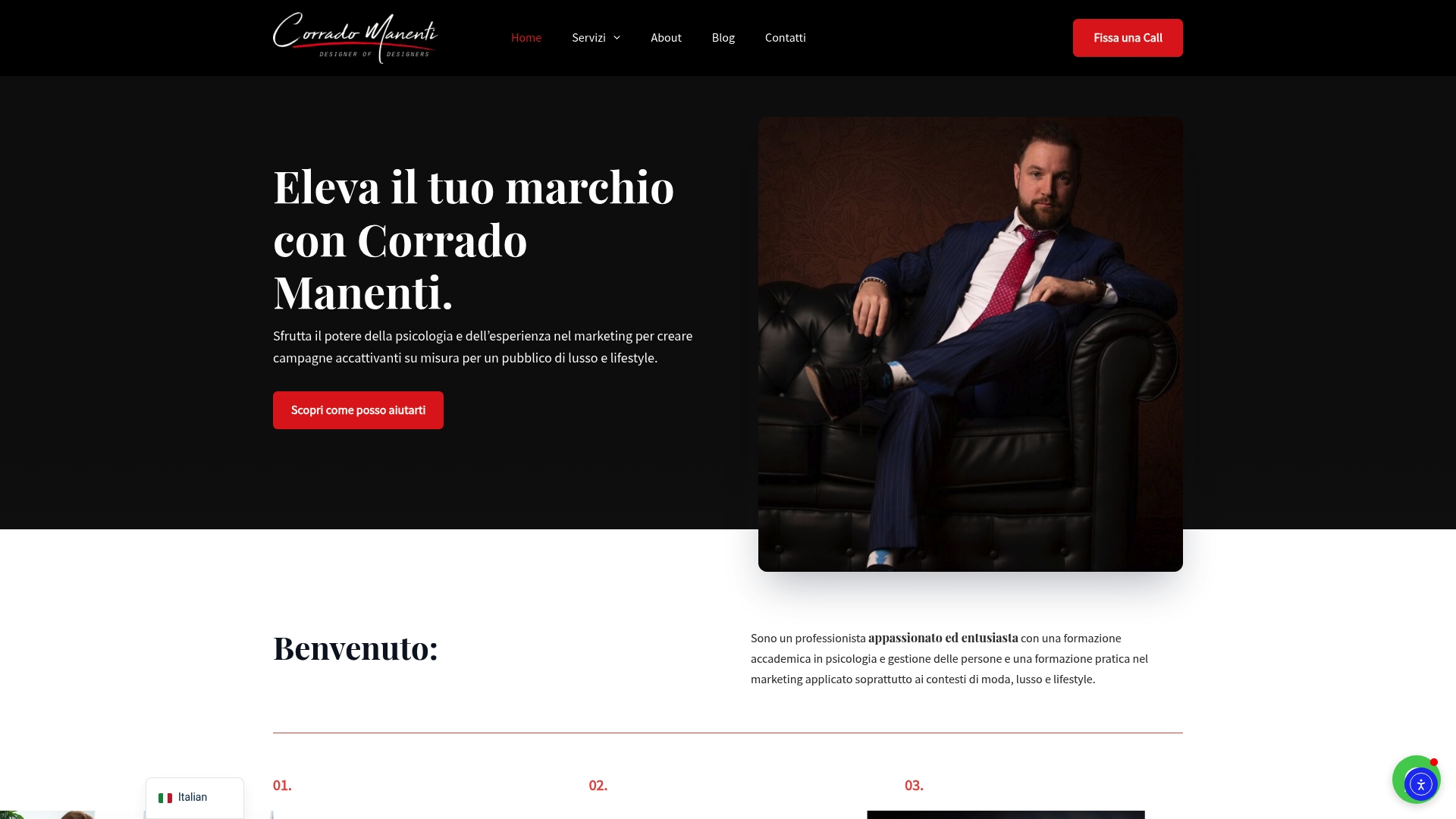
Discover how Marketing Fashion – Corrado Manenti can help you craft emotionally resonant digital journeys that maintain your brand’s elite positioning. With expert guidance on Digital Positioning – Corrado Manenti, you can ensure your digital transformation is strategic, not just tactical. Take the first step toward elevating your luxury brand by visiting Corrado Manenti today and unlock the power of psychology-driven marketing tailored to your exclusive audience.
Frequently Asked Questions
What are the key aspects of digital innovation in the luxury sector?
Digital innovation in the luxury sector focuses on strategic integration of advanced digital technologies that enhance exclusivity and prestige while engaging customers globally. Unlike mass-market brands, luxury brands prioritize personalized experiences that reinforce status and refined taste.
How do immersive technologies like AR and VR enhance customer experiences in luxury?
Immersive technologies such as augmented reality (AR) and virtual reality (VR) allow customers to visualize products in a lifelike way, reducing purchase hesitation and creating exclusive experiences. This technology can make high-value items feel more accessible and desirable.
What role does AI play in luxury brand personalization?
AI enables luxury brands to deliver hyper-personalized recommendations by analyzing customer behavior and preferences. It can anticipate individual tastes and enhance customer interactions, providing a premium and personalized experience.
How can luxury brands measure the success of their digital initiatives?
Luxury brands should define success through various metrics that reflect customer engagement and brand equity rather than focusing solely on revenue. Key indicators include customer satisfaction scores, engagement depth, and retention rates, ensuring a holistic understanding of digital effectiveness.
Recommended
- 7 Innovative Luxury Loyalty Program Ideas for Brands – Corrado Manenti
- Complete Guide to Innovation Strategies for Luxury – Corrado Manenti
- Blog – Corrado Manenti
- Complete Guide to Digital Strategy for Luxury Brands – Corrado Manenti
- QR Codes on Business Cards: Elevating Luxury Beauty Brands – BcardsCreation