


TL;DR:
- Experiential showrooms create immersive environments that foster deep emotional connections with luxury clients. Designing with sensory layering, spatial zoning, and modularity enhances visitor engagement and adapts to changing trends. Proper planning, testing, and ongoing iteration are essential for long-term relevance and success.
Crafting experiential showrooms is the process of designing immersive environments that engage the senses and create lasting emotional connections with luxury clients. The industry term for this practice is experiential retail design, a discipline that treats physical space as a brand narrative tool rather than a product display surface. Luxury brands that master this approach shift client behavior from passive browsing to active emotional investment. The difference between a showroom that sells and one that is remembered lies in three factors: sensory layering, spatial decision architecture, and modular adaptability. This guide gives brand managers and designers a concrete framework for all three.
How to craft experiential showrooms: the sensory foundation
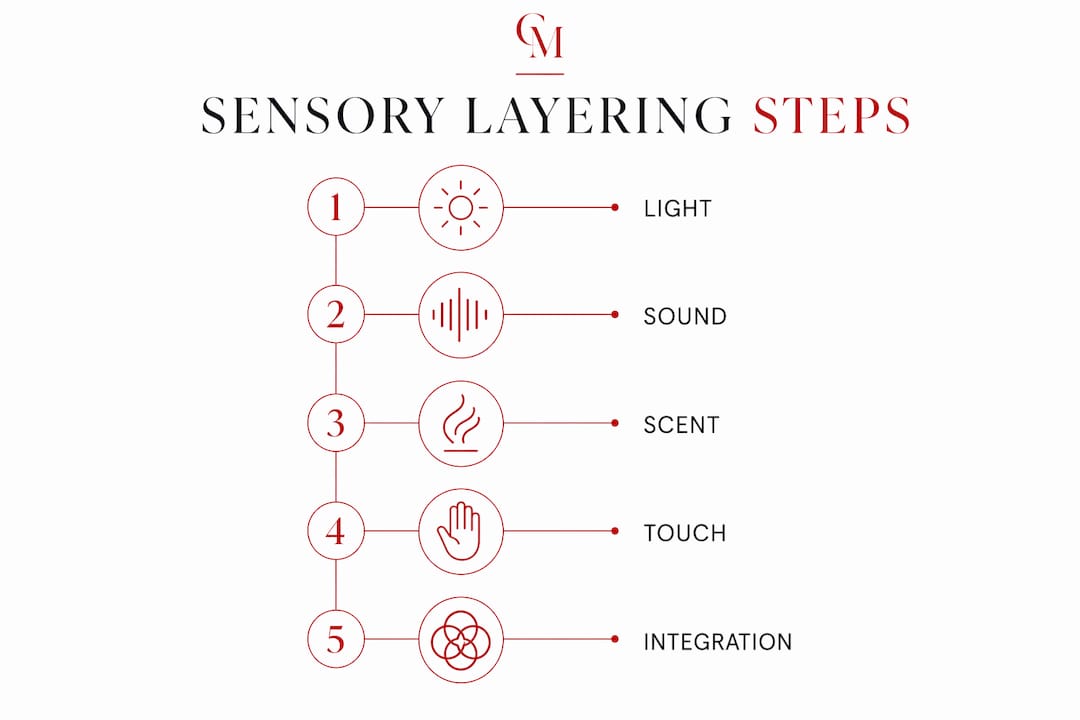
Sensory layering is the deliberate stacking of light, sound, scent, and touch to shape how a visitor perceives a space and the brand within it. The key insight from POLA GINZA’s design philosophy by architect Kazuyo Sejima is counterintuitive: avoid full synchronization of sensory inputs. When light, sound, and scent are perfectly aligned, the brain processes them as background noise. Slight dissonance between channels keeps perception sharp and encourages visitors to slow down and reflect.
Scent is the most underused tool in luxury showroom design. A signature fragrance diffused at low intensity guides visitors through zones without a single sign or arrow. The scent should shift subtly between areas, not announce itself. Overt branding through smell reads as commercial. Subtle scent reads as atmosphere.
Lighting does three jobs simultaneously in a well-designed showroom:
- Ambient lighting sets the emotional baseline. Warm, low-intensity ambient light signals comfort and exclusivity.
- Accent lighting creates hierarchy. It directs the eye to hero products without the visitor consciously noticing the direction.
- Product lighting reveals material truth. Lighting design in showrooms must render fabric texture, leather grain, and metal finish accurately, because a client who feels deceived by lighting will not return.
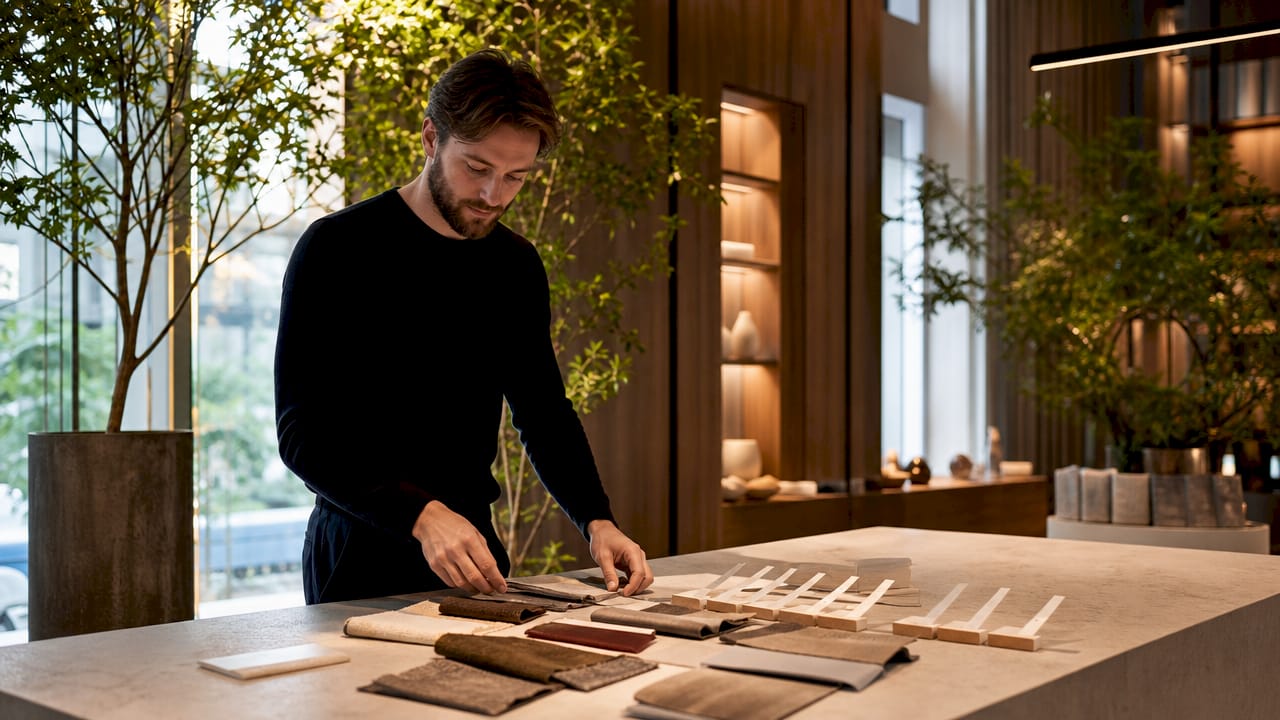
Touch and materiality close the sensory loop. The weight of a door handle, the texture of a display surface, and the resistance of a drawer all communicate brand quality before a single product is touched. Every surface a visitor contacts is a brand statement.
Pro Tip: Conduct a sensory audit before finalizing any showroom design. Walk the space blindfolded to assess sound and scent, then in silence to assess light and material. Sensory problems that are invisible during a normal walkthrough become obvious through isolation.
What are the essential spatial zoning principles for immersive showrooms?
Showroom design is a form of decision architecture, and treating it as anything less produces spaces that exhaust rather than engage visitors. Decision fatigue is a documented psychological phenomenon: the more choices a person processes without structure, the worse their decisions become. A well-zoned showroom removes that burden by sequencing the client’s journey through three distinct stages.
- The information zone. This is the entry area. It orients the visitor, establishes brand context, and sets emotional tone. Keep product density low here. The goal is calibration, not conversion.
- The comparison zone. This mid-space area presents product families side by side. Sightlines matter enormously here. A visitor should be able to see two or three options simultaneously without turning their body. Lighting hierarchy reinforces which products deserve primary attention.
- The hero moment zone. This is the deepest point of the showroom, reserved for the brand’s signature piece or most aspirational offering. Spatial thresholds, such as a change in floor material or ceiling height, signal the transition. The visitor should feel they have arrived somewhere.
Studio 19 in Pune demonstrates this principle at scale. The 9,000 square foot space houses over 11 brands using a gallery-inspired, neutral palette that creates curated lifestyle destinations within a single environment. Each brand occupies a defined zone without visual competition from its neighbors.
| Zone type | Primary function | Key design tool |
|---|---|---|
| Information zone | Orient and calibrate | Low product density, brand narrative |
| Comparison zone | Facilitate evaluation | Sightlines, lighting hierarchy |
| Hero moment zone | Inspire and convert | Spatial thresholds, singular focus |
| Consultation zone | Support decision-making | Privacy, seating, material samples |
Circulation paths should feel discovered, not prescribed. Subtle architectural cues, such as a slight curve in a wall or a change in floor texture, guide flow without making the visitor feel directed. Forced linear paths create resistance. Organic paths create engagement.
Pro Tip: Place your highest-margin product at the end of the natural circulation path, not at the entrance. Visitors who reach the hero zone have already invested time and emotional energy in the space. Their purchase intent is measurably higher at that point.
What role does modular design play in long-term showroom relevance?
A static showroom has a shelf life. Consumer preferences shift, seasonal campaigns demand new narratives, and a space that looked fresh at launch can feel dated within 18 months. Modular design solves this by building reconfigurability into the architecture from day one. The M&M’S Shanghai flagship at Disneytown integrates interactive displays, digital media, and modular merchandising to evoke curiosity and nostalgia simultaneously. The space updates its narrative without structural renovation.
Netflix House takes modularity to its logical extreme. The 100,000+ square foot experiential destination was developed over a two-year cycle specifically to support evolving programming. The design assumes change. Walls, installations, and retail zones are built to be reconfigured as content libraries shift. That assumption of change is what makes the space relevant across repeat visits.
For luxury brand managers, the lesson is not to build a Netflix House. It is to adopt the underlying principle: design for the second story, not just the first. When a showroom is conceived as a fixed installation, every update requires a renovation budget. When it is conceived as a platform, updates become programming decisions.
| Static showroom | Modular showroom |
|---|---|
| Fixed layout, high renovation cost | Reconfigurable zones, lower update cost |
| Single brand narrative | Evolving seasonal storytelling |
| One-time visit motivation | Repeat visit incentive |
| Rigid product hierarchy | Adaptable hero product rotation |
Digital integration amplifies modular flexibility. Screens, projection surfaces, and interactive installations can carry new content without physical reconfiguration. The physical architecture sets the stage. Digital elements change the script.
What practical steps should luxury brand managers take to build experiential showrooms?
The brand experience design process for a luxury showroom follows a clear sequence. Skipping stages produces spaces that look impressive in renders but fail in practice.
- Define the emotional objective first. Before selecting materials or layouts, articulate the single emotional state you want visitors to leave with. Confidence? Desire? Belonging? Every subsequent decision filters through that objective.
- Conduct client psychology research. Map how your specific luxury client makes decisions. What triggers hesitation? What accelerates commitment? Corradomanenti’s psychology-driven approach to buyer behavior analysis provides a structured method for this stage.
- Assemble a multi-disciplinary team. Spatial designers, lighting consultants, acoustic specialists, and brand strategists must work from a shared brief. Siloed teams produce siloed spaces.
- Prototype before committing. Build a physical or digital mock-up of the hero zone and the entry sequence. Test with real clients under NDA. Their instinctive reactions reveal problems that no design review will catch.
- Plan phased implementation. Launch the core spatial structure first. Add digital and interactive layers in phase two. This approach controls budget risk and allows real visitor data to inform later decisions.
Common pitfalls to avoid:
- Over-investing in technology at the expense of materiality. Screens impress once. Exceptional materials impress every visit.
- Ignoring acoustic design. Sound bleeds between zones and destroys the sense of curated experience faster than any visual mistake.
- Treating the showroom as finished at launch. Schedule a six-month review with visitor feedback built into the process from the start.
The examples of experiential marketing that generate the strongest brand loyalty share one trait: they were designed with iteration built into the brief, not added as an afterthought.
Key takeaways
Experiential showrooms succeed when sensory layering, spatial zoning, and modular design work together as a single system rather than independent choices.
| Point | Details |
|---|---|
| Sensory dissonance sharpens perception | Avoid fully synchronized light, sound, and scent to keep visitors alert and reflective. |
| Zone for decision stages | Sequence information, comparison, and hero zones to reduce client fatigue and guide purchase intent. |
| Design for the second story | Build modular infrastructure from day one so narrative updates require programming, not renovation. |
| Prototype with real clients | Test the entry sequence and hero zone with actual clients before finalizing any design commitment. |
| Align every element to one emotional objective | Define the target emotional state first and filter all spatial and sensory decisions through it. |
Why most luxury showrooms underperform their potential
The showrooms I see underperforming most consistently share a specific flaw: they were designed to impress the brand’s internal stakeholders, not to serve the client’s psychology. The result is a space that photographs beautifully and converts poorly.
The most counterintuitive lesson I have learned working with luxury brands is that restraint outperforms spectacle at almost every price point. Clients who spend at the highest levels are not looking for stimulation. They are looking for clarity and confidence. A space that gives them both, through precise sensory calibration and intelligent spatial flow, closes more than a space that overwhelms them with visual complexity.
Technology is a tool, not a strategy. I have seen brands invest heavily in projection mapping and interactive installations while neglecting the acoustic quality of their consultation zone. The client who cannot hear their advisor clearly will not return, regardless of how impressive the entry sequence was.
The future of experiential retail design belongs to brands that treat their showrooms as living assets rather than capital expenditures. That means building in review cycles, listening to visitor behavior data, and being willing to change what is not working. Flexibility is not a compromise of luxury standards. It is how luxury standards stay relevant.
— Corrado
Corradomanenti’s approach to luxury showroom growth
Corradomanenti works with luxury brand managers and designers who want showroom environments that perform as well as they look. The work combines consumer psychology research, sensory design strategy, and brand narrative development into a single consulting framework.
If you are building or repositioning a luxury showroom, the starting point is understanding how your specific client makes decisions under conditions of high perceived value. Corradomanenti’s luxury market growth tactics give brand teams a structured path from concept to client-ready space. For teams ready to go deeper on the psychology side, the psychology in luxury branding resource covers the behavioral frameworks that underpin every effective experiential environment.
FAQ
What is an experiential showroom?
An experiential showroom is a physical space designed to engage visitors through sensory, emotional, and narrative elements rather than product display alone. The goal is to create a memorable brand connection that drives both immediate purchase intent and long-term loyalty.
How does sensory layering improve showroom performance?
Sensory layering, using light, scent, sound, and touch in deliberate combination, slows the visitor experience and deepens emotional engagement. Research from POLA GINZA’s design shows that slight dissonance between sensory channels sharpens perception and encourages reflection.
What is spatial zoning in showroom design?
Spatial zoning divides a showroom into distinct areas, each serving a specific stage of the client’s decision process. Effective zones include an information area, a comparison area, and a hero product moment, each supported by appropriate lighting and circulation cues.
Why does modular design matter for luxury showrooms?
Modular design allows a showroom to update its narrative without structural renovation. Netflix House’s 100,000+ square foot format demonstrates that designing for reconfiguration from the start is what sustains visitor engagement across multiple visits over time.
How long does it take to design an experiential showroom?
Development timelines vary by scale and complexity. Large-format experiential destinations like Netflix House required a two-year development cycle. Luxury brand showrooms at boutique scale typically require six to twelve months from concept brief to opening, depending on the depth of prototyping and client testing built into the process.